




Blockchain technology enables the decentralized and transparent nature of digital currencies by maintaining a distributed ledger that is collectively managed by a network of independent nodes rather than a centralized authority. In this system, transaction records are stored across multiple participants, ensuring that no single entity has control over the network or the data. Decentralization is achieved through consensus mechanisms, such as Proof of Work or Proof of Stake, which allow network participants to validate and agree upon transactions in a trustless manner. Transparency is ensured by the public accessibility of the blockchain ledger, where all confirmed transactions are permanently recorded and can be independently verified by any participant. Cryptographic techniques, including hashing and digital signatures, secure transaction integrity while preserving user pseudonymity. The immutable and auditable nature of blockchain records significantly enhances trust, reduces the risk of fraud, and eliminates reliance on intermediaries, thereby forming the foundational infrastructure for decentralized and transparent digital currency ecosystems.
How Decentralized Finance (DeFi) uses technology to build financial systems without traditional intermediaries
Decentralized Finance (DeFi) leverages blockchain technology and smart contracts to construct financial systems that operate without traditional intermediaries such as banks, brokers, or clearing institutions. By deploying self-executing smart contracts on decentralized blockchain networks, DeFi platforms automate financial functions including lending, borrowing, trading, and asset management based on predefined rules encoded in software. These contracts execute transparently and autonomously once conditions are met, eliminating the need for centralized oversight. DeFi systems rely on distributed consensus mechanisms to ensure security and integrity, while cryptographic protocols enable trustless interactions among participants. Additionally, open-source architectures and public ledgers provide full transaction visibility and auditability, enhancing transparency and reducing systemic risk. Through interoperability, permissionless access, and algorithmic governance, DeFi redefines financial infrastructure by enabling inclusive, efficient, and censorship-resistant financial services without reliance on traditional financial intermediaries.
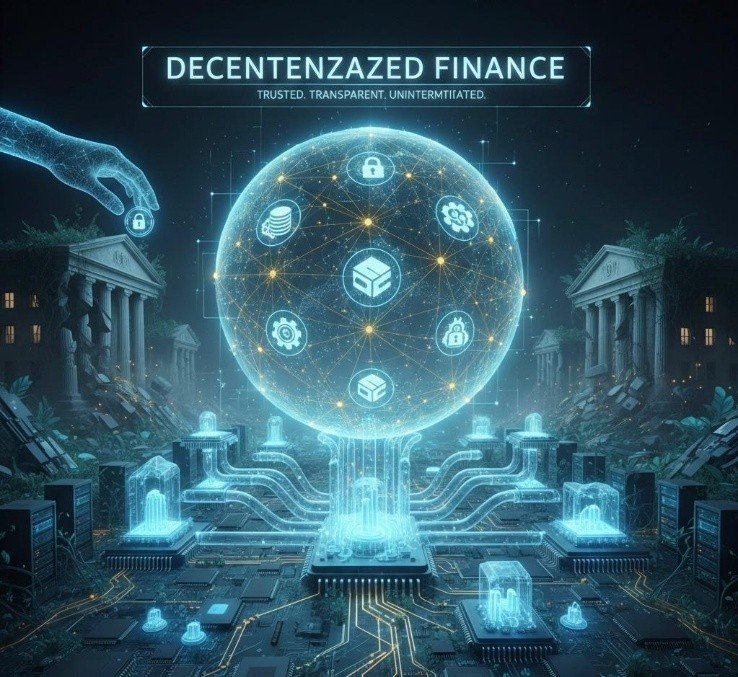
Recent technological advancements have significantly enhanced the security and accessibility of digital financial systems through the use of advanced cryptographic techniques, decentralized architectures, and automated protocols. Innovations such as smart contracts, multi-factor authentication, and distributed consensus mechanisms have reduced reliance on centralized control while strengthening resistance to fraud and cyberattacks. At the same time, user-friendly interfaces and open, permissionless networks have expanded access to financial services for a broader global population. However, despite these improvements, challenges related to scalability, regulatory uncertainty, and interoperability remain critical barriers to widespread adoption, necessitating continued technological refinement and coordinated regulatory frameworks.
Conclusion
This study highlights how digital currencies and Decentralized Finance (DeFi) are reshaping the global financial landscape through the application of blockchain technology. By enabling decentralization, transparency, and trustless transactions, blockchain eliminates reliance on centralized intermediaries and establishes a secure, auditable foundation for digital currencies. DeFi further extends these capabilities by leveraging smart contracts and open protocols to automate financial services and enhance financial inclusion. While technological advancements have significantly improved security and accessibility, persistent challenges related to scalability, regulatory uncertainty, and system interoperability continue to limit widespread adoption. Addressing these challenges through technological innovation and coordinated regulatory frameworks will be essential for the sustainable integration of digital currencies and DeFi into the global financial system.





0 Comments