Back to News
News AlertWorld Money
Dow Jumps 1,569 Points After Midterms as AI Stocks Slide
T
Author
Tushar Shrivas
Published
November 5, 2026
Reading Time
6 MIN READ
Spread the Word
What Happened? Wall Street Rallied After the US Midterm Elections
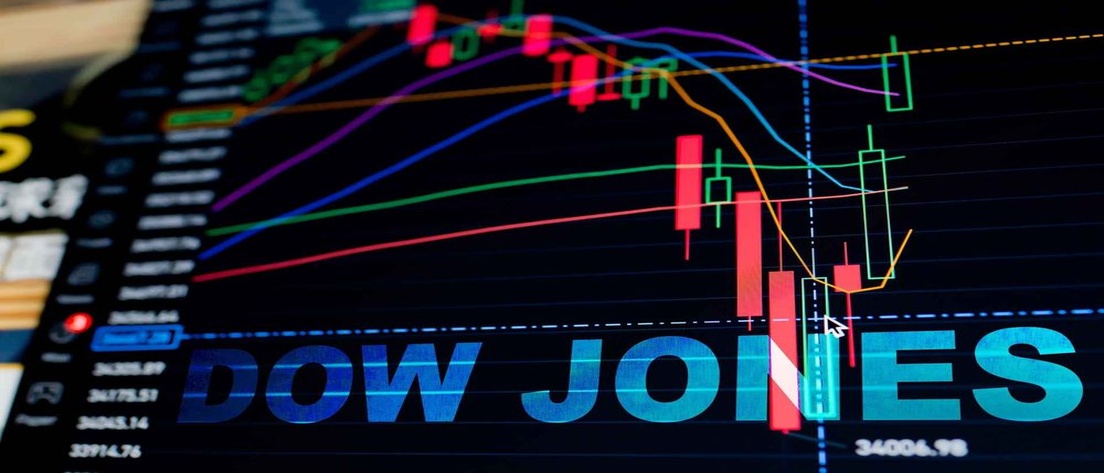
Wall Street recorded a sharp rally on Wednesday, November 4, 2026, after Democrats won control of both chambers of Congress in the US midterm elections. The Dow Jones Industrial Average surged 1,569.40 points, or 3.03%, to close at 53,356.12. The S&P 500 advanced 1.6% to 7,688.62, while the Nasdaq Composite gained 1.4% to 25,736.51. The Dow's rise was its strongest daily performance since April 9, 2025. The market reaction reflected improved investor sentiment following the election, although technology and energy stocks experienced a very different trading session from the broader market. Associated Press
Why Did the Dow Rise So Sharply?
The election result reduced uncertainty about the political balance in Washington. With Democrats taking control of the House and Senate, investors began assessing the possibility of greater congressional oversight and a slower pace of major policy changes. Some market participants viewed the prospect of political gridlock as favourable for equities because it could limit abrupt changes in the economic and regulatory environment.
The rally was also supported by falling oil prices and gains across several non-technology sectors. According to AP, hospital operators and retailers serving lower-income consumers were among the strongest performers. The S&P 500's consumer discretionary sector also gained 4.3%, while the energy sector fell 4.8%, according to Reuters. This difference shows that the rally was driven by changing expectations across industries rather than uniform buying in every part of the market.
Why AI and Data-Centre Stocks Moved in the Opposite Direction
The most important market divergence appeared within the technology industry. While several large technology companies advanced, data-centre operators, semiconductor suppliers and other AI infrastructure-related businesses faced selling pressure.
Reuters reported that Microsoft shares rose 6.7%, Amazon gained 6.1%, Alphabet advanced 3.2%, and Meta Platforms added 1.4%. In contrast, data-centre and computing infrastructure companies came under pressure. Hut 8 fell 23%, IREN declined 11%, Core Scientific lost 10%, and Applied Digital dropped 6.7%. The Philadelphia Semiconductor Index also fell 3.1%, reaching a six-month low.
The difference reflects the economics of the AI investment cycle. Established technology companies with substantial cash resources and existing infrastructure may be better positioned to absorb slower investment growth. Smaller infrastructure operators and suppliers, however, often depend on continued expansion in data-centre construction and demand for computing capacity.
If new projects face delays, higher compliance costs or restrictions, companies whose growth depends on rapid infrastructure expansion could face pressure on future revenue expectations and financing requirements. This is a market concern, not proof that existing projects have been cancelled or that AI demand has disappeared. Reuters
Data-Centre Restrictions Become a Political and Investment Risk
The technology sell-off followed growing public opposition to data-centre development in several parts of the United States. According to The Washington Post, voters in at least 38 jurisdictions passed measures restricting or rejecting data-centre projects during the November 3 elections.
The concerns included electricity consumption, water usage, noise, local infrastructure costs and the limited involvement of residents in development decisions. In Texas, incoming Democratic governor Gina Hinojosa has supported a moratorium on new projects alongside stronger protections for the environment and electricity ratepayers.
These developments matter because data-centre investment requires substantial spending on land, power connections, cooling systems, equipment and construction. Restrictions or lengthy approval processes could increase project costs and delay the point at which infrastructure begins generating revenue.
However, local ballot measures and political promises should not be treated as a nationwide ban. Their legal scope and practical consequences differ by jurisdiction. The extent to which they affect the US AI infrastructure pipeline remains uncertain. The Washington Post
Brent Crude Falls 8.7% as Energy Stocks Decline
Oil prices were another major driver of Wednesday's market reaction. Brent crude futures fell 8.7% to settle at $94.62 per barrel, while US West Texas Intermediate crude declined 8.3% to $88.12.
The decline followed market expectations that the Democrats' congressional gains could increase pressure for a diplomatic resolution to the Iran conflict. Investors considered the possibility that a changed political balance could constrain the administration's military options and encourage negotiations. These were market expectations, not confirmation that a peace agreement had been reached.
Lower oil prices can reduce inflationary pressure and input costs for businesses that rely on energy. They can also support consumer purchasing power. However, the impact is not equally positive for every industry: lower crude prices can reduce expected revenue for oil producers, helping explain why energy shares fell even as the broader market advanced. Reuters
What Does the Rally Mean for Investors?
What Does the Rally Mean for Investors?
The Dow's 3.03% gain compared with the Nasdaq's 1.4% rise highlights an important shift in market leadership. The Dow gained approximately 1.6 percentage points more than the Nasdaq during the session, despite the technology-heavy index also finishing higher.
This divergence suggests investors were reassessing which businesses could benefit from the changing political and economic environment. Lower oil prices, gains in consumer-related sectors and reduced political uncertainty supported the wider market. At the same time, concerns about data-centre restrictions and the cost of AI infrastructure weighed on selected technology businesses.
The longer-term outcome will depend on more than election results. Corporate earnings, interest rates, energy supply, AI demand and the actual implementation of regulatory proposals will matter more to business valuations over time. A single strong trading session cannot establish a lasting market trend.
What Is Still Unknown?
The election results have increased the likelihood of additional scrutiny of data-centre development, but the final regulatory consequences are not yet clear. The scope of local restrictions, their implementation timelines and the response from technology companies remain open questions.
It is also too early to determine whether the sell-off in AI infrastructure businesses represents a temporary repricing or the beginning of a longer reassessment of projected AI investment returns. The market reaction reflects expectations and perceived risks, not confirmed changes to every company's construction plans or financial forecasts.
The Bigger World Money Picture
The November 4 rally demonstrated how political developments can affect different parts of the financial market in opposite ways. The Dow's 1,569-point jump reflected improved broad-market sentiment, while falling oil prices supported the wider economic outlook. Yet the weakness in semiconductor and data-centre-related stocks revealed the risks attached to the next phase of AI infrastructure investment.
The central question is no longer just how much companies will spend on AI, but whether the infrastructure being built can generate sufficient returns under changing political, regulatory and economic conditions.That distinction could become increasingly important for investors evaluating the technology sector.

Tushar Shrivas
B.Tech CS@ Shri Balaji Institute of Technology & Management
I write at Metaplugs — breaking down the latest in tech, economics, and business into simple, impactful stories for everyday readers. Passionate about software testing and global finance.