Back to News
News AlertWorld Money
Nasdaq 100 Plunges 6.4% as AI Chip Stocks Lead Sell-Off
T
Author
Tushar Shrivas
Published
November 6, 2026
Reading Time
7 MIN READ
Spread the Word

What Happened? Wall Street's Post-Election Rally Unravelled
US stock markets suffered one of their sharpest declines of 2026 on Thursday, November 5, as investors aggressively sold technology and semiconductor shares. The Nasdaq 100 plunged approximately 6.4%, marking its worst single-day performance since March 2020. The Nasdaq Composite fell 5.52% to close at 24,315.00, while the S&P 500 declined 4.36% to 7,353.73. The Dow Jones Industrial Average dropped 1,833.06 points, or 3.44%, ending the session at 51,523.06.
The sell-off reversed the previous session's optimism following the US midterm elections, when the major indexes had rallied after Democrats won control of both chambers of Congress. By Thursday's close, the Nasdaq Composite had fallen more than 10% from its October 6 record closing high, placing it in correction territory.
The scale of the decline was particularly striking in technology. The Nasdaq 100 fell more sharply than the broader Nasdaq Composite, reflecting the pressure on its large technology and semiconductor constituents. Associated Press
Semiconductor Stocks Led the Sell-Off
The semiconductor industry experienced some of the session's largest losses. The Philadelphia Semiconductor Index, which tracks major US-listed semiconductor companies, dropped approximately 12.3%, highlighting the severity of the selling across the chip industry.
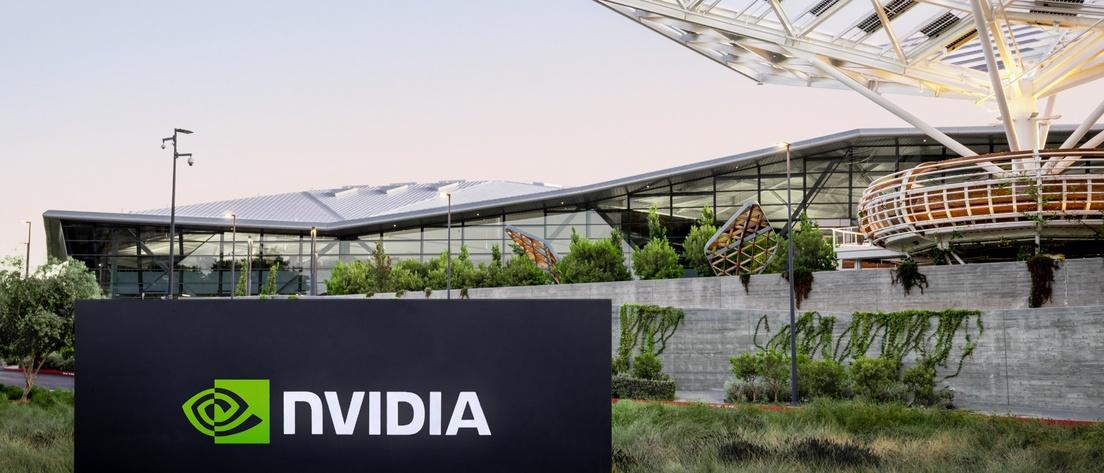
Individual companies recorded even steeper declines. SanDisk fell approximately 21.8%, AMD dropped 17.4%, and Micron declined 17.3%. Nvidia lost around 9.2%, while Intel and Qualcomm each fell approximately 10% and 9.3%, respectively.
The declines were not limited to companies supplying AI data centres. Semiconductor businesses also face exposure to smartphone demand, memory pricing, personal computers and other technology markets. Qualcomm's disappointing smartphone chip-sales outlook added a separate source of pressure, showing that investors were reassessing more than just AI infrastructure spending.
The important distinction is that the market was not reacting to one company's results. Investors were reducing exposure across an industry whose valuations and earnings expectations had become closely connected to continued technology investment. Seoul Economic Daily
Why Data-Centre Restrictions Became a Market Risk
The political backdrop added another layer of uncertainty. Democrats' midterm victories included several areas where opposition to large data-centre developments had become a major local issue. Investors began assessing whether new political leadership and local voting decisions could make future AI infrastructure projects more difficult to approve.
The scale of the public opposition was notable. According to Ballotpedia, voters favoured restrictions on data-centre development in 40 of 41 local ballot-measure contests held on November 3. Measures varied: some introduced bans or temporary moratoriums, while others involved zoning restrictions or additional approval requirements.
The economic implications could extend beyond construction companies. Large AI data centres require substantial investment in electricity, cooling, land, networking equipment and advanced processors. Delays in permitting or additional compliance requirements could increase project costs and postpone the point at which operators begin generating revenue.
However, these local decisions do not create a nationwide ban on data centres. Their legal scope varies, and the effect on the overall US construction pipeline remains uncertain. The market reaction reflects the possibility of slower expansion rather than confirmation that the AI infrastructure industry has stopped growing. The Washington Post
Qualcomm's Weak Outlook Added to the Pressure
Election-related uncertainty was not the only reason semiconductor shares declined. Qualcomm's latest outlook raised concerns about the health of its traditional smartphone chip business.
The company forecast weaker-than-expected fourth-quarter smartphone chip sales, citing sluggish handset demand and declining revenue related to Apple. Qualcomm shares fell approximately 9% following the update.
This mattered because semiconductor companies operate across different markets. While AI-related demand has supported parts of the industry, smartphone and consumer-electronics demand remain important revenue sources for many chipmakers. Higher memory costs and uneven consumer demand can affect margins even when investment in AI infrastructure remains strong.
Qualcomm's results therefore reinforced a broader concern: strong expectations for AI growth do not automatically protect every semiconductor company from weakness in its existing businesses.

The Bigger Problem: Investors Are Questioning AI Spending Returns
The sell-off also reflected a broader reassessment of the AI investment cycle. Technology companies have committed enormous amounts of capital to data centres, advanced processors, cloud infrastructure and networking systems. These investments are designed to support future demand for AI services, but the financial returns may take years to materialise.
Reuters reported that concerns about high AI spending and whether those investments would generate adequate returns were contributing to the retreat from technology shares. Institutional selling and pressure on financing for data-centre projects also added to the weakness.
This creates a difficult equation for investors. If technology companies continue increasing capital expenditure, they must eventually demonstrate that the spending is translating into revenue growth, operating cash flow and sustainable profits. If investment slows, suppliers and infrastructure operators may face lower future orders.
Neither outcome automatically means that AI demand is collapsing. It does mean that investors are becoming more demanding about the financial evidence supporting AI-related valuations. Investing.com
How Much Market Value Disappeared?
The scale of the market reaction was reflected in the estimated loss of company market capitalisation. Seoul Economic Daily reported that approximately $2.3 trillion in market value was erased from the Nasdaq 100 during the session.
This is an attributed estimate rather than an official Nasdaq calculation. Market-value loss estimates can differ depending on the index, company group and measurement period used. Figures for the Nasdaq 100 should not be combined with separate estimates for the S&P 500 or the entire US equity market.
The concentration of losses in semiconductor and AI infrastructure businesses was particularly important. When highly valued technology companies account for a substantial share of an index's market capitalisation, a sharp correction in those businesses can have an outsized effect on overall market performance.
What Investors Should Watch Next
The immediate question is whether the technology sell-off remains concentrated in AI-related businesses or spreads into other parts of the economy. Several developments will help determine the next direction of the market.
First, upcoming earnings and company guidance will reveal whether semiconductor demand is weakening or whether the market has simply lowered expectations after an extended period of strong valuations. Second, capital-expenditure announcements from major cloud and technology companies will indicate whether AI infrastructure spending plans are changing. Third, the implementation of local data-centre restrictions will determine whether political opposition creates measurable delays or additional costs.
Investors should also distinguish between a correction in stock prices and a deterioration in the underlying businesses. A falling share price does not by itself prove that a company's revenue, technology or long-term prospects have weakened.
The Bigger World Money Picture
The November 5 sell-off exposed the risks behind one of Wall Street's most important investment themes. AI continues to attract substantial corporate investment, but the companies financing, supplying and operating its infrastructure face growing scrutiny over costs, regulation and returns.
The sharp fall in the Nasdaq 100 and semiconductor index shows how quickly sentiment can change when several risks appear together. Weak company guidance, political uncertainty and questions about the profitability of AI spending created a difficult environment for technology investors.
The next stage of the AI boom will be judged not only by how much computing capacity companies can build, but by how much sustainable profit that capacity can generate. That is the financial test investors are increasingly demanding.
Sources
Associated Press:
https://apnews.com/article/wall-street-stocks-dow-nasdaq-afe254c608c3d1fe2ea792812ba9765a
Investing:
https://ca.investing.com/news/stock-market-news/techstock-rout-accelerates-retreat-from-the-ai-trade-4935818
Fidelity:
https://www.fidelity.com/news/article/default/202611042134RTRSNEWSCOMBINED_KCN3WG077-OUSBS_1
Investing:
https://www.investing.com/news/stock-market-news/qualcomm-slumps-as-weak-smartphone-chip-sales-overshadow-datacenter-momentum-5002833
The Washington Post:
https://www.washingtonpost.com/technology/2026/11/04/voters-pass-over-20-ballot-measures-ban-or-restrict-data-centers/
Ballotpedia:
https://news.ballotpedia.org/2026/11/06/voters-favored-limiting-data-center-development-in-40-of-41-local-ballot-measures-on-nov-3/
Seoul Economic Daily:
https://en.sedaily.com/international/2026/11/06/nasdaq-plunges-55-percent-into-correction-on-ai-regulation

Tushar Shrivas
B.Tech CS@ Shri Balaji Institute of Technology & Management
I write at Metaplugs — breaking down the latest in tech, economics, and business into simple, impactful stories for everyday readers. Passionate about software testing and global finance.