LATEST NEWS
Payhawk Doubles Valuation to $2B After $280M Goldman Sachs-Led Series C
November 19, 2026 9M
Back to News
News AlertWorld Unicorn
Path Robotics Raises $300M at a $2.45B Valuation to Scale Physical AI in Manufacturing
V
Author
Vicky Galfat
Published
November 14, 2026
Reading Time
10 MIN READ
Spread the Word
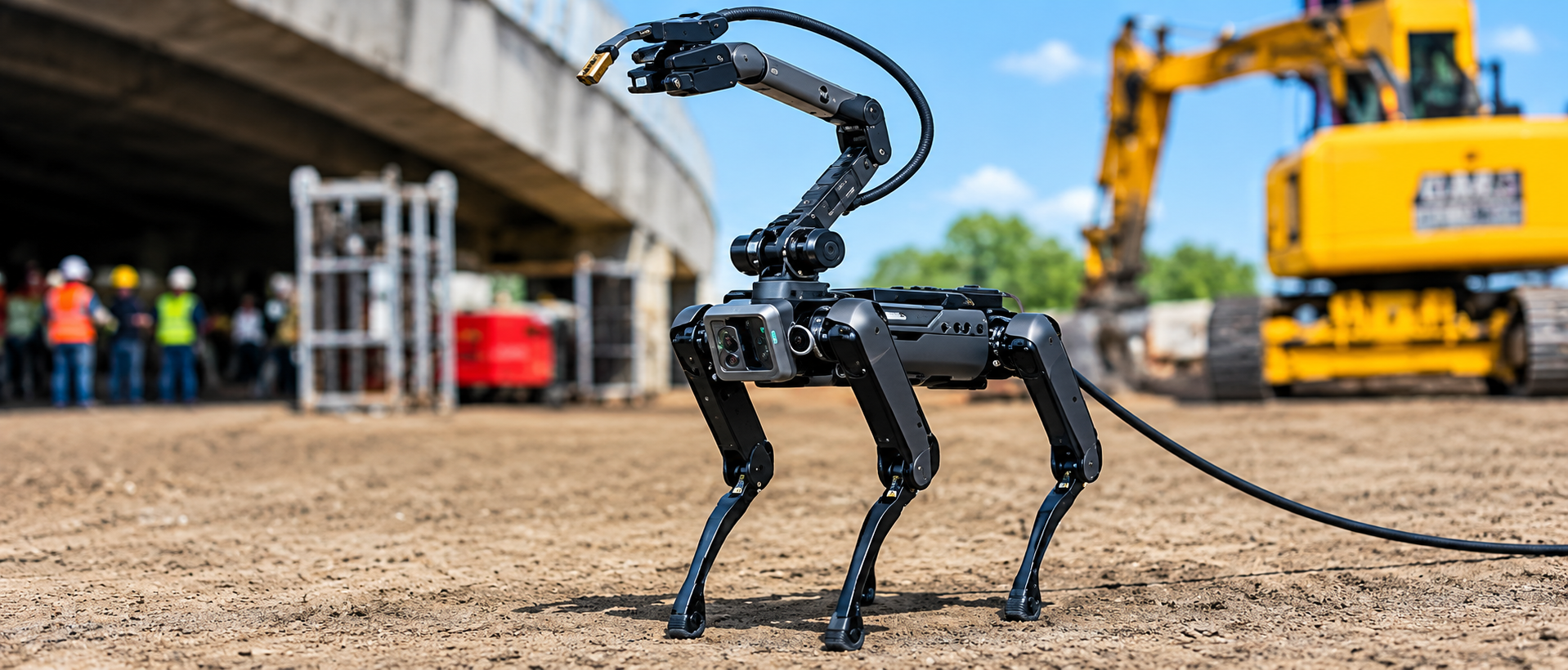
Path Robotics raises $300M led by Georgian at a $2.45B valuation to scale autonomous welding, mobile robots and AI-powered manufacturing.
What Happened?
US-based industrial robotics startup Path Robotics has raised $300 million in Series E funding at a $2.45 billion post-money valuation. Announced on 10 November 2026, the round was led by investment firm Georgian and will support the company's expansion beyond autonomous welding into additional manufacturing tasks and robotic platforms. Georgian's investment announcement
The company also plans to increase investment in AI model development, computing infrastructure and deployments with industrial customers.
The round includes participation from existing investors Addition, Drive Capital, IronArc Ventures, Tiger Global and Yamaha Motor Ventures and its affiliates. New investors D. E. Shaw Ventures and NAVER Ventures also participated. Georgian partner Emily Walsh will join Path Robotics' board. The company says it has raised more than $610 million in total funding since its founding in 2018. Path Robotics newsroom
The investment comes as Path attempts to turn its autonomous welding technology into a broader manufacturing platform. Its Obsidian AI system is designed to help robots identify welding seams, plan their movements and adjust welding decisions as conditions change.
The company is also developing Rove, a mobile welding system that combines Obsidian with a legged robotic platform to bring welding capabilities directly to larger or difficult-to-move structures. Path introduced Rove in April 2026, marking an expansion of its approach beyond conventional fixed robotic welding cells.Rove product information
What Does the Source Say?
Understanding Path Robotics' physical AI
Traditional industrial welding robots generally perform best when parts are consistent, positioned accurately and presented in predictable production environments. Their movements are often programmed around specific components and repeatable tasks. When parts vary in shape, position or alignment, the automation process can require additional programming, fixtures or human intervention.
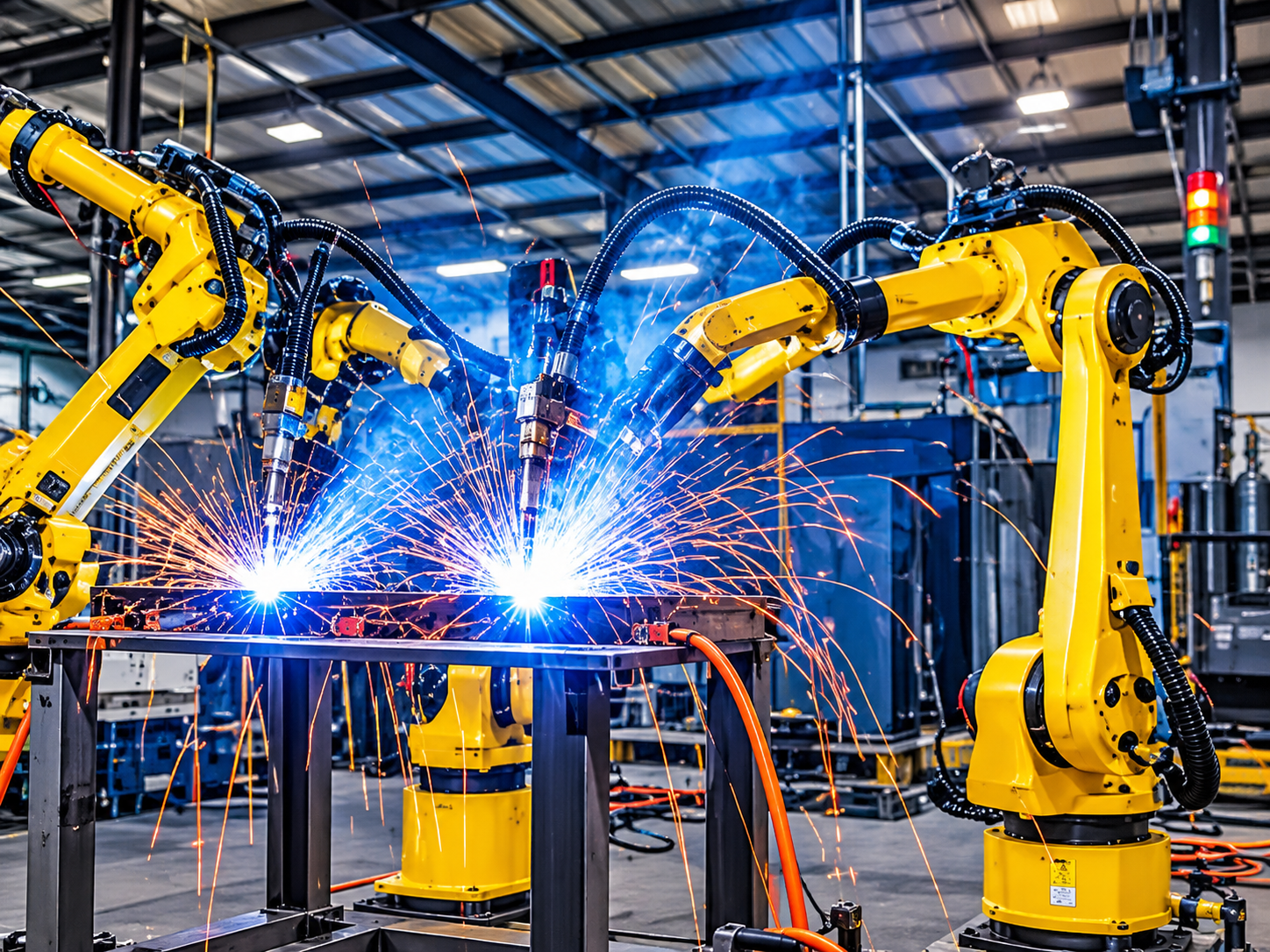
Path Robotics is attempting to address this limitation through its physical AI approach. Rather than relying exclusively on a fixed sequence of movements, its system uses computer vision, sensor data and machine-learning models to understand the individual workpiece and adapt the welding process. This approach is particularly relevant to industries such as shipbuilding and heavy equipment manufacturing, where components can be large and less uniform. Georgian's investment analysis
Obsidian: The AI behind autonomous welding
Path Robotics' central technology is Obsidian, its AI system for autonomous welding. The company's technical description identifies two main components: the Weld World Model and the Obsidian reinforcement-learning agent.
The Weld World Model is a neural-network-based welding simulator trained using multimodal welding data. Obsidian is trained within this model and deployed on the company's robotic systems. It processes real-time information from the sensor stack to make welding decisions seam by seam. Path says data captured before, during and after welding is fed back into the model-development process. Path Robotics' Obsidian technical documentation
The company's published sensor configuration includes two cameras and four lasers designed to provide 360-degree awareness around the welding torch. Path also describes generating sub-millimetre point clouds, which are three-dimensional representations of the workpiece and surrounding geometry. This information helps the system identify welding seams and respond to variations that could make a conventional pre-programmed path unsuitable. Path Robotics' Obsidian documentation
These specifications are company-published descriptions, not independent performance-test results.
Rove takes welding beyond fixed robotic cells
Path's second important product direction is Rove, a mobile robotic welding system that combines Obsidian with a legged robot platform. Instead of requiring every component to be moved into a fixed welding cell, Rove is designed to move towards the workpiece, scan its welding seams and perform the assigned task. This could be useful for large structures in shipyards and other industrial environments where moving the component is difficult. Path Robotics' Rove product page
This could be useful in shipyards and other industrial environments where components are too large or inconvenient to transport to conventional robotic workstations.
Path identifies Saronic Technologies as one of Rove's early adopters, integrating the system into its shipbuilding operations in Franklin, Louisiana. The company says it plans to ship only 50 units in 2027 while selecting early adopters. That is a stated initial shipping plan, not evidence that all 50 units have already been ordered, delivered or deployed. Path Robotics' Rove product page
A major shipbuilding opportunity
Path's expansion also has a connection to US naval manufacturing. In August 2026, shipbuilder Huntington Ingalls Industries (HII) announced performance-based production agreements with Path Robotics and GrayMatter Robotics under its High-Yield Production Robotics programme.
HII said the combined agreements could involve up to $900 million in shipbuilding work over seven years, subject to technology, manufacturing-readiness and performance milestones. The amount covers both companies, not Path Robotics alone. HII's August 6 announcement
HII said the combined agreements could involve up to $900 million in shipbuilding work over seven years, subject to technology, manufacturing-readiness and performance milestones. The amount covers both companies, not Path Robotics alone. HII's August 6 announcement
Georgian's investment article separately describes a $600 million performance-based production agreement with HII for Path Robotics. This is an investor-provided figure; HII's public announcement specifies the combined potential value for Path and GrayMatter rather than publishing an individual allocation.
Importantly, the HII arrangement is not equivalent to $900 million or $600 million in immediately recognised revenue. The agreements require development, qualification and performance milestones before the delivery stage can proceed. Georgian's investment analysis
Importantly, the HII arrangement is not equivalent to $900 million or $600 million in immediately recognised revenue. The agreements require development, qualification and performance milestones before the delivery stage can proceed. Georgian's investment analysis
What Is Still Unknown?
The $2.45 billion post-money valuation establishes the price investors assigned to the company in this financing round. However, Path has not publicly disclosed a detailed financial breakdown of the round, including the precise ownership acquired by investors, the terms of the preferred shares or the company's absolute annual recurring revenue.
The company has reported that ARR grew 17-fold over the previous 18 months, but the starting and ending revenue figures have not been provided in the funding announcement. Path Robotics' funding announcement
The company has reported that ARR grew 17-fold over the previous 18 months, but the starting and ending revenue figures have not been provided in the funding announcement. Path Robotics' funding announcement
There are also technical questions around the performance of autonomous welding systems across different materials, component geometries and industrial environments. Path describes its AI models and sensor capabilities, but publicly available product information does not provide a comprehensive independent comparison of weld quality, production throughput, operating costs or failure rates against experienced human welders and conventional robotic welding systems. These measurements are important because a system that works on selected production tasks may not perform equally well across every manufacturing environment. Georgian's investment analysis
The commercial terms and eventual value of the HII agreements also require careful interpretation. HII has stated that the potential work depends on meeting defined technical and manufacturing milestones, while its public announcement gives a combined ceiling for Path Robotics and GrayMatter Robotics. The available public information does not establish how much of the total will ultimately be awarded to Path or how much work has already moved into the delivery stage. HII's official announcement
Finally, Rove's planned 2027 shipments will be an important commercial test. Its mobile design introduces requirements beyond those of a fixed robotic cell, including reliable movement, positioning, sensing and welding in less controlled work areas. The company has not yet published a broad independent evaluation of Rove's performance across multiple customer sites. Path Robotics' Rove product page
Why Does It Matter?
Manufacturing automation is moving beyond repetitive tasks
Industrial robots have traditionally been most effective in structured environments where the same operation is repeated with limited variation. Physical AI could expand automation into tasks that require machines to interpret changing surroundings and adjust their actions.
Welding is a useful example because small differences in component geometry, seam position and heat distortion can affect the process. If Path can reliably manage these variations, its systems could address manufacturing work that has remained difficult to automate. Georgian's investment analysis
Welding is a useful example because small differences in component geometry, seam position and heat distortion can affect the process. If Path can reliably manage these variations, its systems could address manufacturing work that has remained difficult to automate. Georgian's investment analysis
Shipbuilding and heavy industry could become important markets
Large industrial structures are difficult to handle with conventional fixed automation. Shipyards, energy infrastructure manufacturers and heavy-equipment producers often work with components that vary significantly in size and geometry.
Mobile systems such as Rove could reduce the need to move large workpieces into dedicated robotic cells, although their economic value will depend on reliability, deployment costs and the range of tasks they can perform. Path Robotics' Rove product page
Mobile systems such as Rove could reduce the need to move large workpieces into dedicated robotic cells, although their economic value will depend on reliability, deployment costs and the range of tasks they can perform. Path Robotics' Rove product page
The HII agreements give this opportunity a concrete industrial context. The programme is intended to develop and qualify automated production techniques for processes including welding, grinding, blasting, painting, assembly and inspection. If the systems meet the required standards, HII plans to source shipbuilding work through the new production line. This could create a route for AI-enabled robotics to become part of a larger industrial supply chain rather than remaining limited to demonstrations or isolated factory installations. HII's August 2026 announcement
The investment reflects confidence in a broader platform
The Series E funding is not intended only to increase the number of welding robots Path sells. The company has explicitly stated that it wants to extend its physical AI capabilities into new manufacturing tasks and robotic form factors.
This creates a larger opportunity than selling a single-purpose machine, but it also raises the technical challenge: each new task requires reliable perception, planning, control and validation in its own working environment. Path Robotics' funding announcement
This creates a larger opportunity than selling a single-purpose machine, but it also raises the technical challenge: each new task requires reliable perception, planning, control and validation in its own working environment. Path Robotics' funding announcement
Our Analysis
Path Robotics' $2.45 billion valuation reflects investor confidence in the possibility that physical AI can become an important layer of industrial automation. The company's strongest argument is its focus on a difficult, specific manufacturing problem: welding variable components in environments where conventional robotic programming can be restrictive. Starting with a specialised task gives the company an opportunity to build real production experience before expanding into adjacent applications. Georgian's investment rationale
However, the central question is not whether a robot can complete a welding task. It is whether the system can do so consistently, safely and economically across different facilities and production conditions. Welding quality, cycle time, equipment uptime, maintenance requirements and the cost of integrating robots into existing factories will determine whether manufacturers see a strong return on investment.
The company's reported 17-fold ARR growth is encouraging, but without absolute revenue figures and customer-level economics, it is not enough to assess profitability or long-term commercial durability. Path Robotics' funding announcement
The company's reported 17-fold ARR growth is encouraging, but without absolute revenue figures and customer-level economics, it is not enough to assess profitability or long-term commercial durability. Path Robotics' funding announcement
The HII programme may be one of the most important milestones to monitor. Shipbuilding is a demanding industrial environment, and the performance-based structure means the companies must meet defined technical and manufacturing requirements before the full delivery opportunity can materialise. Successful qualification would provide stronger evidence of industrial readiness than a product demonstration alone.
At the same time, the combined $900 million figure should not be mistaken for guaranteed revenue or an award exclusively to Path Robotics.The potential work is shared across Path Robotics and GrayMatter Robotics and remains dependent on milestones. HII's production-agreement announcement
At the same time, the combined $900 million figure should not be mistaken for guaranteed revenue or an award exclusively to Path Robotics.The potential work is shared across Path Robotics and GrayMatter Robotics and remains dependent on milestones. HII's production-agreement announcement
Rove is another important part of the company's expansion strategy. Its April 2026 launch demonstrated Path's intention to bring autonomous welding beyond fixed robotic cells. The planned 2027 shipments will help show whether that mobile approach can work reliably in industrial environments and attract repeat customer demand.
The next stage will test whether Path can turn its welding expertise into a repeatable platform across factories, mobile robots and additional manufacturing processes. The $300 million investment gives it substantial resources to pursue that strategy. Its long-term success, however, will depend on measurable production results, customer adoption and the ability to deliver reliable automation outside carefully controlled environments.
Sources and References
Path Robotics Announces $300 Million Series E Financing at $2.45 Billion Valuation to Scale Physical AI for Manufacturing
Why Georgian Invested in Path Robotics
Obsidian — Path Robotics' Foundational AI for Welding
Rove — Mobile Welding for Flexible, Large-Scale Fabrication
HII Signs Performance-Based Production Agreements with Path Robotics and GrayMatter Robotics
Path Robotics — Company Newsroom
Path Robotics Quadruples Valuation to $2.5 Billion in Latest Funding Round

Vicky Galfat
University of Mumbai/BCA
Learning, building, and exploring the world of technology one project at a time.