Back to News
News AlertWorld Unicorn
The Trillion‑Dollar Club: How 1,619 Unicorns Are Rewriting Global Wealth in 2026
V
Author
Vishal Sable
Published
April 7, 2026
Reading Time
13 MIN READ
Spread the Word
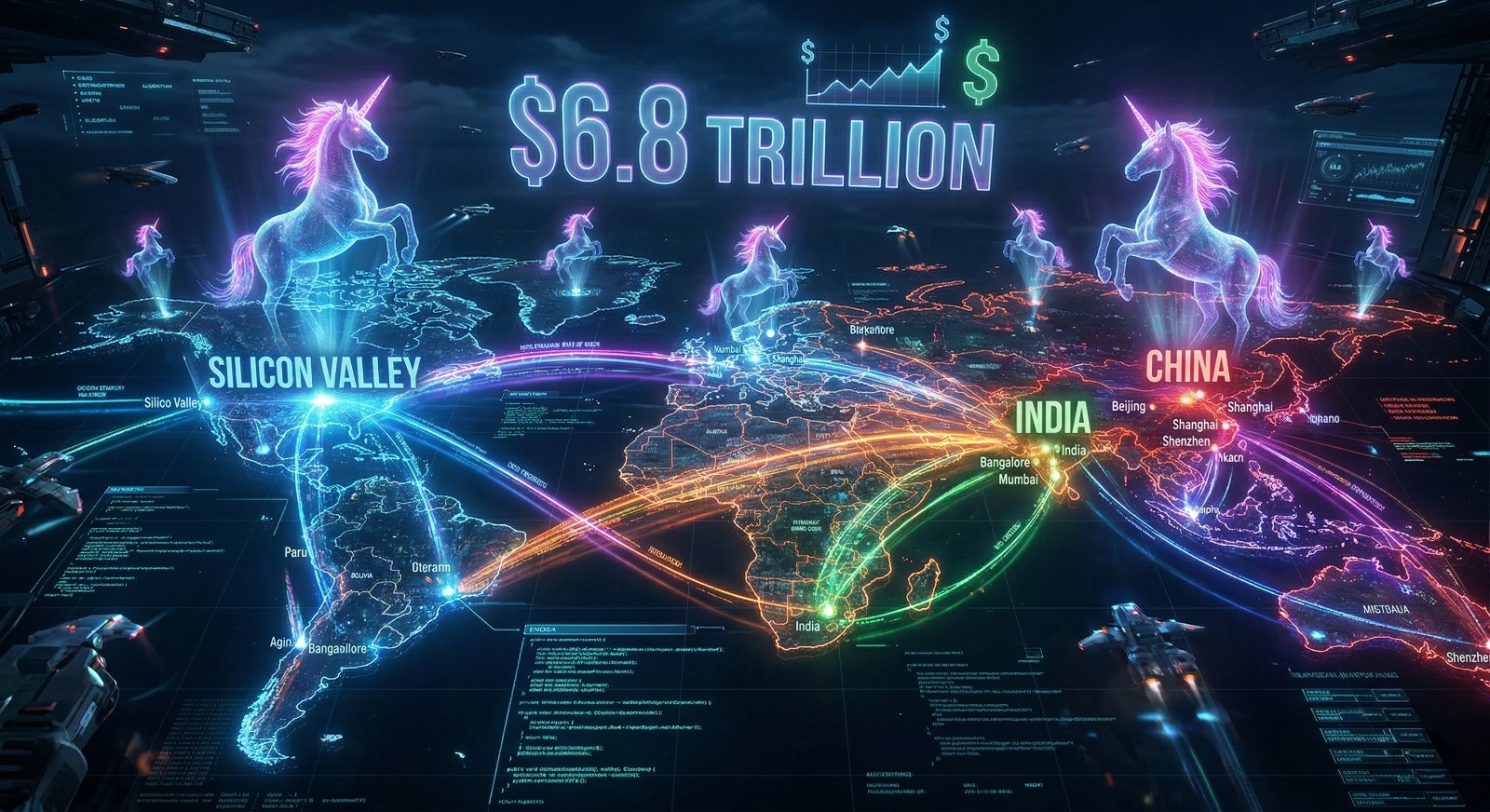
2026 Unicorn Boom: $6.8Tn Market, AI & Space Giants 1,619 unicorns valued at $6.8Tn. US leads with 1,047, India holds #3. Inside the SpaceX‑xAI merger and the new trillion‑dollar era.
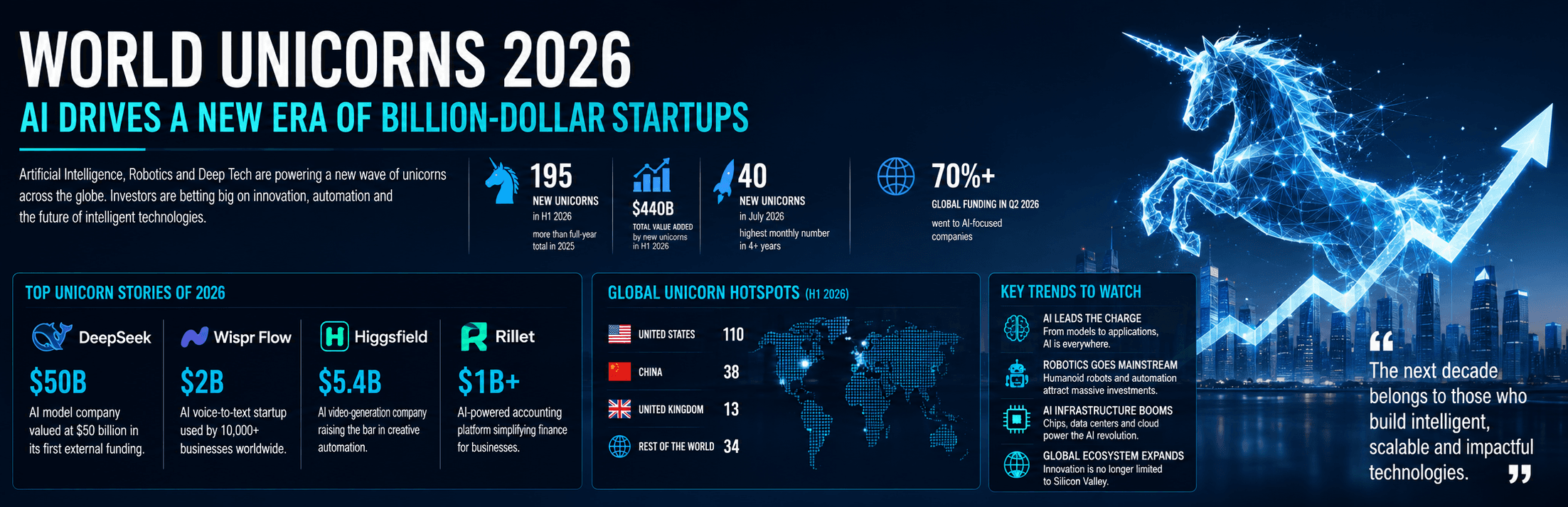
The Unicorn Herd Has Grown Up – And It’s Worth $6.8 Trillion
Once upon a time, a “unicorn” was a rare mythical beast. In 2026, it’s almost routine—except for the valuations.
As of April 2026, the world is home to 1,619 active unicorns, with a combined valuation of $6.8 trillion. That’s larger than the GDP of every country except the United States and China.
The “startup gold rush” has matured into a focused battle of giants. And the battlefield is increasingly dominated by two forces: Artificial Intelligence and Space Technology.
By the Numbers – The $6.8 Trillion Herd
The unicorn landscape has exploded. According to PitchBook, there were 1,590 active unicorns globally as of February 2026. Other trackers put the number even higher, with BestBrokers reporting 1,705 startups had achieved unicorn status by March 2026.
But the real story is the concentration of value. The top five unicorns alone are worth nearly $3 trillion:
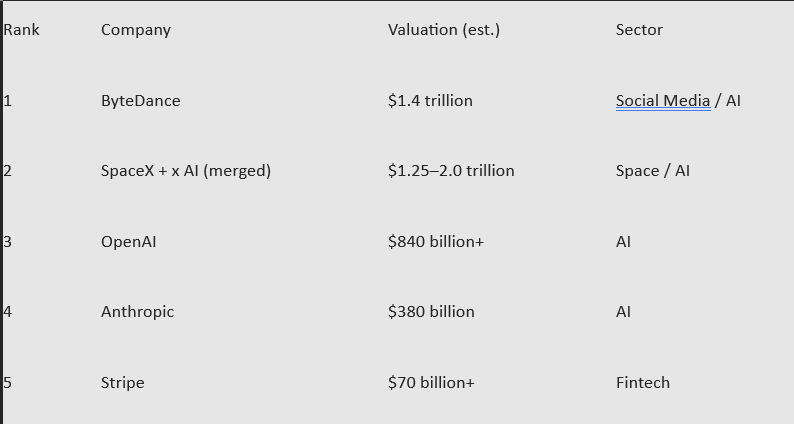
The rise of the “hectocorn”—companies valued over $100 billion—has fundamentally changed the venture capital game. As one analyst put it, “In the era of unicorn valuation escalation, a trillion dollars isn’t what it used to be”.
Global Leaders – The U.S. Still Rules, India Solidifies #3
United States: The 1,047 Gorilla
The United States remains the undisputed king of unicorns, hosting 1,047 of the world’s 1,619 billion‑dollar startups. That’s nearly 65% of the global total.
American unicorns boast a combined valuation of over $2.5 trillion, concentrated heavily in the San Francisco Bay Area, New York, and emerging tech hubs like Austin and Miami.
The U.S. dominance is driven by deep venture capital pools, world‑class research universities, and a regulatory environment that, for better or worse, allows rapid scaling.
India: The Third Pole
India has solidified its position as the third‑largest unicorn hub globally, behind only the U.S. and China. As of April 2026, India is home to 61 unicorns, primarily concentrated in Fintech and EdTech.
The combined valuation of Indian unicorns exceeds $73 billion, with another $99 billion in value generated by Indian‑founded unicorns operating overseas.
Leading the pack:
Razorpay (Fintech): $7.5 billion
Ola Electric (EV Mobility): $5.4 billion
Swiggy (Food Delivery): $8 billion
Dream11 (Gaming): $8 billion
BYJU‘S (EdTech): Previously a leader, now navigating turbulence
The Indian government’s push for digital public infrastructure (UPI, Aadhaar, Account Aggregator) has created a fertile ground for fintech unicorns to scale. Meanwhile, the pandemic‑driven edtech boom has matured, with survivors like PhysicsWallah and Eruditus now leading the sector.
China: The Silent Giant
While China’s official unicorn count (around 300) trails the U.S., its top‑end value is staggering. ByteDance alone is worth $1.4 trillion, making it the world’s most valuable private company. Ant Group, Didi, and Shein round out a deep bench of decacorns.
However, China’s unicorn pipeline has slowed due to regulatory crackdowns and a cooling economy. The U.S. has widened its lead in new unicorn creation since 2024.
The “Space” Factor – AI and Orbit Collide
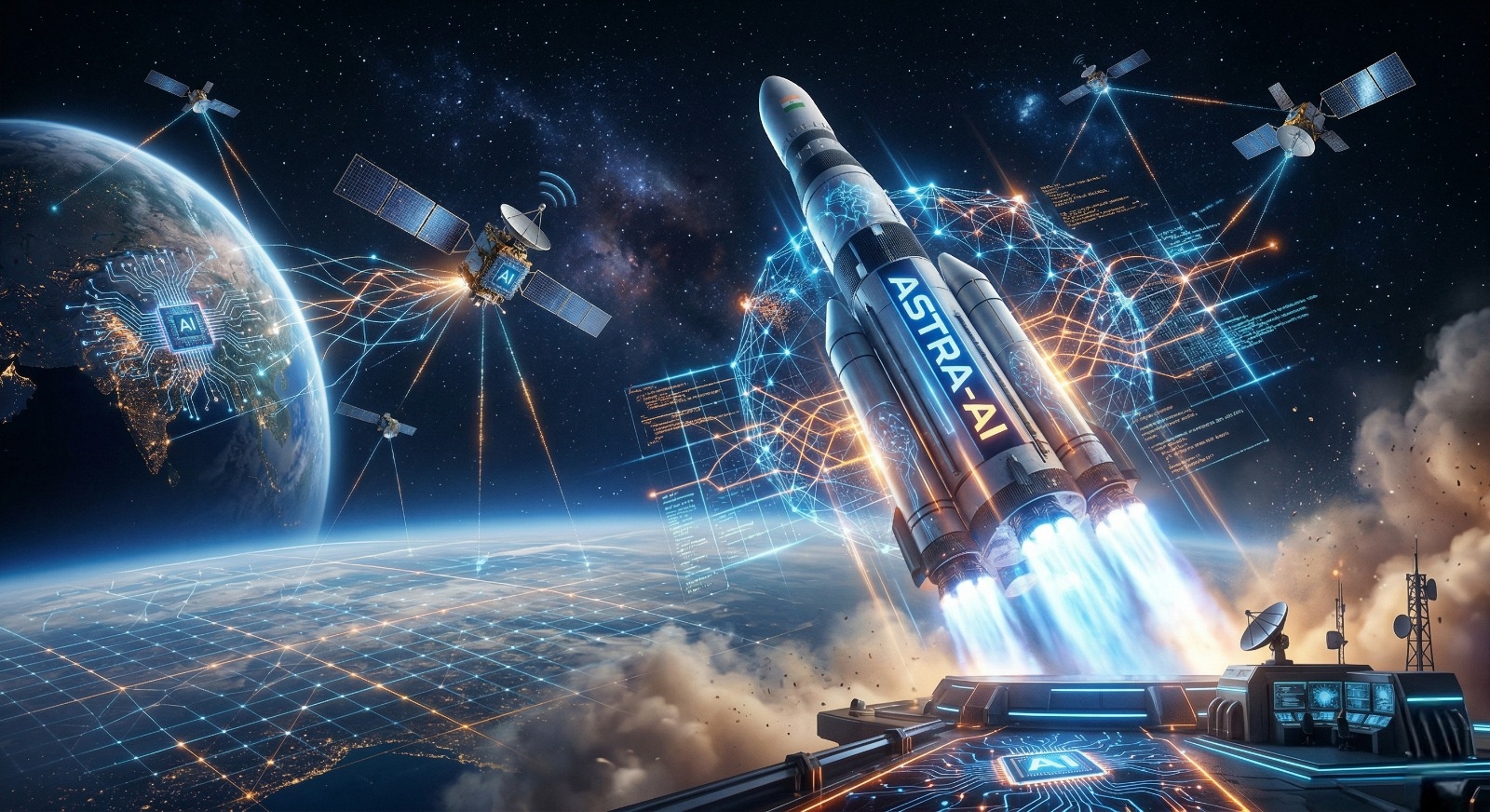
The most significant trend of 2026 isn’t just AI or just space—it’s the merger of the two.
SpaceX + xAI: The $1.25 Trillion Megamerger
In February 2026, Elon Musk confirmed the merger of SpaceX and xAI, creating a vertically integrated behemoth valued at $1.25 trillion. The new entity combines:
SpaceX’s rocket launch business and Starlink satellite network
xAI’s Grok chatbot and foundational AI models
X (Twitter) social platform for real‑time data
Musk called it “the most ambitious, vertically integrated innovation engine on Earth (and beyond)”.
The IPO That Could Break Records
SpaceX has already filed confidentially for its U.S. listing and is targeting a June 2026 debut. The IPO could raise $75 billion at a valuation between $1.75 trillion and $2 trillion.
If successful, it would be the largest IPO in history—by an extraordinary margin. For context, the current record holder is Saudi Aramco’s $29.4 billion offering in 2019.
Analysts estimate SpaceX‘s launch and Starlink revenue will approach $200 billion in 2026, while xAI’s revenue remains modest (under $10 billion). The valuation, therefore, is a bet on the “Space AI” thesis: orbital data centers, AI‑powered satellite constellations, and interplanetary intelligence.
Orbital AI Startups Join the Unicorn Club
The SpaceX‑xAI merger has supercharged investor interest in “space compute” startups.
Starcloud, a Seattle‑based startup building solar‑powered data centers in orbit, raised $170 million in Series A at a $1.1 billion valuation in March 2026. It achieved unicorn status just 17 months after its Y Combinator demo day—the fastest in YC history. The company is already deploying Nvidia H100 GPUs in orbit for AI inference workloads.
Other verticals seeing unicorn activity:
In‑space manufacturing: Companies printing satellite components and pharmaceuticals in zero‑gravity
Space debris removal: Valued at $15 billion by 2030, with several startups nearing unicorn status
Lunar logistics: With NASA’s Artemis program accelerating, lunar delivery startups are attracting billion‑dollar valuations
The Great Shakeout – Winners, Losers, and What Comes Next
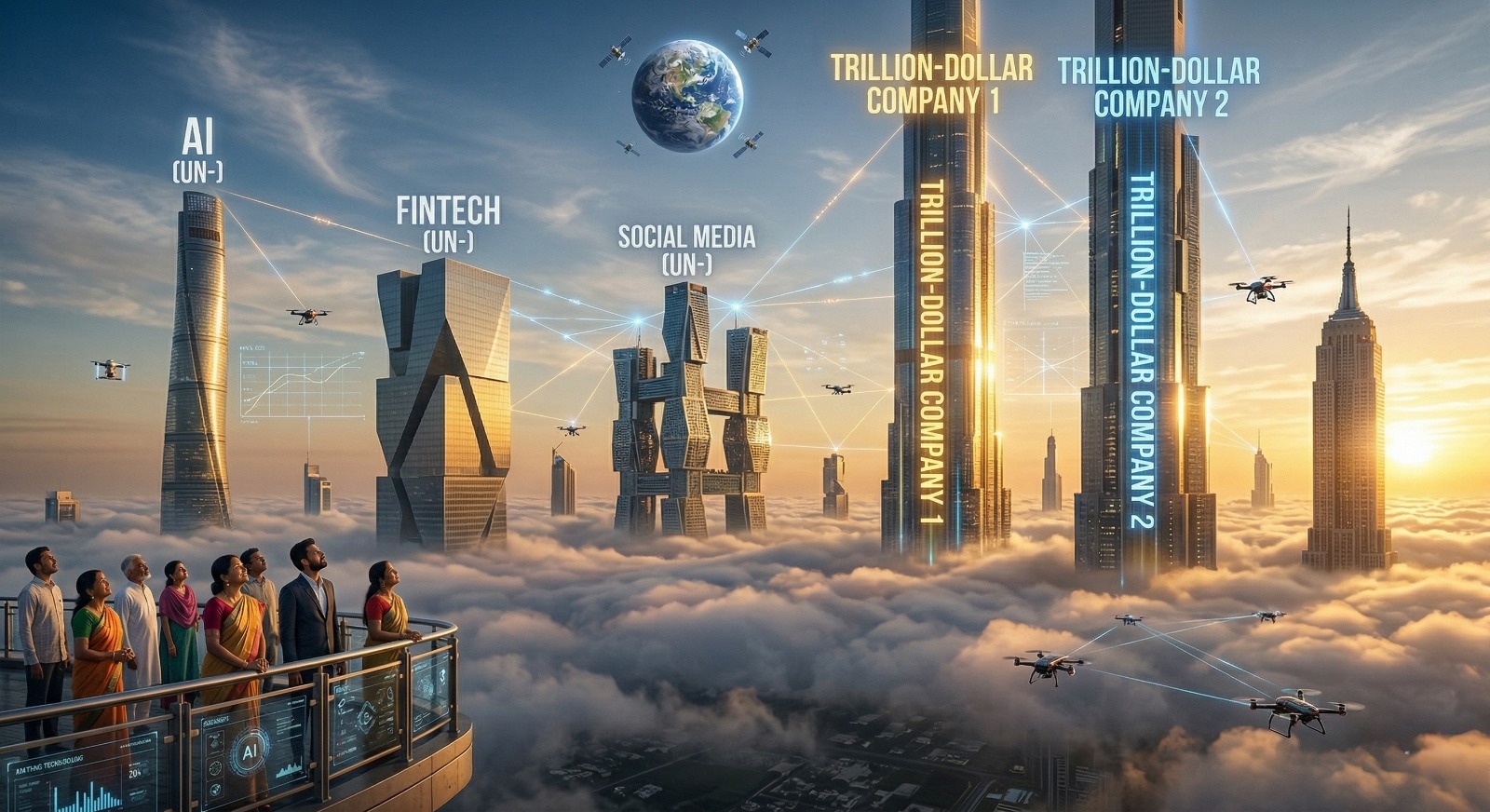
Not all unicorns will survive. Industry experts estimate that 80–90% of AI startups launched in the past two years will be wiped out during the current consolidation cycle.
The survivors share three traits:
Proprietary data moats – Unique, hard‑to‑replicate datasets
Enterprise revenue – Real paying customers, not just user growth
Capital efficiency – Low burn rates and clear paths to profitability
For investors, the 2026 unicorn landscape is no longer about spreading bets across 40,000 hopefuls. It’s about doubling down on the top 5% — the OpenAI‘s, the Anthropics, the SpaceX’s of the world.
Conclusion: From Unicorns to Hectocorns
The term “unicorn” was coined in 2013 when a billion‑dollar startup was rare. In 2026, the word has lost some of its magic—not because unicorns are less impressive, but because the bar has moved.
We are now in the era of hectocorns (over $100 billion) and trillion‑dollar private companies. The SpaceX‑xAI merger, the OpenAI juggernaut, and India‘s steady rise are all pointing in the same direction: the future of global wealth will be built by a handful of giants, not a thousand small miracles.
The herd has grown. But the predators are bigger than ever.

Vishal Sable
B.Tech AD @ shri balaji institute of technology and management
Engineering and tech journalist. I love exploring the impact of emerging technologies on global defense, sovereignty, and everyday life. Always looking for the real story behind the headlines.