Back to News
News AlertWorld Money
Trump Cites India's 7% Growth to Claim US Could Reach 20%
T
Author
Tushar Shrivas
Published
November 21, 2026
Reading Time
6 MIN READ
Spread the Word
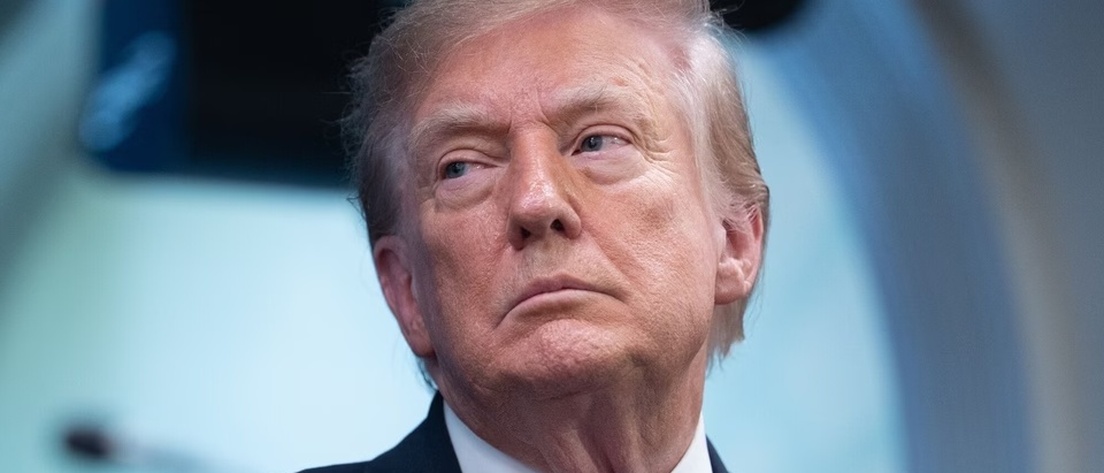
Trump Cites India's 7% Growth to Claim US Could Reach 20% if Fed Cuts Rates
US President Donald Trump has argued that the American economy could grow by as much as 20% if the Federal Reserve lowered interest rates, using India's economic growth as an example. Speaking to reporters at the White House on November 20, Trump described the Fed as "very political" and said the US should have lower borrowing costs when economic figures are strong. He cited India's roughly 7% growth rate and its interest-rate environment to support his argument. These growth figures were Trump's claims, not official US economic projections. Hindustan Times – Trump criticises the Fed
Trump said the US could achieve growth of 14%, 15% or even 20% with lower rates. He also argued that the Federal Reserve should respond to strong economic data by reducing borrowing costs rather than keeping them high. However, he did not specify the timeframe or measurement basis for his 15%–20% growth claim, making it difficult to assess against standard economic forecasts.
The latest available advance estimate from the US Bureau of Economic Analysis (BEA) showed that real US GDP grew at an annualised rate of 3.4% in the third quarter of 2026, up from 2.2% in the second quarter. The figure reflects the change from one quarter to the next expressed at an annual rate; it is not a full-year growth forecast. No official BEA projection supports Trump's claim that lower rates could take US growth to 20%. BEA – Q3 2026 GDP Advance Estimate
India's 7% Growth Forecast Comes With Important Context
India's growth outlook is strong, but the 7% figure needs to be identified correctly. Moody's Ratings raised its forecast for India's fiscal year 2026–27 growth to 7%, from 6.5%, citing resilient consumption, improving investment and sound macroeconomic fundamentals. Separately, the Reserve Bank of India projected real GDP growth of 7.1% for the same fiscal year in its October monetary policy resolution. Both figures are forecasts, not final measured growth for the full year.
Reuters – Moody's raises India's FY2027 growth forecast
Inflation is another important part of India's economic picture. Government data showed that India's retail inflation rose to 6.09% year-on-year in October 2026, while food inflation reached 8.94%. Both figures were provisional. Headline retail inflation was above the RBI's upper tolerance limit of 6%, highlighting the price pressures that monetary policymakers must consider alongside economic growth. Ministry of Statistics and Programme Implementation – October 2026 CPI release
The RBI also raised its policy repo rate by 25 basis points to 5.50% at its October 5–7 meeting and changed its policy stance to calibrated tightening. This is important context for Trump's description of India's interest rates as low: the RBI had recently increased its benchmark rate rather than cutting it.
RBI – October 2026 Monetary Policy Resolution
India's and US Interest Rates Are Not a Like-for-Like Comparison
The policy-rate figures also complicate a simple comparison. Following its September 2026 increase, the Federal Reserve's target range stood at 3.75%–4.00%. The RBI's policy repo rate was 5.50% after its October increase. These are different central-bank benchmarks operating within different monetary systems, so comparing the headline percentages alone does not establish which country has easier monetary conditions.
The more relevant point is that both central banks must consider inflation and domestic economic conditions when setting policy. India's October retail inflation was 6.09%, above the RBI's tolerance ceiling, while the Fed said in October that US inflation remained elevated relative to its 2% target. Lower borrowing costs may support economic activity, but central banks cannot assess rate decisions on growth alone.
Federal Reserve – October 28, 2026 FOMC statement
Why the Federal Reserve Held Rates in October
At its October 27–28 meeting, the Federal Open Market Committee (FOMC) maintained the federal funds target range at 3.75%–4.00%. The decision was approved by a 10–2 vote. The Fed said economic activity was expanding at a strong pace, domestic spending remained resilient and inflation was still elevated.
The two dissenting members, Lisa D. Cook and Beth M. Hammack, preferred a further 25-basis-point rate increase. Their position reflected concern that inflation remained too high, rather than support for lowering borrowing costs. The next scheduled FOMC meeting was December 8–9, 2026.
Federal Reserve – October 2026 meeting minutes
The Fed's position reflects its dual mandate of maximum employment and price stability. Cutting rates can make borrowing cheaper for households and businesses, potentially supporting spending and investment. But if inflation remains persistent, easing policy too soon could make price pressures harder to control.
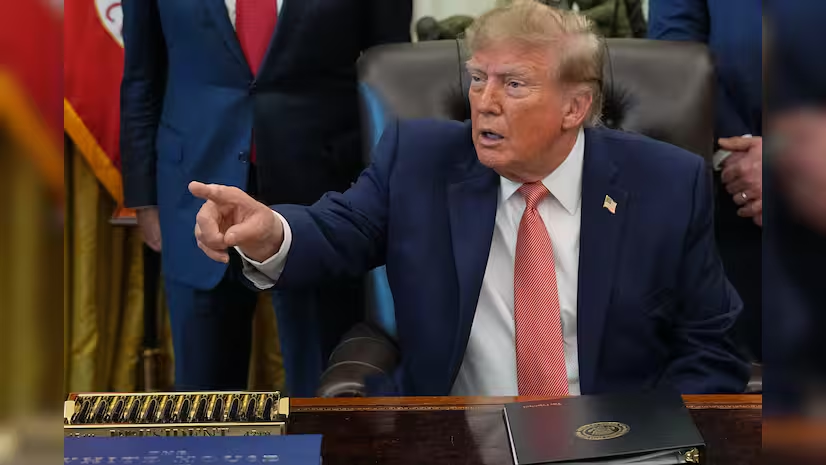
Can Lower Interest Rates Deliver 20% GDP Growth?
Trump's remarks raise a broader question about how much monetary policy can influence economic growth. Lower interest rates can encourage borrowing, investment and consumption, but they do not guarantee a specific GDP growth rate.
Sustained growth of 15%–20% would require much more than cheaper credit. Productivity gains, business investment, labour-force participation, consumer demand and the economy's capacity to expand would all matter. The administration has not provided an economic model or supporting projections showing how lower interest rates alone could deliver the growth figures Trump cited.
The comparison with India also involves two different measurements. India's 7% figure is a fiscal-year forecast, while the US BEA's 3.4% figure is an annualised quarterly growth estimate. They cover different periods and use different reporting conventions, so they should not be treated as directly equivalent.
Ultimately, the debate is not simply about whether interest rates should be lower. It is about whether cheaper borrowing can support stronger economic activity without allowing inflation to rise further. India's recent rate increase and the Fed's decision to hold rates while two members favoured a hike show why central banks must weigh both sides of that trade-off.
Sources
Mint – Trump cites India's growth and RBI rates to criticise the Fed:
https://www.livemint.com/news/world/india-is-growing-at-7-trump-uses-india-s-growth-rbi-rates-to-slam-fed-key-takeaways-from-press-briefing-11795228724838.html
Hindustan Times – Trump criticises the US Federal Reserve over interest rates:
https://www.hindustantimes.com/world-news/look-at-india-trump-slams-political-us-federal-reserve-over-high-interest-rates-101795224127441.html
US Bureau of Economic Analysis – Q3 2026 GDP Advance Estimate:
https://www.bea.gov/news/2026/gdp-advance-estimate-3rd-quarter-2026
Reuters – Moody's raises India's FY2027 growth forecast to 7%:
https://www.reuters.com/world/india/moodys-lifts-india-growth-forecast-sees-economy-well-positioned-sustain-near-7-2026-11-11/
Ministry of Statistics and Programme Implementation – October 2026 CPI release:
https://www.pib.gov.in/PressReleseDetailm.aspx?PRID=2335416&lang=1®=1
Federal Reserve – October 28, 2026 FOMC statement:
https://www.federalreserve.gov/newsevents/pressreleases/monetary20261028a.htm

Tushar Shrivas
B.Tech CS@ Shri Balaji Institute of Technology & Management
I write at Metaplugs — breaking down the latest in tech, economics, and business into simple, impactful stories for everyday readers. Passionate about software testing and global finance.