Autonomous military drones
Autonomous
military drones are reshaping modern warfare by operating without direct human
control, making split-second decisions on the battlefield. This technology matters
to defense professionals, policy makers, military analysts, and anyone
interested in how artificial intelligence is changing combat operations.
Military
forces worldwide are rapidly deploying these unmanned systems because they can
perform dangerous missions without risking human lives. The drones use advanced
sensors, machine learning, and GPS guidance to identify targets and navigate
complex environments on their own.
We'll explore the
current technical capabilities that make these systems so effective and examine
the serious ethical questions about machines making life-or-death decisions.
You'll also learn about the security vulnerabilities that could allow hackers
to hijack these powerful weapons systems.
Current State of Military Drone Technology
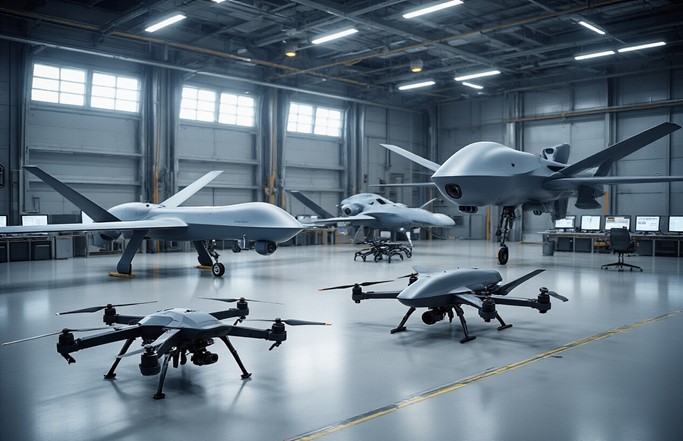
Levels of automation in modern military
drones
Military drones
today operate across a spectrum of automation levels, from basic
remote-controlled systems to sophisticated autonomous platforms capable of
independent decision-making. The most fundamental level involves human-in-the-loop
systems, where operators maintain direct control over all critical functions,
including target identification, engagement decisions, and flight path
adjustments.
These systems represent
the majority of current military drone operations, with platforms like the MQ-9
Reaper requiring constant human oversight for mission-critical tasks.
Semi-autonomous
systems mark the next evolutionary step, incorporating artificial intelligence
algorithms that can handle routine tasks like navigation, obstacle avoidance,
and pattern recognition while reserving lethal decisions for human operators. These
drones can automatically adjust flight paths, maintain formation with other
aircraft, and identify potential targets for human review. The Israeli Iron
Dome system exemplifies this approach, automatically detecting and intercepting
incoming projectiles while operating under predefined engagement rules.
Fully
autonomous military drones represent the cutting edge of current technology,
capable of completing entire missions without human intervention once
programmed. These systems integrate advanced machine learning, computer vision,
and decision-making algorithms that can adapt to changing battlefield conditions.
Countries like Turkey, China, and Israel have deployed such systems in limited
operational contexts, demonstrating capabilities that include autonomous target
acquisition, engagement, and mission completion.
The transition between these levels often occurs dynamically during operations, with drones shifting from autonomous navigation to human-controlled engagement modes based on mission requirements and threat assessments. This flexible automation allows military forces to leverage machine efficiency for routine tasks while maintaining human judgment for complex ethical and tactical decisions.
Key manufacturers and their
autonomous capabilities
General Atomics
leads the Western market with their MQ-9 Reaper series, which incorporates
increasingly sophisticated autonomous flight systems and sensor fusion capabilities.
Their latest variants can perform autonomous takeoff and landing, navigate
complex airspace independently, and coordinate with multiple platforms
simultaneously. The company's development roadmap focuses on enhancing AI-
driven target recognition and reducing operator workload through automated
mission planning.
Turkey's
Baykar Technologies has emerged as a significant player with their TB2 and
Akinci drone families, featuring advanced autonomous capabilities that have
proven effective in recent conflicts. These platforms demonstrate impressive
autonomous navigation, target tracking, and swarm coordination capabilities. Baykar's
systems can operate in contested electromagnetic environments and maintain
mission effectiveness even when communication links are disrupted.
Chinese
manufacturers, particularly China Aerospace Science and Technology Corporation
(CASC), have developed the Wing Loong and CH series drones with sophisticated autonomous
features. These platforms integrate domestically produced AI chips and
demonstrate advanced machine learning capabilities for target identification
and threat assessment. Chinese systems emphasize autonomous swarm coordination
and have showcased the ability to operate multiple drones from a single control
station.
Israeli
companies like Israel Aerospace Industries and Elbit Systems continue pushing
autonomous boundaries with platforms like the Harop and Harpy series. These
"loitering munitions" operate with near-complete autonomy, capable of
searching for, identifying, and engaging targets without human intervention
once launched. Israeli systems excel in miniaturization and can pack
sophisticated autonomous capabilities into relatively small platforms.
Operational deployment statistics worldwide
Current global
military drone inventories reflect the rapid expansion of autonomous
capabilities across multiple regions. The United States maintains the largest
operational fleet with over 11,000 military drones of various sizes and capabilities,
including approximately 300 large unmanned aerial vehicles like the MQ-9 Reaper
and MQ-1 Predator series. American forces have logged over 7 million flight
hours with unmanned systems since
2001, with autonomous functions handling an estimated 60% of routine flight
operations.
Turkey operates
one of the most active drone programs globally, with over 400 combat-capable
autonomous drones deployed across multiple theaters. Turkish forces have conducted
more than 15,000 autonomous drone missions since 2016, with platforms spending
an average of 12 hours per mission operating independently. The Turkish model
demonstrates how mid-tier military powers can leverage autonomous technology to
project force effectively.
China's
People's Liberation Army operates an estimated 2,000+ military drones across
all service branches, with autonomous capabilities integrated into
approximately 40% of their fleet. Chinese autonomous drone operations have increased
by 300% since 2019, with platforms regularly patrolling disputed territories
and conducting surveillance missions with minimal human oversight.
Israel maintains
approximately 1,000 military drones with varying degrees of autonomous
capability, representing one of the highest drone-to-personnel ratios globally.
Israeli autonomous systems have conducted over 8,000 operational missions, with
success rates exceeding 95% for autonomous navigation and target identification
tasks.
Technical Capabilities and Advantages
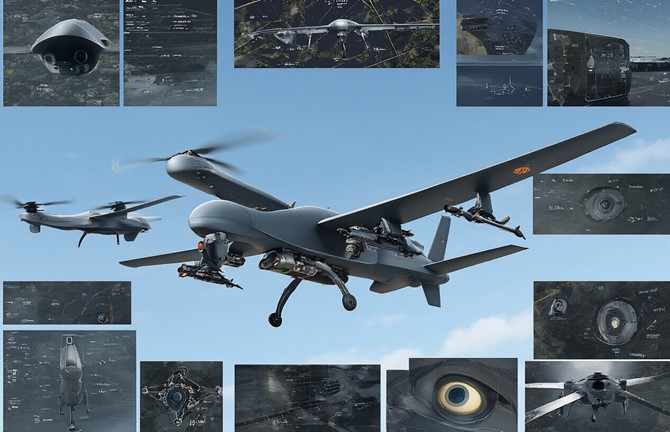
Advanced
AI-powered target recognition systems
Modern autonomous
military drones incorporate sophisticated artificial intelligence algorithms
that can identify and classify targets with remarkable accuracy. These systems
use computer vision, machine learning, and neural networks to analyze visual
data from multiple sensors, including high-resolution cameras, thermal imaging,
and radar systems. The AI processes this information in real-time, comparing
detected objects against extensive databases of military assets, vehicles,
personnel, and infrastructure.
The target recognition
capabilities extend beyond simple object identification. Advanced systems can
distinguish between military and civilian targets, assess threat levels, and
even predict enemy movements based on behavioral patterns. Machine learning
algorithms continuously improve their accuracy by analyzing previous missions
and incorporating feedback from successful operations.
These AI systems can operate
effectively in challenging environments where human operators might struggle. They
maintain consistent performance in low-light conditions, adverse weather, and high-stress
combat situations where human decision-making might be compromised by fatigue
or emotional factors.
Real-time decision
making without human intervention
Autonomous drones
possess the capability to make split-second tactical decisions without waiting
for human authorization. This autonomous decision-making process relies on
pre-programmed rules of engagement, threat assessment algorithms, and priority-based
target selection protocols. The systems can evaluate multiple factors
simultaneously, including target value, collateral damage risk, mission
objectives, and threat immediacy.
The decision-making architecture typically
follows a hierarchical structure where the most critical threats receive
immediate attention. When multiple targets are present, the system can
prioritize based on strategic importance, proximity to friendly forces, or
potential for causing maximum impact on enemy operations.
These systems can adapt their decision-making
parameters based on changing battlefield conditions. If communication links are
severed or jamming occurs, the drones continue operating according to their
programmed mission parameters while making tactical adjustments as situations
evolve.
Enhanced mission efficiency and reduced response times
Autonomous
military drones dramatically reduce the time between target identification and
engagement. Traditional human-operated systems require communication delays, human
analysis time, and command authorization processes that can take several
minutes. Autonomous systems compress this timeline to seconds or milliseconds.
The
efficiency gains extend to mission planning and execution. These drones can
simultaneously monitor multiple areas, track numerous targets, and coordinate with
other autonomous units to optimize mission outcomes. They don't require rest periods,
shift changes, or breaks that human operators need, allowing for continuous
operations over extended periods.
Fuel efficiency
also improves as autonomous systems can optimize flight paths, altitude
changes, and operational patterns without the inefficiencies that sometimes occur
with human pilots. They can loiter in designated areas for extended periods
while consuming minimal resources, activating full capabilities only when
targets are detected.
Improved precision
and reduced collateral damage potential
The
precision capabilities of autonomous military drones represent a significant advancement
over conventional weapons systems. Advanced targeting algorithms can calculate optimal
engagement angles, weapon selection, and timing to minimize unintended damage to
nearby structures or non- combatants.
These systems
integrate multiple data sources to create comprehensive situational awareness
before engaging targets. They can assess building materials, structural weak
points, and blast patterns to predict and minimize collateral damage. The AI can
even delay engagement if civilians enter the target area, waiting for optimal
conditions that ensure mission success while protecting innocent lives.
Weapon delivery
systems on autonomous drones can adjust explosive yields, projectile types, and
impact points with unprecedented precision. Some advanced systems can even
abort missions milliseconds before impact if conditions change unexpectedly,
providing a level of adaptability that surpasses traditional weapons systems.
Ethical and Legal Implications

International Humanitarian Law Considerations
The rise of
autonomous military drones creates a complex web of legal challenges that
existing international humanitarian law struggles to address. The Geneva Conventions
and their Additional Protocols, which form the backbone of warfare regulations,
were designed for human combatants making split-second decisions on
battlefields, not for machines operating with pre-programmed algorithms.
The principle
of distinction stands as one of the most critical concerns. This fundamental
rule requires combatants to differentiate between military targets and
civilians at all times. While human soldiers can process contextual cues,
cultural nuances, and unexpected situations that might indicate civilian
status, autonomous systems rely on sensor data and pattern recognition that may
fail in complex environments. A person carrying what appears to be a weapon might
actually be a farmer with tools, or a civilian forced to carry supplies under
duress.
Proportionality
presents another significant hurdle. Military forces must ensure that
anticipated civilian harm doesn't exceed the expected military advantage gained
from an attack. This calculation requires nuanced judgment about immediate and long-term
consequences that current AI systems cannot reliably perform. The destruction
of a bridge, for example, might provide tactical advantage but could cut off
medical supplies to civilian populations for months.
The precautionary principle demands that all feasible steps be taken to minimize civilian casualties. Human commanders can call off strikes when circumstances change, redirect missions based on new intelligence, or choose alternative weapons when civilian risk becomes apparent. Autonomous systems, once deployed, operate within the parameters of their programming and may lack the flexibility to adapt to rapidly evolving situations.
Accountability Challenges in Autonomous Weapons Systems
Determining
responsibility when autonomous weapons cause unintended casualties or violate
international law creates unprecedented legal puzzles. Traditional military
accountability structures assume human decision-makers who can be held responsible
for their actions, but autonomous systems blur these lines of responsibility
across multiple parties.
The chain of accountability spans
from programmers and engineers who design the systems, to military commanders who
deploy them, to political leaders who authorize their use. When an autonomous drone
strikes the wrong target, identifying the responsible party becomes
exceptionally difficult. Was it a programming error, faulty intelligence,
equipment malfunction, or inadequate human oversight?
Military
commanders face particular challenges in maintaining meaningful human control
over autonomous weapons. Current military doctrine requires commanders to understand
the capabilities and limitations of their weapons systems, but the complexity
of AI decision-making processes often makes this impossible. Machine learning
algorithms can evolve their behavior in ways that even their creators cannot
fully predict or explain.
Legal systems
worldwide lack established frameworks for prosecuting crimes committed by
autonomous systems. Traditional war crimes tribunals focus on individual culpability,
but autonomous weapons create situations where no single person may have
sufficient control over the weapon's actions to bear full responsibility. This
accountability gap could potentially shield war criminals from prosecution
while leaving victims without legal recourse.
The insurance
and compensation models for civilian casualties also require complete
restructuring. Current systems assume human error or intentional wrongdoing, but
autonomous weapons introduce new categories of harm that don't fit existing
legal frameworks.
Moral Responsibility
for Machine-Made Lethal Decisions
The delegation of
life-and-death decisions to machines raises profound moral questions that
extend beyond legal compliance into the realm of human dignity and the value of
life. Many ethicists argue that taking a human life requires human moral agency
and conscious deliberation that machines fundamentally cannot provide.
The concept of
meaningful human control becomes central to these discussions. This principle suggests
that humans must retain sufficient oversight and decision-making authority to ensure
moral responsibility for lethal actions. However, the speed and complexity of
modern warfare increasingly push human operators out of the decision loop,
creating situations where human oversight becomes nominal rather than
meaningful.
Cultural and religious perspectives on the sanctity
of life often
conflict with the mechanization of
killing.
Many
belief systems hold that decisions about life and death require souls, consciousness,
or divine guidance that artificial systems inherently lack. The reduction of human
existence to data points and algorithmic calculations strikes many as
fundamentally dehumanizing.
The psychology
of warfare also changes dramatically when lethal decisions become automated.
Human soldiers carry the moral weight of their actions, which serves as a
natural constraint on excessive violence. Autonomous systems eliminate this psychological
burden, potentially lowering the threshold for initiating conflicts and
escalating violence.
Risk assessment becomes purely
mathematical in autonomous systems, potentially missing the moral dimensions
that human judgment provides. A machine might calculate that destroying a
building with a high probability of containing enemy combatants is tactically sound,
even if children's voices were heard nearby moments before the strike. Human
operators might pause to investigate or choose alternative approaches based on
moral intuition that algorithms cannot replicate.
The slippery slope
toward fully automated warfare concerns many ethicists who worry about a future
where human moral agency becomes completely divorced from the conduct of war.
Global Military Adoption Trends
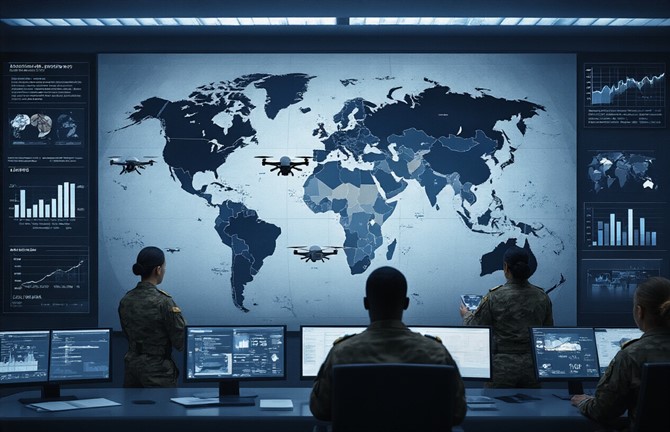
Leading nations investing in autonomous drone programs
The United States continues
to dominate autonomous military drone development through programs like the
Defense Advanced Research Projects Agency's (DARPA) Gremlins project and the
Navy's Loyal Wingman initiative. American defense contractors including General
Atomics, Boeing, and Lockheed Martin are pushing boundaries with AI-powered
systems that can operate independently for extended periods. The Pentagon
allocated $3.7 billion specifically for unmanned systems in 2023, with
autonomous capabilities receiving the largest share.
China has emerged as a formidable
competitor, showcasing swarm drone technology and autonomous aerial vehicles
during military demonstrations. Their CH-7 Rainbow drone represents significant
advancement in stealth autonomous platforms, while companies like DJI have transitioned
civilian drone expertise into military applications. Chinese investment in
autonomous military systems reportedly exceeded $2 billion in 2022.
Israel
maintains its position as an innovation leader despite its smaller size, with
companies like Elbit Systems and Israel Aerospace Industries developing
cutting-edge autonomous platforms. Their experience in real-world combat
scenarios gives them unique insights into practical autonomous drone
deployment. European nations including the United Kingdom, France, and Germany are
collaborating on the Future Combat Air System, which includes autonomous drone
components designed to work alongside manned aircraft.
Russia has
accelerated its autonomous drone programs following recent military conflicts,
while countries like Turkey, Iran, and India are developing indigenous
capabilities to reduce dependence on foreign technology. South Korea and Japan are
also investing heavily in defensive autonomous systems.
Strategic advantages
driving rapid development
Autonomous drones
offer unprecedented tactical flexibility by operating in environments too
dangerous for human pilots. They can maintain persistent surveillance over
hostile territories for weeks without risking personnel, providing continuous
intelligence gathering that manned aircraft cannot match. These systems excel at
rapid response scenarios, launching within minutes of threat detection compared
to the hours required for traditional aircraft preparation.
The elimination of human pilot
limitations transforms operational possibilities. Autonomous drones can
withstand G-forces that would incapacitate human pilots, execute maneuvers
impossible for manned aircraft, and operate in chemical, biological, or radiation-contaminated
environments without concern for crew safety. They provide 24/7 availability
without pilot fatigue considerations, rotating crews, or rest requirements.
Swarm capabilities represent perhaps
the most significant strategic advantage. Coordinated autonomous drone swarms
can overwhelm enemy defenses through sheer numbers, with individual units
costing a fraction of traditional military aircraft. These swarms can adapt in
real-time to changing battlefield conditions, redistributing tasks automatically
when units are destroyed or compromised.
Speed of
decision-making gives autonomous systems crucial battlefield advantages.
AI-powered drones process threat information and respond in milliseconds, far faster
than human reaction times. This speed becomes critical in scenarios involving
hypersonic weapons or surprise attacks where human commanders lack time for
traditional decision-making processes.
Integration with existing defense infrastructure
Military
organizations worldwide are retrofitting current command and control systems to
accommodate autonomous drone operations. NATO has established standardized
communication protocols allowing autonomous drones from different member
nations to share information seamlessly during joint operations. The Alliance Ground
Surveillance system now incorporates autonomous drone feeds directly into
existing intelligence networks.
Modern military bases are installing
automated drone maintenance facilities, reducing human technician requirements
while increasing operational readiness. These facilities can diagnose problems,
perform routine maintenance, and prepare drones for missions without human intervention.
The U.S. Air Force's Ghost Works program demonstrates how autonomous maintenance
systems can service multiple drone types simultaneously.
Existing
radar and air traffic control systems receive upgrades to track and coordinate
autonomous drone movements safely. Military air space management systems now
include algorithms that prevent collisions between autonomous and manned aircraft
while optimizing flight paths for mission efficiency.
Combat management
systems integrate autonomous drone capabilities into traditional military
hierarchies. Commanders can assign missions to autonomous units using familiar interfaces,
while AI systems translate high-level objectives into specific flight plans and
tactical decisions.
Cost-effectiveness
compared to traditional military assets
Autonomous drones deliver
remarkable cost savings compared to manned military aircraft. An advanced
autonomous drone costs approximately $3-15 million versus $80-100 million for
modern fighter jets.
Operating costs favor
drones even more dramatically, with no requirements for pilot training, life support
systems, or ejection seats that add millions to aircraft expenses.
Training pilots for
advanced fighter aircraft requires 5-10 years and costs $2-5 million per pilot.
Autonomous drones eliminate these training costs entirely while providing
consistent performance without skill degradation over time. Maintenance costs drop
significantly due to simpler systems design and absence of life support
equipment.
Personnel costs
represent massive savings opportunities. Traditional military aircraft require teams
of pilots, navigators, weapons officers, and support crews. Autonomous drones
operate with minimal human oversight, allowing military organizations to redeploy
personnel to other critical roles or reduce overall staffing requirements.
Operational availability increases substantially while costs decrease. Autonomous drones can fly continuously for days or weeks, limited only by fuel and mechanical reliability. Traditional aircraft require crew rest, limiting operational tempo and requiring larger fleets to maintain continuous coverage.
Insurance and replacement
costs also favor autonomous systems, as their lower unit costs make losses more
acceptable during high-risk missions.
Security Risks and Vulnerabilities
Cybersecurity threats and hacking possibilities
Military drones create
massive digital attack surfaces that adversaries can exploit through sophisticated
cyber warfare techniques. Unlike traditional weapons systems with limited
connectivity, autonomous drones rely heavily on wireless communications, GPS
navigation, and complex software architectures that hackers can potentially
penetrate.
Nation-state
actors and advanced persistent threat groups actively target drone
communication protocols, seeking to intercept command signals or inject malicious
code into flight control systems. These attacks can manifest through several
vectors:
 Signal
jamming and spoofing: Attackers can overwhelm drone communication
frequencies or create false GPS signals, causing navigation errors or complete
loss of control
Signal
jamming and spoofing: Attackers can overwhelm drone communication
frequencies or create false GPS signals, causing navigation errors or complete
loss of control
Man-in-the-middle
attacks: Intercepting data streams between drones and command centers allows
hackers to steal sensitive intelligence or insert fraudulent commands
 Firmware
exploitation: Vulnerabilities in drone operating systems can provide backdoor
access for remote takeover operations
Firmware
exploitation: Vulnerabilities in drone operating systems can provide backdoor
access for remote takeover operations
Supply chain compromises: Malicious components introduced
during manufacturing can create persistent security weaknesses
The interconnected
nature of modern military networks amplifies these risks significantly. A
single compromised drone can potentially serve as an entry point into broader defense
systems, creating cascading security failures across multiple platforms and
installations.
Potential for autonomous systems to be compromised
Autonomous decision-making
algorithms present unique vulnerabilities that traditional remote-controlled
systems don't face. Machine learning models powering these systems can be
manipulated through adversarial attacks that exploit how artificial
intelligence processes information.
Attackers can feed
carefully crafted inputs designed to fool neural networks into making incorrect
classifications or decisions. For example, subtle modifications to visual data might
cause a drone to misidentify friendly forces as enemy targets, or fail to
recognize legitimate threats entirely. These "adversarial examples"
can be nearly invisible to human observers while completely deceiving AI systems.
The black box
nature of many machine learning algorithms makes detecting such compromises
extremely difficult. Military operators may not realize their autonomous systems
have been corrupted until critical failures occur in combat situations.
Additionally,
the vast amounts of training data required for autonomous systems create opportunities
for data poisoning attacks. Adversaries who can influence training datasets
during development phases might embed subtle biases or backdoors that only
activate under specific conditions, making detection nearly impossible during
normal testing procedures.
Unintended
escalation scenarios
in conflict zones
Autonomous weapons systems
operating in complex battlefield environments face significant challenges
distinguishing between legitimate military targets and protected persons or
facilities. Programming errors, sensor malfunctions, or unexpected
environmental conditions can trigger unintended engagements that rapidly
escalate conflicts beyond original parameters.
Consider scenarios
where multiple nations deploy autonomous systems in contested areas. Without
direct human oversight, these systems might interpret defensive maneuvers as
aggressive actions,
creating feedback
loops of automated responses that quickly spiral out of control. Each system's
programmed rules of engagement could interact unpredictably with others, producing
outcomes no single operator intended or anticipated.
Communication
failures between allied autonomous systems pose additional risks. If friendly
units cannot properly identify each other due to technical malfunctions or enemy
interference, blue-on-blue incidents become increasingly likely. The speed of
autonomous decision-making leaves little time for human intervention once such
scenarios begin unfolding.
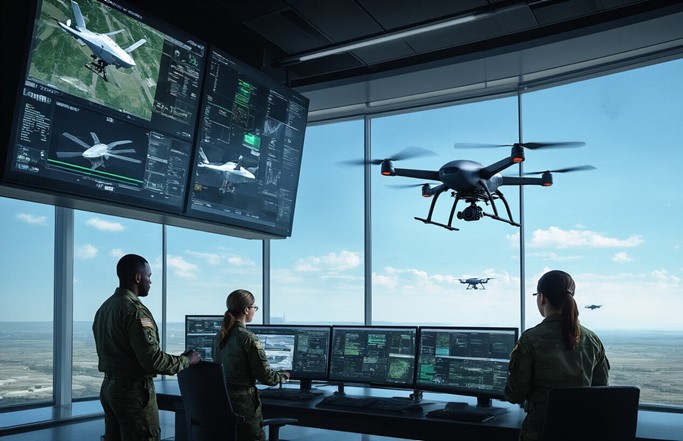
Autonomous military
drones represent a significant leap forward in defense technology, offering
enhanced precision, reduced human risk, and strategic advantages that traditional
warfare methods can't match. The rapid adoption by militaries worldwide shows
these systems are becoming essential tools for modern defense strategies.
However, their technical capabilities come with serious ethical questions about
automated decision-making in life-or-death situations and complex legal
challenges around accountability when machines make critical choices.
The security risks and vulnerabilities
of these systems can't be ignored either. As nations rush to deploy autonomous
drone technology, establishing clear international guidelines and robust
cybersecurity
measures becomes
urgent. The future of military drones will depend on finding the right balance between leveraging their tactical
advantages and addressing the moral, legal, and security concerns they raise. Military leaders, policymakers,
and technologists must work together to ensure these powerful tools serve
humanity's best interests while minimizing potential harm.
1. Autonomous military drones can react faster
than humans
AI-driven
drones can analyze threats and respond within milliseconds. This speed is
critical in missile defense and high-speed combat scenarios where human
reaction time is too slow.
2. Some autonomous drones can operate without
GPS
Advanced
drones use visual navigation, terrain mapping, and inertial sensors. Even if
GPS is jammed or spoofed, they can continue their missions, making them
effective in electronic warfare environments.
3. Drone swarms do not depend on a single
controller
Autonomous
drone swarms work on decentralized intelligence. If one or more drones are
destroyed, the remaining units automatically reorganize and continue the
mission without human input.
4. Autonomous drones can abort an attack at
the last moment
Modern
systems can cancel a strike seconds before impact if civilians enter the target
area or if conditions change unexpectedly. This level of precision is difficult
to achieve with traditional weapons.
5. Training a fighter pilot can cost more than
deploying autonomous drones
Training
a single fighter pilot takes years and costs millions of dollars. Autonomous
drones eliminate pilot training, fatigue, and life-support requirements, making
them more cost-effective over time.
6. AI pilots have more “flight experience” than humans
Autonomous
systems are trained on millions of simulated and real flight hours. This gives
AI-based drones more operational experience than any individual human pilot
could ever accumulate.