Back to News
News AlertWorld Money
Brent Hits $114 on Houthi Attacks: Highest Since May 4
T
Author
Tushar Shrivas
Published
October 23, 2026
Reading Time
5 MIN READ
Spread the Word
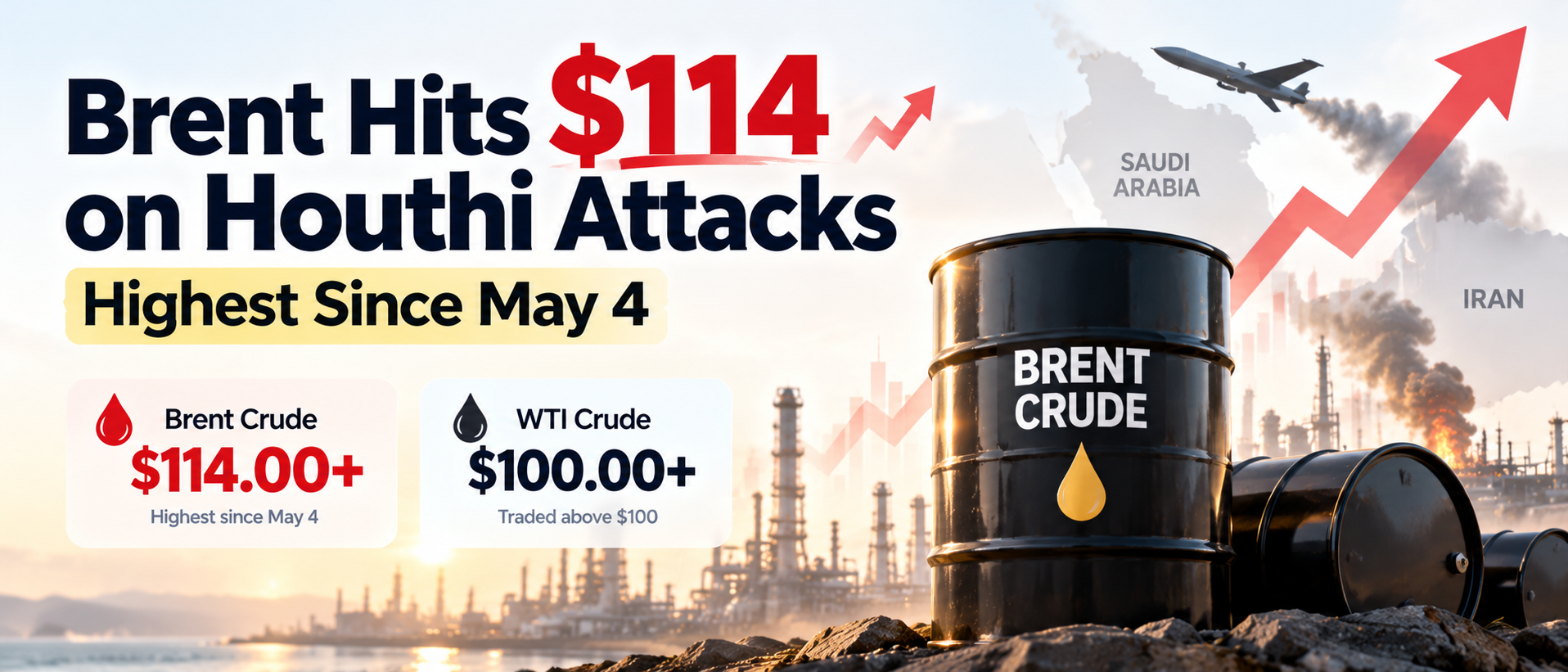
Brent crude touched $115 on October 23, 2026, its highest since May 4, as Houthi strikes on Saudi Arabia and Iran threats lifted supply risk.
Brent oil October 23 2026, Houthi Saudi Arabia attacks oil, Aramco Dhahran evacuation, Iran Gulf energy threat, oil highest since May, WTI $100 October 2026, oil inflation Fed October meeting
Brent Crude Hits $114 as Houthi Attacks on Saudi Arabia Revive Oil's Inflation Threat
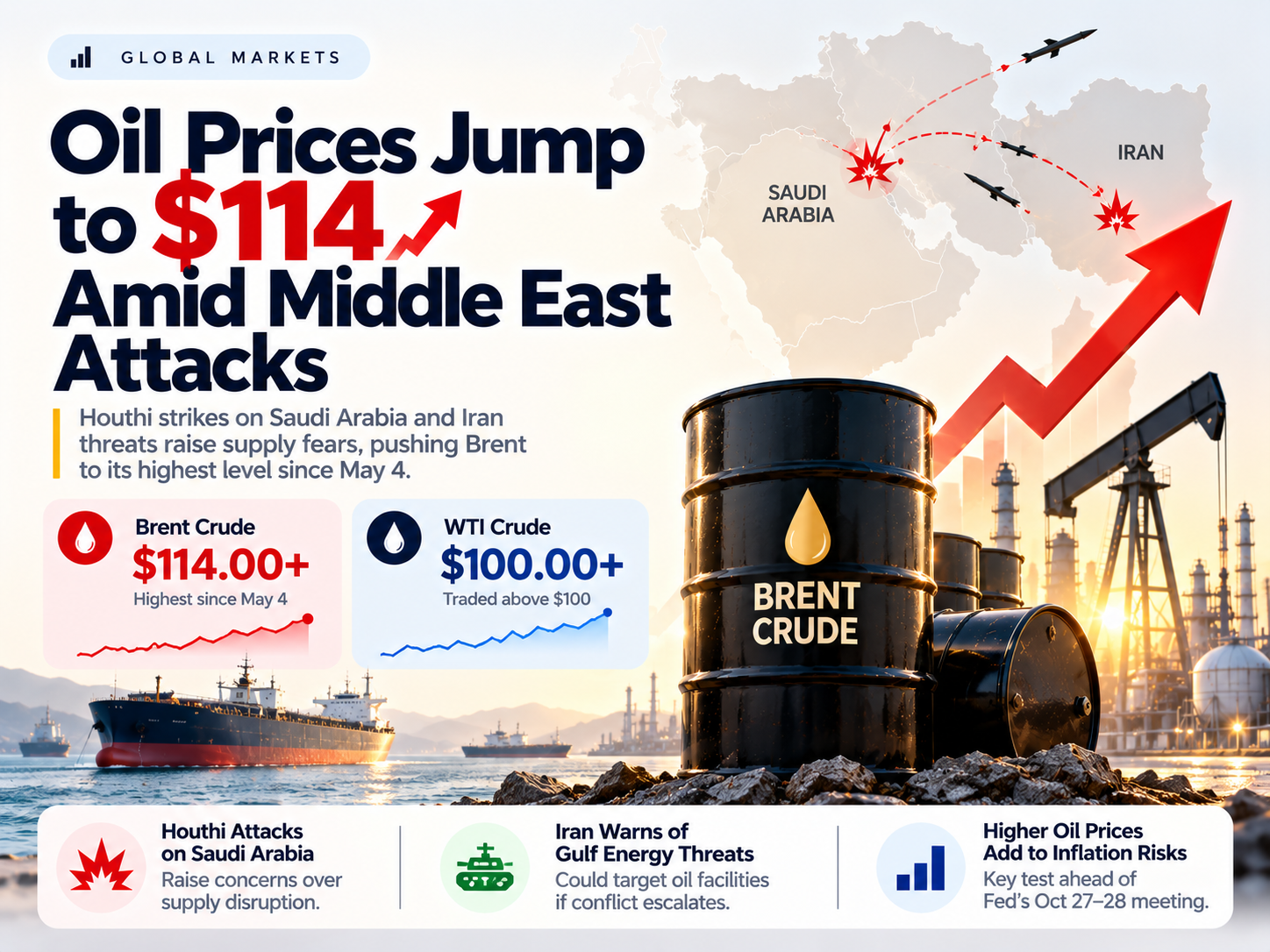
Brent crude traded above $114 a barrel on Friday, October 23, 2026, reaching a high of $115.16 earlier in the session, its highest level since May 4. The contract was on track for a 4.4% weekly gain, its third straight weekly rise. US crude (WTI) traded above $100, though it was set to finish slightly lower on the week.
The brief described this as a "record" or a rate-cut challenge. The more accurate framing is that it is the highest level since early May, not a record. Analysts quoted in the reporting flagged that sustained oil-price increases "could complicate inflation control," with the Federal Reserve's October 27–28 meeting seen as the key test. That is an inflation risk, which points toward keeping policy tighter for longer rather than being a direct threat to planned cuts. Rigzone
What Pushed Prices Up
The most direct driver was the Houthi campaign against Saudi Arabia. Reuters reported that attacks on the kingdom stoked concern about further disruption to supply from the Middle East, and that Saudi Aramco ordered the evacuation of its headquarters in Dhahran on Thursday as fighting intensified. Brent was trading near $115 on that report. HuffPost (Reuters)
Iran added to the risk premium. Tehran warned it could target oil facilities, undersea cables, data centres and artificial intelligence infrastructure across the Gulf if the United States and Israel launched another attack. Reports that Washington could resume strikes on Iran reinforced that concern.
The Move Built Over Two Sessions
Brent had already climbed on Thursday, settling at $113.17, up about 4% and its highest close since May 4. On Friday morning it touched $114.47 at 06:39 GMT, with WTI at $100.84, carrying the benchmark through $114 for the first time since May. Profile News
Thursday's session had itself followed a rise of more than 3% that crossed $112, according to IranWire's coverage. Reuters put Friday's gain on track for a third straight weekly rise, which is why the move reads as a trend rather than a single headline. IranWire
The Human Cost at the Pump Is Lagging
US retail fuel prices have eased from a month ago but remain well above a year earlier, according to AAA. The gap means consumers are still absorbing the earlier spike even as crude climbs again, and any new rise in wholesale costs would reach pumps with a lag. NewsBytes
Trading Economics described escalating Houthi attacks on Saudi targets alongside reports of possible renewed US strikes on Iran, which together raised supply risks in the region. Trading Economics
What the Brief Could Not Confirm
The brief named FTSE energy majors soaring, Ukrainian strikes on refining infrastructure as a driver of this specific move, and a Persian Gulf shipping drone campaign. I found no source on Friday's session confirming the FTSE claim, and the Ukrainian strikes are not cited among the drivers in the reporting I reviewed for October 23. Shipping-corridor attacks are reported in earlier coverage this month, but the specific Friday attribution is the Houthi and Iran story.
The brief's "Daily Tech & Money Impact" lines on freight surcharges and algorithmic FX clearing are analysis, not reported facts, so I have not included them as findings.
FAQ
Is $114 a record for Brent?
No. Reporting calls it the highest level since May 4, 2026, when Brent settled at $114.44. Some headlines call it a record, which the reporting does not support.
What drove the move?
Houthi attacks on Saudi Arabia, including pressure around Saudi Aramco's Dhahran headquarters, plus Iranian warnings about Gulf infrastructure and reports of possible renewed US strikes on Iran.
Does this affect central bank rate decisions?
The reporting frames the risk as inflation-related. Analysts said sustained oil increases could complicate inflation control, with the Fed's October 27–28 meeting as the next test. That points to a tighter-for-longer risk rather than a direct threat to rate cuts that had been planned.
How high did WTI go?
WTI traded above $100, reaching about $100.84 early Friday, though it was set to finish slightly lower on the week.
Is the price likely to hold?
Uncertain. Reporting describes the move as driven by supply risk, not a confirmed loss of barrels. Any easing in Houthi or Iran tensions would likely pull the premium back down.

Tushar Shrivas
B.Tech CS@ Shri Balaji Institute of Technology & Management
I write at Metaplugs — breaking down the latest in tech, economics, and business into simple, impactful stories for everyday readers. Passionate about software testing and global finance.