Back to News
News AlertWorld of Startup’s
Upwind Raises $400M to Expand Cloud and AI Security
V
Author
Vicky Galfat
Published
October 30, 2026
Reading Time
6 MIN READ
Spread the Word

Meta Description: Upwind raises $400M in Series C funding led by Bessemer Venture Partners to expand its cloud security platform and AI protection capabilities.
What Happened?
What Happened?
Cloud and AI security startup Upwind announced a $400 million Series C funding round on October 28, 2026, led by Bessemer Venture Partners. The investment includes participation from existing backers such as Greylock Partners, Cyberstarts, Craft Ventures, Salesforce Ventures, TCV and other investors. Canapi Ventures joined as a new investor. The funding is intended to accelerate product development and engineering as Upwind expands its cloud and AI security platform. Upwind's official funding announcement
According to Reuters, the financing values Upwind at approximately $3.8 billion. The latest round comes less than nine months after the company announced its $250 million Series B in January 2026. Upwind says the new financing takes its total funding to more than $800 million since its founding in 2022. Reuters
The investment arrives as enterprises increasingly deploy AI applications, automated agents and cloud-based services. These systems introduce additional security considerations involving identities, permissions, sensitive data and communication between applications. Upwind is positioning its platform around this expanding security environment, combining traditional cloud protection with tools designed to identify and monitor AI workloads. Upwind AI Security Platform
What Does the Source Say?
The official announcement, published by Upwind CEO Amiram Shachar, confirms that Bessemer Venture Partners led the $400 million round. Existing investors returned, including Greylock Partners, Cyberstarts, Craft, Salesforce Ventures, Alta Park, Picture Capital, Swish Ventures, Cerca Partners, TCV, Penny Jar and Leaders Fund. Canapi Ventures joined the investor group for the first time in this round. Upwind's official Series C announcement
The company plans to use the new capital to expand its product and engineering operations. Its announcement specifically highlights AI sensors for endpoints, scanners for AI agents and their skills, and improvements to its infrastructure inventory system. The broader objective is to extend security coverage from endpoints and application code to cloud infrastructure, data and AI-powered systems. Upwind's announcement
What Is Still Unknown?
Although the $400 million funding announcement is confirmed, several financial details remain undisclosed in the official announcement. Upwind has not provided a detailed breakdown of the allocation between research, engineering, product expansion and sales operations. Reuters reports a $3.8 billion valuation, but the company's announcement does not specify the valuation or publish the complete financing terms. Reuters
The financial performance behind the fundraising also requires more transparency. The public funding announcement does not provide audited revenue, operating margins, customer acquisition costs or profitability figures. These metrics would help investors and customers understand whether the company's expansion is supported by sustainable business performance. Upwind's funding announcement
There are also questions around the practical effectiveness of AI-powered security agents. The company describes what its Blue, Red and Green agents are designed to accomplish, but the announcement does not include independent testing, comparative detection rates or detailed false-positive measurements. Their effectiveness across complex enterprise environments will need to be evaluated through documented customer deployments and independent technical assessments. Upwind AI Security Platform
Why Does It Matter?
The funding highlights the increasing importance of protecting infrastructure that supports AI applications. Enterprise AI systems can interact with cloud services, APIs, databases, identities and external tools. AI agents may also perform actions using permissions and credentials, creating additional security risks when access is excessive or activity is not properly monitored. This makes visibility into both the infrastructure and the behaviour of AI systems increasingly important. Upwind CNAPP Documentation
For cybersecurity teams, combining runtime intelligence with AI security monitoring could improve how vulnerabilities and suspicious activity are prioritized. Instead of treating every detected configuration issue as equally urgent, security tools can use information about running workloads, application relationships and resource access to establish which exposures deserve attention. The effectiveness of this approach depends on the accuracy, coverage and quality of the collected security data. Upwind Cloud Security Documentation
The size of the investment is also relevant to the cybersecurity startup ecosystem. A $400 million financing led by Bessemer Venture Partners, alongside participation from several existing investors, demonstrates substantial institutional backing for Upwind's expansion strategy. Its $3.8 billion reported valuation provides another indication of investor confidence in the company's position within cloud and AI security. However, one financing transaction does not independently establish the scale of demand across the entire cybersecurity market. Reuters
Our Analysis
Upwind's latest funding is significant not simply because of the amount raised, but because of the security problem the company is targeting. Cloud infrastructure is becoming increasingly interconnected with AI applications, automated agents, identities and data services. This creates an environment in which security teams need to understand not only what resources exist, but also how those resources behave during actual operations.
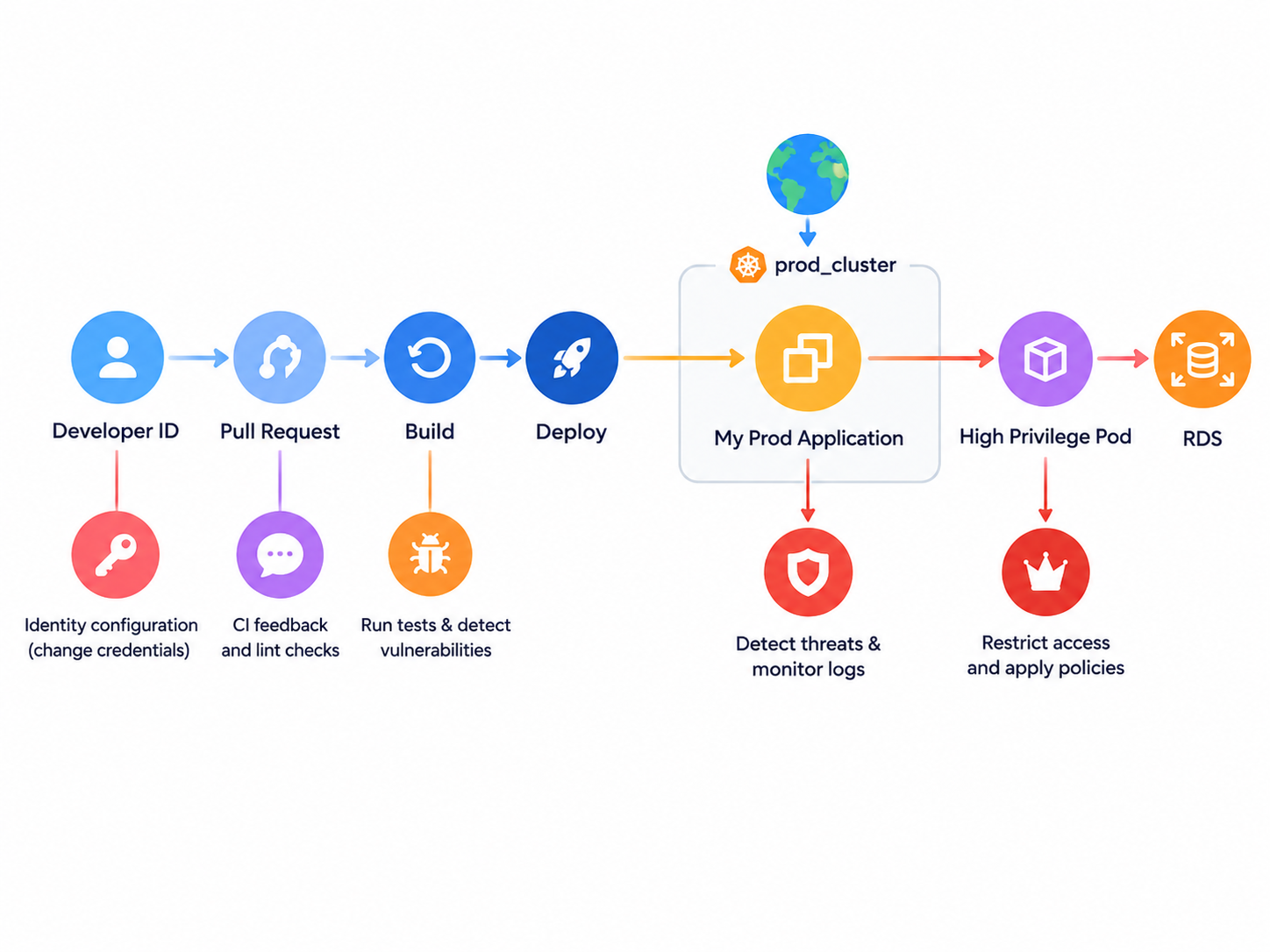
Upwind's runtime-focused architecture provides a technical foundation for this approach. Its sensors monitor activity within running workloads, while its broader platform connects that information with vulnerabilities, application relationships and security posture. Extending this model to AI inventory and agent monitoring is a logical product direction because AI systems can introduce new connections and permission pathways into existing enterprise environments. Upwind Sensor Architecture
However, the distinction between product ambition and proven effectiveness remains important. AI-powered security agents may help automate investigations, validate exposures and recommend remediation, but they also need reliable context, appropriate permissions and human oversight for sensitive actions. The funding announcement establishes that Upwind intends to invest in these capabilities; it does not independently prove that the agents outperform established security workflows.
The next challenge will be execution. Upwind will need to demonstrate that its expanded platform can provide consistent security coverage across cloud infrastructure, endpoints, AI applications and autonomous agents without introducing excessive operational complexity. Customer adoption, independently assessed detection performance, product reliability and sustainable financial growth will be important indicators to monitor.
The larger takeaway: Upwind's $400 million Series C reflects meaningful investor confidence in cloud and AI security as a business category. Its long-term significance will depend on whether the company can turn its runtime-security foundation and AI-focused roadmap into measurable improvements in enterprise security.
Sources and References
The Next Wave Is Here: Upwind's $400M Series C to Build The Cloud & AI Security Platform
Cloud Security Startup Upwind Raises $400 Million, Valued at $3.8 Billion
Upwind Sensors — Technical Documentation
https://docs.upwind.io/public/introduction/concepts/upwind-architecture/sensors
Upwind CNAPP — Cloud-Native Application Protection Platform
https://docs.upwind.io/public/introduction/concepts/upwind-cnapp
AI Security Platform
https://www.upwind.io/ai-security-platform
Building the Next Wave of Cloud Security
Upwind Secures $400 Million to Protect AI Across Endpoints, Code, and Cloud

Vicky Galfat
University of Mumbai/BCA
Learning, building, and exploring the world of technology one project at a time.