Back to News
News AlertWorld Unicorn
AI Infrastructure Unicorns: The $2.5 Trillion Race to Power Intelligence
V
Author
Vishal Sable
Published
April 8, 2026
Reading Time
14 MIN READ
Spread the Word
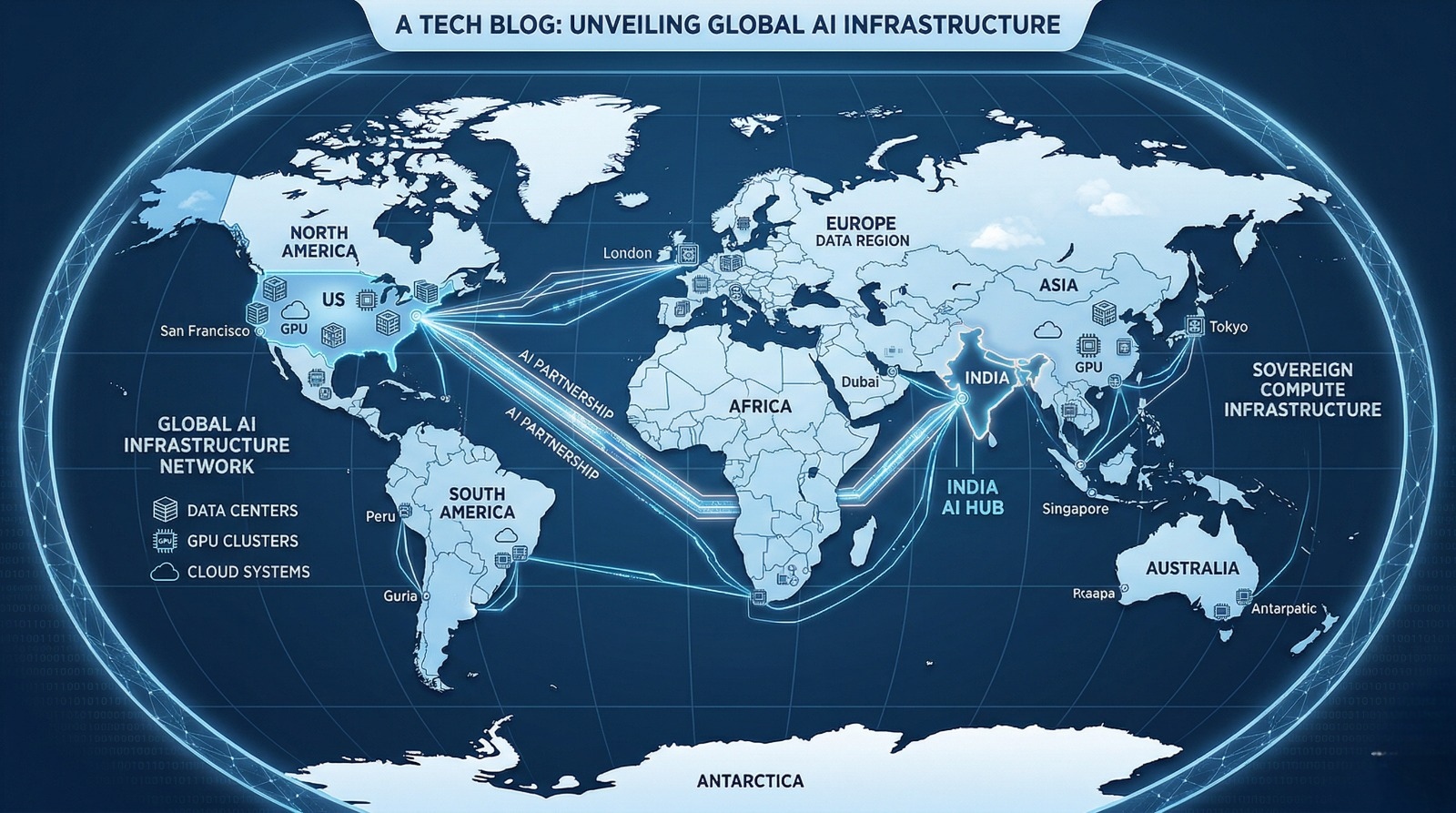
AI Unicorns 2026: $2.5Tn Market, OpenAI & Neysa Lead Neysa hits $1.4B unicorn status as OpenAI ($852B) and SpaceX ($800B) lead $2.5Tn AI infra boom. Inside the 2026 compute gold rush.Neysa hits $1.4B unicorn status as OpenAI ($852B) and SpaceX ($800B) lead $2.5Tn AI infra boom. Inside the 2026 compute gold rush.
The Pick-and-Shovel Phase of AI Has Arrived – and It’s Worth Trillions
For the past three years, the AI world has been obsessed with applications: chatbots, image generators, and code assistants. But in April 2026, the narrative has flipped. The real money is no longer in the models—it‘s in the infrastructure that runs them.
Welcome to the era of the AI infrastructure unicorn.
From Mumbai to San Francisco, a new class of billion‑dollar startups is emerging—not to build the next ChatGPT, but to provide the GPUs, cloud systems, and networking layers that make AI possible. And the valuations are staggering. The global AI infrastructure market is projected to grow from $75.4 billion in 2026 to nearly $500 billion by 2034, a 26.6% CAGR. By 2030, the AI chip market alone will approach $1 trillion.
This is the “pick‑and‑shovel” phase of the AI gold rush. And the picks are selling faster than the gold.
Neysa – India‘s $1.4 Billion Answer to Sovereign AI Compute
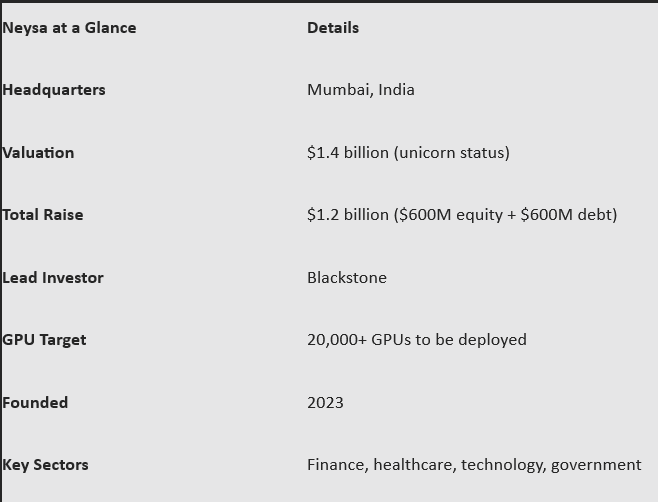
The most significant development this week comes from Mumbai. Neysa, an AI acceleration cloud platform, has officially entered the unicorn club with a $1.4 billion valuation following a landmark $1.2 billion funding round led by Blackstone.
But the numbers only tell half the story.
The Largest AI Infrastructure Raise in Indian History
The transaction comprises $600 million in equity, with the company planning to mobilize another $600 million through debt. The round ranks among the largest ever in India’s AI infrastructure landscape, with participation from Teachers‘ Venture Growth, TVS Capital, 360 ONE Assets, and existing investor Nexus Venture Partners.
The fresh capital will be directed toward expanding Neysa’s national AI compute backbone, including plans to deploy 20,000+ GPUs. This scale signals rising demand for sovereign, in‑country infrastructure as enterprises accelerate model training, fine‑tuning, and inference workloads.
Neysa‘s funding trajectory has been nothing short of explosive. It secured $20 million in seed capital in early 2024, followed by a $30 million Series A later that year. Its valuation has jumped from roughly $128 million at Series A to $1.4 billion today—a more than 10x increase in under two years.
Why This Matters: The “Sovereign Compute” Thesis
Neysa becomes the second unicorn of 2026, following Juspay, underlining investor appetite for platforms enabling AI readiness at scale. Its positioning around sovereign compute and data assurance closely aligns with the ambitions of the IndiaAI Mission.
The message for global investors is clear: control over compliant, local, high‑performance compute is becoming strategically critical. As generative and agentic systems proliferate, global capital wants exposure to platforms that can guarantee performance, security, and regulatory alignment.
The Valuation Leaders – OpenAI, SpaceX, and the Trillion‑Dollar Club
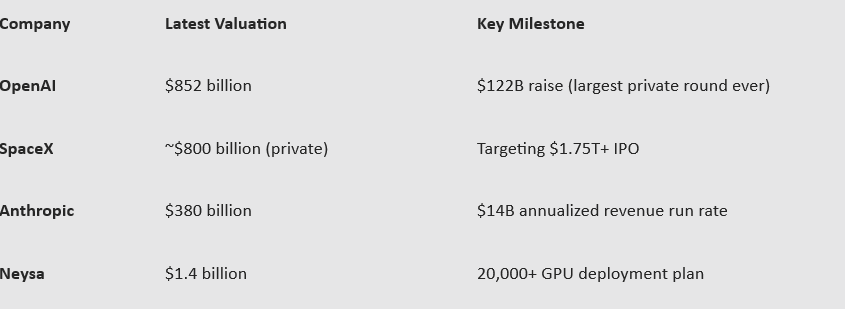
While Neysa represents the rising tide of regional AI infrastructure players, the valuation leaders are operating on an entirely different scale. Three private companies now dominate the global AI landscape, with combined valuations approaching $2.5 trillion.
OpenAI: $852 Billion and Climbing
OpenAI has closed what may be the largest private funding round in history, raising $122 billion at an $852 billion post‑money valuation. The March 31, 2026, round was anchored by Amazon, Nvidia, and SoftBank.
To put that number in perspective: an $852 billion valuation means OpenAI is worth more than every S&P 500 company except 12. The company is now generating $2 billion in monthly revenue, with enterprise making up 40% of revenue and expected to reach 50% by year‑end. Its ads pilot reached a $100 million annualized revenue run rate just six weeks after launch.
SpaceX: From $800 Billion Private to $1.75 Trillion IPO Target
SpaceX, following its February 2026 merger with xAI, is now valued at approximately $800 billion in private markets. But the real headline is the IPO. SpaceX confidentially filed to go public on April 1, 2026, targeting a valuation between $1.75 trillion and $2 trillion.
If successful, the IPO would be the largest in history, raising up to $75 billion and topping Saudi Aramco‘s $29.4 billion record. The merger with xAI—valued at $250 billion—has created a vertically integrated behemoth combining rocket launch, Starlink satellite internet, and Grok AI capabilities.
Anthropic: The Fastest‑Growing AI Company
Anthropic completed a $30 billion Series G funding round in February 2026, led by GIC and Coatue, pushing its post‑money valuation to $380 billion. The company is now the fastest‑growing AI company, with a $14 billion annualized revenue run rate—a 14x year‑over‑year increase driven by the breakout success of “Claude Code”.
The Broader Ecosystem – Inference, Networking, and Orbital Compute

Beyond the headline giants, a second tier of AI infrastructure unicorns is rapidly emerging, each attacking a different bottleneck in the AI stack.
Inference Infrastructure: The $5 Billion Battle
Modal Labs, a startup focused on AI inference efficiency, is in talks to raise new funding at a $2.5 billion valuation—more than double its $1.1 billion valuation just five months ago. Its annual recurring revenue is approximately $50 million. Rival Baseten recently raised $300 million at a $5 billion valuation, and Fireworks AI secured $250 million at a $4 billion valuation.
The inference layer—the process of running trained AI models to respond to user requests—is becoming the next battleground as model training costs plateau and usage scales.
Networking Infrastructure: Upscale AI
Santa Clara‑based Upscale AI secured $200 million in Series A funding, achieving unicorn status with a valuation exceeding $300 million. The company builds AI‑optimized networking infrastructure through its SkyHammer platform, which unifies AI hardware with high‑speed, low‑latency interconnects.
Orbital Compute: Starcloud‘s $1.1 Billion Space Bet
Starcloud, a startup building data centers in space, raised $170 million in Series A at a $1.1 billion valuation, becoming Y Combinator‘s fastest‑ever unicorn—just 17 months after its demo day. The company is deploying Nvidia H100 GPUs in orbit for AI inference workloads, addressing the terrestrial energy bottleneck.
GPU Cloud: Lambda Labs and Together AI
Lambda Labs raised $500 million to expand its on‑demand cloud offering, with a valuation of $1.5 billion. Meanwhile, Together AI is in advanced talks to raise approximately $1 billion at a $7.5 billion pre‑money valuation, with annualized revenue of around $1 billion—up more than three times from mid‑2025.
he Market Context – $2.5 Trillion and Accelerating
The numbers driving this unicorn explosion are staggering:
The global AI infrastructure market was valued at $58.78 billion in 2025 and is projected to reach $75.40 billion in 2026.
The global AI chip market is expected to reach approximately $500 billion in 2026, approaching nearly half of the entire semiconductor industry‘s projected $975 billion in sales.
Top 10 global cloud vendors are expected to spend $632 billion in capital expenditures in 2026, with the majority directed toward AI infrastructure.
The AI chip market is growing at a 36% CAGR through 2029, with custom ASICs growing at an even faster 65%.
Conclusion: The Infrastructure Era Has Arrived
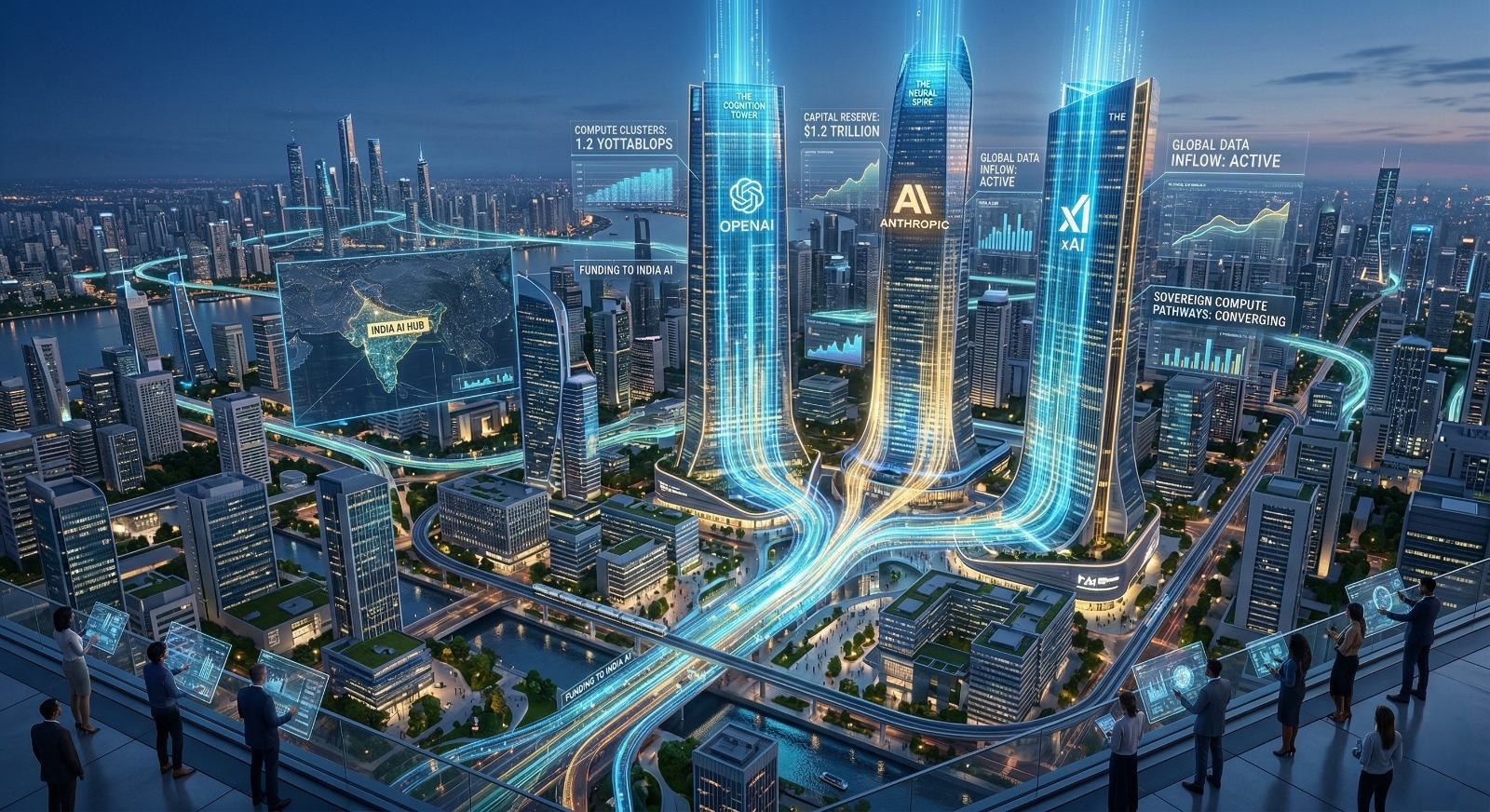
The AI unicorn board of 2026 tells a clear story: the gold rush is over, and the infrastructure providers are winning.
Neysa‘s $1.4 billion valuation represents the rise of sovereign, regional AI compute. OpenAI’s $852 billion and SpaceX‘s $800 billion represent the global giants consolidating the stack. And the emerging tier of inference, networking, and orbital compute unicorns represents the specialization that comes with maturity.
For investors, the message is unmistakable: the picks and shovels of AI are now the most valuable assets in the market. The models come and go. But the infrastructure that powers them is here to stay.

Vishal Sable
B.Tech AD @ shri balaji institute of technology and management
Engineering and tech journalist. I love exploring the impact of emerging technologies on global defense, sovereignty, and everyday life. Always looking for the real story behind the headlines.