Back to News
News AlertWorld Money
Brent Crude Drops to $101 as G7 Releases Emergency Reserves
T
Author
Tushar Shrivas
Published
October 5, 2026
Reading Time
6 MIN READ
Spread the Word
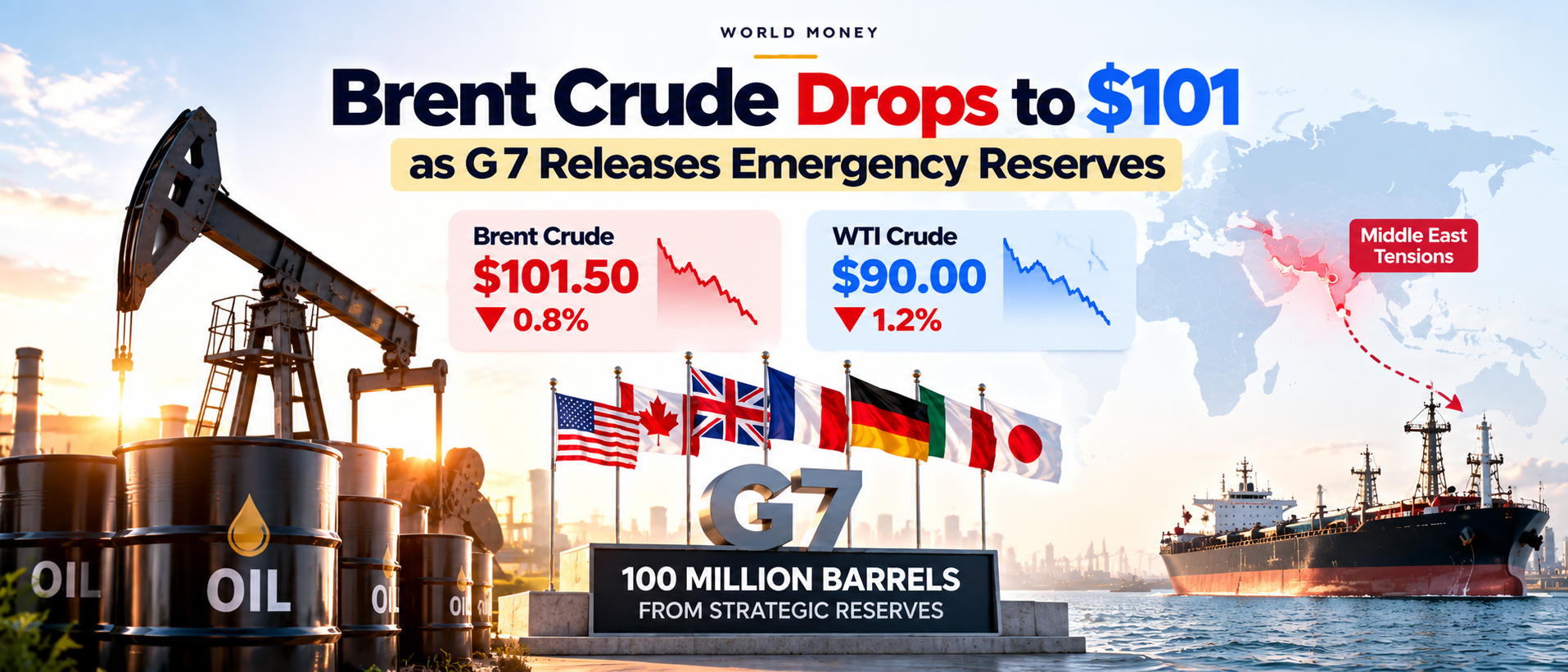
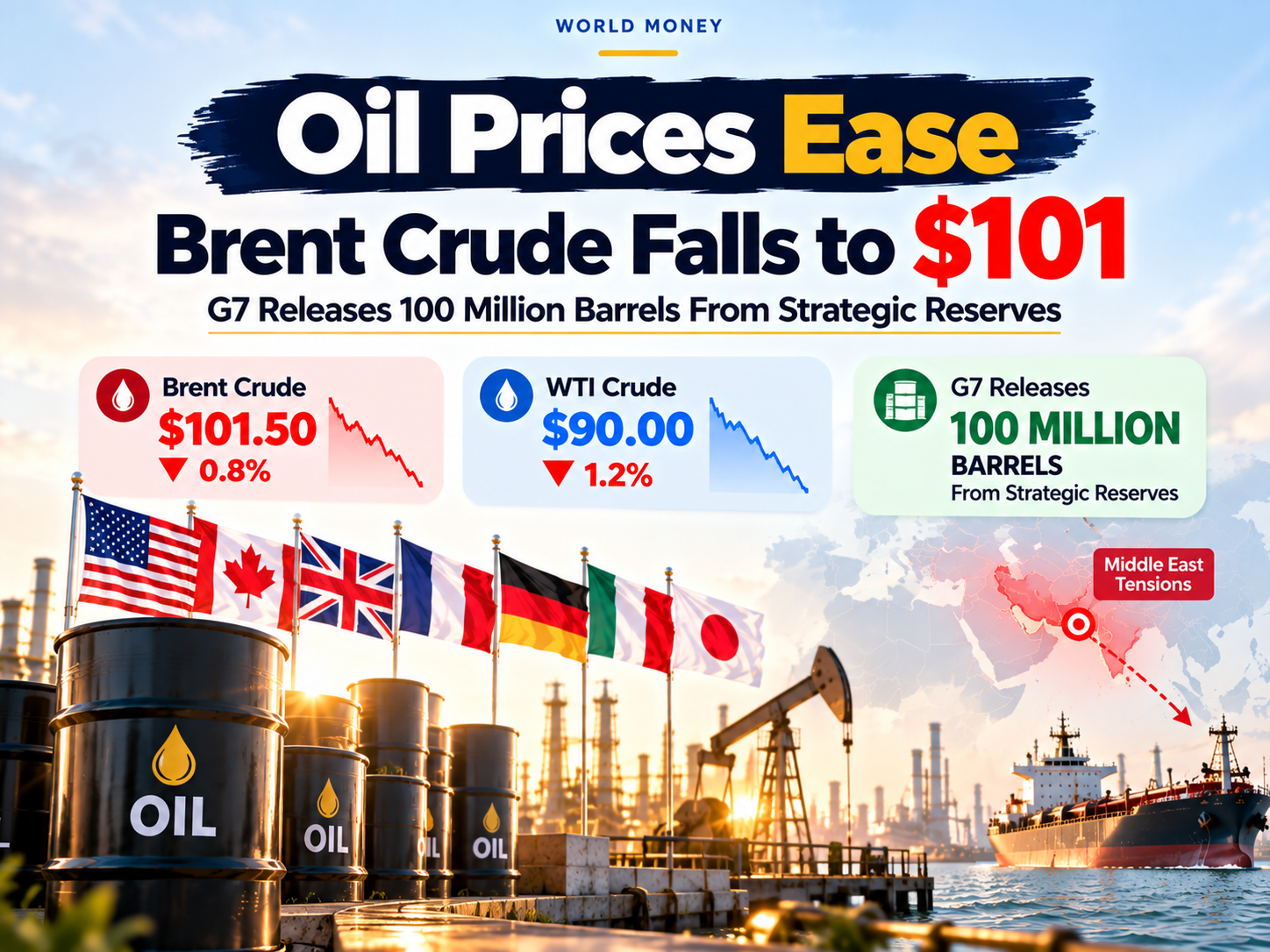
Brent crude fell 0.8% to $101.50 on October 5 as G7 nations agreed to release 100 million barrels from strategic reserves amid Middle East tensions.
G7 oil reserves release, oil prices October 5, strategic petroleum reserve, Middle East energy crisis, WTI crude, global energy supply
Brent Crude Falls to $101.50 as G7 Releases 100 Million Barrels From Strategic Reserves
Global oil markets caught a break today. On October 5, 2026, Brent crude futures fell 0.8% to $101.50 per barrel, while US West Texas Intermediate crude declined 1.2% to $90 a barrel — the result of a coordinated decision by Group of Seven nations to release 100 million barrels of crude and diesel from emergency strategic reserves. The move came after targeted energy infrastructure attacks in Saudi Arabia created fresh supply fears and pushed prices toward $105 just days earlier.
What made today significant wasn't the price movement alone — it was the global coordination required to pull it off. The G7 decision represents one of the most aggressive emergency interventions in oil markets since similar moves were deployed during earlier Middle East conflicts. HDFC Sky
The Scale of the Intervention
The 100 million barrel release was coordinated through the International Energy Agency (IEA) and includes both crude oil and, critically, diesel reserves — a distinction that matters because refined products shortages were driving some of the pressure on pump prices. The G7 also committed to refrain from imposing energy export restrictions, a pledge that came after pressure from US President Donald Trump to keep global energy markets open.
The frontloaded component is particularly significant: a substantial portion of the diesel release is scheduled to reach physical markets within 20 days, designed to prevent simultaneous refinery shutdowns and ease short-term global supply constraints. Business Recorder
Why Now? The Saudi Attacks and Strait Closure
The urgency of the release followed fresh targeted missile and drone strikes on Saudi Aramco facilities in Riyadh and other energy infrastructure across the Gulf region. These attacks, combined with the functional closure of the Strait of Hormuz (which normally handles 20% of global daily energy throughput), created a dual-pressure scenario: actual supply losses from the attacks, plus the risk of cascading shutdowns if traders anticipated further disruptions.
Tim Waterer, chief analyst at KCM Trade, summarized the market logic: "The G7 decision to tap strategic reserves is taking some of the immediate supply anxiety out of the price, while there's a growing view that Saudi export volumes are moving back toward pre-war levels, even if those barrels are still moving at higher cost and via less efficient routes." CNBC
The Strategic Petroleum Reserve at Its Lowest Since 1982
The scale of the emergency reserve release highlights just how depleted US strategic reserves have become. According to the US Energy Information Administration, the US Strategic Petroleum Reserve stood at approximately 284.6 million barrels as of October 5 — the lowest level recorded in emergency reserves since 1982.
That context underscores why the G7's release, while substantial, is still a finite intervention. Once those 100 million barrels are deployed, the margin for further emergency action is narrower. The IEA has indicated it stands ready to release additional reserves if required, but the political and physical limits on emergency interventions are now visible in a way they weren't months ago. Archyde
What This Means for India and Cross-Border Supply Chains
India, which imports roughly 85% of its crude oil requirements, felt an immediate benefit today. Lower Brent prices translate directly into lower landed costs for Indian refiners, which typically means moderating pressure on domestic fuel prices — though the two-to-three-week lag between global price movements and domestic pass-through means Indian consumers won't see relief at the pump until mid-to-late October.
For logistics and gig-economy workers in India (delivery platforms, trucking fleets), the price signal matters because it reduces the urgency of further fuel-price hikes like the Nayara Energy increases announced two days ago. A ceiling of $101.50 Brent is still elevated by historical standards, but a ceiling is better than an open-ended upside. Trading Economics
The Risk Ceiling Remains High
The reserve release isn't an end to oil market volatility — it's a pause. Middle East tensions remain elevated, Chinese refiners have suspended petroleum-product exports for October (creating additional global competition for available barrels), and the functional closure of the Strait of Hormuz hasn't been resolved, only managed.
The G7's willingness to intervene today signals that coordinated policy responses are still available when supply shocks threaten systemic stability. But the diminished state of strategic reserves also signals that the window for further emergency interventions is closing. If oil prices spike above $110 again in November, the toolkit is measurably thinner than it was six months ago. Investing News
FAQ
How much did Brent crude fall today?
Brent crude fell 0.8% to $101.50 per barrel, while WTI fell 1.2% to $90 on October 5, 2026.
How much oil did G7 agree to release?
G7 nations agreed to release 100 million barrels of crude and diesel from strategic reserves, coordinated through the International Energy Agency. A substantial portion of the diesel is scheduled to reach markets within 20 days.
Why is the US Strategic Petroleum Reserve so low?
According to the EIA, the US SPR stands at approximately 284.6 million barrels — the lowest level since 1982 — due to prior emergency releases and ongoing global energy market volatility.
Will fuel prices in India drop immediately?
No. There's typically a two-to-three-week lag between global crude price changes and domestic Indian fuel prices, so any pass-through benefit won't appear at Indian pumps until mid-to-late October.
Is this reserve release a permanent solution to oil prices?
No. It's a finite intervention. The IEA stands ready to release additional reserves if needed, but the overall pool of emergency reserves is significantly depleted, constraining future interventions.

Tushar Shrivas
B.Tech CS@ Shri Balaji Institute of Technology & Management
I write at Metaplugs — breaking down the latest in tech, economics, and business into simple, impactful stories for everyday readers. Passionate about software testing and global finance.