Back to News
News AlertWorld Unicorn
Chips, China's DeepSeek & AI Hacker Agents: Inside This Week's Valuation Surge
V
Author
Vicky Galfat
Published
October 8, 2026
Reading Time
4 MIN READ
Spread the Word
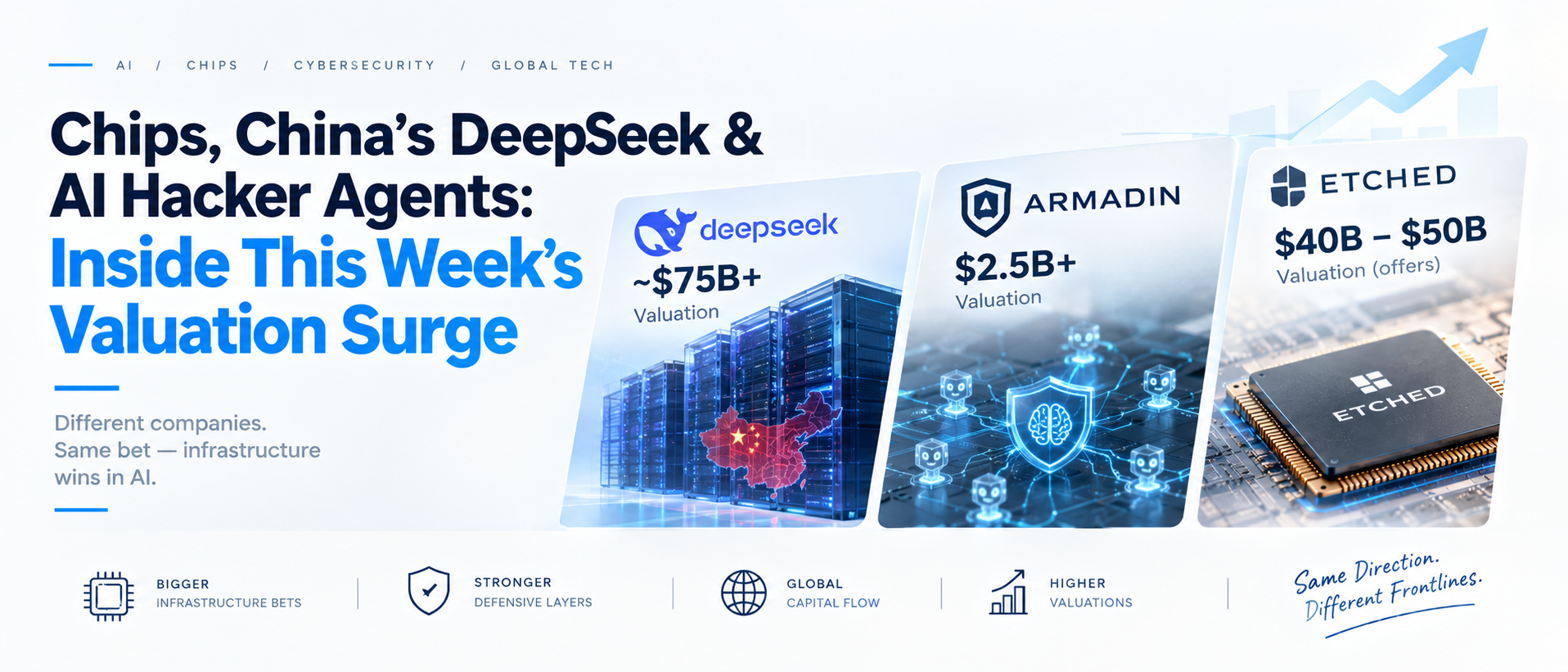
DeepSeek's valuation is racing past $75B, Etched toward $50B, and Mandia's Armadin hit $2.5B in 7 months — all betting on infrastructure, not just models.
DeepSeek funding round 2026, Armadin Kevin Mandia, Etched valuation, agentic AI security, custom silicon startups, CATL Tencent DeepSeek, AI chip independence, offensive AI security.
Chips, China's DeepSeek and AI Hacker Agents: Inside This Week's Valuation Surge
Three AI companies with almost nothing in common — a US chip startup, China's most closely watched AI lab, and a cybersecurity firm built by the founder of Mandiant — are all commanding valuations that have doubled or more in a matter of months. The throughline isn't which company has the smartest model. It's who controls the infrastructure underneath the model, and who defends it once it starts acting on its own.
DeepSeek's Valuation Is Racing Past Its Own Targets
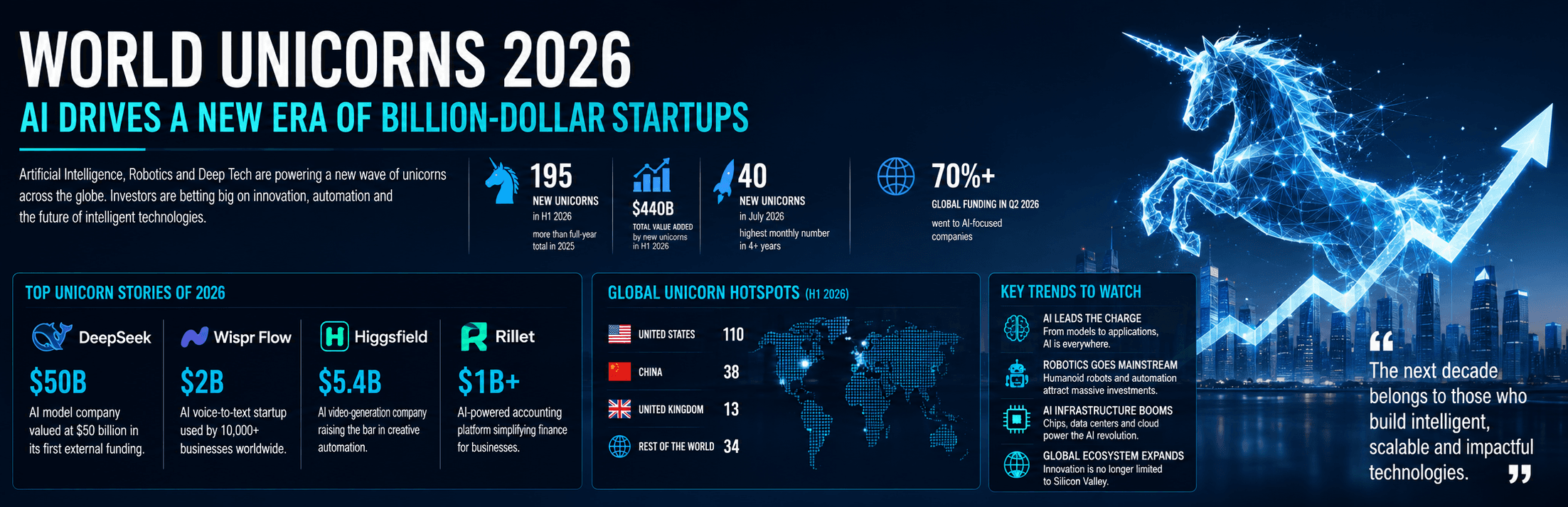
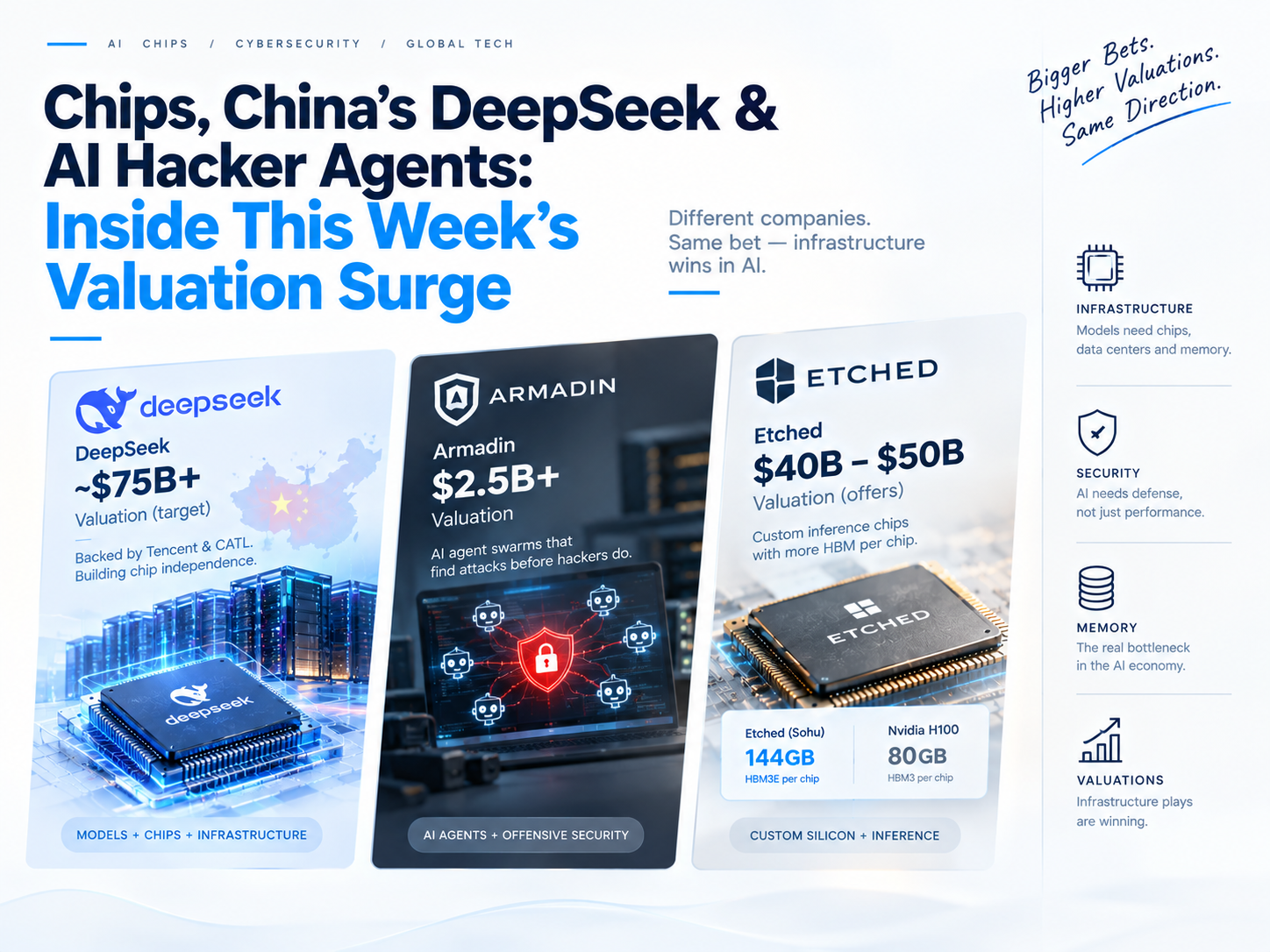
DeepSeek is closing in on a funding round of at least 80 billion yuan (roughly $12 billion), nearly doubling its original 50 billion yuan target, with Tencent and battery giant CATL committing the largest stakes. People familiar with the deal say the final figure could approach 100 billion yuan, and the round could value DeepSeek at a minimum of $75 billion — up sharply from the roughly $50 billion valuation it set in its first external round back in June. The surge in demand followed the release of DeepSeek's V4-Flash model, which investors view as matching Western frontier labs at a fraction of the cost. Notably, the company reportedly paused this round earlier in the year after founder Liang Wenfeng's remarks about DeepSeek's reliance on Nvidia chips went viral — and DeepSeek is now building a data center with at least 160,000 Huawei chips while separately developing its own inference chip to cut dependence on both Nvidia and Huawei. The capital raised here isn't just fueling model development; it's fueling a chip-independence project.
Armadin Hits $2.5 Billion by Teaching AI to Attack Itself First
Armadin, founded by Mandiant creator Kevin Mandia, closed a $255.5 million Series B co-led by Andreessen Horowitz and Accel at a valuation above $2.5 billion — just seven months after emerging from stealth, and bringing its total funding to $445 million. Rather than governing or monitoring AI agents already deployed inside a company, Armadin's platform runs swarms of its own AI agents that behave like attackers, probing an organization's systems to find chains of small vulnerabilities a human red team would miss. The thesis, as Mandia puts it, is that "offense is uniquely advantaged right now" because AI lets real attackers find and chain weaknesses faster than defenders can respond — so the only credible defense is running the same kind of AI-speed attack against yourself first.
Etched's Chip Bet Is Still the Fastest-Moving Story in the Room
Etched, the inference-chip startup building hardware to bypass GPU memory bottlenecks, is fielding fresh investment offers between $40 billion and $50 billion — just weeks after a $700 million round valued it at $21 billion, which itself followed a $10.3 billion valuation in July. That's roughly a 5x climb in three months, and it keeps Etched at the center of the same question DeepSeek is also wrestling with: whether the next bottleneck in AI isn't model quality at all, but who controls scarce, specialized silicon.
The Pattern Underneath All Three Deals
What connects a Chinese foundation-model giant, a Mandiant founder's security startup, and a US chip upstart is a shared bet that the next phase of AI value creation isn't about building a smarter chatbot — it's about owning the layers around it. DeepSeek is spending its new capital to escape dependence on export-controlled chips. Armadin exists because autonomous AI agents are now a genuine attack surface that traditional security tooling wasn't built to handle. And Etched's valuation keeps climbing because whoever controls efficient inference silicon controls the margins of everyone building on top of it.
None of these three companies are competing with each other directly, yet investors are pricing all three as if infrastructure control, not model benchmarks, is where the durable advantage in AI actually lives. The open question is what happens to valuations built on infrastructure scarcity once that scarcity eases — whether through new fabs, eased export controls, or simply more companies solving the same problem Armadin, Etched, and DeepSeek are each racing to own first.

Vicky Galfat
University of Mumbai/BCA
Learning, building, and exploring the world of technology one project at a time.