Back to News
News AlertWorld Money
Oil Is Surging Again: Is the Strait of Hormuz Becoming the World Economy's Biggest Risk?
T
Author
Tushar Shrivas
Published
September 4, 2026
Reading Time
5 MIN READ
Spread the Word
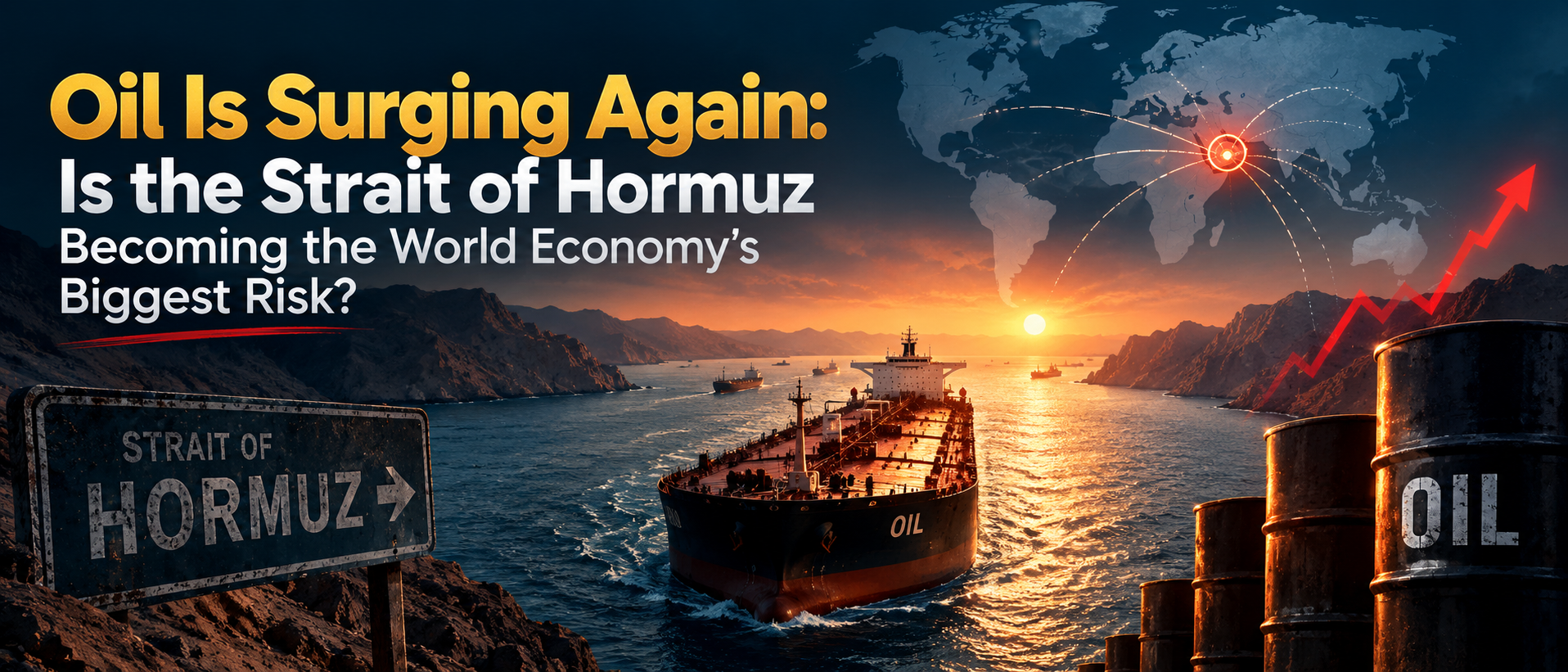
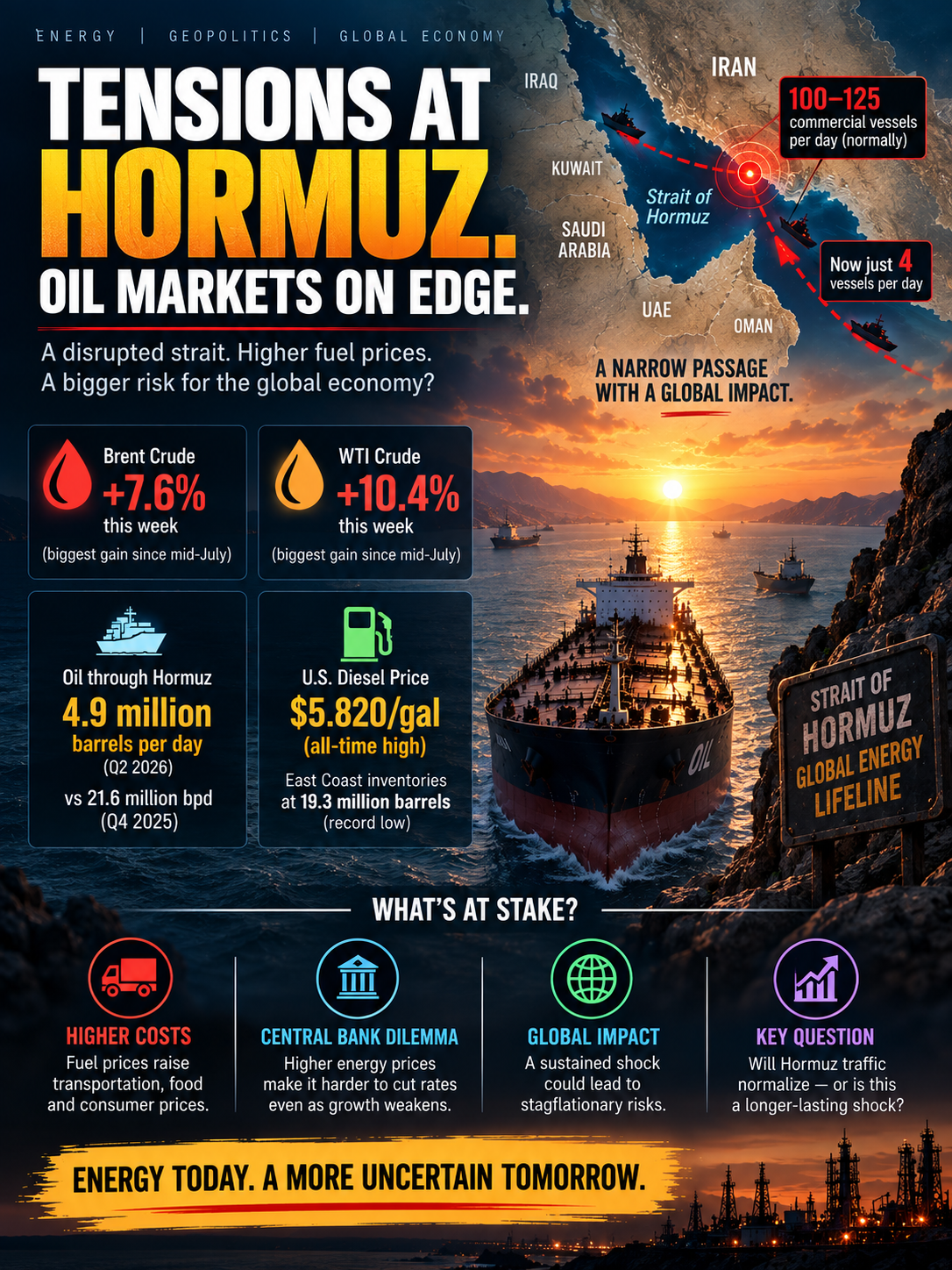
The global oil market is facing another shock. Brent crude and West Texas Intermediate (WTI) are both on track for their biggest weekly gains since mid-July — Brent up roughly 7.6% and WTI up about 10.4% for the week — as renewed U.S.-Iran fighting raises fears of further supply disruptions. The escalation comes at a particularly sensitive time, because the Strait of Hormuz remains heavily disrupted.
The bigger concern isn't simply that oil prices are rising. It's that a prolonged disruption around one of the world's most important energy routes could turn a geopolitical conflict into a broader inflation and economic-growth problem.
Why the Strait of Hormuz Matters So Much
The Strait of Hormuz connects the Persian Gulf with the Gulf of Oman and is a critical route for global energy trade — normally carrying around 100–125 commercial vessels a day. That traffic has fallen dramatically since the conflict began. Kpler data cited by Reuters showed just four commodity vessels transited the strait on Tuesday, down from 10 a day earlier and well below the roughly 13-vessel 10-day average.
The decline matters because alternative routes can't fully replace Hormuz. Saudi Arabia has redirected some crude through its East-West pipeline to the Red Sea, but alternative infrastructure is more limited and expensive. The U.S. Energy Information Administration estimates that crude oil and petroleum liquids moving through Hormuz averaged just 4.9 million barrels per day in the second quarter of 2026 — down from 21.6 million barrels per day in the fourth quarter of 2025, before the conflict began.
That's not a temporary shipping inconvenience. Physical oil flows are already being affected.
The Oil Shock Is Becoming a Fuel Problem
Crude oil gets the headlines, but refined fuels may be the bigger economic problem. U.S. diesel prices just hit an all-time record of $5.820 a gallon, surpassing the previous high set in June 2022, while East Coast inventories fell to a record-low 19.3 million barrels. Diesel powers trucking, agriculture, construction, and industrial activity — meaning a sustained shortage spreads through the economy faster than a crude-price rise alone.
Higher fuel costs raise the cost of moving goods and can eventually push up food and consumer prices. Businesses then face a choice: absorb the cost and accept thinner margins, or pass it on — and either path can weaken economic activity.
The Central Bank Problem
The most uncomfortable consequence may run through monetary policy. Central banks normally cut rates when growth weakens. But an oil-driven inflation shock makes that harder — if energy prices stay elevated, policymakers may have less room to ease even as consumers and businesses struggle.
The Federal Reserve is already facing this exact dilemma, with record diesel prices adding another inflation variable just as markets debate the direction of U.S. rates. That combination — slower growth, stubborn inflation — is the textbook definition of a stagflationary risk.
The Federal Reserve is already facing this exact dilemma, with record diesel prices adding another inflation variable just as markets debate the direction of U.S. rates. That combination — slower growth, stubborn inflation — is the textbook definition of a stagflationary risk.
How Long Can the Shock Last?
Duration matters more than the initial spike. The EIA's August outlook expects Brent to average around $85 per barrel in the third quarter of 2026, gradually easing to $69 in 2027 as Middle East production returns toward pre-conflict levels — a recovery it expects to materialize by early 2027. But that forecast depends heavily on Hormuz shipping actually improving. If the disruption runs longer than expected, inventories could fall further and prices could stay elevated longer than the EIA currently models.
That's why investors should track shipping traffic, global inventories, refinery margins, and diplomatic developments — not just the daily price of Brent.
The Bigger Picture
The world has more diversified energy sources than during previous oil crises, and producers can reroute some supply. But those alternatives have real limits, and refined-fuel markets remain vulnerable to sudden disruption.
For investors, the real risk isn't "oil above $90" as a headline number. It's a prolonged disruption that keeps fuel prices high, limits central banks' room to cut rates, and squeezes household and corporate spending simultaneously. If Hormuz traffic normalizes, today's surge could fade as inventories rebuild. If it doesn't, the Strait of Hormuz stops being just an energy-market story — and becomes a global growth story.
FAQ
Why is the Strait of Hormuz important for oil prices?
The Strait of Hormuz is a major global energy shipping route. A prolonged disruption reduces available oil supplies, increases shipping risk, and pushes crude and refined-fuel prices higher.
Why are oil prices rising again?
Renewed U.S.-Iran fighting and sharply reduced shipping through the Strait of Hormuz are driving fresh concerns about global oil supply — Brent and WTI are on track for their biggest weekly gains since mid-July.
Could higher oil prices cause global inflation?
Yes. Higher crude and diesel prices raise transportation, manufacturing, and agricultural costs, which can feed into consumer prices over time.
What should investors watch next?
Hormuz shipping volumes, oil and diesel inventories, refinery margins, and central-bank policy — these will show whether the current shock is temporary or turning into a longer-lasting economic problem.
---
Sources
Energy Connects — Oil heads for biggest weekly gain since July on Iran war risks, September 2026
Energy Connects — Oil heads for biggest weekly gain since July on Iran war risks, September 2026
Iran International / Reuters-Kpler shipping data — Four commodity vessels transit Strait of Hormuz, September 2026
U.S. Energy Information Administration — August 2026 Short-Term Energy Outlook (full report)
U.S. Energy Information Administration — August 2026 Short-Term Energy Outlook (full report)
U.S. Energy Information Administration — Press release on Hormuz-related global oil forecast, August 11, 2026
Investing.com/Reuters — US diesel prices hit record high as conflicts intensify supply crunch, September 3, 2026

Tushar Shrivas
B.Tech CS@ Shri Balaji Institute of Technology & Management
I write at Metaplugs — breaking down the latest in tech, economics, and business into simple, impactful stories for everyday readers. Passionate about software testing and global finance.