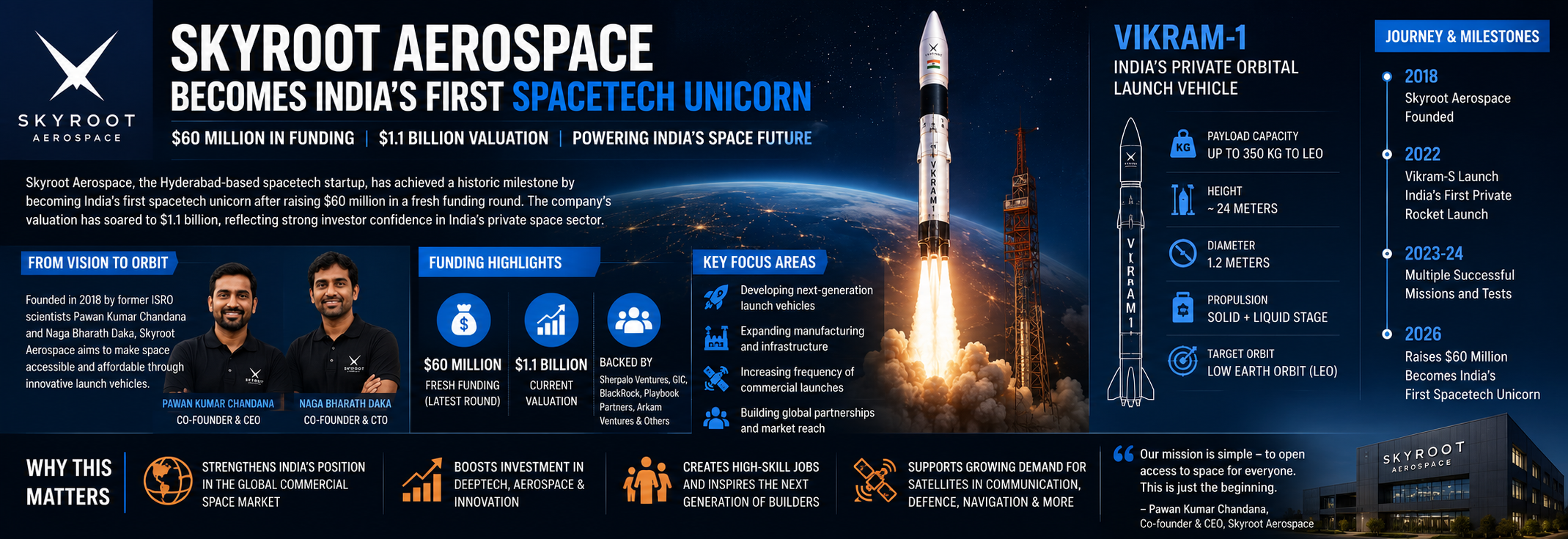
Skyroot Aerospace Becomes India's First SpaceTech Unicorn After $60 Million Funding
From Former ISRO Engineers to a Billion-Dollar Startup
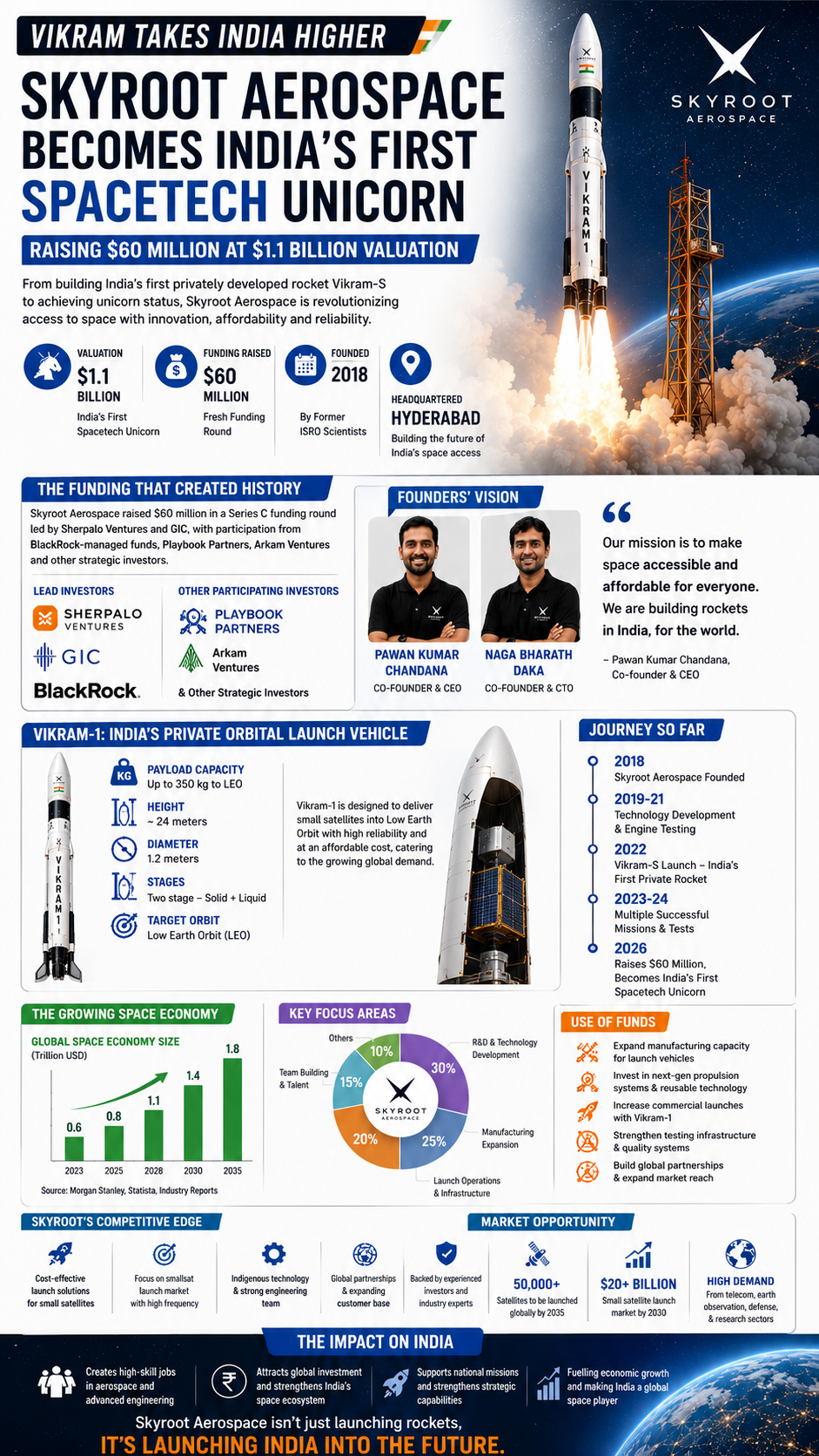
Skyroot Aerospace was founded in 2018 by former ISRO scientists Pawan Kumar Chandana and Naga Bharath Daka, who envisioned building affordable and reliable launch vehicles for the rapidly expanding satellite market. Starting with a small team and a bold vision, the company quickly gained attention for developing cutting-edge rocket technology. In 2022, Skyroot successfully launched Vikram-S, India's first privately built rocket, proving that private companies could contribute significantly to the nation's space ambitions. That achievement laid the foundation for the company's rapid growth and eventually its unicorn status.
Vikram-1 to Lead the Next Phase of Growth
Following the successful demonstration of Vikram-S, Skyroot is now preparing for the commercial launch of Vikram-1, the company's first orbital launch vehicle. Designed to carry small and medium-sized satellites into Low Earth Orbit, Vikram-1 aims to provide affordable launch services for governments, research institutions, and private satellite operators worldwide. With global demand for satellite deployment continuing to rise, Skyroot hopes to establish itself as one of the most competitive commercial launch providers in the international market.
A Major Boost for India's Deep-Tech Ecosystem
Industry experts believe Skyroot's unicorn status will encourage greater investment in deep-tech startups across aerospace, robotics, artificial intelligence, semiconductors, and defence technology. The company's journey demonstrates that Indian entrepreneurs can successfully build globally competitive businesses in capital-intensive industries with the right combination of innovation, engineering talent, and investor support. As more startups enter these advanced technology sectors, India's position in the global innovation landscape is expected to become even stronger.
Global Investors Show Strong Confidence
The latest funding round attracted leading global investors, including Sherpalo Ventures, Singapore's sovereign wealth fund GIC, BlackRock-managed funds, and several existing backers. The newly raised capital will be used to expand manufacturing facilities, accelerate research and development, strengthen engineering teams, and increase the frequency of commercial launches. The investment also demonstrates that international investors see enormous long-term potential in India's private space ecosystem, which has expanded rapidly following government reforms that opened the sector to private participation.