Back to News
News AlertWorld Money
SpaceX’s $40 Billion GPU Lease and AI Infrastructure Risks
T
Author
Tushar Shrivas
Published
October 26, 2026
Reading Time
9 MIN READ
Spread the Word
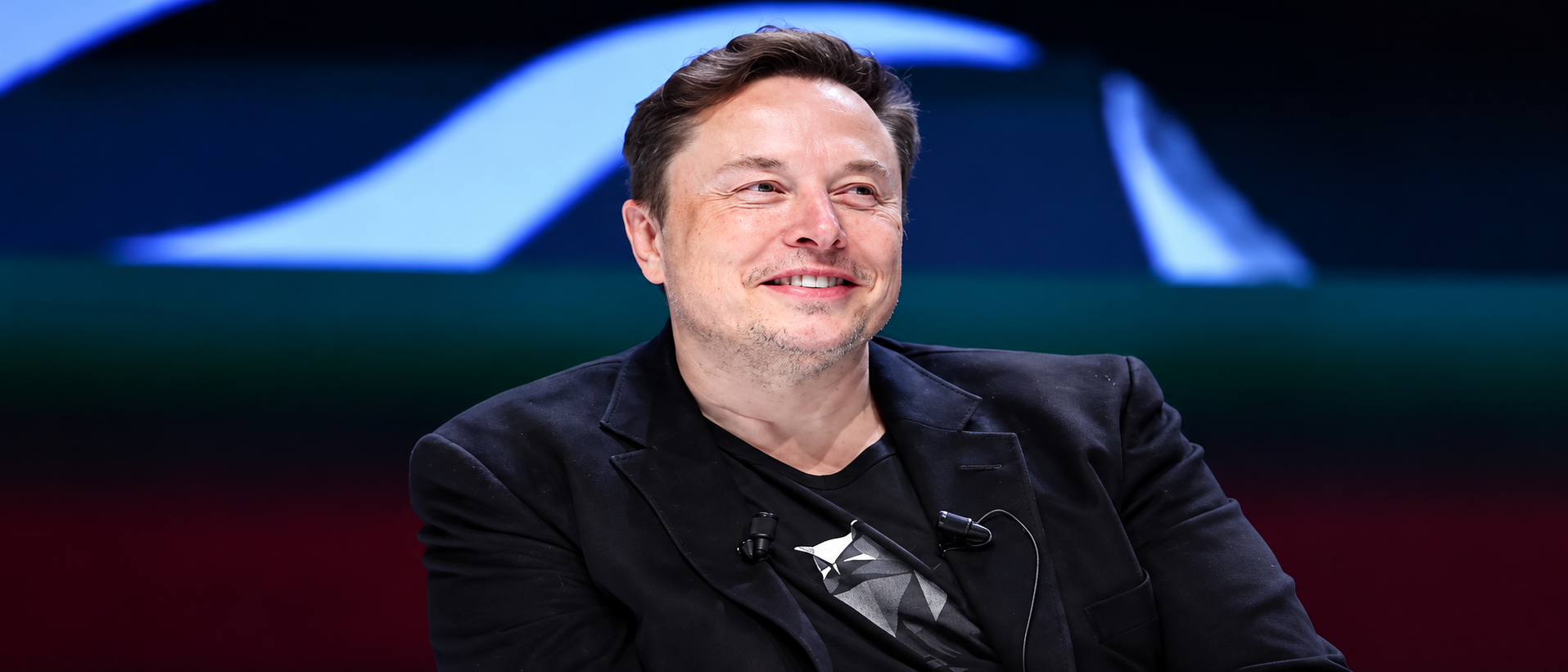
SpaceX’s $40 billion GPU lease highlights the economics of AI infrastructure. CoreWeave’s results and Gartner’s forecast reveal the risks behind the AI boom.
AI infrastructure financing, neocloud consolidation, CoreWeave financial results, GPU economics, AI data center investment, AI infrastructure risk ,SpaceX, AI Infrastructure, CoreWeave, NVIDIA, Neoclouds, Data Centers, Technology Finance
AI infrastructure financing, neocloud consolidation, CoreWeave financial results, GPU economics, AI data center investment, AI infrastructure risk ,SpaceX, AI Infrastructure, CoreWeave, NVIDIA, Neoclouds, Data Centers, Technology Finance
What Happened
SpaceX announced on October 26, 2026, that it had reached a binding commitment to enter an approximately $40 billion master finance lease for graphics processing units (GPUs) and related equipment through an entity managed by Apollo Global Management. The arrangement is intended to support SpaceX’s terrestrial computing infrastructure using next-generation NVIDIA Vera Rubin chips. The transaction remains subject to specified closing conditions, with closing expected before the end of 2026 and lease schedules expected to begin when equipment is delivered in the first half of 2027. The announcement represents a major financing commitment, not confirmation that all equipment has already been delivered or deployed. Apollo’s announcement
The agreement comes as concerns grow over whether investment in AI infrastructure will generate sufficient returns. Gartner’s October 2026 forecast says more than $3.5 trillion in AI infrastructure spending could be exposed to impairment by the end of 2030 if the current spending trajectory continues. Gartner also predicts that more than 80% of neocloud providers could cease operating independently by 2030. These are forecasts rather than established outcomes, but they highlight a fundamental financial question: can revenue from AI computing justify the cost of acquiring, financing and operating the infrastructure required to deliver it? Gartner
What Does the Source Say?
The SpaceX agreement is structured as a master finance lease, not a simple announcement that the company will immediately spend $40 billion in cash. According to its Form 8-K filing, the equipment is expected to be delivered in tranches, each covered by a separate lease schedule lasting approximately five to five-and-a-quarter years. Rent is generally payable quarterly in advance and includes repayment of financed cost, an amount calculated using a fixed annual rate on the outstanding lease balance, and certain ongoing expenses. The applicable fixed rate will be determined before SpaceX enters the master lease. SpaceX Form 8-K
The approximately $40 billion figure refers to expected aggregate principal payments over the respective lease schedules. It should not be treated as the transaction’s complete economic cost: interest and certain additional expenses are separate components of the payment structure. The eventual financial outcome will depend on final pricing, equipment utilization, operating costs and the revenue generated by the infrastructure. The financing structure provides SpaceX with a way to fund its computing expansion, but it also creates future payment obligations that must be supported by the business.
SpaceX CFO Bret Johnsen said in Apollo’s announcement that the company was seeing payback periods of less than one year on its “SI infrastructure investments.” This is a management statement about infrastructure investments broadly; the announcement does not establish that the same payback period applies specifically to the $40 billion lease. It also does not provide enough detail to independently calculate the claimed payback period, including the precise investment base, costs included or cash-flow measure used. The claim is relevant to understanding management’s expectations, but it should not be interpreted as proof that this lease will recover its full economic cost within a year. Apollo’s announcement
What Is Still Unknown?
The transaction’s final financing rate, complete cost after interest and additional expenses, detailed delivery schedule and expected utilization are important variables that remain unresolved in the announcement. The available disclosure also does not provide a project-specific revenue forecast or cash-flow model showing how the leased equipment is expected to generate returns. Without these details, an independent calculation of the lease’s return on investment would be speculative. SpaceX Form 8-K
The useful economic life of the hardware is another uncertainty. AI infrastructure can lose its competitive advantage as newer chips improve performance or reduce the cost of computing. Older equipment does not automatically become worthless when a new generation arrives; it may remain useful for workloads where its performance and operating costs are competitive. The risk is that equipment may fail to generate enough revenue during its useful life to cover its acquisition, financing, operating and replacement costs. Gartner identifies the risk of infrastructure investments failing to recover their costs before current AI semiconductors are replaced. Reuters
Why Does It Matter?
Gartner estimates that AI data-center owners would need to generate $8.5 trillion in cumulative revenue through 2030 to cover announced capital spending, financing costs and an assumed 12% return on invested capital. Its forecast puts the enterprise and consumer AI revenue attributable to AI data centers at no more than $3.6 trillion over that period. Gartner argues that this potential gap exposes infrastructure spending to financial risk. These figures are model-based estimates, not a guarantee of future losses: the outcome depends on assumptions about spending, revenue attribution and the return required by investors.
Neocloud providers face particular pressure because their businesses depend heavily on selling access to specialized computing capacity. They must attract customers, keep expensive equipment productive and compete on price while financing hardware and data-center expansion. Gartner argues that providers without differentiated business models may struggle to recover their investment, while larger technology companies can draw on more diversified revenue sources. Its forecast that more than 80% of neocloud providers could cease operating independently by 2030 points to potential consolidation, not necessarily the disappearance of those companies: some could be acquired, merged or absorbed into larger businesses. Gartner
Our Analysis: Growth Is Not the Same as Return on Investment
CoreWeave’s second-quarter 2026 results illustrate why AI infrastructure needs to be assessed through more than revenue growth. Revenue more than doubled year over year, rising from $1.212 billion to $2.575 billion. Yet the company recorded a $49 million operating loss, compared with $19 million in operating income a year earlier. Net interest expense rose from $267 million to $640 million, while net loss widened from $290 million to $626 million. These results do not prove that CoreWeave’s strategy will fail, but they show that strong demand and rapid revenue growth do not automatically translate into positive operating income or net profit. CoreWeave’s
The company also reported adjusted EBITDA of $1.510 billion, compared with $753 million a year earlier. However, its adjusted EBITDA margin declined from 62% to 59%. This provides an important counterpoint: CoreWeave is generating substantial adjusted earnings while scaling its business. But adjusted EBITDA is a non-GAAP measure that excludes interest, taxes, depreciation and amortization, among other adjustments. Those excluded costs matter in an infrastructure-intensive business, where equipment is expensive, financing can be substantial and hardware must eventually be upgraded or replaced. Adjusted EBITDA should therefore be considered alongside operating income, net income and cash flow rather than used alone to judge financial health.
Capital spending further illustrates the challenge. CoreWeave reported approximately $679 million in operating cash flow and $6.422 billion in purchases of property and equipment, including capitalized software, during the second quarter. Subtracting equipment purchases from operating cash flow produces an illustrative difference of approximately negative $5.743 billion. This is a simple operating-cash-flow-minus-equipment-purchases calculation, not a formally defined free-cash-flow measure, and it excludes other investing and financing items. It demonstrates how a company can generate positive cash flow from operations while investing substantially more in expansion during the same quarter. Such a gap may be consistent with a high-growth strategy, but it increases the importance of financing access and the returns generated by future deployments.
CoreWeave’s backlog provides further evidence of demand, but it must be interpreted carefully. The company reported approximately $104 billion in revenue backlog as of June 30, 2026, excluding more than $25 billion in net new customer commitments added in early Q3. Its reported backlog includes remaining performance obligations and other estimated future revenue under committed customer contracts, subject to delivery and service-availability requirements. Backlog is not the same as cash received, revenue already recognized or profit earned. Converting it into attractive returns depends on delivering services, managing operating costs and meeting financing obligations. Strong demand reduces one kind of uncertainty; it does not eliminate execution or profitability risk.
The comparison with SpaceX must remain measured because the companies have different business models, financing arrangements and sources of revenue. Nevertheless, SpaceX’s stated payback expectation raises a useful question: what evidence would demonstrate that a major infrastructure investment is earning its cost back quickly? A rigorous assessment would need a clearly defined investment base and measurement period, realized cash returns, and clarity about whether power, operations, financing and other relevant costs are included. Apollo’s announcement does not provide enough information to verify those details for the specific lease. The appropriate conclusion is not that SpaceX’s claim is false, but that it remains management commentary rather than an independently established return on this transaction. Apollo’s announcement
The key test for AI infrastructure companies is whether the cash generated over the useful life of their equipment can justify the combined costs of acquisition, financing, power, operations and replacement. Investors should therefore examine utilization, pricing, customer concentration, interest expense, capital expenditure, cash conversion and hardware longevity together. If demand converts into durable cash flow and returns above the cost of capital, heavy infrastructure investment can create lasting value. If the cost of capacity grows faster than the returns it generates, even companies with large backlogs and rapidly rising revenue may face pressure to raise more capital, consolidate or write down assets. That is the financial risk behind the AI infrastructure boom—not that investment is automatically unsustainable, but that its eventual returns remain the decisive measure.
Sources
Apollo Global Management :
SpaceX — Form 8-K :
https://www.stocktitan.net/sec-filings/SPCX/8-k-space-exploration-technologies-corp-reports-material-event-535a6020be0a.html
https://www.stocktitan.net/sec-filings/SPCX/8-k-space-exploration-technologies-corp-reports-material-event-535a6020be0a.html
Gartner:
CoreWeave :
Reuters

Tushar Shrivas
B.Tech CS@ Shri Balaji Institute of Technology & Management
I write at Metaplugs — breaking down the latest in tech, economics, and business into simple, impactful stories for everyday readers. Passionate about software testing and global finance.