Back to News
News AlertWorld Unicorn
The Private Leaderboard Shakes Up
V
Author
Vishal Sable
Published
July 2, 2026
Reading Time
8 MIN READ
Spread the Word
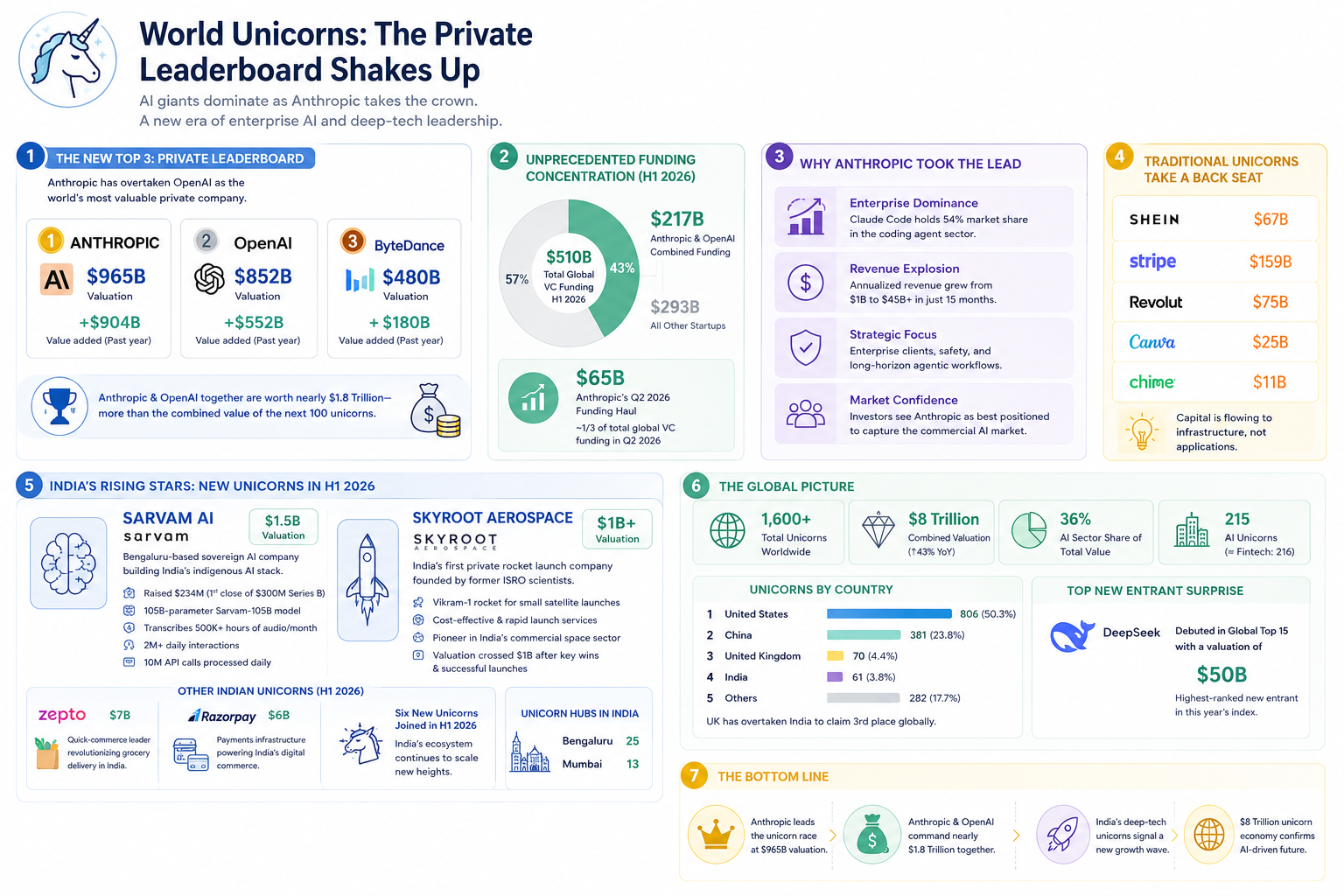
The extreme concentration of AI venture capital has significantly reshaped the global Unicorn Board, crowning new private tech rulers. The historic $510 billion funding data for the first half of 2026 reveals a startling reality: Anthropic and OpenAI alone captured a staggering 43% ($217 billion) of all global startup funding in the first half of the year. This unprecedented concentration has fundamentally reordered the private company hierarchy, with traditional consumer tech unicorns taking a back seat as hard tech infrastructure dominates the leaderboard.
The Latest News
Following an eye-watering **$65 billion funding haul in Q2** alone—close to a third of all global venture funding for the period—**Anthropic has officially overtaken OpenAI** as the most valuable private company on the global Unicorn leaderboard. The company's valuation surged to $965 billion, adding a record $904 billion in value over the past year, the most dramatic valuation rise ever recorded across eight years of the Hurun index. OpenAI, the ChatGPT-maker, now ranks second with a valuation of $852 billion after adding $552 billion during the year. The two AI giants together are now worth nearly $1.8 trillion—more than the combined value of the next 100 unicorns on the list.
Anthropic's ascent reflects a broader shift in investor sentiment. The company's dominance in enterprise AI, particularly its Claude Code platform commanding 54% market share in the coding agent sector and its annualized revenue surging from $1 billion to over $45 billion in 15 months, has convinced investors that Anthropic is better positioned to capture the commercial AI market. The company's focus on enterprise clients, safety, and long-horizon agentic workflows has paid off spectacularly.
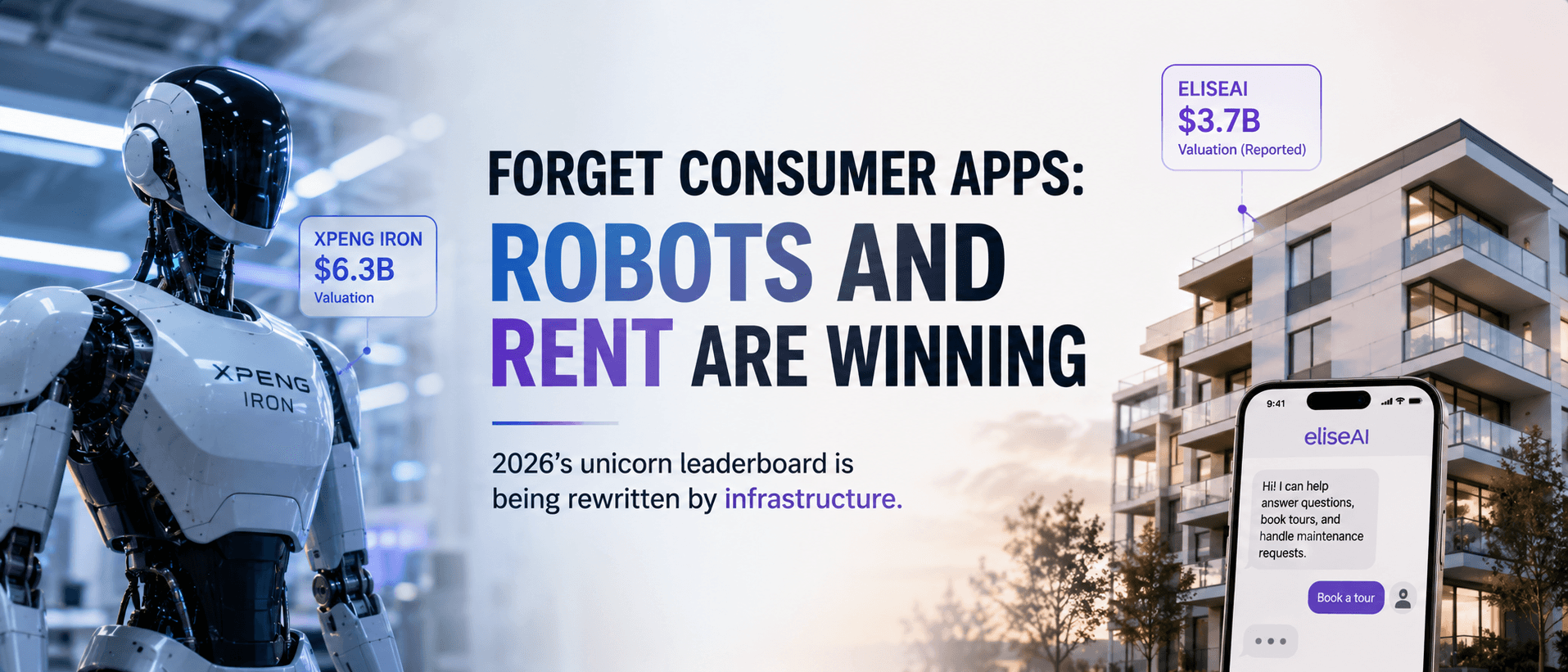
Traditional consumer tech unicorns are taking a back seat as hard tech infrastructure dominates. ByteDance, the Chinese social media giant behind TikTok, slipped to third place with a valuation of $480 billion. Shein, once a consumer unicorn darling, is now valued at $67 billion, while consumer-focused fintech players like Stripe ($159 billion) and Revolut ($75 billion) remain outliers rather than trendsetters. The message from investors is clear: capital is flowing to companies building the foundational infrastructure for the AI era—chips, compute, models, and defense applications—rather than apps that sit on top of it.
India's Rising Stars
Indian players have minted their fresh Unicorn status this season. Sarvam AI, the Bengaluru-based sovereign AI company, achieved unicorn status after raising $234 million in the first close of its $300 million Series B funding round on June 15, at a post-money valuation of $1.5 billion. The company has been mandated to build India's sovereign AI stack, rolling out indigenous large language models including the 105-billion-parameter Sarvam-105B, developed entirely in India. The company's speech models transcribe over half a million hours of audio each month, its conversational platform handles over 2 million interactions daily, and its inference platform processes 10 million API calls daily.
Skyroot Aerospace, India's first private company to successfully launch a rocket into space, has also achieved unicorn status. Founded in 2018 by former ISRO scientists, Skyroot has become a pioneer in the country's commercial space sector. The company's flagship Vikram-1 rocket is designed to launch small satellites into low Earth orbit, offering cost-effective and rapid launch services. Skyroot's success aligns with India's broader push for space privatization, with the government opening the sector to private players and creating a regulatory framework to encourage commercial space ventures. The company's valuation crossed the $1 billion mark following significant contract wins and successful launch demonstrations.
The Indian startup ecosystem has also seen other notable entrants. Six new unicorns joined the club in H1 2026, including Zepto ($7 billion), the quick-commerce platform that has revolutionized grocery delivery in Indian cities, and **Razorpay** ($6 billion), the payments company that has become the backbone of India's digital commerce infrastructure. Bengaluru remains India's top unicorn hub with 25 companies, followed by Mumbai with 13.
The Global Picture
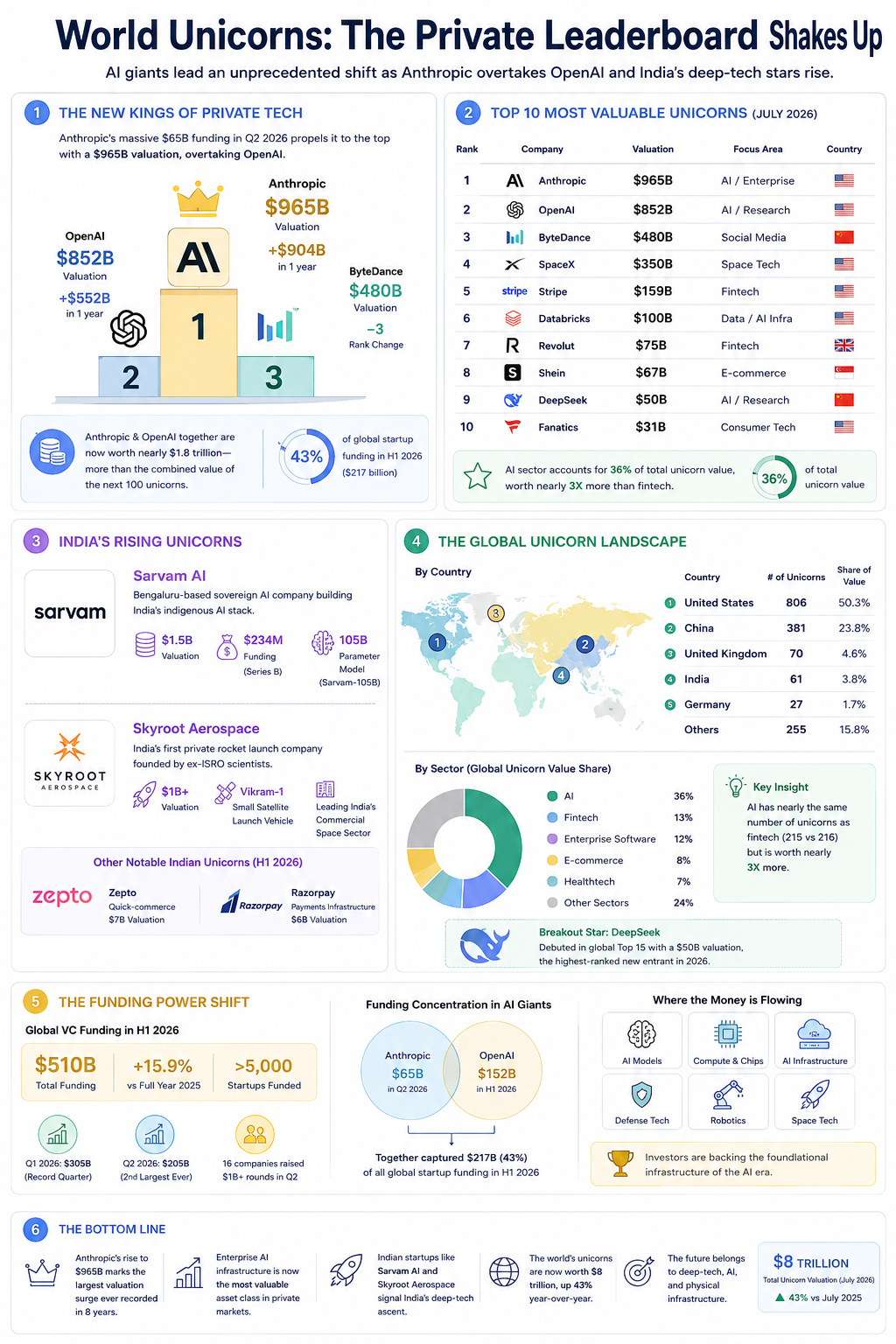
The United States commands the global unicorn index with 806 unicorns—more than half the world's total—accounting for 50.3% of the $8 trillion combined valuation. China remains firmly in second place with 381 unicorns. In a major shift, the United Kingdom has officially overtaken India to claim third place globally, with 70 unicorns compared to India's 61. The UK's rise is heavily driven by its skyrocketing AI and fintech sectors, with London emerging as Europe's leading hub for deep-tech investment.
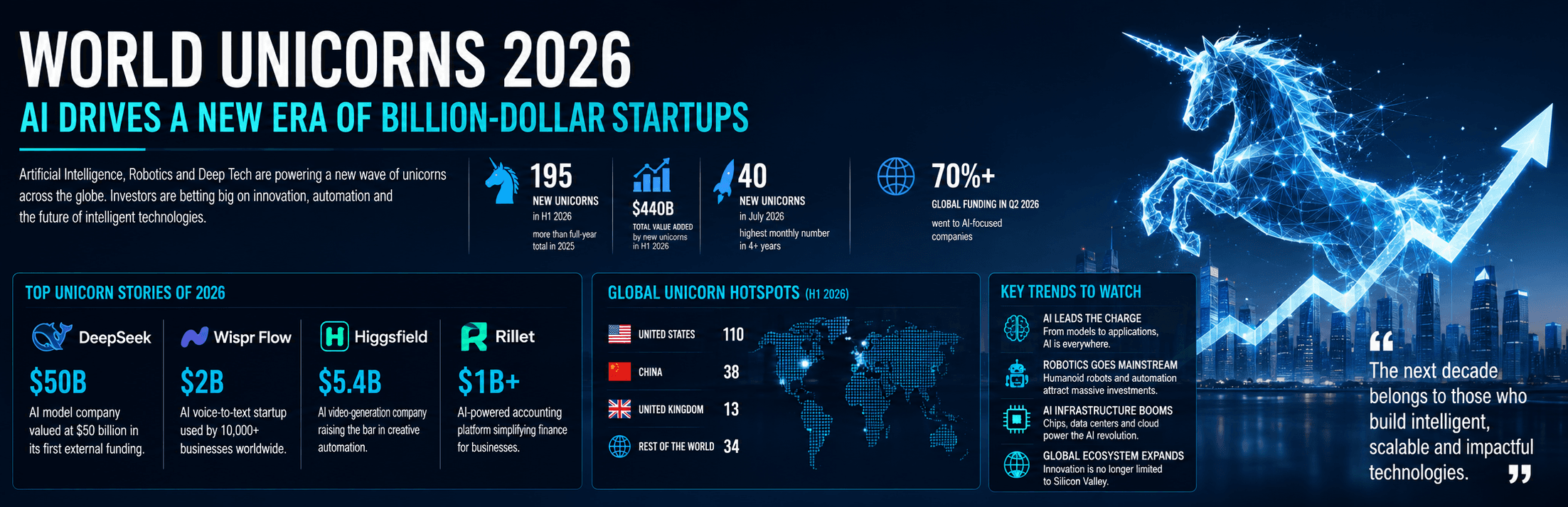
The AI sector now accounts for 36% of total unicorn value despite numbering just 215 companies, nearly matching fintech's 216 but worth nearly three times as much. Among the biggest surprises was China's DeepSeek, which debuted directly in the global Top 15 with a valuation of $50 billion, making it the highest-ranked new entrant in this year's index.
The Bottom Line
July 2026 marks a definitive reordering of the private technology hierarchy. Anthropic's rise to the top of the unicorn leaderboard, fueled by $65 billion in Q2 funding and a $965 billion valuation, signals that enterprise AI infrastructure is now the most valuable asset class in private markets. Traditional consumer tech unicorns are taking a back seat as hard tech, defense, and sovereign AI dominate. Indian players like Sarvam AI and Skyroot Aerospace have joined the unicorn club, reflecting a global shift toward deep-tech and physical infrastructure. The combined $8 trillion valuation of the world's unicorns, up 43% year-over-year, confirms that deep-tech and artificial intelligence are now the primary engines of global startup wealth creation—and the two companies at the very top now command nearly a quarter of that value.

Vishal Sable
B.Tech AD @ shri balaji institute of technology and management
Engineering and tech journalist. I love exploring the impact of emerging technologies on global defense, sovereignty, and everyday life. Always looking for the real story behind the headlines.