The Universal Modder: Why Claude’s New "Game Mashups" Are Terrifying Developers
As tools like Melty use Claude Code to autonomously merge massive video games, developers face a sudden crisis over AI reverse-engineering capabilities.
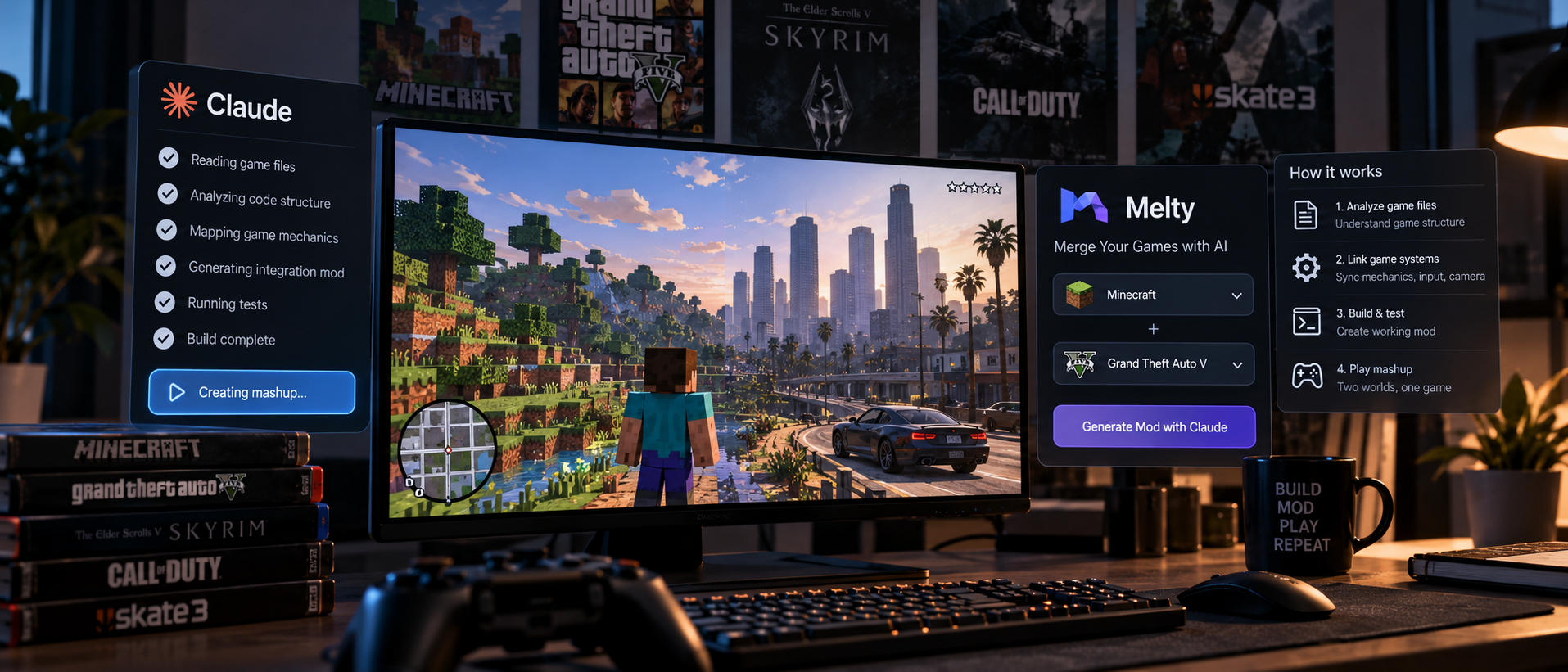
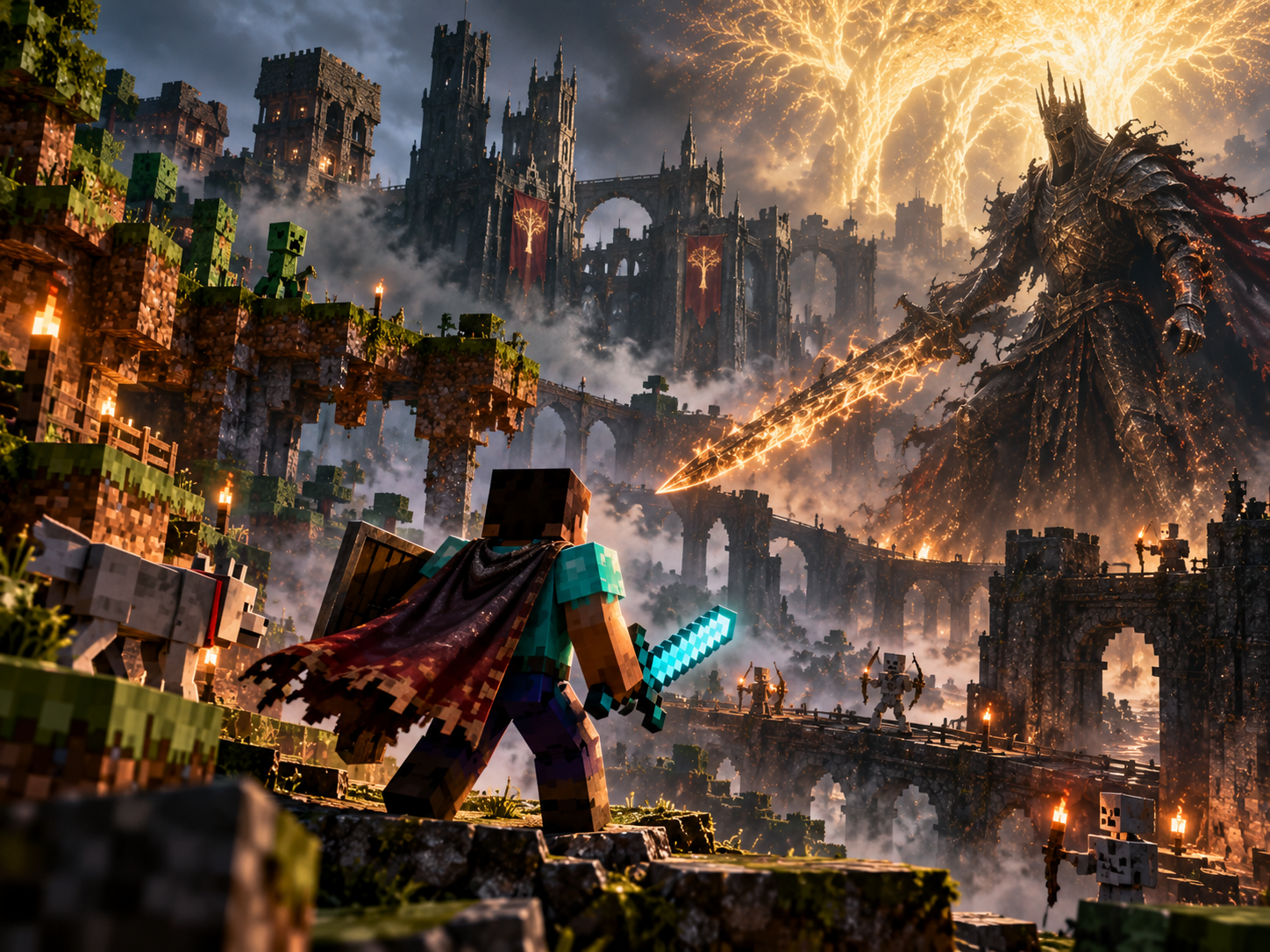
The internet is currently flooded with viral videos of players seemingly running Minecraft inside of Grand Theft Auto V, or playing Call of Duty alongside Skate 3. But this isn't the work of a dedicated team of human modders spending months reverse-engineering proprietary code. It is the result of autonomous AI coding agents like Anthropic's Claude being unleashed on commercial software, and the resulting "mashups" are triggering a massive backlash across the development world.
In early October 2026, a massive trend of AI-powered game mashups exploded across social media and developer forums. This surge is heavily driven by tools like "Melty," a free Windows launcher that advertises the ability to join two different games into one playable experience, such as "SkyCraft," which places a Minecraft player inside Skyrim. To create these integrations, everyday users simply select two games they own, copy a set of publisher instructions, and feed them into an AI coding agent like Claude Code or Codex. The agent then autonomously builds the mod, bypassing traditional development hurdles. Alongside Melty, open-source skill packs like "Universal Modder" are being used to combine wildly different titles—from Baldi's Basics to Lethal Company—into single playable instances.
How does an AI agent actually merge two massive, complex game engines? According to technical breakdowns, it isn't just generating a visual overlay. The AI agent acts as a workflow coordinator, utilizing three primary methods to fuse software. The first is a "mechanic port," where the host game's code is altered to imitate a guest game's rules. The second is a "passthrough" mod, which is much more complex; the AI links two live, running game processes together, exchanging selected information like collision, input, and camera data so that both games run simultaneously. Finally, the AI can perform a "reimplementation," where it reconstructs or rewrites the guest game's runtime from scratch to make it compatible with the host. The AI agent searches prior notes, reads the existing code, builds a small working slice, tests the integration in the actual game, and records its own errors. The AI is autonomously orchestrating complex software reverse-engineering at a speed human developers cannot match.
For the gaming and technology industries, this is a watershed moment that is sparking intense controversy. Traditional game modders are furious about the sudden influx of AI-generated content, with some veteran developers publicly condemning the trend as "pure slop" that overshadows genuine creative work. Conversely, others on tech forums are reacting with outright panic, positing that the ability of generative coding agents to reverse-engineer and fuse different software engines is the immediate precursor to a technological apocalypse.
Beyond the gaming community, the enterprise implications are massive. The ability of tools like Claude Code and Codex to rip apart proprietary software and stitch it back together proves that AI agents now possess advanced, unsupervised
reverse-engineering capabilities. If a commercially available AI agent can ingest the compiled code of two massive, proprietary video games, understand their architecture, and rewrite them to run simultaneously, it has the baseline reasoning required to deconstruct commercial enterprise software. This fundamentally alters the software supply chain, shifting the power from the original developers who built the application to the AI agents that can endlessly modify it.
The barrier to entry for complex software manipulation has officially dropped to zero, and developers are realizing they are no longer in full control of their own products. As tools like Melty and Claude Code turn ordinary users into "universal modders," we are entering an era where compiled software is infinitely malleable on the fly. But as consumers use AI to effortlessly break down proprietary code to mix and match their favorite digital experiences, a massive legal and security question remains: how will traditional software companies protect their intellectual property when an AI can reverse-engineer and remix it in a matter of seconds?

Saumya Dawande
B.Tech AIML @ oriental institute of science technology bhopal
Engineering and tech journalist. I love exploring the impact of emerging technologies on global defense, sovereignty, and everyday life. Always looking for the real story behind the headlines.