AeroVironment’s Halo_Shield™: Changing the Calculus of Drone Defense
The first, and arguably most significant, announcement comes
from AeroVironment, Inc., a global leader in multi-domain defense solutions.
The company today unveiled Halo_Shield™, a comprehensive
counter-unmanned aircraft system (C-UAS) designed to detect and defeat the full
spectrum of aerial threats, including coordinated drone swarms and subsonic
cruise missiles. The breakthrough here is not merely in detection; it's in the
system's radical modular architecture.
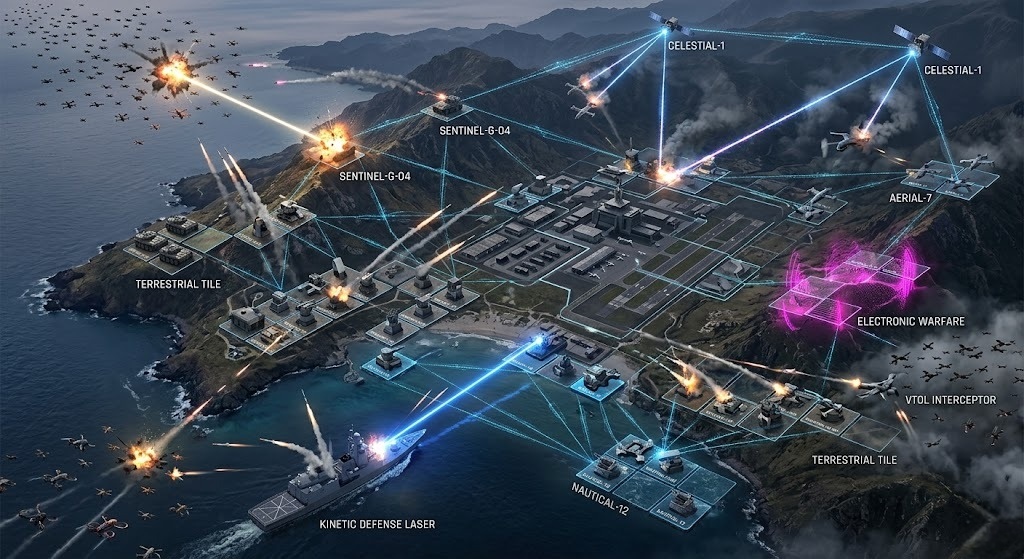
At the core of Halo_Shield is a groundbreaking
"tile-based" architecture. Instead of relying on a monolithic
installation (like a single radar tower), Halo_Shield is composed of a
distributed network of modular units. These are categorized into specific
domains: Sentinel, Terrestrial, Nautical, Aerial, and Celestial tiles. This
"tile" approach is revolutionary for several reasons. It allows the
system to be scaled to protect a small forward operating base or extended to
provide layered, area-wide protection for a sprawling critical infrastructure
site like a port or a metropolitan area.
Furthermore, the modular design dramatically reduces the
cost and complexity of upgrades. As new sensors or electronic warfare effectors
become available, they can be swapped into the existing tile network without
overhauling the entire system. This open, scalable architecture is designed to
directly counter the economic calculus of swarm attacks, which rely on
overwhelming defenses with sheer numbers. By offering a flexible, adaptable,
and mission-tailored solution, AeroVironment is empowering commanders to shift
from static "point defense" to a resilient, dynamic "grid
defense" that protects the modern battlespace from the ground up.
Raytheon and the Space Force: Extending the Shield to
Hypersonic Threats
While AeroVironment fortifies the lower and middle tiers of
the threat envelope, Raytheon is reinforcing the top. In a concurrent
announcement, Raytheon (an RTX business) confirmed it has delivered its second
advanced missile-warning sensor to Lockheed Martin for the U.S. Space
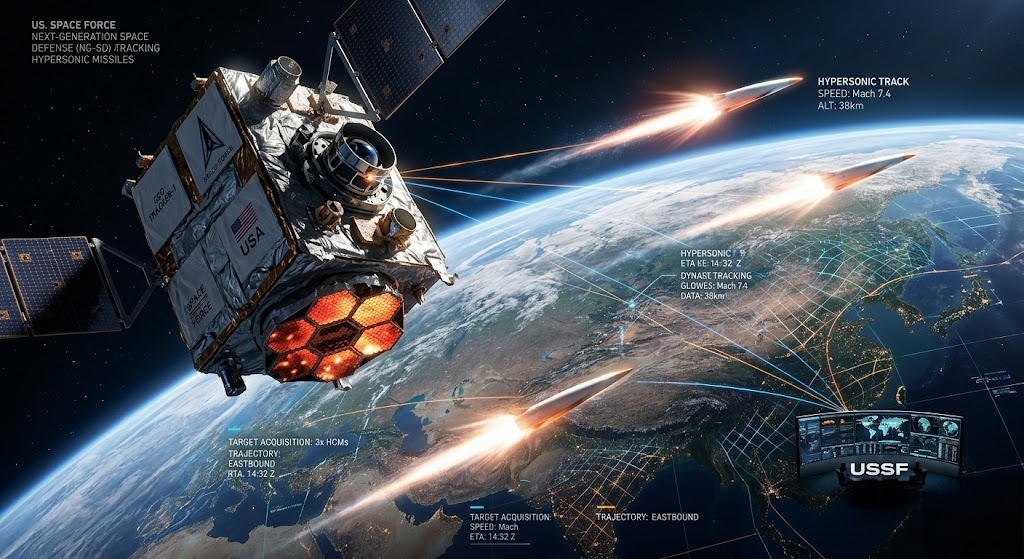
Force's Next-Generation Overhead Persistent Infrared (Next-Gen OPIR)
Geosynchronous Earth Orbit Block 0 satellite program. This is not just an
incremental upgrade; it is a generational leap in how the Pentagon detects and
tracks the fastest-moving threats in existence.
Raytheon's sensor payloads are designed to detect the heat
signatures of missile launches with unprecedented sensitivity. However, their
true value lies in their ability to track hypersonic weapons complex
systems that can travel at more than five times the speed of sound, often while
maneuvering unpredictably through the upper atmosphere. Traditional
ground-based radars have a limited line-of-sight and can lose hypersonic
threats as they dip below the horizon. By placing these advanced sensors in
geosynchronous orbit, the Space Force is creating an "always-on
watchtower" that can track these threats from launch through their entire
flight path.
This second sensor delivery is a critical milestone for the
Next-Gen OPIR program. It signifies that the constellation is moving from
design and testing to assembly and integration, keeping it on track to provide
initial operational capability. Once fully deployed, this network, which is
already supported by a massive $8.2 billion contract framework, will provide
the persistent, resilient, and high-fidelity data needed for commanders to make
split-second intercept decisions against the most advanced missile threats in
the world.
Conclusion -
Together, these announcements paint a clear picture of
modern defense in 2026. It is no longer a single wall or a single weapon
system. It is a multi-layered, intelligent tapestry of
capabilities. AeroVironment's Halo_Shield addresses the "low and
slow" but high-volume swarms using a flexible land-based grid. Raytheon's
space-based sensors address the "high and fast" hypersonic missiles
using a persistent orbital sentinel. For decision-makers, the roadmap is clear:
the best path to security lies in modularity, domain integration, and the
unblinking eye of space-based awareness.

Vishal Sable
B.Tech AD @ shri balaji institute of technology and management
Engineering and tech journalist. I love exploring the impact of emerging technologies on global defense, sovereignty, and everyday life. Always looking for the real story behind the headlines.