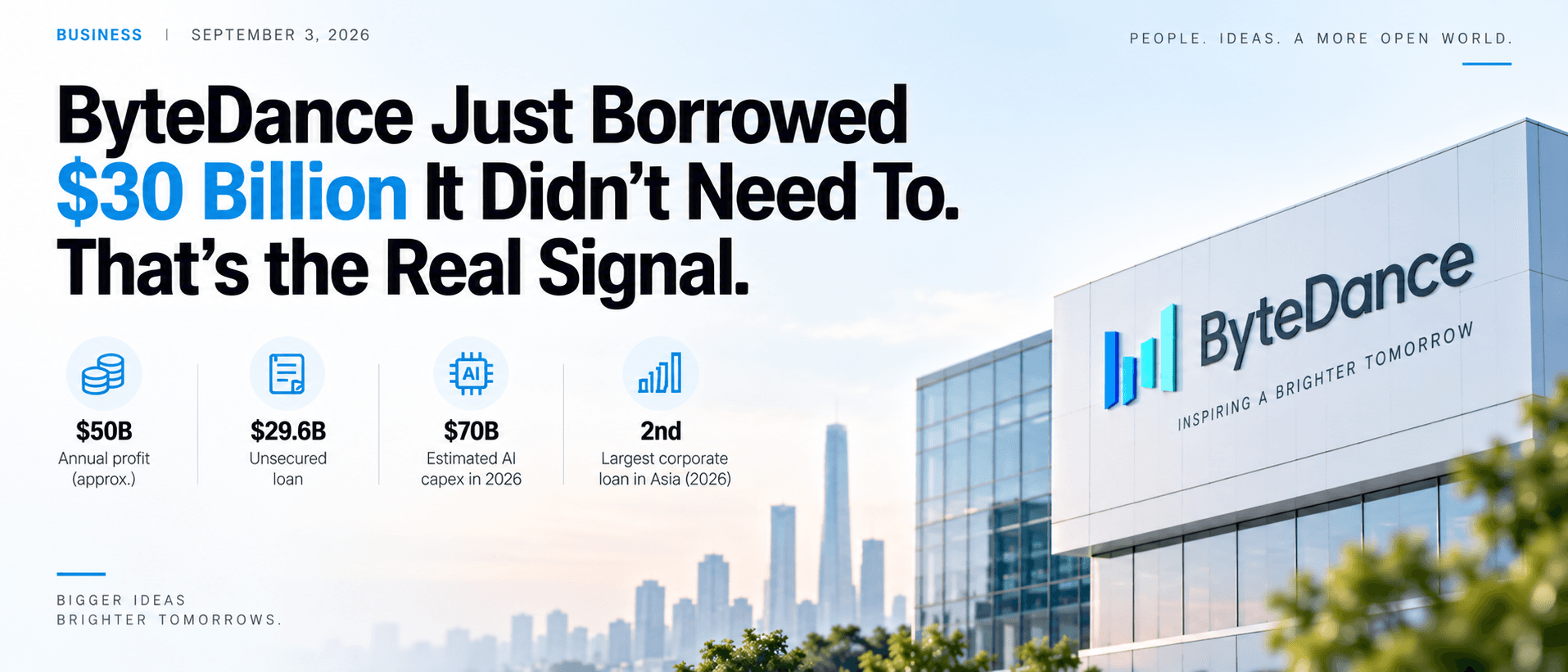
ByteDance Just Borrowed $30 Billion It Didn't Need To. That's the Real Signal.
AI-Driven Threat Detection: The Future of Cyber Defense
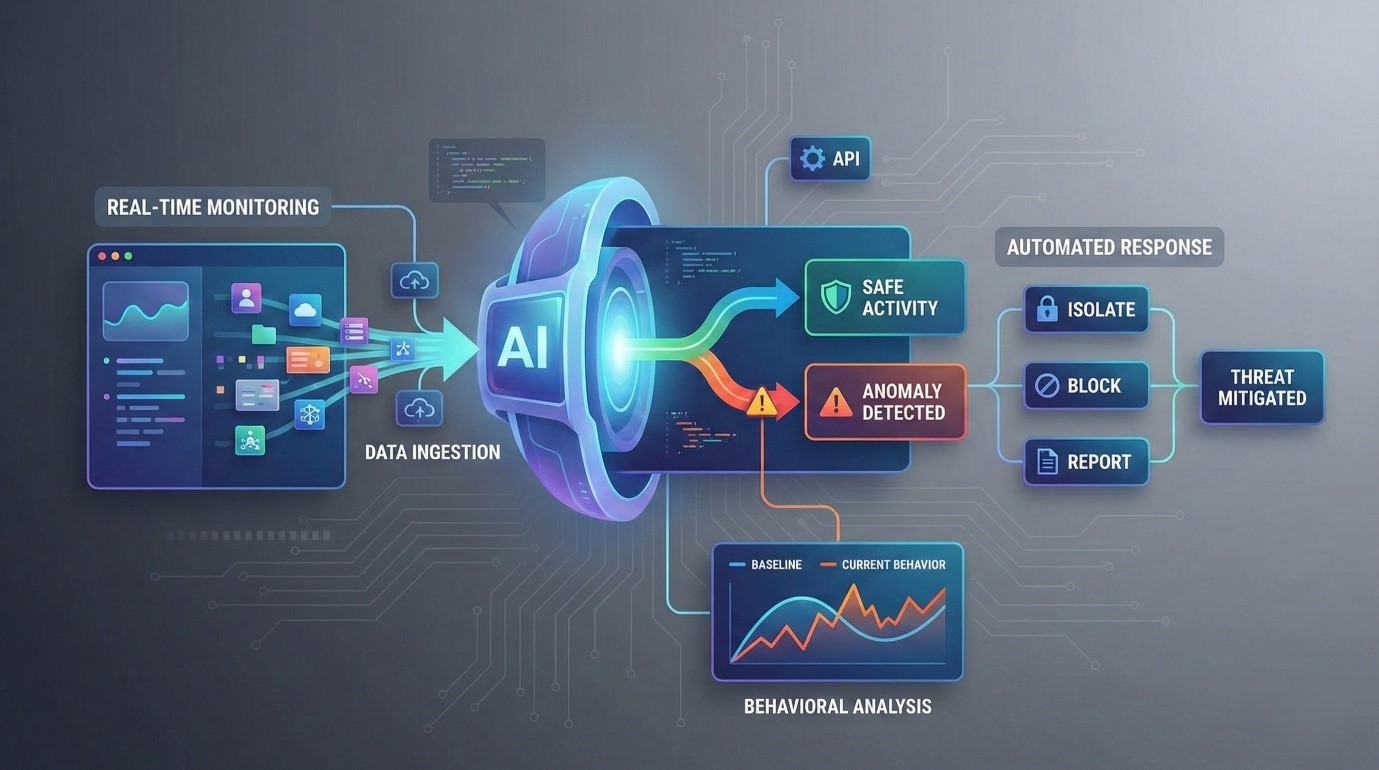
The Obsolescence of Static Defense
The modern
digital landscape is expanding at a velocity that human oversight can no longer
match. For decades, organizations relied on static defense mechanisms—firewalls
and antivirus software dependent on predefined rules and known malware
signatures. While effective against recognized threats, these legacy systems
possess a fatal flaw: they are blind to the unknown.
In an era
defined by zero-day exploits and polymorphic malware, relying on what has
happened in the past to predict future attacks is a failing strategy. This is
where Artificial Intelligence (AI) and Machine Learning (ML) intervene. By
transitioning from signature-based detection to behavioral analysis, AI is not
merely enhancing cybersecurity; it is fundamentally restructuring how
organizations detect, analyze, and neutralize threats.
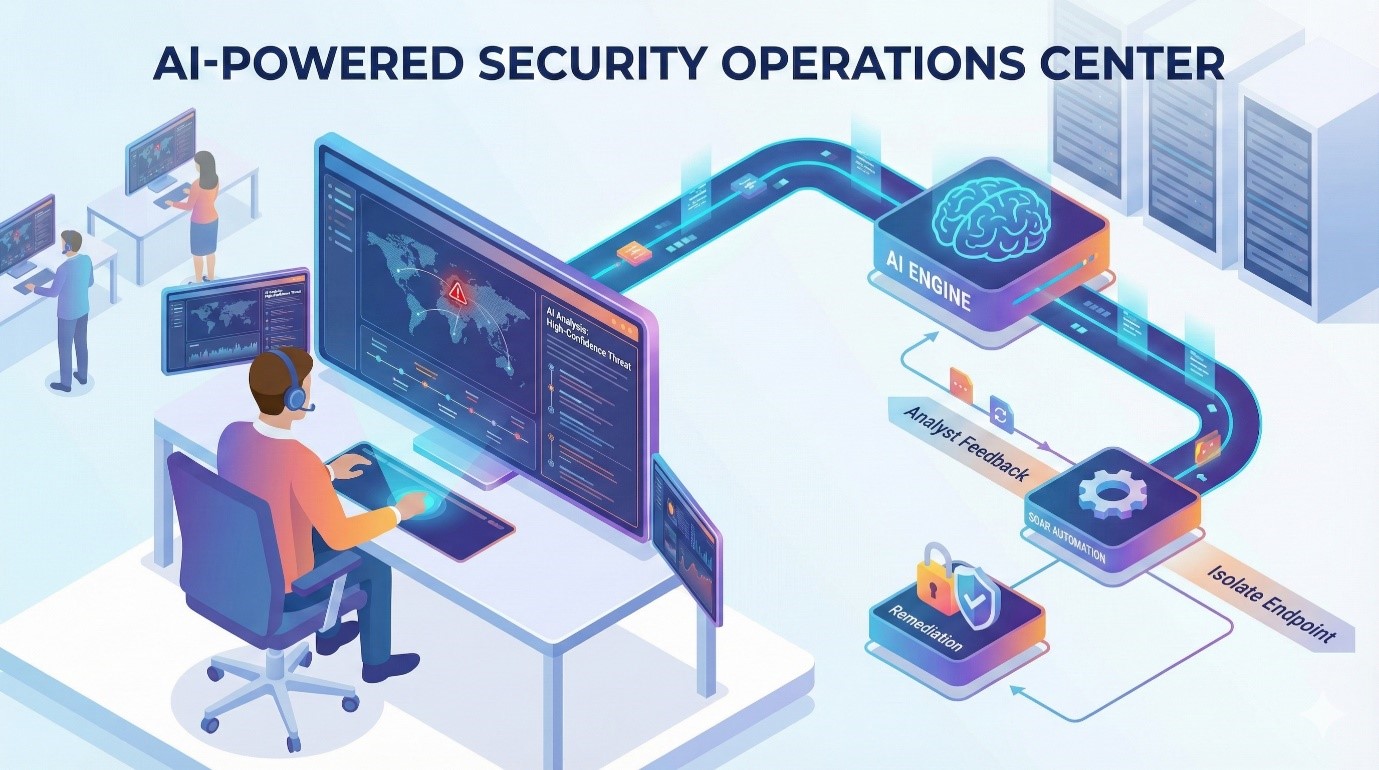
Beyond Signatures: The Mechanics of Behavioral Analysis
The core
innovation of AI in cybersecurity is its ability to establish a baseline of
"normality." unlike traditional tools that scan for specific
malicious code, AI models ingest vast amounts of telemetry data from endpoints,
network traffic, cloud infrastructure, and user logs.
User and Entity Behavior Analytics (UEBA)
Advanced AI
systems utilize User and Entity Behavior Analytics (UEBA) to monitor day-to-day
operations. Instead of looking for a specific virus, the system learns how a
specific user interacts with the network.
- The Baseline: The AI learns
that User A typically logs in from London between 9:00 AM and 6:00 PM and
accesses specific file repositories.
- The Anomaly: If User A’s
credentials suddenly attempt a login from a different continent at 3:00 AM
and initiate a massive data exfiltration from a restricted server, the AI
flags this immediately—even if the credentials are valid.
This heuristic
approach allows security teams to identify Advanced Persistent Threats
(APTs) and insider threats that successfully bypass traditional perimeter
defenses.
Accelerated Response: Integrating AI with SOAR and SIEM
Detection is
only half the battle; the speed of response determines the magnitude of the
damage. In traditional Security Operations Centers (SOCs), analysts are often
overwhelmed by "alert fatigue," sifting through thousands of flags to
find genuine threats.
Modern AI
integrates seamlessly with Security Information and Event Management (SIEM)
and Security Orchestration, Automation, and Response (SOAR) platforms to
revolutionize incident response metrics.
Reducing Mean Time to Respond (MTTR)
AI-driven
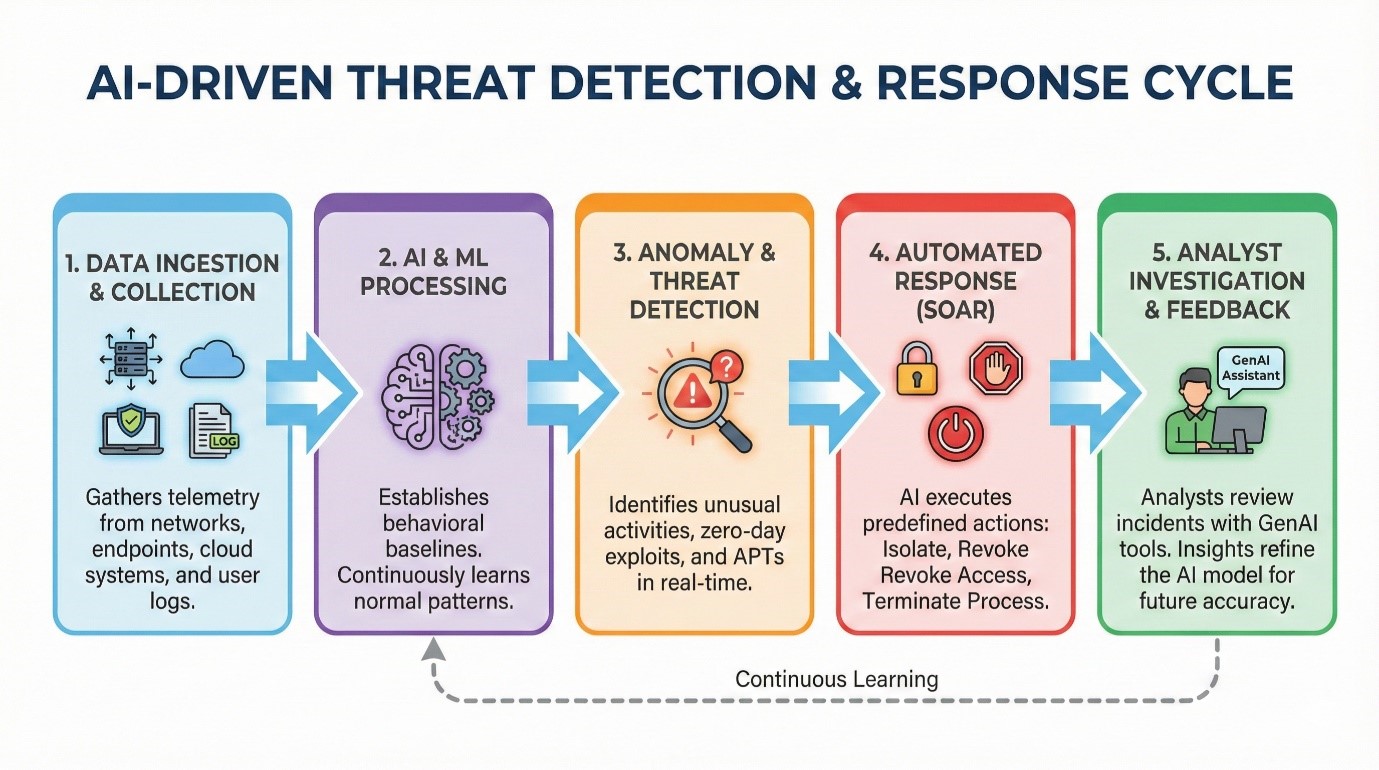
automation can execute defensive protocols without human intervention. Upon
detecting a high-confidence threat, the system can autonomously:
1. Isolate compromised endpoints
from the main network to prevent lateral movement.
2. Revoke user access tokens
immediately.
3. Terminate malicious processes
or scripts running in the background.
The Generative AI Revolution in Security Operations
While machine
learning handles detection, Generative AI (GenAI) is transforming
investigation and reporting. Large Language Models (LLMs), such as those
powering Microsoft’s Security Copilot, are becoming force multipliers for
security analysts.
- Incident
Summarization: GenAI can parse complex log data and generate concise,
human-readable summaries of an attack chain.
- Code
Deobfuscation: Analysts can use AI to explain complex, obfuscated malicious
scripts in plain English, speeding up forensic analysis.
- Guided
Remediation: AI assistants can suggest step-by-step remediation strategies
based on the specific architecture of the victimized network.
This
democratization of knowledge allows junior analysts to handle complex incidents
that previously required senior-level expertise.
Critical Challenges and Risks
Despite its
transformative potential, the deployment of AI in cybersecurity is not without
significant hurdles.
1. The Resource Barrier
Training and
running sophisticated ML models require substantial computational power and
financial investment. For Small and Medium-sized Enterprises (SMEs), the cost
of infrastructure and the scarcity of skilled AI-security professionals remain
high barriers to entry.
2. Adversarial AI and Model Poisoning
The
weaponization of AI is a double-edged sword. Cybercriminals are utilizing AI to
automate attacks, create convincing deepfakes for social engineering, and
develop malware that adapts to evade detection. Furthermore, attackers may
attempt data poisoning—feeding false data to a defense model during its
training phase to blind it to specific attack vectors.
3. The "Black Box" Problem
For AI to be
trusted, it must be explainable. In highly regulated industries, the
"Black Box" nature of deep learning—where the decision-making process
is opaque—poses compliance issues. Organizations must balance performance with
explainability to ensure accountability.
Looking Ahead: The Era of Predictive Defense
As we look
toward the future, the role of AI will shift from real-time detection to predictive
analysis. By analyzing global threat intelligence and internal
vulnerabilities, AI will forecast potential breach pathways before they are
exploited.
However, the
horizon also holds the challenge of Quantum Computing. As quantum
technologies mature, they threaten to break current encryption standards. AI
will play a pivotal role in the transition to post-quantum cryptography,
managing the complexity of these new security paradigms.
Artificial
Intelligence has successfully moved cybersecurity from a reactive posture to a
proactive one. It is no longer a luxury but a necessity for maintaining digital
resilience. While AI will never fully replace human intuition and ethical
judgment, the partnership between human expertise and algorithmic speed is the
only viable defense against the sophistication of modern cyber warfare.
Frequently Asked Questions (FAQs)
Q1: Can AI completely replace human security analysts? No. While AI excels
at data processing and pattern recognition, it lacks the contextual
understanding, ethical judgment, and strategic decision-making capabilities of
human experts. AI is a tool to augment human capabilities, not replace them.
Q2: What is a Zero-Day exploit? A Zero-Day exploit is a cyberattack that targets a
software vulnerability which is unknown to the software vendor or antivirus
vendors. Because no patch exists, traditional signature-based security cannot
detect it, making AI behavior analysis crucial for defense.
Q3: How does AI help with False Positives? Traditional systems
often flag benign activities as threats (false positives). AI and Machine
Learning models continuously learn from analyst feedback, refining their
algorithms over time to distinguish between actual threats and unusual but safe
user behavior, thereby reducing false alarms.