LATEST NEWS
ByteDance Just Borrowed $30 Billion It Didn't Need To. That's the Real Signal.
September 8, 2026 4M
Back to News
News AlertWorld AI Tech
AI Utility 2026: Vibe Coding & Diamond-Tier Security Emerge
V
Author
Vishal Sable
Published
April 9, 2026
Reading Time
14 MIN READ
Spread the Word

Accenture invests in Replit to scale "vibe coding" for enterprises. Oracle AI Database 26ai delivers <3 sec failover. The age of invisible AI is here.
April 9, 2026 – The Day AI Finally Became Electricity
There is a quiet revolution happening in the world of technology. For the past three years, AI has been a spectacle — a chatbot that passed the bar exam, an image generator that created viral art. It was loud, visible, and disruptive.
But today, April 9, 2026, marks the moment when AI begins to fade into the background, becoming as invisible and essential as the electrical grid.
Two announcements, separated by continents and industries, share a single thesis: AI is no longer a tool you use. It is a utility you depend on.
In San Francisco, Accenture announced a strategic investment in Replit, the $9 billion "vibe coding" platform, to bring AI-native software development to the world's largest enterprises. In New York, Oracle unveiled AI Database 26ai with "Diamond-tier" availability — sub‑three‑second failover times that make national stock exchanges jealous.
This is the age of AI as infrastructure. It simply must stay on. It must work without asking permission. And it must be so deeply embedded that you forget it's there.
"Vibe Coding" Goes Enterprise – Accenture Bets on Replit's $9 Billion Vision
The first announcement comes from the world of software development, where a paradigm shift has been quietly gathering momentum.
Replit, the San Francisco‑based AI‑powered software creation platform, has just received a strategic investment from Accenture Ventures. The two companies are also entering a formal partnership to bring AI‑driven development to enterprise environments at scale.
What Is "Vibe Coding"?
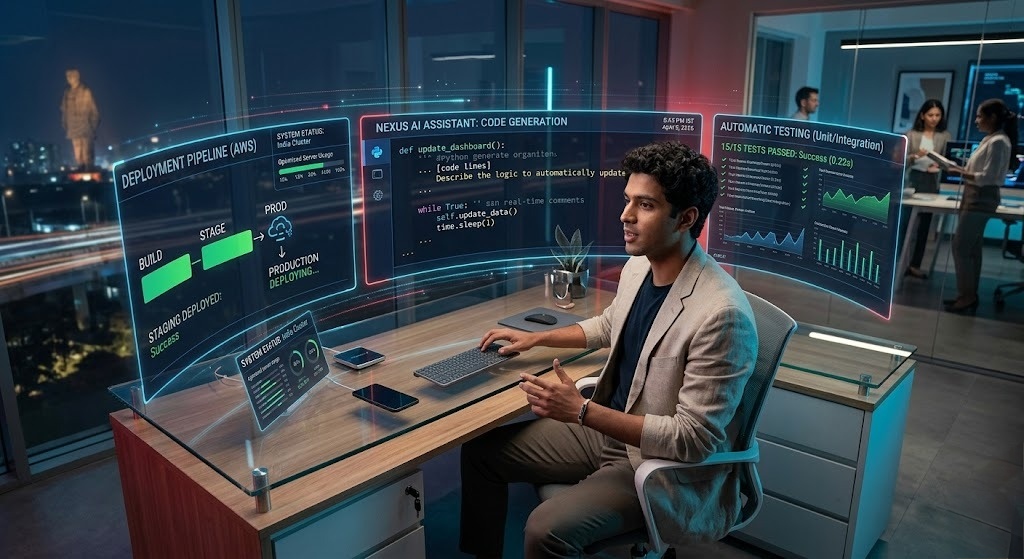
The term "vibe coding" was coined by AI researcher Andrej Karpathy in early 2025 and was named Collins Dictionary's Word of the Year for 2025. It describes a new way of building software: instead of writing lines of code, developers "express intent" using natural language, and AI agents autonomously generate, test, and deploy the application.
"Vibe coding is building software by describing what you want in natural language instead of writing code."
— Definition, Taskade Help Center
It transforms the developer's role from a manual coder into a guide, tester, and curator of AI‑generated outputs. The focus shifts from syntax to intent, from implementation to outcome.
The $9 Billion Replit Story
Replit's trajectory has been nothing short of extraordinary. On March 11, 2026, the company secured $400 million in Series D funding, catapulting its valuation to $9 billion — tripling its $3 billion valuation from just six months earlier. The round was led by Georgian Capital and included participation from Andreessen Horowitz, Coatue, Craft Ventures, the Qatar Investment Authority — and now, Accenture Ventures.
Today, Replit serves:
50 million users globally
85% of the Fortune 500
150,000 paying customers
The platform is on track to reach $1 billion in run‑rate revenue by the end of 2026.
The Accenture Partnership: Enterprise‑Grade Vibe Coding
So why is Accenture, a $70 billion global professional services firm, investing in a vibe coding platform?
Because the way software is built is fundamentally shifting. Traditional development cycles — often slowed by complex environments, infrastructure setup, and lengthy coding processes — are giving way to AI‑native approaches that enable teams to move from idea to working application in significantly less time using natural language prompts and agentic AI.
"Every enterprise wants to move faster — from idea to working application, and from prototype to production," said Ram Ramalingam, global lead for Software and Platform Engineering at Accenture. "Our collaboration with Replit puts that capability in the hands of more teams, breaking down the barriers between business vision and technical execution."
Under the partnership, Accenture and Replit will:
Collaborate to identify practical enterprise use cases for AI‑driven development
Scale new development workflows to Accenture's global client base
Integrate Replit's platform into existing enterprise engineering practices and technology ecosystems
The message is clear: vibe coding is no longer just for solo developers and startups. It is becoming the standard for the Fortune 500.
Oracle AI Database 26ai – Diamond‑Tier Availability for the Unbreakable Enterprise
The second announcement comes from Oracle, which today unveiled a comprehensive series of enhancements to its flagship database platform at the Oracle AI World Tour in New York.
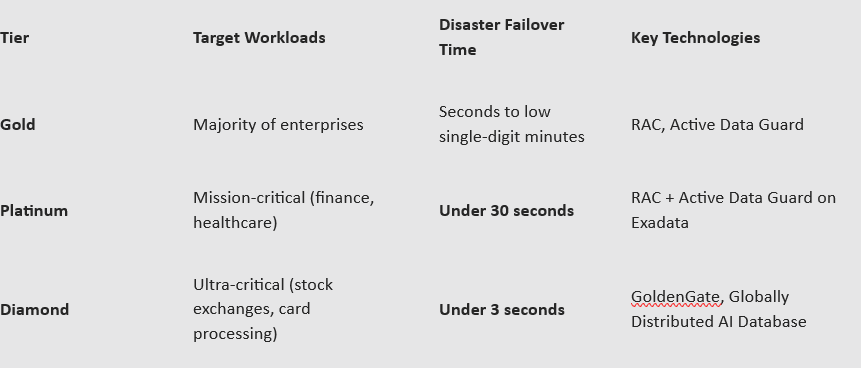
Platinum Tier: Sub‑30‑Second Failover for Mission‑Critical Workloads
Oracle introduced Platinum‑tier availability for mission‑critical workloads, delivering disaster failover times typically under 30 seconds — up to 4x faster than Oracle Database 19c — without requiring any application changes.
For high‑throughput multi‑node clusters spanning multiple regions, Platinum tier achieves failover times that previously took minutes, now completed in seconds. This is a direct response to the growing demands of AI‑driven workloads, which require continuous availability even as they scale unpredictably.
Diamond Tier: The Apex of Resilience
But the true headline is the introduction of Diamond‑tier availability — a new classification for applications that demand extreme resilience.
For the most demanding workloads — real‑time credit‑card processing, national stock exchanges, critical government infrastructure — Diamond tier delivers disaster failover times typically under three seconds.
"With Diamond‑tier availability, even the most demanding applications such as real‑time credit‑card processing recover from disasters so quickly that humans don't perceive any downtime."
— Oracle announcement
This is achieved through active‑active distributed clusters using Oracle GoldenGate or Oracle Globally Distributed AI Database, with logical replication across data centers or regions to detect and recover from failures at machine speed.
AI That Predicts and Prevents Failure
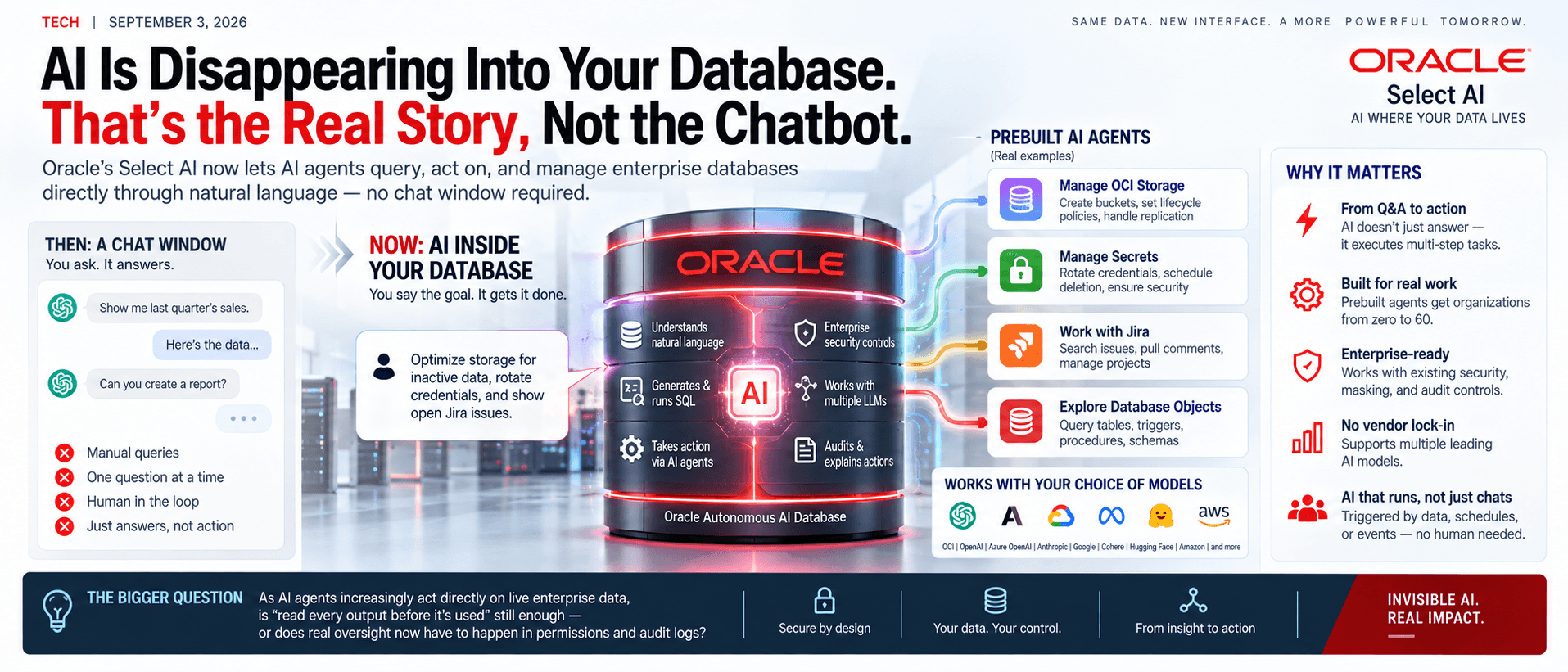
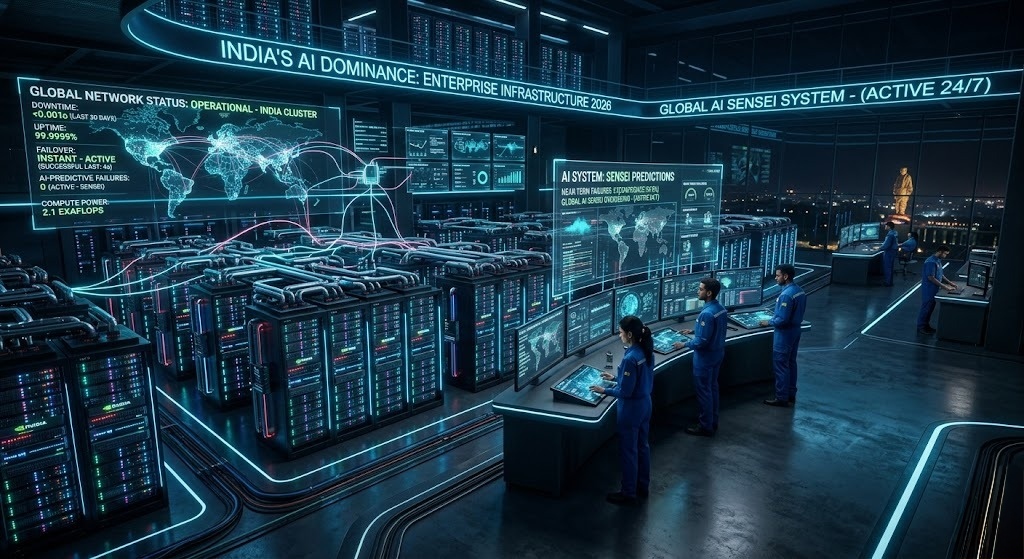
Beyond failover speeds, Oracle AI Database 26ai embeds intelligence directly into the database kernel. New diagnostic capabilities in the Cluster Health Monitor listen for critical component events that could indicate pending or actual failure, and recommend corrective actions. In some cases, the system can self‑heal autonomously.
Built‑in machine learning algorithms detect patterns, identify anomalies, and predict behaviors — from fraud detection to system health forecasting. This is not reactive disaster recovery. It is predictive resilience.
The Convergence – AI as the Unseen Utility
Taken together, these two announcements reveal a profound shift in how the world interacts with artificial intelligence.
Replit and Accenture are democratizing the creation of software — turning every business user into a potential "developer" who can express intent in natural language and watch AI agents bring that vision to life. The friction of coding is dissolving. The barrier between idea and execution is collapsing.
Oracle is ensuring that the infrastructure running beneath these applications is unbreakable. Whether it's a vibe‑coded prototype scaling to millions of users or a national stock exchange processing billions in transactions, the database simply must stay on. Sub‑three‑second failover makes downtime a forgotten concept.
This is the essence of the "Year of Truth" for AI. The spectacle is over. The utility is here. AI is becoming like electricity — invisible, essential, and expected to work every single time.
Conclusion: From Wow to Work
April 9, 2026, will be remembered as the day two different worlds of AI converged on a single idea: infrastructure matters.
Accenture's investment in Replit signals that enterprise software development is moving from manual coding to AI‑native "vibe coding" — where natural language becomes the new programming language. Oracle's Diamond‑tier availability signals that the databases powering our most critical systems can now recover from disaster faster than a human can blink.
For business leaders, the implications are clear:
Software development cycles are about to compress dramatically. Teams that adopt vibe coding will ship features in days, not months.
Downtime is becoming optional. Sub‑three‑second failover makes "always on" a reality for any workload willing to pay for Diamond tier.
AI is no longer a differentiator. It is a baseline utility. The companies that win will be those that embed AI so deeply that users never even notice it's there.
The age of AI as a flashy chatbot is over. The age of AI as the invisible grid has begun.

Vishal Sable
B.Tech AD @ shri balaji institute of technology and management
Engineering and tech journalist. I love exploring the impact of emerging technologies on global defense, sovereignty, and everyday life. Always looking for the real story behind the headlines.