LATEST NEWS
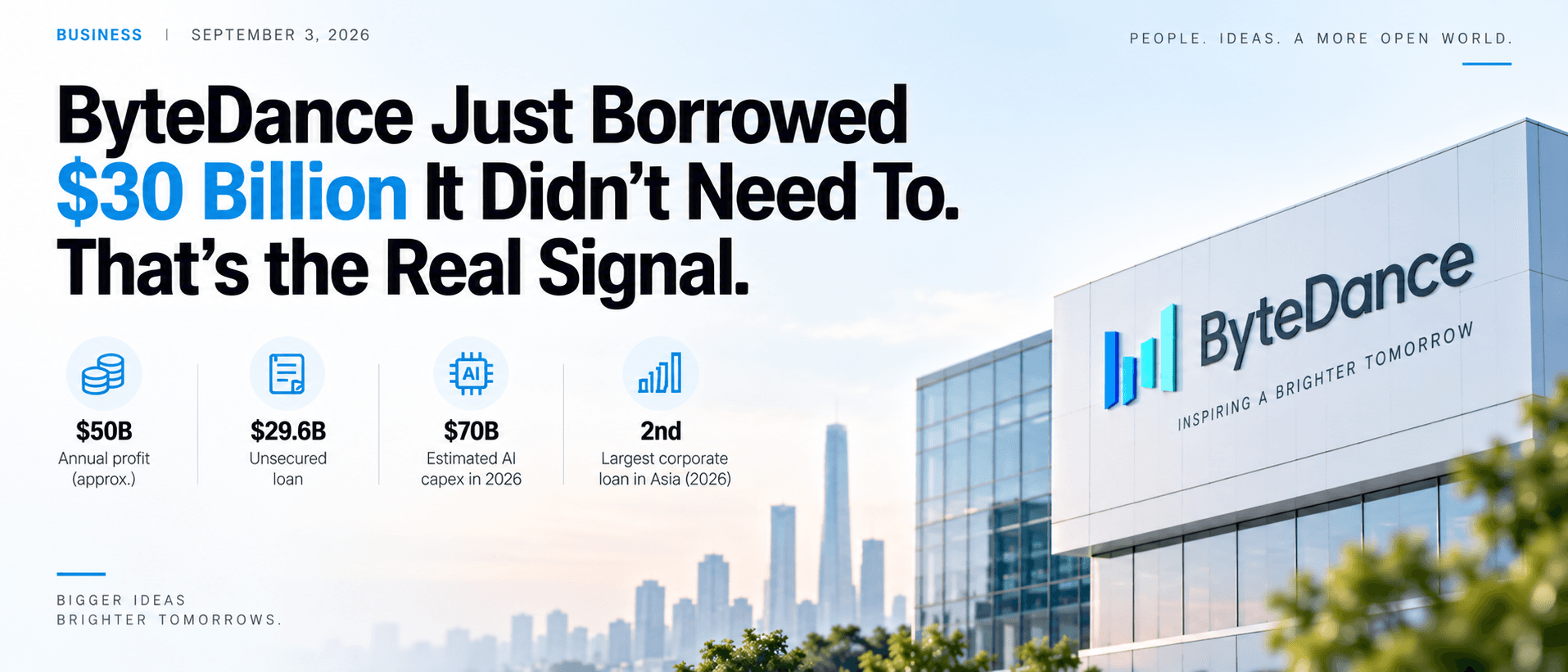
ByteDance Just Borrowed $30 Billion It Didn't Need To. That's the Real Signal.
September 8, 2026 4M
Back to News
News AlertWorld AI Tech
The Year of Truth: How Agentic AI and India’s $2Tn Bet Are Reshaping Global Business
V
Author
Vishal Sable
Published
April 6, 2026
Reading Time
12 MIN READ
Spread the Word
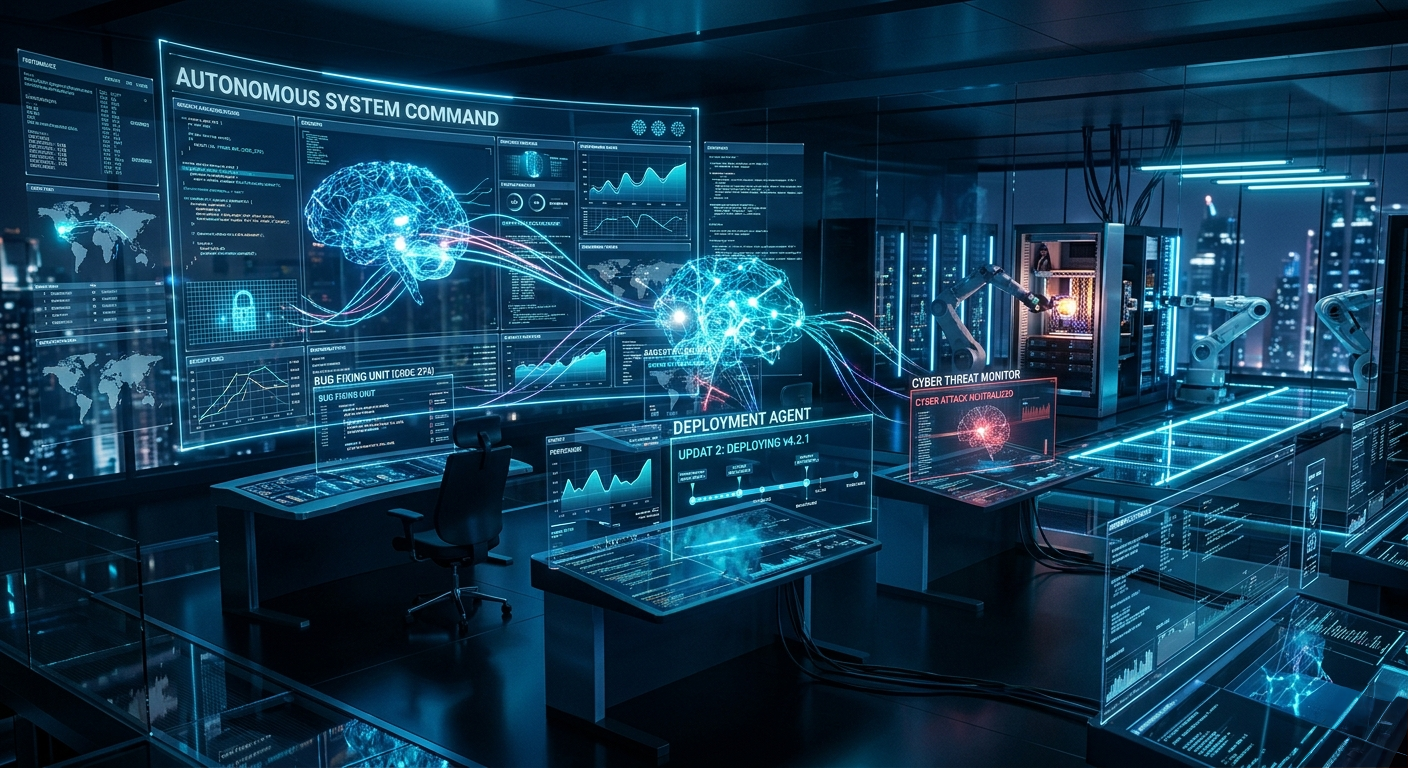
Year of Truth: 86% of Indian workers face AI disruption as spending hits $2Tn. Inside the ‘Year of Truth’—Agentic AI, Bollywood’s AI revolution, and the skills saving the economy.
The Great Unbundling: Why 2026 Is the ‘Year of Truth’ for AI
We have officially crossed the chasm. For the last three years, artificial intelligence has been a party trick for most enterprises—summarizing emails, generating rough drafts, and hallucinating legal cases. Welcome to April 2026. The "Wow" phase is over. The "Work" phase has begun.
Industry analysts at Moody’s and Nvidia have declared this moment the "Year of Truth" for artificial intelligence. The distinction is brutal and binary: AI is no longer competing with humans at chess or trivia; it is competing for operational budgets, software engineering headcounts, and physical supply chain control.
At Metaplugs, we are observing a perfect storm where Agentic Architecture meets economic reality. Global AI spending is projected to exceed $2 trillion in 2026, but the ROI is no longer about hype. It is about autonomy. As Jeff Dean of Google DeepMind stated at Nvidia’s GTC last week, we have moved past solving eighth-grade math; we are now in the era of "machine speed" agents that rewrite their own code and negotiate with other AIs.
This is your technical briefing on the three vectors of truth: The Agents taking your software, the global south leading the entertainment pivot, and the workforce survival data you cannot ignore.
The Agentic Shift: From “Chat” to “Chair” (Autonomous Execution)
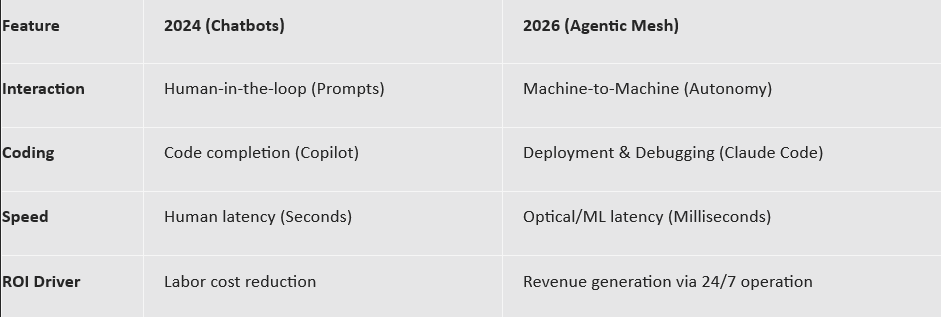
The first truth of 2026 is architectural. The Large Language Model (LLM) is no longer the product; the Agentic Mesh is the product. We have moved from Retrieval-Augmented Generation (RAG) to Autonomous Execution.
The Death of the GUI and the Rise of the Digital Worker
For the past forty years, software required a human to point and click. That bottleneck is dissolving. In February 2026, the release of models like Anthropic’s Claude 4.6 Opus and Google’s Gemini 3 Deep Think introduced "Computer Use" capabilities that allow AI to view a monitor, move a cursor, and navigate Excel or legacy mainframes without API integrations.
This is not robotic process automation (RPA). This is visual reasoning. Alibaba’s Qwen 3.5, for example, can now look at a UI screenshot and independently fill out multi-step web forms. For Metaplugs’ enterprise clients, this means AI isn't just answering a ticket; it is physically resetting a password across five legacy systems simultaneously.
Self-Healing Infrastructure and the 1,000 Token/Second Barrier
The most immediate monetization vector is Software Engineering. The industry is witnessing a "Silicon Exodus" where efficiency is king.
OpenAI’s GPT-5.3 Codex Spark model, running on Cerebras hardware, has shattered latency barriers, achieving over 1,000 tokens per second. At that speed, the concept of "human review" becomes the liability. We are seeing the emergence of self-healing code—systems where AI agents do not just suggest fixes but deploy, test, and rollback changes autonomously.
As noted in recent technical analyses, a single developer using these tools can now output the work of ten to twenty "virtual developers," forcing a total rewrite of DevSecOps protocols. The "Year of Truth" asks: If your software fixes itself, what is the role of your IT department? (Answer: Monitoring the "Master Agent" that oversees the sub-agents).
The Entertainment Revolution: Bollywood's AI Pivot & The $1.4Bn Gamble
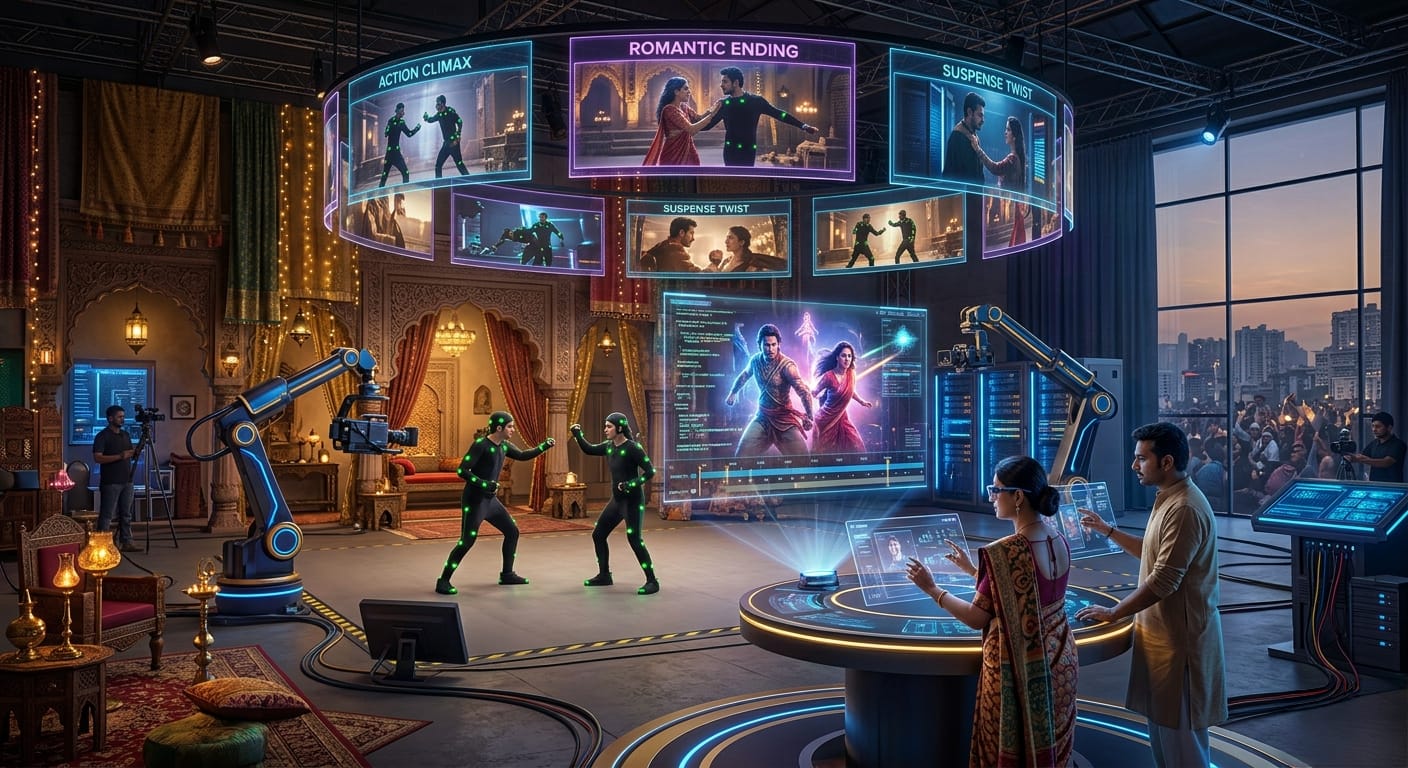
While Silicon Valley debates ethics, India has moved to execution. The "Year of Truth" is also the "Year of Cultural AI," and the numbers coming out of Mumbai and Bengaluru are staggering.
Despite a drop in physical moviegoers (down to 832 million in 2025 from 1.03Bn in 2019), box office revenues hit a record $1.4 billion last year. Why? AI-driven hyper-efficiency.
Recutting Reality for Revenue
The global publishing rule for Metaplugs is to follow the money, and India’s Eros Media World is doing exactly that. They are currently reviewing a 3,000-title catalog for "AI-assisted adaptation". Why reshoot a classic when you can change the ending?
The 2013 hit Raanjhanaa was re-released with an AI-altered, happy ending. Despite actor backlash, the Tamil version sold 35% of available tickets in its release month—12 points higher than the industry average. For studios, AI allows "A/B testing" of narrative endings to maximize streaming retention.
Workforce Reality: 86% Disruption & The Upskilling Imperative
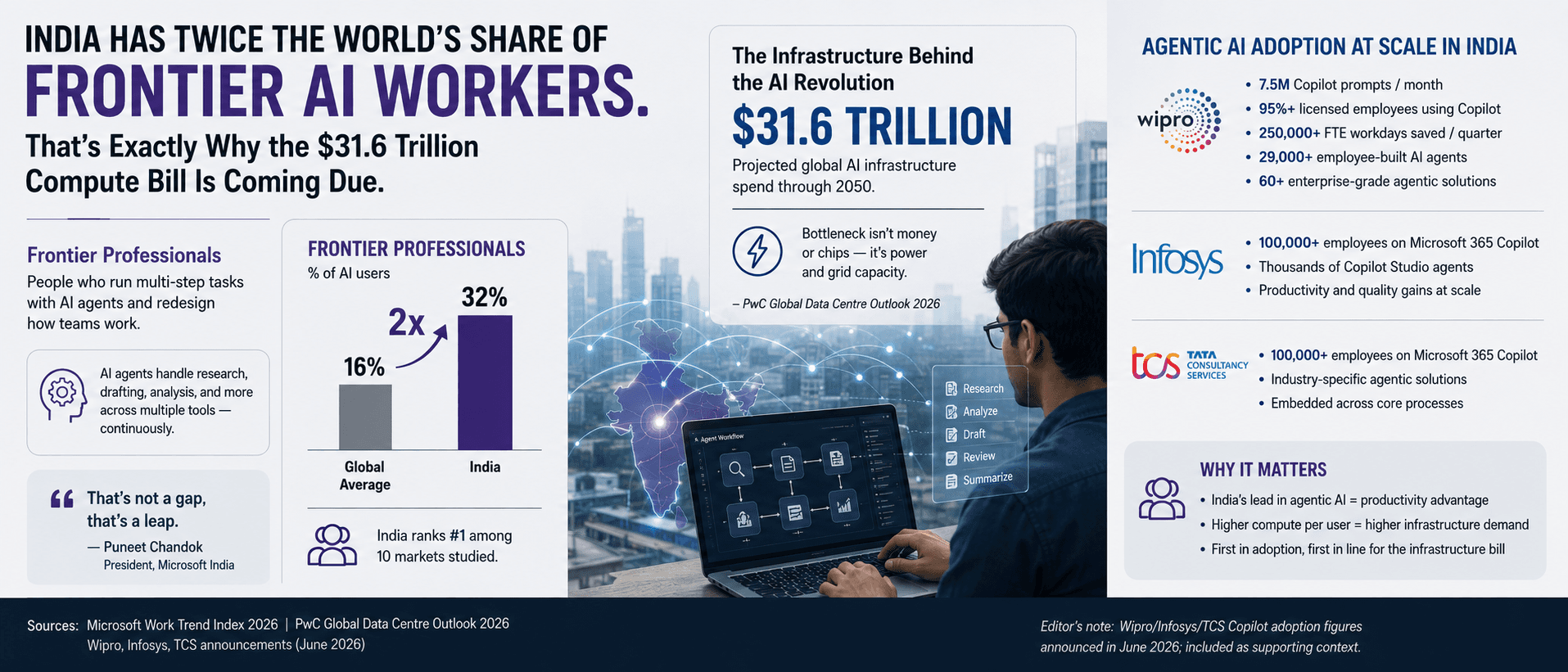
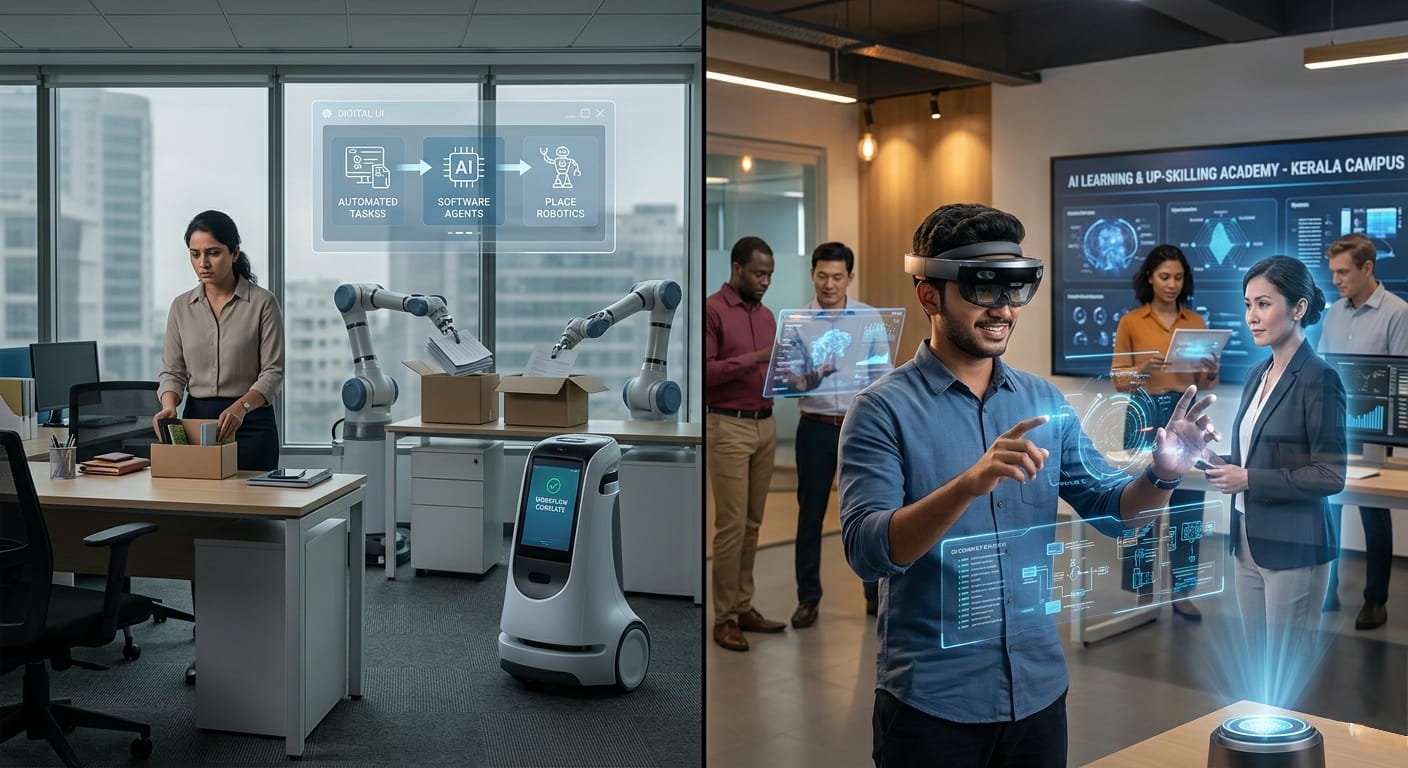
You cannot discuss 2026 without addressing the human ROI. The data is in, and it is polarizing. According to the ETS Human Progress Report 2026 (exclusively accessed by Times of India), 86% of Indian professionals report major workplace disruption due to AI—significantly higher than the global average of 67%. India is the canary in the coal mine for the global north. Why? Because Indian workers estimate that 42% of their daily tasks already involve AI tools. This is not a future prediction; it is the present reality.
Surviving the Agent Era
2026 is the year we stop asking "Can AI do this?" and start asking "Should the human do this?"
For enterprises, the "Year of Truth" means:
Cost reduction (AI slashing production/film costs by 80%).
Revenue protection (Using AI to recut libraries and retain audiences).
Talent retention (Upskilling 86% of a disrupted workforce before they become obsolete).
As the industry pivots from Generative AI to Operational AI, Metaplugs remains focused on the revenue stack. The agents are here. They are fast. And they are rewriting the rules of global business in real-time.

Vishal Sable
B.Tech AD @ shri balaji institute of technology and management
Engineering and tech journalist. I love exploring the impact of emerging technologies on global defense, sovereignty, and everyday life. Always looking for the real story behind the headlines.