LATEST NEWS
ByteDance Just Borrowed $30 Billion It Didn't Need To. That's the Real Signal.
September 8, 2026 4M
Back to News
News AlertWorld AI Tech
AI News: Latest Breakthroughs, Innovations, and the Future of Artificial Intelligence
M
Author
Mukesh paliwal
Published
March 22, 2026
Reading Time
6 MIN READ
Spread the Word
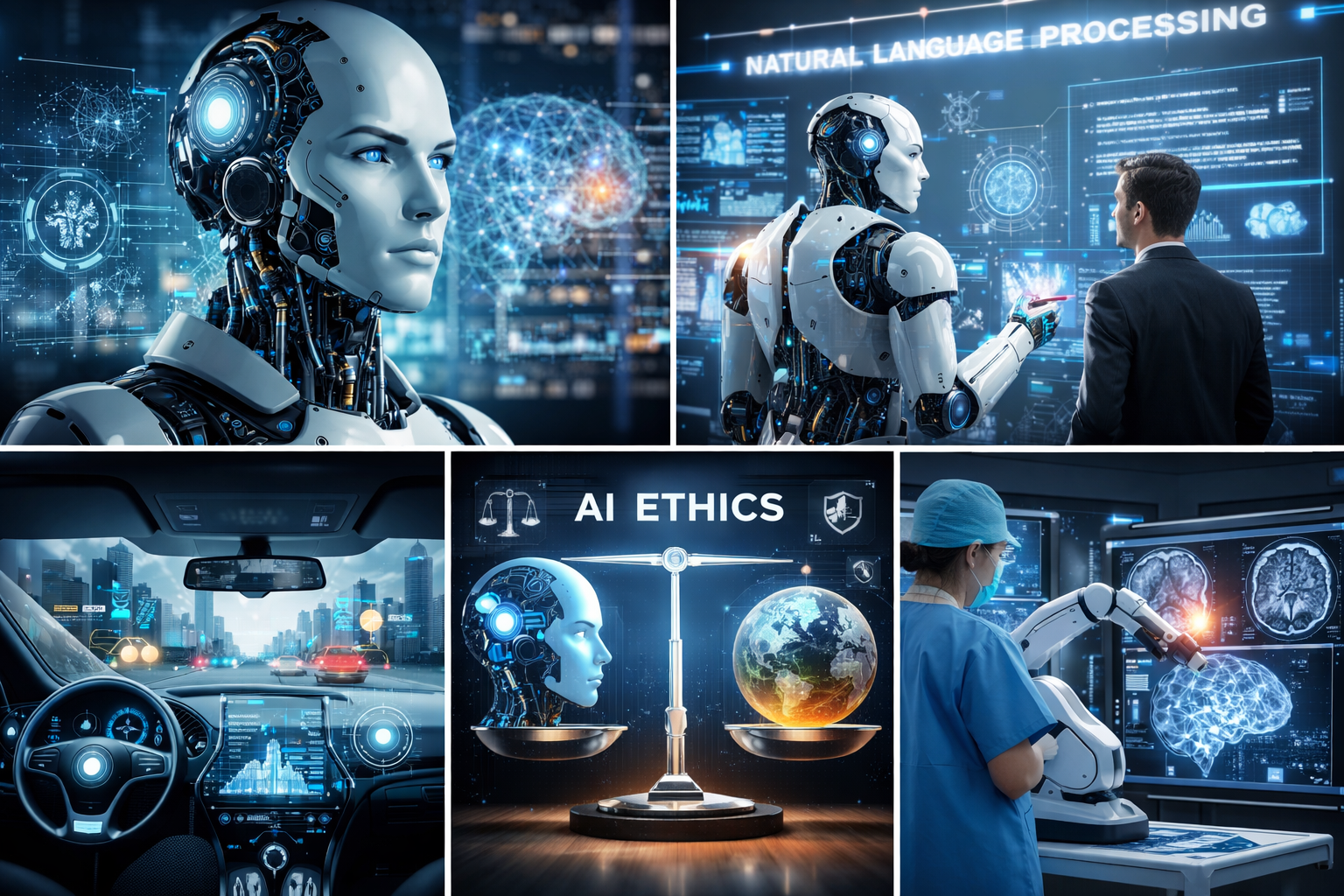
he world of artificial intelligence (AI) is evolving at a breathtaking pace, and every year brings a fresh wave of innovations that push the boundaries of what machines can do. At its core, AI is reshaping industries, redefining human-computer interaction, and raising profound questions about the nature of work, creativity, and society itself. One of the biggest drivers behind this transformation is the advancement of machine learning (ML), the subset of AI that enables systems to learn from data and improve over time without explicit programming. Modern machine learning systems, particularly deep learning models, use complex neural networks with millions or even billions of parameters to excel at tasks once thought to be strictly human domains — from generating art and composing music to diagnosing diseases and navigating autonomous vehicles. Technologies like Generative Adversarial Networks (GANs) and diffusion models have democratized creative content, enabling machines to produce images, videos, and text that blur the line between human and AI-generated output. At the same time, innovations in self-supervised learning and few-shot learning are reducing AI’s reliance on vast amounts of labeled training data, making powerful models more accessible to researchers and developers around the world.
Another area where AI has seen explosive growth is Natural Language Processing (NLP), which focuses on enabling machines to understand and generate human language. The advent of large language models (LLMs) — such as those in the GPT series — has transformed how machines interact with humans. These models are trained on massive text datasets, teaching them to respond coherently to prompts, translate languages, summarize documents, and even write code. Their influence can be felt across industries: advanced chatbots are improving customer support; educational platforms use AI to provide personalized tutoring; and writers leverage generative tools to brainstorm or edit content. Yet, with this power comes significant ethical debate. Experts are concerned about bias in language models, potential misinformation spread, and the economic impact on jobs involving writing, translation, or research. Ensuring that NLP systems are fair, transparent, and accountable remains a central focus of AI research and governance discussions.

Looking to the future, the trajectory of AI development suggests even more astonishing breakthroughs ahead. Researchers are striving for AI systems that possess greater common sense, adaptability, and the ability to integrate multimodal data — blending text, visual, and audio information seamlessly. Advances in explainable AI (XAI) aim to make complex models more interpretable and trustworthy, enabling better collaboration between humans and machines in sensitive domains like healthcare and finance. Additionally, AI is being integrated with other emerging technologies like the Internet of Things (IoT) and blockchain to create smarter cities, transparent supply chains, and adaptive systems that respond intelligently to real-world data. As governments and international organizations develop standards and policies around AI use, the conversation around AI ethics and safety will continue to shape how these powerful tools are deployed responsibly. Staying informed through trustworthy AI news sources will be essential for navigating this rapidly changing landscape.