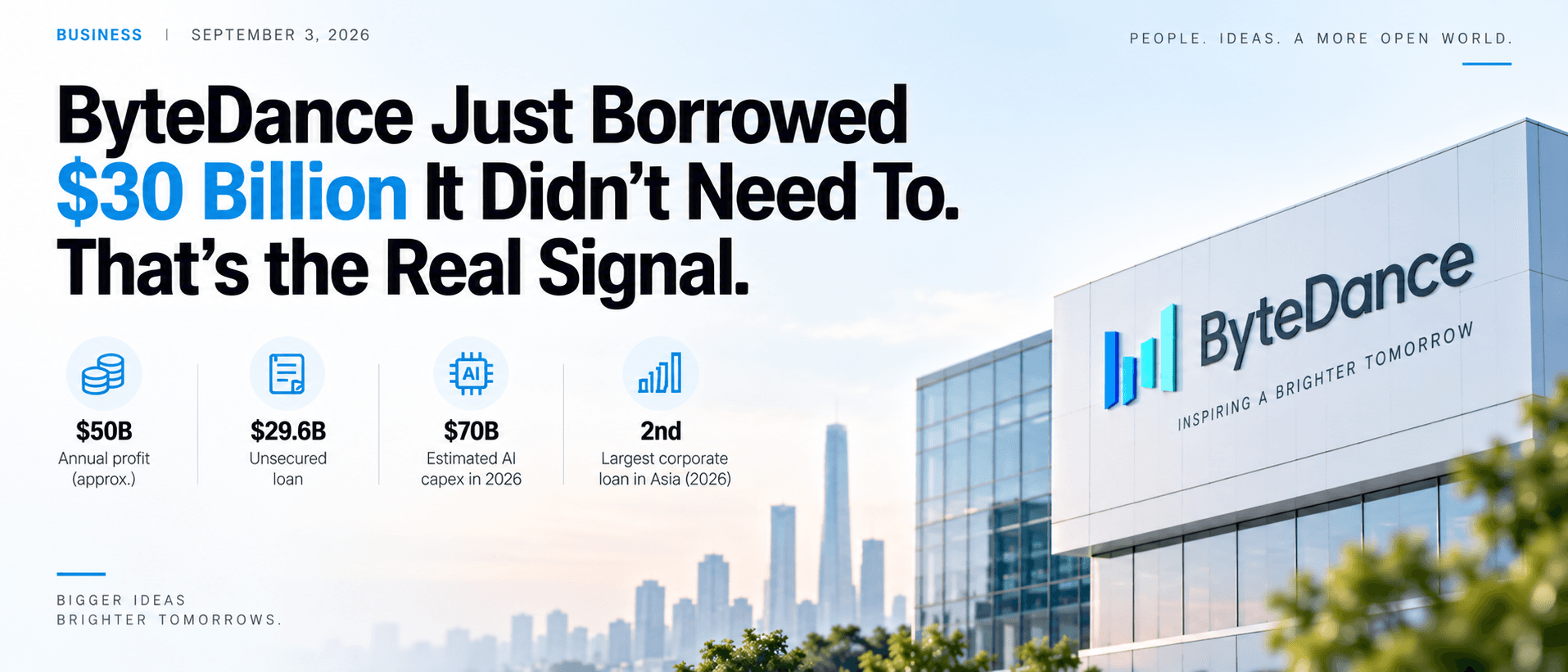
ByteDance Just Borrowed $30 Billion It Didn't Need To. That's the Real Signal.
The "Digital Coworker" Era Has Begun

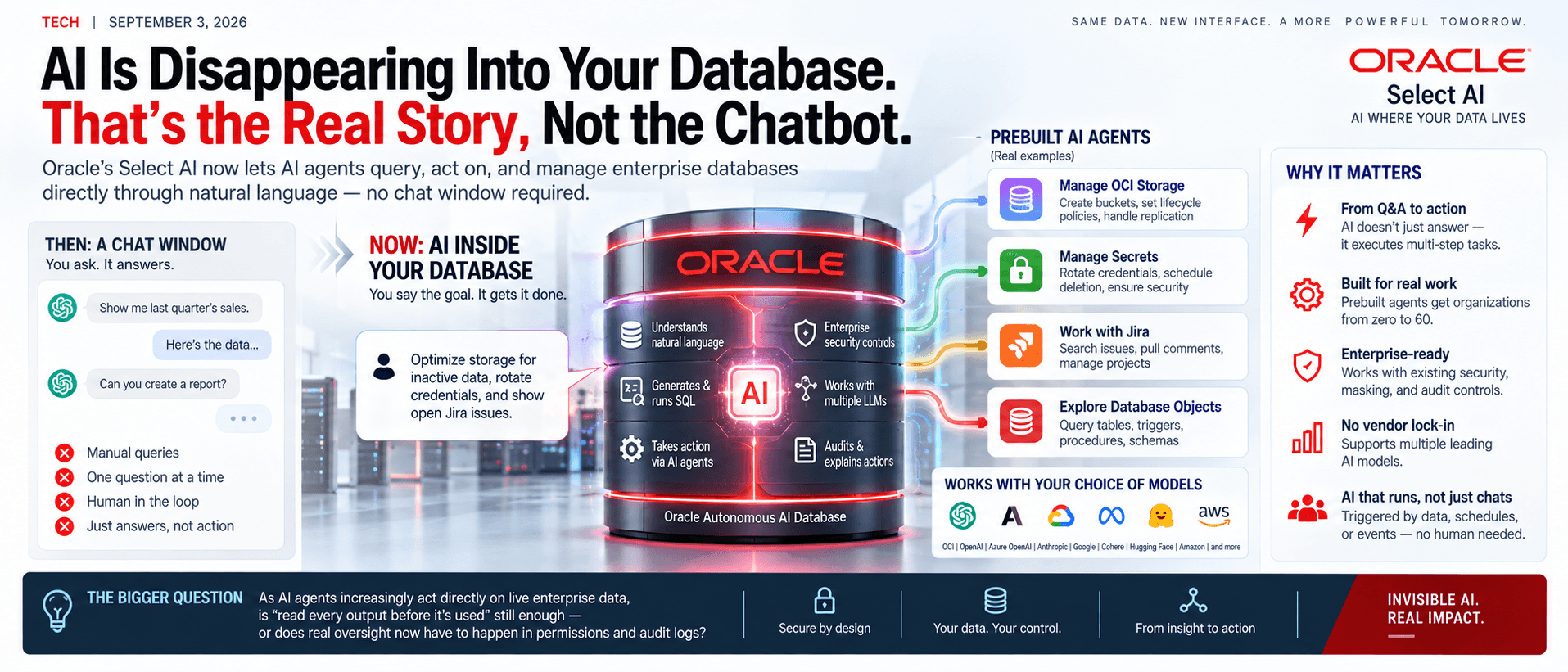
For the past two years, artificial intelligence has been a fascinating conversation partner — generating emails, drafting code, and answering questions with varying degrees of accuracy. That era ended in April 2026. The focus has shifted decisively from "Generative AI" — chatbots that respond — to "Agentic AI" — autonomous systems that actually do the work. AI is no longer a search tool. It is now a digital coworker that manages schedules, negotiates contracts, troubleshoots software, and executes complex tasks without human intervention. As Microsoft's Copilot team put it in February, conversational chatbots were the first chapter of AI, and today is the beginning of the second chapter.
The infrastructure story driving this shift came into sharp focus today. AMD announced its flagship global AI event, "Advancing AI 2026," scheduled for July 22–23 at the San Francisco Moscone Center. The event will bring together developers, customers, enterprise leaders, and ecosystem partners to showcase the latest advancements in AMD's AI solutions. But the real headline is the strategic intent: the event will provide the AI open ecosystem with "blueprints for building, deploying and scaling AI powered by AMD" — from silicon to software. As AMD CEO Dr. Lisa Su and her team will demonstrate, the company is positioning its full stack — AI-optimized CPUs, GPUs, networking, and software — as the foundation for the agentic era. Why does this matter? Because as enterprises race to deploy agentic AI, the underlying compute infrastructure has become the critical bottleneck. With a broad portfolio of AI-optimized solutions, AMD is delivering the performance and scalability needed for what it calls "a new era of intelligent computing." The conference is expected to highlight next-generation AI accelerators including the MI450 series, EPYC Venice "Zen 6" server processors, and platform-level innovations designed to compete in the rapidly evolving AI data center market. The message is clear: the infrastructure race for agentic AI has begun, and AMD is publishing the playbook.

The enterprise data confirms this is not a niche trend. It is an explosive mainstream shift. According to recent enterprise surveys, 96% of organizations are already using AI agents in some capacity, and 97% are exploring system-wide agentic AI strategies — a clear signal that the shift from pilots to production is accelerating. Mayfield's CXO Network survey of 266 CIOs, CTOs, and technology leaders found that 42% of enterprises already have AI agents in production, and 72% are deploying agents across real workflows in IT, operations, finance, and customer experience. This marks the fastest shift in enterprise automation in five years. A separate survey of 1,500 IT decision-makers found that organizations currently have an average of 28 AI agents deployed, with plans to scale to 40 agents within the next 12 months — a 43% increase. Large enterprises over $500 million expect to deploy an additional 72 agents in the coming year. According to the same data, 78% of AI automation projects are already delivering moderate to high value, with only 2.5% reporting failure or negative ROI. Budget is now a challenge for just 15% of IT leaders — down dramatically from prior years. As Mayfield's report concluded, agentic AI moved into production faster than most enterprise technology shifts seen in the last decade.
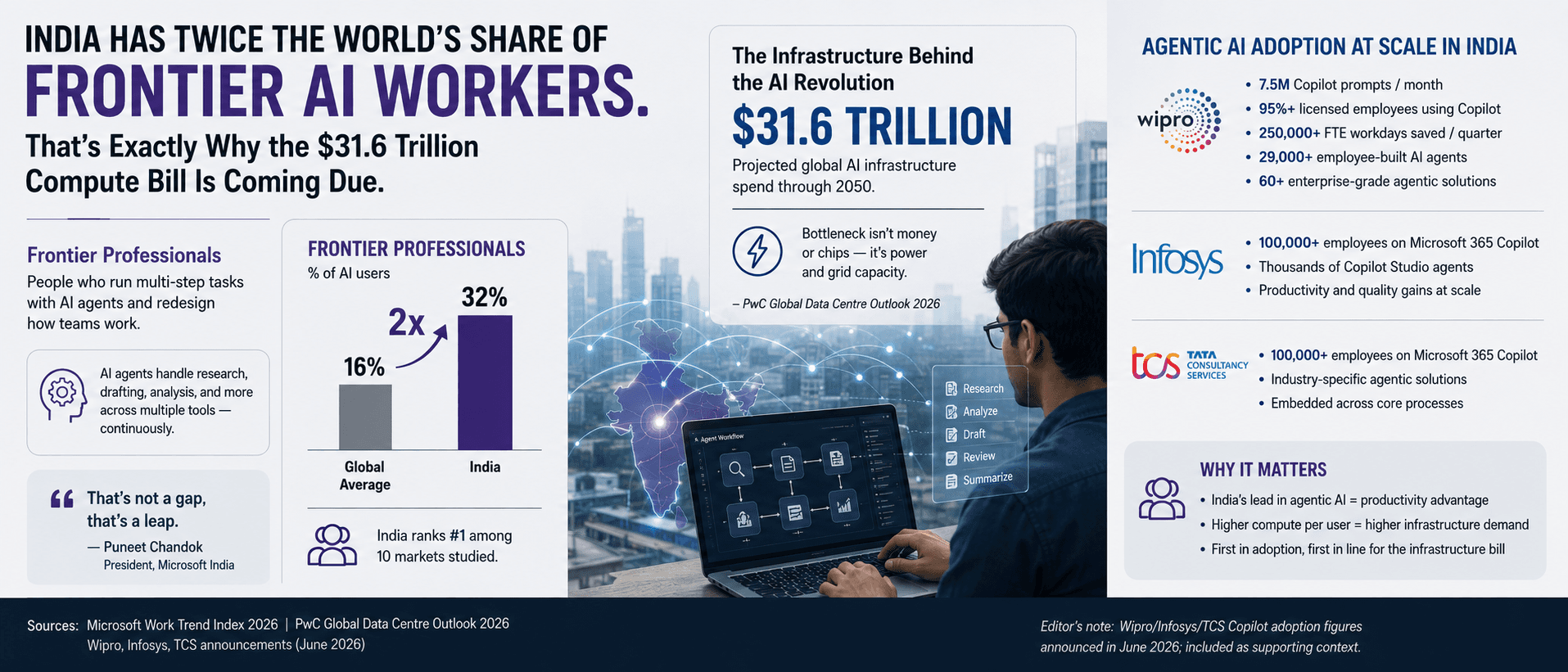
None of these agentic capabilities would be possible without the underlying compute infrastructure. This is why AMD's "Advancing AI 2026" is more than product announcements — it is a strategic declaration. The agentic AI boom requires massive GPU compute for persistent, 24/7 agent operations; scalable cloud infrastructure to support millions of simultaneous agent sessions; low-latency networking for agent-to-agent coordination; and enterprise-grade security and governance to prevent "rogue" agent behavior. As the industry grapples with power efficiency and scalability challenges in large-scale AI deployments, events like AMD Advancing AI 2026 have become critical checkpoints for decision-makers evaluating infrastructure strategies. The question is no longer whether to deploy agentic AI — it is which infrastructure provider will power the agentic enterprise. According to Gartner, 40% of enterprise applications will include task-specific AI agents by the end of 2026. For context, that is months away — not years.

Vishal Sable
B.Tech AD @ shri balaji institute of technology and management
Engineering and tech journalist. I love exploring the impact of emerging technologies on global defense, sovereignty, and everyday life. Always looking for the real story behind the headlines.