Back to News
News AlertWorld of Startup’s
Cosmoserve Raises $6M Seed Round to Advance Space Debris Removal Technology
V
Author
Vicky Galfat
Published
November 6, 2026
Reading Time
10 MIN READ
Spread the Word
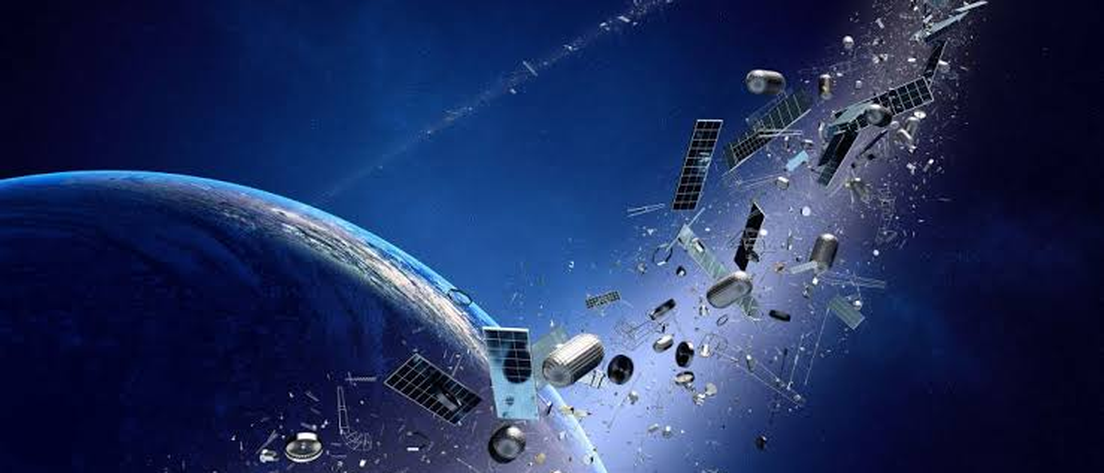
Cosmoserve raises $6M led by Rebright Partners to advance robotic debris removal, satellite servicing and its target of commercial operations by 2028.
What Happened?
Hyderabad-based space technology startup Cosmoserve Space has raised $6 million in a seed funding round led by Japan-based Rebright Partners. Indian investors Aranya Holdings and Naandi Ventures also participated, alongside existing investors AUM Ventures and Shakti VC. The announcement was made on November 5, 2026, alongside the inauguration of the company's new Hyderabad facility, Base 1. Inc42
The latest investment takes Cosmoserve's total reported funding to more than $9 million. The company plans to use the capital for technology demonstrations, two upcoming missions and the development of its Hyderabad facility. Its broader objective is to develop robotic spacecraft capable of approaching and capturing defunct satellites and other orbital debris. The Economic Times
Cosmoserve is targeting commercial operations by 2028, following additional technology demonstrations. The company has also opened Base 1 in Hyderabad, a facility designed to support research, development and testing for space debris recovery and satellite servicing. These milestones indicate that the startup is preparing for more advanced demonstrations, rather than announcing an already operational debris-removal service. Business Standard
What Does the Source Say?
The $6 million funding round
The funding round was led by Rebright Partners, a Japan-based venture capital firm. Aranya Holdings and Naandi Ventures joined the investment, while existing investors AUM Ventures and Shakti VC also participated. According to Inc42, founder Chiranjeevi Phanindra said the company's valuation had doubled since its previous pre-seed funding round, although the exact valuation was not disclosed. Inc42
The company reportedly raised more than $9 million in total funding after this round. The latest capital is intended to support technology demonstrations, two upcoming missions and operations at Base 1. The available reporting does not provide a detailed allocation of the $6 million across these activities. Business Standard
How Cosmoserve plans to remove space debris
Cosmoserve is developing a soft robotic capture system designed to capture non-operational satellites and other orbital objects. Unlike ordinary satellite operations, active debris removal involves approaching an object that may not be designed to cooperate with another spacecraft. The servicing vehicle must therefore navigate towards the target and establish a controlled capture before a disposal operation can take place.
The company's first technology demonstration, Mission Embrace-1, flew aboard Skyroot Aerospace's Vikram-1 rocket in July 2026. However, the robotic capture petals did not deploy as intended. Founder Chiranjeevi Phanindra told Inc42 that the company had identified and addressed potential issues involving the thermal release mechanism and the system's response to low temperatures. These are company-reported explanations, not independent proof that the problem has been permanently resolved. The Economic Times' earlier mission coverage
The next planned step is Embrace-2, an upgraded demonstration intended to validate the improved robotic capture mechanism. Cosmoserve is also planning a larger demonstration that would involve approaching within 10 metres of a defunct satellite. That proposed proximity demonstration should not be confused with a completed capture or successful removal. Inc42
Base 1 : Hyderabad's space servicing facility
Alongside the funding announcement, Cosmoserve inaugurated Base 1, a facility located in Hyderabad. The Government of India's Press Information Bureau described it as a facility spanning approximately 14,800 square feet, with infrastructure for designing, building and testing space robotics and satellite servicing systems. Press Information Bureau
The facility includes four principal capabilities:
Orbital Rendezvous and Capture Lab: Supports the simulation and development of spacecraft approach and capture operations.
Space Robotics Innovation Lab: Focuses on the development of robotic systems for satellite servicing and debris capture.
ISO Class 8 clean room: Provides a controlled environment for satellite integration.
Mission Simulation and Control Centre: Supports mission preparation, simulation and operational control.
These facilities provide ground-based infrastructure for developing and testing hardware before it is sent into orbit. They do not, by themselves, establish that a robotic spacecraft can successfully capture and remove debris under real orbital conditions. Business Standard
The company's proposed business model
Cosmoserve is also working on a proprietary Dual Spacecraft Architecture. As described by Business Standard, the proposed model involves a larger orbital service station carrying fuel, equipment and spare parts, alongside a smaller autonomous service vehicle that travels to individual satellites to perform servicing or removal tasks. The idea is to support multiple servicing activities rather than relying entirely on a separate, dedicated recovery spacecraft for each target. Business Standard
The company says this approach could help reduce costs through in-orbit refuelling and the ability to service multiple objects. However, the available information does not establish the system's final operating costs, demonstrated capacity or commercial economics. These remain development objectives rather than independently validated performance results. Inc42
What Is Still Unknown?
Despite the new funding and facility, several important technical and commercial questions remain unanswered.
First, the capture technology still needs further orbital validation. The first demonstration did not deploy its robotic petals as intended. Cosmoserve says it has addressed potential causes and is preparing an upgraded mission, but the available sources do not provide independent test results confirming that the revised mechanism will work reliably in orbit. Inc42
Second, the commercial economics are not yet established. The company has described plans involving in-orbit refuelling and servicing multiple satellites, but has not publicly demonstrated the cost per removal mission, the number of objects it can service or the operating economics of its proposed architecture. These figures will matter when satellite operators compare removal services with other end-of-life disposal options. Business Standard
Third, commercial demand has not yet translated into confirmed paid contracts in the available reporting. Phanindra told Inc42 that Cosmoserve had letters of intent from satellite operators in the United States, Europe and India. He also said the company was aiming to secure at least one paying customer before commercial operations begin. Letters of intent indicate interest, but they should not be treated as completed customer agreements or revenue. Inc42
Finally, the company's 2028 commercialisation target depends on completing its upcoming demonstrations and translating those results into a dependable service. The available reporting does not establish the final mission schedule, service pricing or the regulatory and operational arrangements for individual debris-removal missions. Business Standard
Why Does It Matter?
Orbital debris is a growing space sustainability problem
Space debris includes defunct satellites, spent rocket stages and fragments created by collisions or other break-up events. These objects travel at high orbital speeds, meaning even relatively small fragments can damage operational spacecraft. As more satellites enter orbit, managing the growing population of non-operational objects becomes increasingly important. NASA Orbital Debris Program Office
The European Space Agency's 2026 Space Environment Report highlights the scale of the problem. Based on data collected through the end of 2025, ESA reported that more than three intact satellites or rocket bodies re-enter Earth's atmosphere each day on average, while approximately ten new payloads are launched daily. The agency also warns that not enough satellites are leaving heavily congested orbits at the end of their operational lives. ESA Space Environment Report 2026
ESA's statistics portal, updated on November 2, 2026, estimates approximately 47,280 regularly tracked space objects. It also estimates around 1.5 million debris objects between 1 centimetre and 10 centimetres in size, and approximately 230 million fragments between 1 millimetre and 1 centimetre. These are estimates based on space-environment models, not a count of individually tracked objects. ESA Space Environment Statistics
Why active debris removal is important
Traditional debris mitigation focuses heavily on preventing new debris and ensuring satellites are disposed of responsibly after their missions. Active debris removal addresses a different part of the problem: objects that are already in orbit and may continue to pose collision risks.
The challenge is that removing an object from orbit is technically complex. A servicing spacecraft must identify and approach its target, manage relative motion, establish a secure capture and then support a controlled disposal or other safe operation. A failure during these steps could compromise the mission or create additional risks. ESA identifies active debris removal as part of the wider response needed to improve long-term orbital sustainability. NASA Orbital Debris Program Office
Implications for India's private space sector
Cosmoserve's development is also relevant to India's expanding private space ecosystem. The company's Base 1 facility brings robotics development, satellite integration and mission simulation capabilities together in Hyderabad. The Government of India's Press Information Bureau says the facility supports India's emerging work in active debris removal and in-orbit servicing. Press Information Bureau
If Cosmoserve can validate its capture technology and build a commercially viable servicing model, it could contribute to a specialised segment of the space industry beyond launch vehicles and satellite manufacturing. However, the opportunity depends on successful orbital demonstrations, customer demand and the ability to conduct safe, repeatable missions.
Our Analysis
Cosmoserve's $6 million seed round is significant because it directs investment towards a difficult but increasingly relevant part of the space economy: maintaining the orbital environment after satellites have been launched.
The company is pursuing more than a one-time debris-capture demonstration. Its proposed architecture combines robotic capture, satellite servicing and in-orbit refuelling. In principle, a system that can service multiple objects could offer a different cost structure from missions designed around a single target. But this advantage remains a proposition until the company demonstrates the system's reliability, mission duration and actual servicing costs. Business Standard
The first Embrace mission is an important part of the story because it shows the gap between developing hardware on Earth and making it work in orbit. The robotic petals' failure to deploy is a meaningful technical setback, even if the mission generated information that can guide the next iteration. Cosmoserve's ability to convert that experience into a successful Embrace-2 demonstration will be a more useful indicator of technical progress than the funding announcement alone. Inc42
Base 1 is another practical step. A dedicated facility can help the company develop, integrate and test its systems more consistently. However, ground simulations cannot fully reproduce every challenge of operating around an uncontrolled object in orbit. The strongest evidence of progress will come from successful flight demonstrations that show reliable approach, capture and disposal operations. ESA Space Environment Report 2026
The commercial timeline also deserves attention. Cosmoserve's stated goal of beginning operations in 2028 gives it a relatively clear development milestone, but the company still needs to demonstrate its technology and convert reported letters of intent into paying customers. The next two years will therefore be about technical validation and market readiness, not simply scaling an already established service.
Our assessment: Cosmoserve has secured meaningful early-stage capital for a specialised space technology challenge and has added physical infrastructure to support development. Its long-term opportunity is credible as an area of industry need, but its commercial prospects will depend on proving that its capture system can operate safely and repeatedly in orbit. The next major milestone is not another funding round; it is a successful orbital capture demonstration.
Sources and References
Spacetech Startup Cosmoserve Nets $6 Mn, Eyes Commercialisation By 2028
India Pioneers Space Debris Removal; Union Minister Dr. Jitendra Singh Announces Vision of Debris-Free Space by 2030
Cosmoserve Unveils Hyderabad Facility for Space Debris Removal, Refuelling
ESA Space Environment Report 2026
Space Environment Statistics
Cosmoserve Awaits Telemetry Analysis Before Confirming Debris-Removal Demo Outcome on Vikram-1
Orbital Debris Program Office — Frequently Asked Questions

Vicky Galfat
University of Mumbai/BCA
Learning, building, and exploring the world of technology one project at a time.