Back to News
News AlertWorld of Startup’s
Gama Raises €15M to Scale Satellite Solar Arrays and Expand Production
V
Author
Vicky Galfat
Published
November 13, 2026
Reading Time
8 MIN READ
Spread the Word
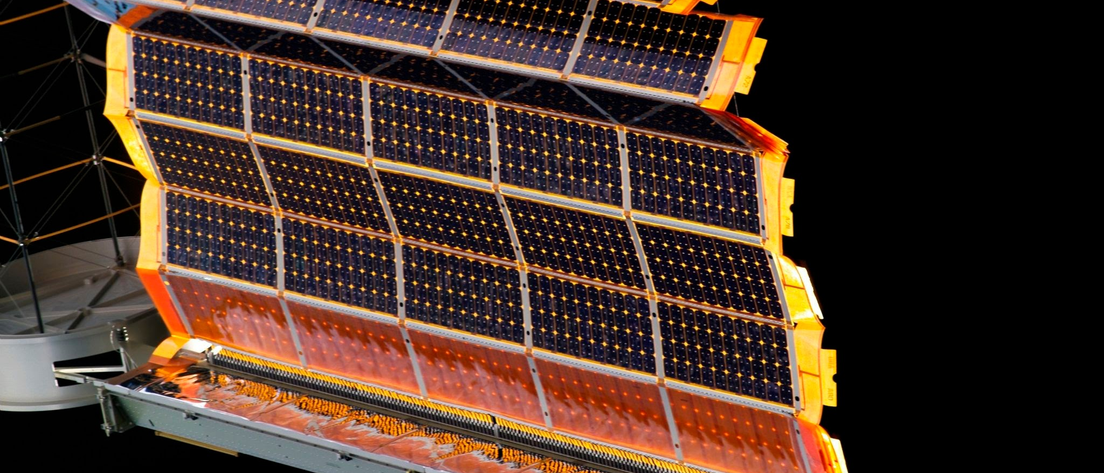
French space-tech startup Gama raises €15M to scale its lightweight Wing solar arrays, build production capacity and expand satellite power supply.
What Happened?
French space-technology startup Gama has raised €15 million in seed funding to scale production of its lightweight, deployable solar arrays for satellites. Announced on 12 November 2026, the round includes Transition Ventures, Planet A, Draper Associates and Manta Ray Ventures. The company plans to use the capital to establish its first Wing production line in Ivry-sur-Seine, near Paris, expand in-house testing capabilities and recruit approximately 60 additional engineers. Tech.eu's funding report
The investment is aimed at a specific challenge in the satellite industry: producing increasingly powerful solar arrays without making them too heavy, expensive or difficult to manufacture. Gama's Wing product is designed to launch in a compact, folded configuration and deploy into a much larger structure once in orbit. The company wants to supply satellite manufacturers that need more electrical power but face constraints around available components and production timelines. Payload's funding coverage
The round also gives Gama resources to move beyond product development towards repeatable manufacturing. The company says it is targeting lead times of six months or less once its production line is operational, compared with industry lead times of a year or more cited in its announcement. That is a company target, not a demonstrated delivery record. Tech.eu
What Does the Source Say?
What Gama is building
Gama's Wing is presented as more than a conventional solar panel. The company describes it as a modular power system that can combine a deployable solar array with power conditioning, batteries and software. Its official website lists a product range from 3 kilowatts to more than 100 kilowatts per array wing, although these are design specifications and should not be interpreted as proof that every configuration is already flight-qualified or commercially deployed. Gama Wing product information
The system's deployable design addresses a physical limitation of satellite launches. Solar arrays need a large surface area to collect sunlight, but spacecraft must fit inside the limited space available in a rocket's payload fairing. Folding the array for launch and deploying it in orbit allows a satellite to carry a larger power-generating structure without requiring the entire structure to fit within the launch configuration. NASA identifies deployable solar panels as one way to increase power generation within spacecraft volume constraints, while noting that deployment adds engineering complexity and reliability risks. NASA Small Spacecraft Systems Virtual Institute
Why Gama is using silicon cells
One of Gama's main technical choices is its use of high-volume silicon solar cells adapted for space applications. Traditional space solar systems commonly use specialised multijunction III-V cells, which offer high conversion efficiency and radiation resistance but require more specialised manufacturing processes. Silicon cells benefit from a much larger terrestrial manufacturing base and can offer cost advantages, particularly for satellite missions where affordability and production scale matter. U.S. Department of Energy
However, lower manufacturing costs do not automatically make terrestrial solar cells suitable for every spacecraft. Space photovoltaic systems must operate under radiation exposure, extreme temperature changes and vacuum conditions, while maintaining performance over the intended mission lifetime. The Department of Energy notes that silicon technology is attracting renewed interest for certain applications, particularly low-Earth-orbit constellations, but researchers are still working to improve its performance and radiation tolerance. U.S. Department of Energy
Gama's approach therefore involves more than sourcing inexpensive solar cells. It must integrate the cells into lightweight structures, ensure reliable deployment, manage electrical output and demonstrate that the complete system can survive the space environment. The company's investment in in-house functional and environmental testing is relevant because these tests help assess whether hardware can withstand conditions associated with launch and operation in orbit. Tech.eu's funding report
The Eclipse Space partnership
Gama already has a named technology partner: US-based Eclipse Space. The companies announced a partnership in September 2026 to develop scalable solar power systems for Eclipse's satellite platforms, including systems intended for future spacecraft with power requirements above 100 kilowatts. Their announcement identifies 2028 as the target for their first in-space demonstration. Eclipse Space's September 2026 announcement
Gama's November funding announcement separately says it expects to deliver its first demonstration Wing unit in summer 2027. Delivery of a demonstration unit and an actual in-space demonstration are different milestones. The available announcements do not establish that the system has already completed an orbital demonstration or entered routine commercial service. Tech.eu
What Is Still Unknown?
The €15 million round provides capital for manufacturing and hiring, but several commercial and technical details remain undisclosed. Gama has not publicly provided a detailed breakdown of the funding allocation, the production line's initial output, the price of individual Wing systems or the commercial terms of its Eclipse Space partnership. These details will matter when assessing whether the business can turn its manufacturing plans into recurring sales. Tech.eu
The company also needs to demonstrate how its silicon-based approach performs against established space photovoltaic technologies. Relevant questions include conversion efficiency, radiation degradation, mass per watt, operating lifetime and the reliability of the complete deployable structure. The Department of Energy's technical overview highlights these as important considerations in choosing solar technologies for different space environments. Gama's public product information does not yet provide enough independent performance data to settle these comparisons. U.S. Department of Energy
Another unanswered question is how quickly Gama can build a customer base beyond Eclipse Space. The partnership provides a route towards a demonstration, but the public announcement does not disclose a contract value, confirmed order volume or a binding long-term procurement commitment. Additional customer agreements would help establish whether demand can support the manufacturing scale Gama is targeting. Eclipse Space's announcement
Why Does It Matter?
Electrical power directly affects what a satellite can do. Communications equipment, onboard computing, scientific instruments and other payloads all require electricity. As satellite operators pursue more capable spacecraft and larger constellations, power systems become an important part of spacecraft design. A larger solar array can generate more electricity, but it also creates additional demands around mass, deployment, structural stability and launch packaging. NASA Small Spacecraft Systems Virtual Institute
This creates a potential opportunity for suppliers that can manufacture deployable arrays at higher volumes. If Gama can make its systems reliable and reduce manufacturing lead times, satellite manufacturers may have more flexibility when planning spacecraft power requirements. They could potentially design around the power they need rather than being constrained by the availability of specialised components. That is the commercial opportunity Gama is pursuing, although the outcome depends on technical validation and customer adoption. Tech.eu
The funding also has a European industrial dimension. Gama is building its production capability in France and intends to supply satellite manufacturers operating in a global market. A stronger European supplier base could give regional spacecraft companies another source for an important subsystem. However, one funding round and one publicly announced partnership do not establish that Europe has achieved independence from existing international suppliers. Payload
Our Analysis
Gama's €15 million round is significant because it addresses a manufacturing challenge rather than simply financing another satellite concept. The company's proposition combines three elements: lightweight deployable structures, a power-system package and a production model designed for repeatable manufacturing. If these elements work together, Gama could compete for a role in the supply chain supporting larger and more power-intensive satellites. Gama's official product information
The most important risk is the trade-off between cost and space performance. Silicon cells offer manufacturing advantages, but specialised III-V cells remain the established choice for many space applications because of their efficiency and radiation resistance. Gama must show that its complete system can deliver competitive power per unit of mass and maintain reliable performance over a mission's lifetime. A lower purchase price alone would not be enough if a satellite loses too much power or requires additional structural support. U.S. Department of Energy
The next meaningful evidence will come from testing, production milestones and the Eclipse partnership. The first demonstration unit expected in summer 2027 will be an important development milestone, while the planned 2028 in-space demonstration would provide a more direct test of the system in its intended environment. Gama will also need to show that its factory can deliver consistent quality and that customers beyond its first named partner are willing to adopt the technology. Eclipse Space's announcement
For now, the investment gives Gama the resources to pursue industrial-scale satellite power manufacturing. Its longer-term position will depend less on the size of the seed round and more on whether Wing can pass the technical tests, meet production targets and earn repeat business from satellite manufacturers.
Sources and References
Gama — Official Company Announcement
Gama — Official Website and Wing Product Information
Gama Secures €15M to Tackle the Growing Power Demands of Satellites
Eclipse Space Unveils Satellite Platforms for Customer-Owned D2D, Broadband, and Orbital Data Center Constellations
Gama Raises €15M Seed to Boost Europe's Solar Array Supply Chain
Space Photovoltaics Basics
Power Subsystems — NASA Small Spacecraft Systems Virtual Institute

Vicky Galfat
University of Mumbai/BCA
Learning, building, and exploring the world of technology one project at a time.