Back to News
News AlertWorld AI Tech
Enterprise AI Agent Stack: Dell, Google and DigitalOcean's October Launches
V
Author
Vicky Galfat
Published
October 17, 2026
Reading Time
4 MIN READ
Spread the Word
Dell, Google and DigitalOcean each launched a piece of the enterprise agent stack in October. Only one is available today. Here is what each adds.
Enterprise AI agents, Dell AI Data Platform, Unified Semantic Layer, enterprise knowledge graph, Google Gemini Agent, coworker agents, DigitalOcean Managed Agents, Bright Data, agent governance, agentic AI infrastructure.
Enterprise AI agents, Dell AI Data Platform, Unified Semantic Layer, enterprise knowledge graph, Google Gemini Agent, coworker agents, DigitalOcean Managed Agents, Bright Data, agent governance, agentic AI infrastructure.
Agents Get a Dictionary, an Identity and a Web Connection: The Enterprise Agent Stack Takes Shape
In October, three companies each announced a different piece of what enterprise AI agents need before they can be trusted with real work: a shared understanding of company data, an identity with a budget, and access to live information outside the firewall. Only one of the three is available to customers today.
Dell Teaches Agents What "Client" Means
On 6 October, Dell expanded its AI Data Platform with three features: a Unified Semantic Layer, an Enterprise Knowledge Graph and Knowledge Agents. Dell's argument is that the model is usually not what stops enterprise AI from scaling; the data is. The semantic layer gives structured and unstructured data consistent business meaning through rules, definitions and a searchable glossary, so that if one system says "client" and another says "account," the AI treats them as the same thing. The knowledge graph maps how data connects, using metadata, lineage and query history.
Knowledge Agents sit on top, each advising on a single topic within a defined slice of the graph. According to Data Centre Solutions coverage, customers can set data-access permissions, quality criteria and spending limits for each one. Dell says the components run inside the customer's own environment, a pitch aimed at data-sovereignty needs. The catch is timing: the semantic layer, knowledge graph and agents are due in the first half of 2027. Only Dell's AI-ready data services and a new storage performance tool are available now. Network World
Google's Coworker With Its Own Inbox
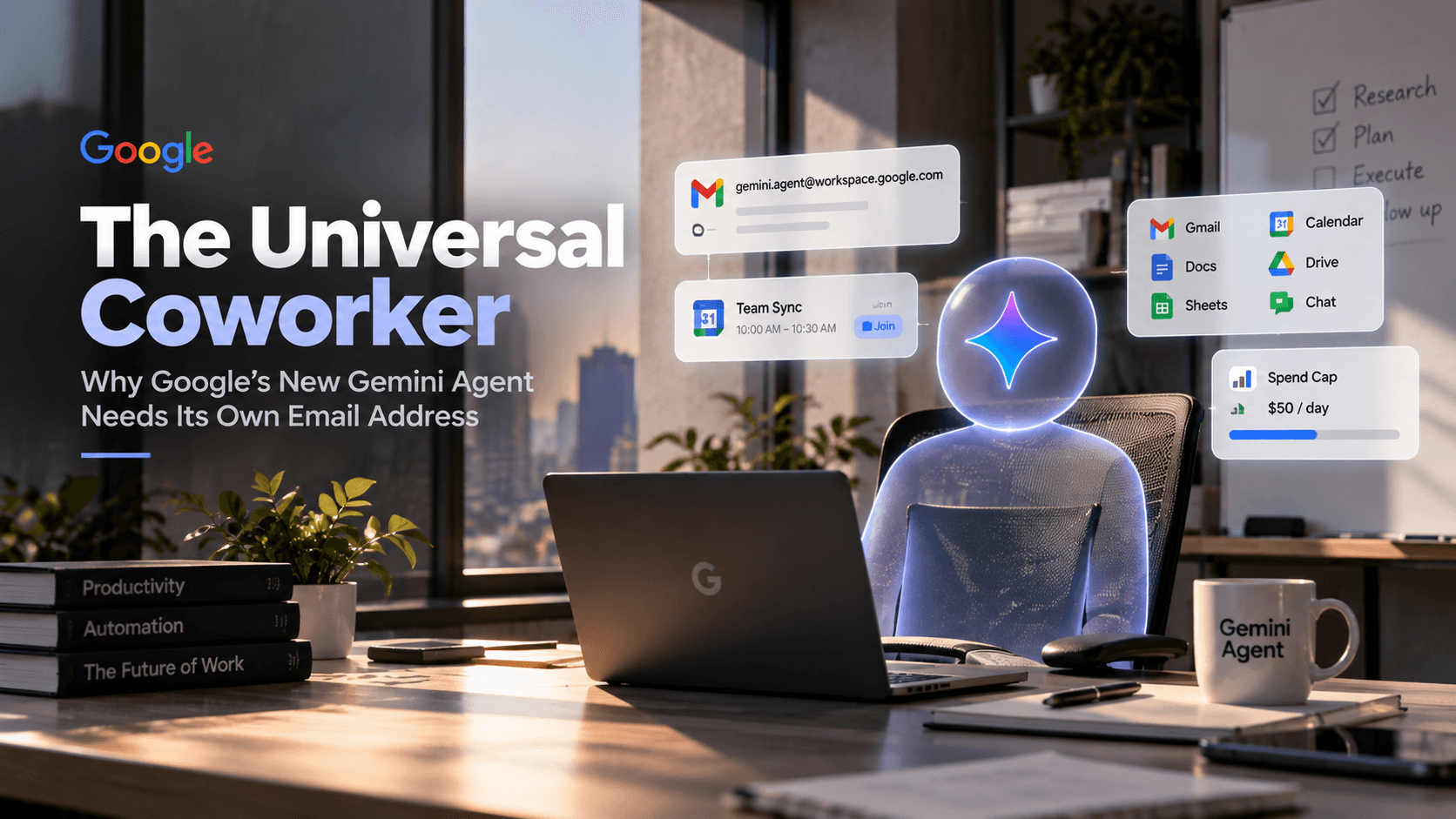
On 8 October, Google Cloud unveiled the Gemini Agent, now in private preview for selected customers. Its headline feature is the coworker agent: a manager describes a role, and Gemini creates an agent with its own Workspace account, including an email address, calendar, Drive storage and a directory listing. Each agent acts under its own identity, sees only what is shared with it, and is logged in an audit trail separate from any human. The agent reaches into Microsoft 365 and Slack as well as Google's own apps.
It also chooses between models. Google says the agent routes each job across its own Gemini models and Anthropic's Claude, picking the best fit for quality and cost. Spending is controlled at the project level: administrators set a limit in Cloud Billing, and the agent pauses until someone resumes it. Google has given no pricing or general availability date, with financial services and legal versions in preview. One analyst quoted by Implicator, Info-Tech's Mahmoud Ramin, argued the launch creates no new category, since OpenAI, Anthropic, Microsoft and Meta already offer multi-agent capabilities. Decrypt
DigitalOcean and Bright Data Open the Live Web
On 13 October, DigitalOcean and Bright Data announced a partnership that adds Bright Data's tools to DigitalOcean Managed Agents through Action Gateway. Agents can search the live web, reach sites that present technical challenges to automated traffic, extract structured data and use refreshed datasets, without a separate Bright Data account or API key. This one is live now, in DigitalOcean's public preview. Two further phases are planned: Bright Data datasets inside DigitalOcean's Agent Data Services, and Bright Data deploying its own agents on the platform. HPCwire BigDATAwire
Reading the Stack
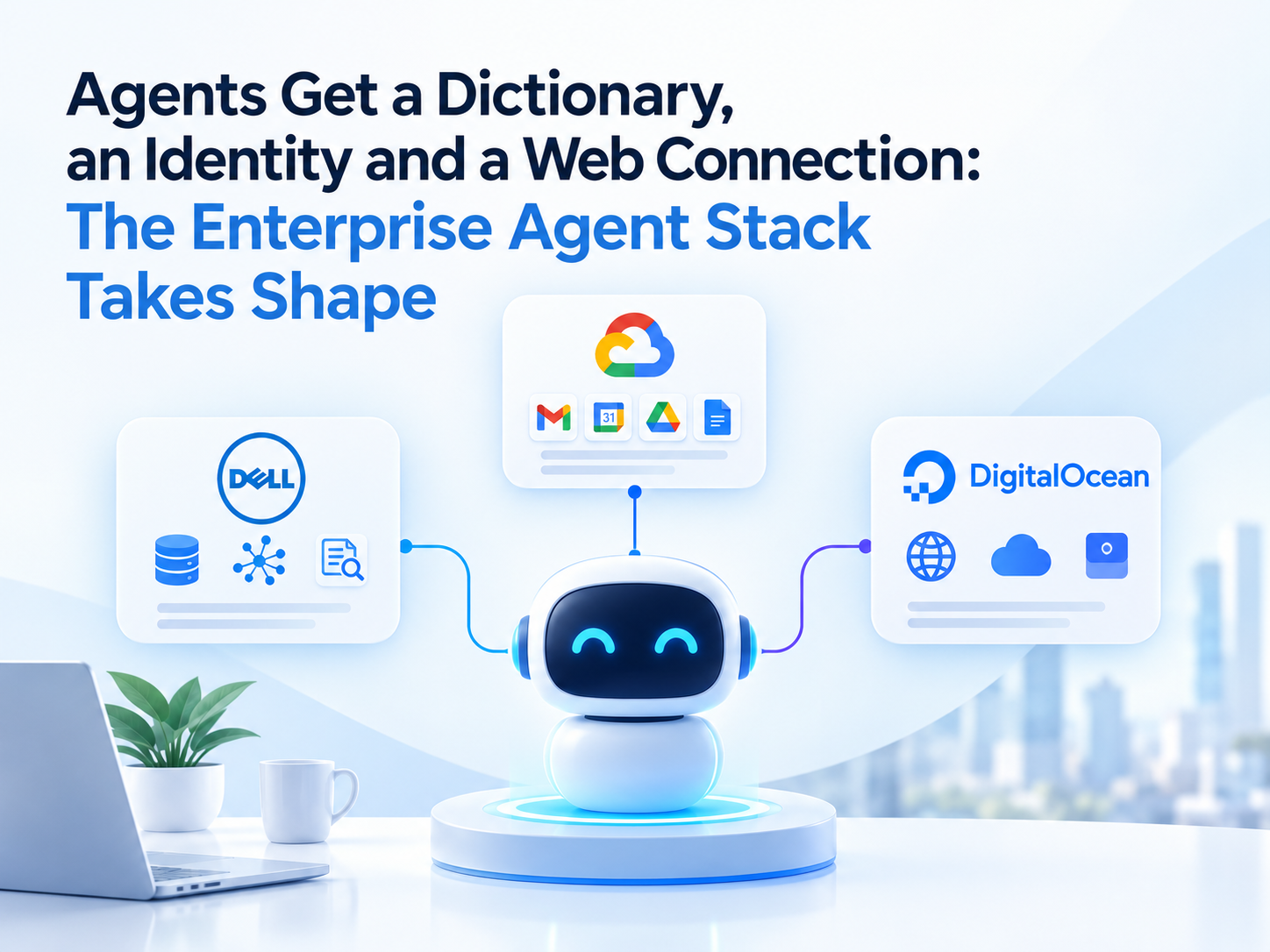
Together the three answer different questions. Dell answers what the data means. Google answers who is acting and what it may spend. DigitalOcean and Bright Data answer what the agent can reach beyond the company. Spending limits show up in two of the three, a sign that budget caps are becoming a standard guardrail.
The announcements also differ in maturity. Bright Data's tools are in public preview today, Google's agent is in private preview with no stated release date, and Dell's data layer is a first-half-2027 promise.
The Open Question
Dell and Google are building boundaries around what an agent can see inside a company. Bright Data widens what it can reach outside one. In the materials reviewed, the partnership announcement describes access to hard-to-reach sites but does not say how publishers' access rules or compliance are handled. Whether agent governance will extend as far as agent reach is the question buyers will be asking as these products arrive.

Vicky Galfat
University of Mumbai/BCA
Learning, building, and exploring the world of technology one project at a time.