LATEST NEWS
Swiggy Didn't Sell Its B2B Arm for Cash — It Bought Into the Company Buying It
September 9, 2026 5M
Back to News
News AlertWorld of Startup’s
H1 Indian Startup Funding Surges to $7.4 Billion
V
Author
Vishal Sable
Published
July 6, 2026
Reading Time
2 MIN READ
Spread the Word
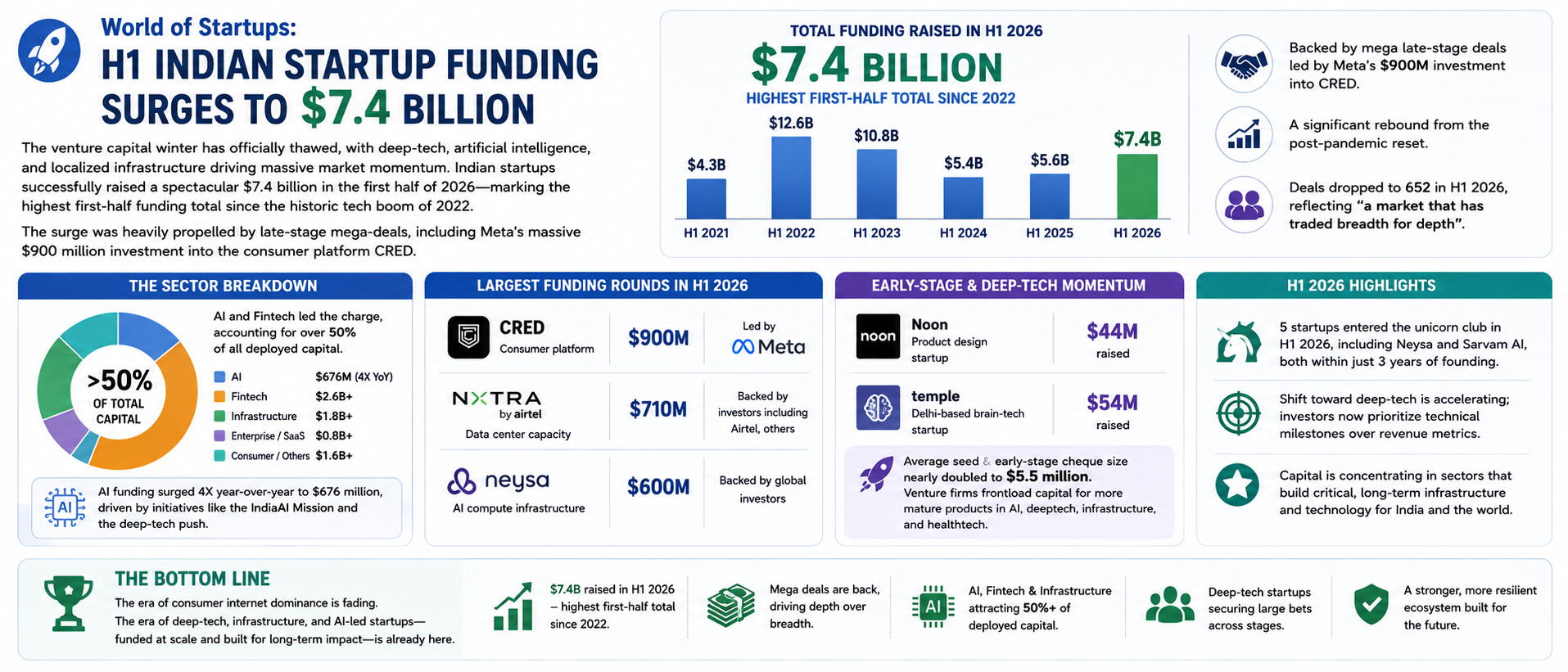
The venture capital winter has officially thawed, with deep-tech, artificial intelligence, and localized infrastructure driving massive market momentum. Indian startups successfully raised a spectacular $7.4 billion in the first half of 2026—marking the highest first-half funding total since the historic tech boom of 2022 . The surge was heavily propelled by late-stage mega-deals, including Meta's massive $900 million investment into the consumer platform CRED .
The total funding represents a significant rebound from the post-pandemic reset, when startup funding fell to $10.8 billion in 2023 before stabilizing. According to Tracxn's India Tech H1 2026 report, the number of deals dropped sharply to 652, reflecting what analysts describe as "a market that has traded breadth for depth" . Investors are now backing fewer companies with larger investments, favoring mature business models in capital-intensive sectors .
The Sector Breakdown
AI and fintech completely dominated the landscape, accounting for over 50% of all deployed capital. AI funding surged 4X year-over-year to $676 million, driven by initiatives like the IndiaAI Mission and the deep-tech push . Infrastructure and AI-led ventures captured the largest rounds: CRED led with $900 million, followed by Nxtra ($710 million) for data center capacity, and Neysa ($600 million) for AI compute infrastructure .
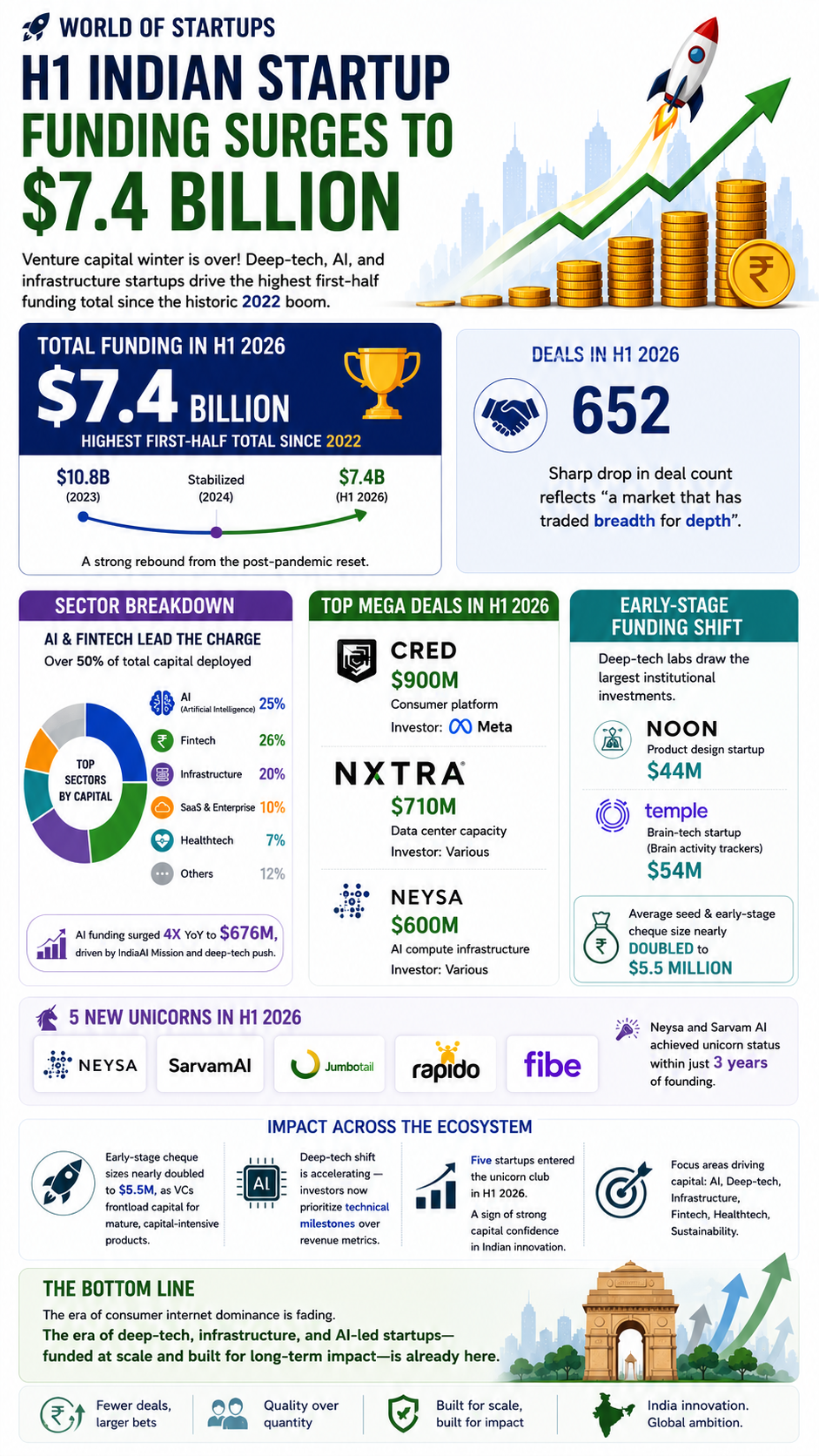
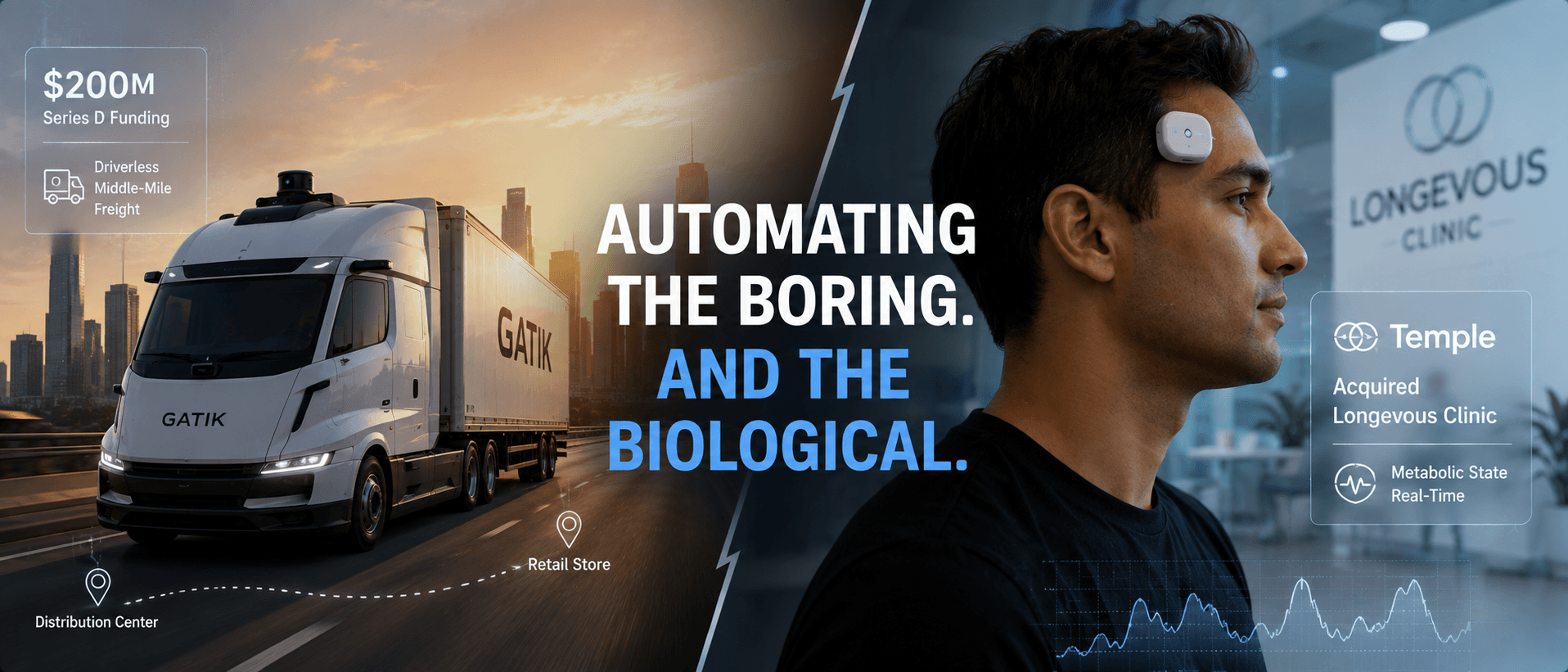
Early-stage funding also saw a massive shift, with deep-tech labs drawing the largest institutional investments. Product design startup Noon raised $44 million , while Temple, a Delhi-based brain-tech startup, secured $54 million to develop wearable brain-activity trackers . The average seed and early-stage cheque size nearly doubled to $5.5 million, as venture firms frontload capital for more mature products that require upfront spending in AI, deeptech, infrastructure, and healthtech .
Five startups entered the unicorn club in H1 2026, including Neysa and Sarvam AI, both reaching the milestone within just three years of founding . The shift toward deep-tech is accelerating, with investors now prioritizing technical milestones over revenue metrics as the ecosystem matures . The era of consumer internet dominance is fading. The era of deep-tech, infrastructure, and AI-led startups—funded at scale and built for long-term impact—is already here. 1104*473

Vishal Sable
B.Tech AD @ shri balaji institute of technology and management
Engineering and tech journalist. I love exploring the impact of emerging technologies on global defense, sovereignty, and everyday life. Always looking for the real story behind the headlines.