LATEST NEWS
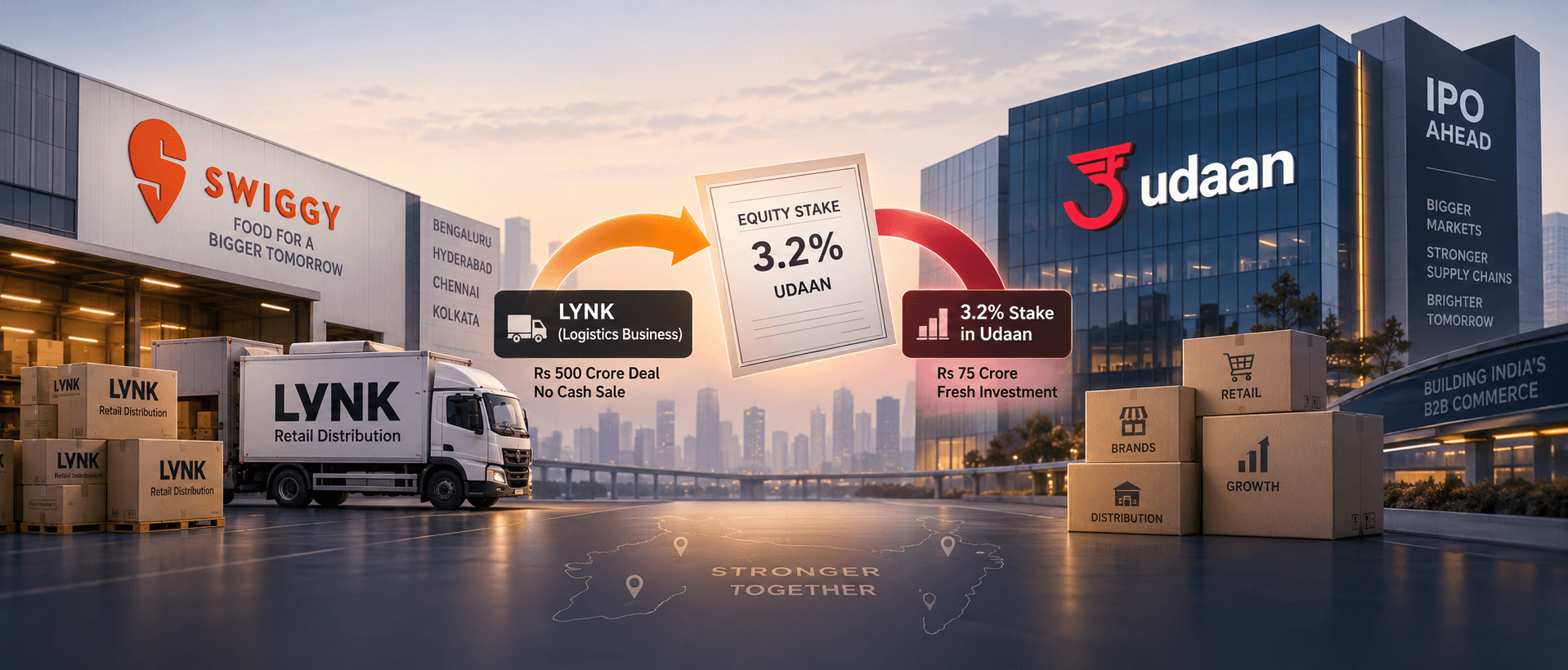
Swiggy Didn't Sell Its B2B Arm for Cash — It Bought Into the Company Buying It
September 9, 2026 5M
Back to News
News AlertWorld of Startup’s
India's RDI Deep-Tech Cohort Takes Flight
V
Author
Vishal Sable
Published
July 10, 2026
Reading Time
4 MIN READ
Spread the Word
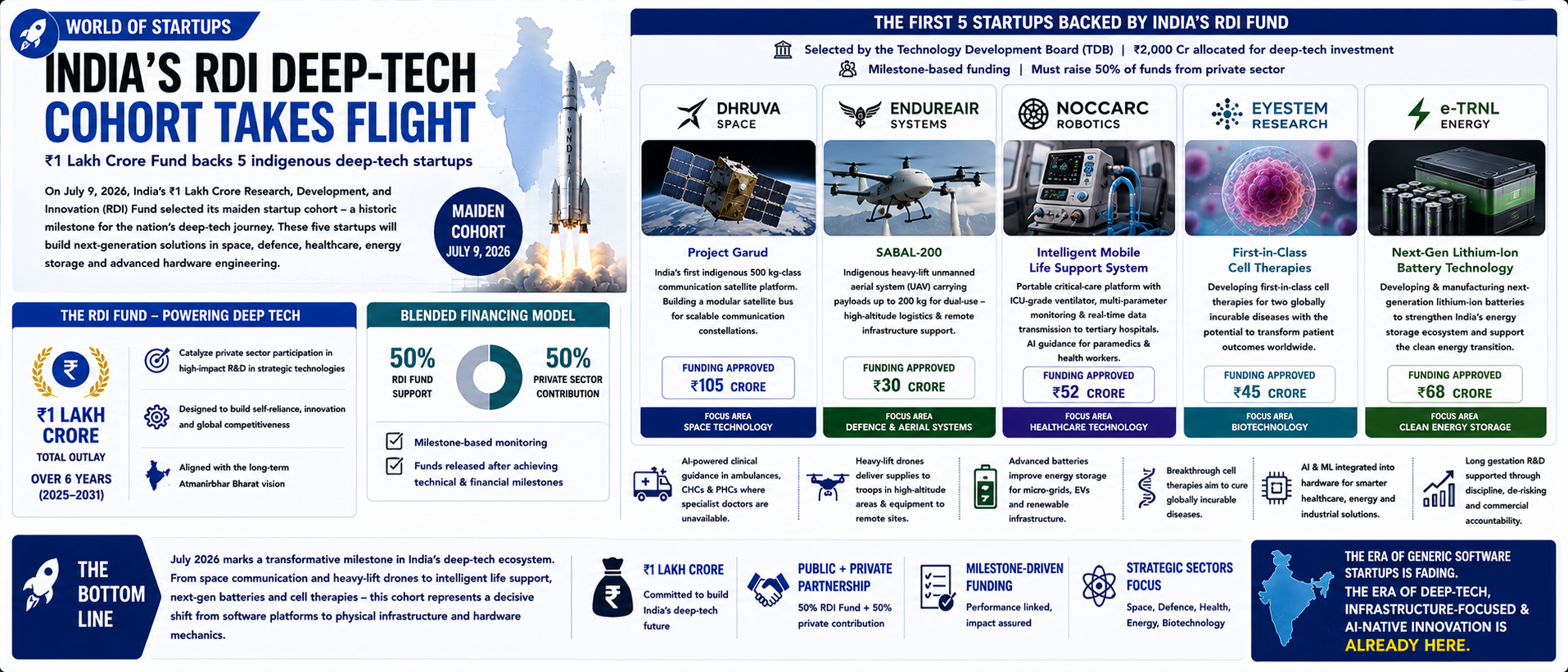
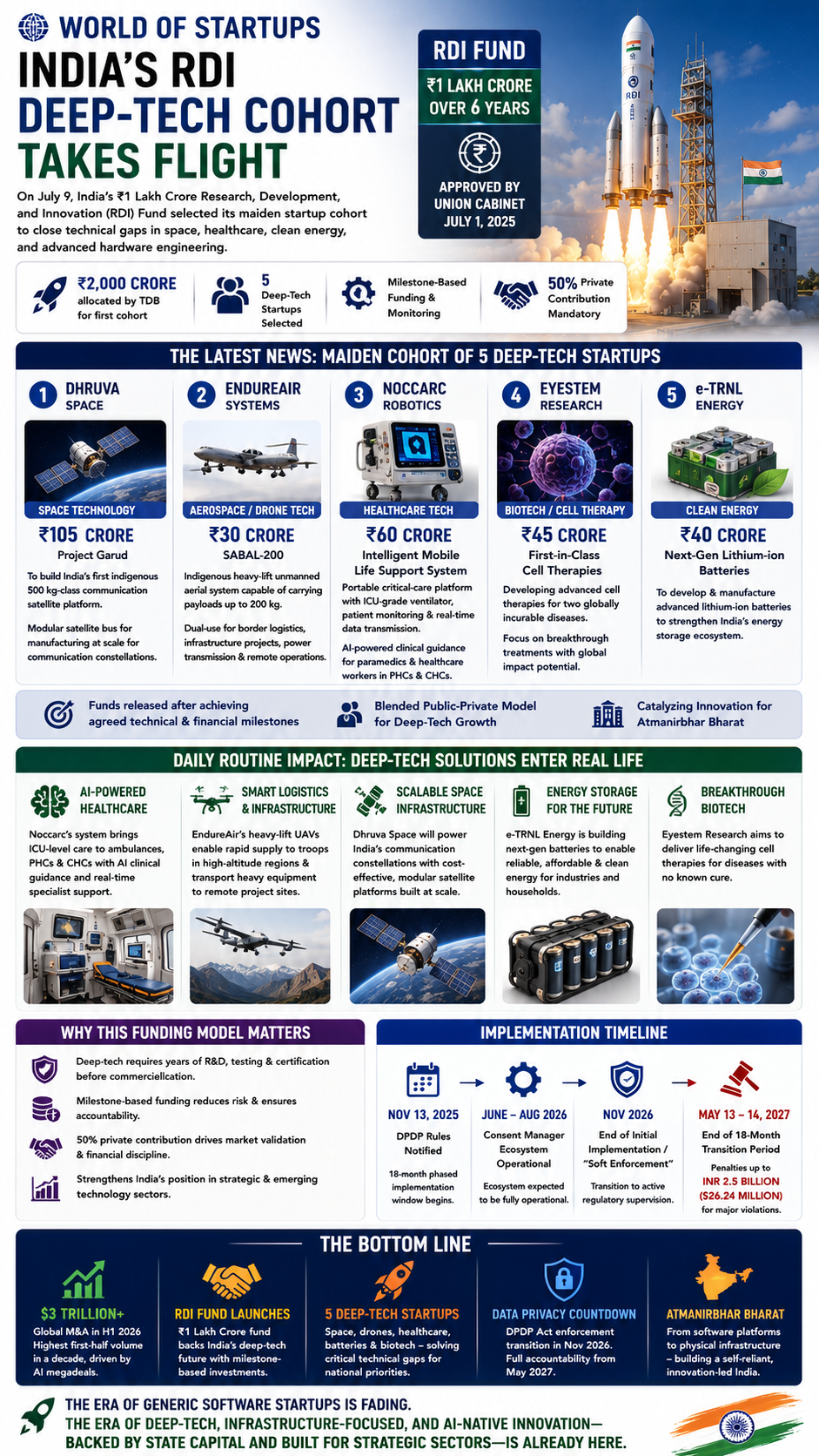
Venture capital and state-backed funds are abandoning generic software platforms to heavily finance physical infrastructure, resource management, and hardware mechanics. On July 9, India's highly anticipated ₹1 Lakh Crore Research, Development, and Innovation (RDI) Fund officially selected its maiden startup cohort, marking a historic milestone in the country's deep-tech journey . The first five indigenous deep-tech startups backed by the state-led fund are tasked with closing technical gaps in space technology, next-generation healthcare, clean energy micro-grids, and advanced hardware engineering .
The Latest News
The first batch of five startups, selected by the Technology Development Board (TDB) which was allocated ₹2,000 crore to invest in deep-tech companies, includes Dhruva Space, EndureAir Systems, Noccarc Robotics, Eyestem Research, and e-TRNL Energy . Unlike conventional grants, the five projects are subject to milestone-based monitoring and will receive funds after reaching agreed-upon technical and financial milestones. In addition, they are also required to raise half of their funding requirement from the private sector, making this a truly blended public-private financing model . Space-tech firm Dhruva Space has received ₹105 crore to build Project Garud, the country's first indigenous 500 kg-class communication satellite platform, aimed at creating a modular satellite bus that can be manufactured at scale for communication constellations . EndureAir Systems has received ₹30 crore to build SABAL-200, an indigenous heavy-lift unmanned aerial system capable of transporting payloads of up to 200 kg, designed for dual-use applications such as transporting supplies to troops in high-altitude border regions as well as carrying heavy equipment for power transmission and infrastructure projects in remote areas . In healthcare, Noccarc has been selected to develop an intelligent mobile life support system, a portable critical-care platform for ambulances and resource-constrained hospitals that integrates an ICU-grade ventilator, multi-parameter patient monitoring system, and a software platform that transmits patient data in real time to tertiary hospitals . The project has a three-year execution timeline, with AI-powered clinical guidance to assist paramedics and healthcare workers in community health centres and primary health centres, where specialist doctors are typically unavailable .
Daily Routine Impact
Startups are successfully commercializing advanced engineering. These new solutions are deploying machine learning algorithms straight into localized smart-home hardware, optimizing consumer energy consumption and local medical diagnostics right on the edge. Noccarc's intelligent mobile life support system, for instance, integrates AI-powered clinical guidance to assist paramedics and healthcare workers in community health centres, primary health centres, and ambulances, where specialist doctors are typically unavailable . e-TRNL Energy aims to develop and manufacture next-generation lithium-ion batteries to strengthen India's energy storage ecosystem, while Eyestem Research will develop first-in-class cell therapies for two globally incurable diseases . The financing model is particularly suited to deep-tech sectors, where products often require years of engineering, testing, and certification before generating revenue . The RDI Fund, approved by the Union Cabinet on July 1, 2025, with a total outlay of ₹1 lakh crore over six years, is designed to catalyze private sector participation in high-impact R&D in strategic technologies, aligning with the nation's long-term innovation and Atmanirbhar Bharat vision .
The Bottom Line
July 2026 marks a transformative milestone in India's deep-tech ecosystem. The RDI Fund's maiden cohort of five startups—spanning space communication, heavy-lift drones, intelligent life support, next-gen batteries, and cell therapies—signals a decisive shift from software platforms to physical infrastructure and hardware mechanics. With milestone-based monitoring and a mandatory 50% private contribution, the blended financing model is designed to de-risk high-impact R&D while ensuring commercial discipline. The era of generic software startups is fading. The era of deep-tech, infrastructure-focused, and AI-native innovation—backed by state capital and built for strategic sectors—is already here.

Vishal Sable
B.Tech AD @ shri balaji institute of technology and management
Engineering and tech journalist. I love exploring the impact of emerging technologies on global defense, sovereignty, and everyday life. Always looking for the real story behind the headlines.