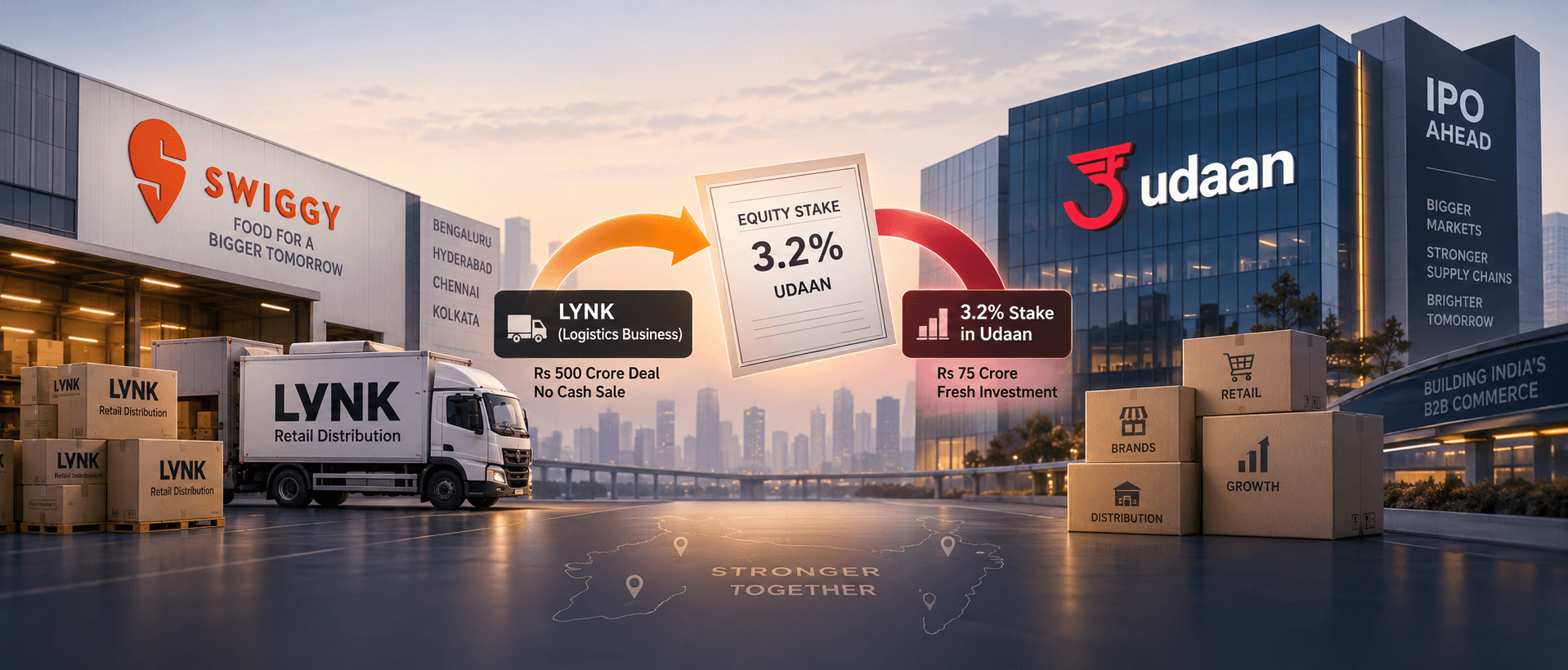
Swiggy Didn't Sell Its B2B Arm for Cash — It Bought Into the Company Buying It
How New Businesses Are Building the Future of the Global Economy
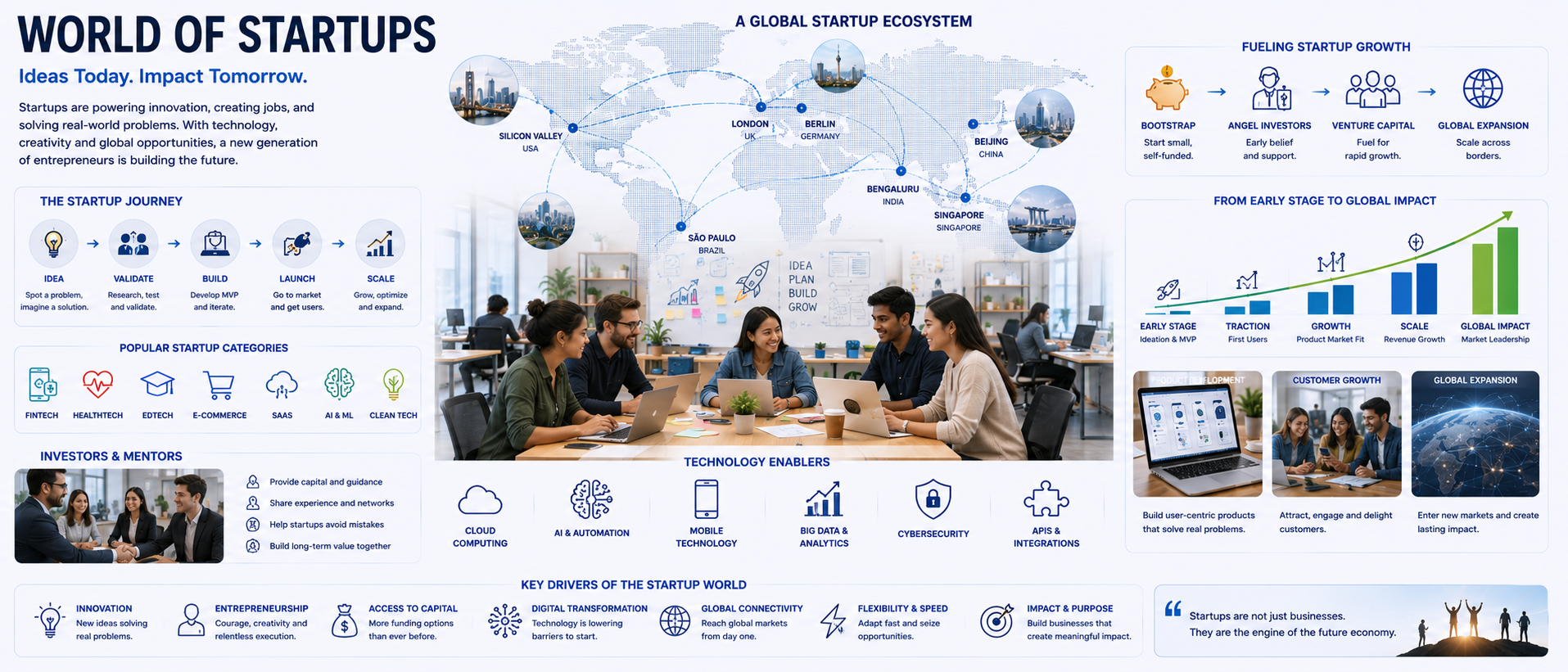
A startup is a new business created to solve a problem, introduce a new product or build a different way of providing a service. Unlike many traditional businesses, startups often aim to grow quickly by using technology, new business models and scalable products. Today, startups are active in almost every sector, including artificial intelligence, fintech, healthcare, education, e-commerce, transportation, cybersecurity and climate technology. The global startup ecosystem connects founders, employees, investors, technology companies, universities and customers across different countries. This makes startups an important source of innovation, new products and employment in the modern economy.
The startup journey usually begins with an idea that is developed into a product or service. Founders first identify a problem, understand potential customers and create an early version of their solution, often called a minimum viable product or MVP. If customers find the product useful, the startup can begin improving it and expanding its market. Funding is another important part of this process. Startups may use their own savings, support from friends and family, angel investors, venture capital or other forms of financing. Investors generally look for strong teams, a useful product, a large potential market and evidence that the business can grow. However, raising money does not guarantee success, and many startups fail because of weak product-market fit, poor financial management or an inability to attract and retain customers.
Technology has dramatically changed the startup world. Cloud computing allows new companies to build and launch digital products without owning large amounts of physical infrastructure, while AI tools can help small teams with coding, design, marketing, customer support and data analysis. This has lowered some barriers to starting a technology business and allows startups to operate internationally from an early stage. India has become one of the world's major startup ecosystems, supported by digital infrastructure, a large consumer market, growing internet adoption and government initiatives such as Startup India. Bengaluru, Delhi-NCR and Mumbai are among India's major startup hubs, while newer companies are also emerging from smaller cities. The growth of digital payments, e-commerce and software services has created additional opportunities for Indian founders.
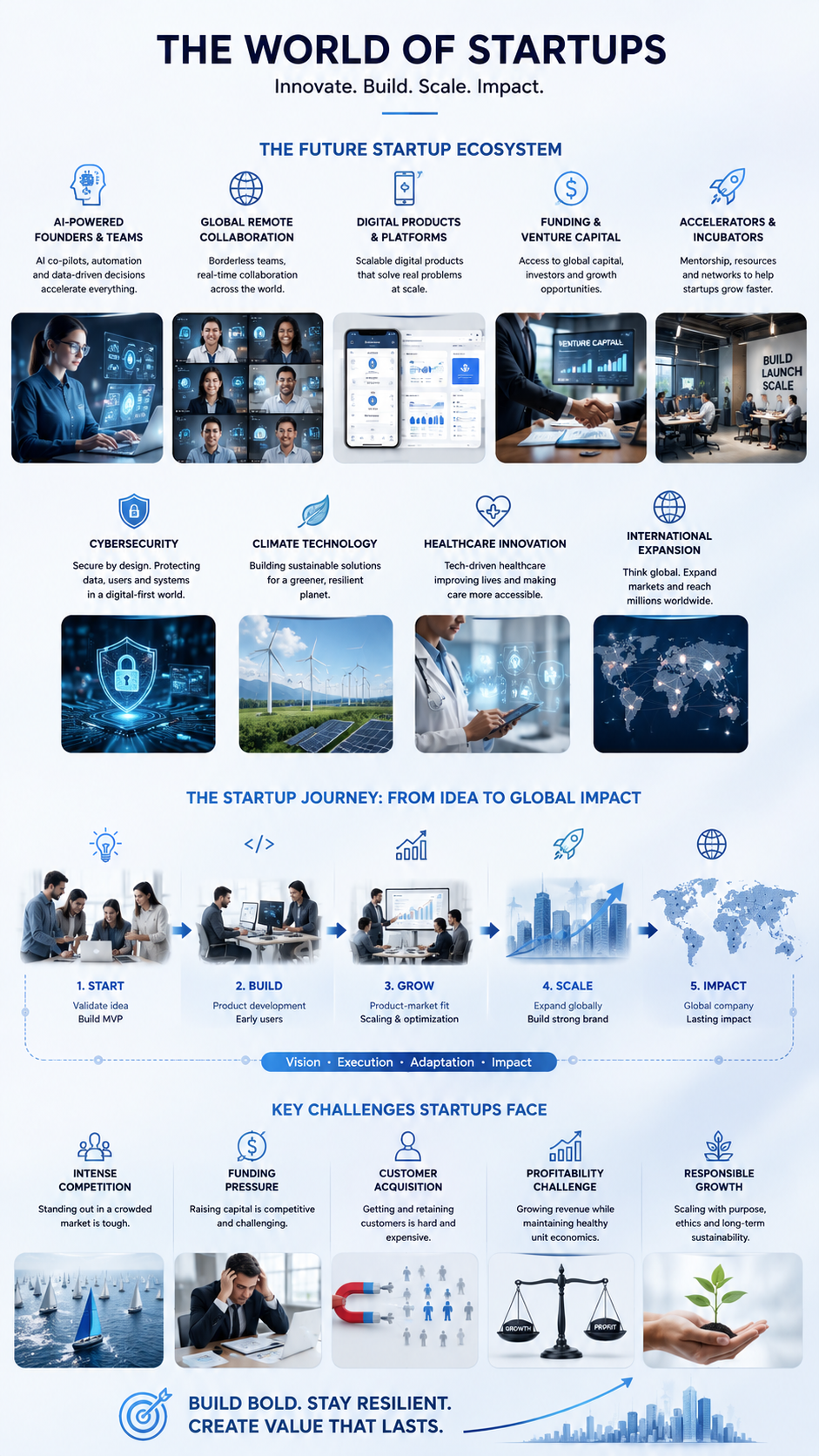
The next generation of startups is likely to be strongly influenced by artificial intelligence and automation. Small teams can increasingly use AI to perform tasks that previously required larger departments, allowing founders to test ideas and build products faster. At the same time, investors are paying close attention to startups developing AI infrastructure, enterprise software, robotics, healthcare technology, climate solutions and other high-growth technologies. However, the startup environment is becoming more competitive. Easy access to technology does not automatically create a successful company; startups still need a genuine customer problem, a sustainable business model, strong execution and the ability to adapt when market conditions change. Companies that depend heavily on funding without developing a sustainable path to revenue can face serious difficulties when investment becomes harder to obtain.
The future of the startup world will depend on how effectively entrepreneurs combine technology with real human needs. AI, cloud computing, digital payments, remote work and global online markets are making it possible for small teams to compete in areas that once required much larger organizations. At the same time, startups must focus on customer trust, cybersecurity, ethical technology and responsible growth. The strongest startups will not necessarily be the ones with the most advanced technology, but those that solve meaningful problems and create lasting value for customers. As innovation continues across different countries and industries, the world of startups will remain an important engine for new ideas, economic growth, employment and technological change.