Back to News
News AlertWorld Money
PhonePe Goes Global: Is Your Phone the New Travel Card?
T
Author
Tushar Shrivas
Published
September 17, 2026
Reading Time
6 MIN READ
Spread the Word
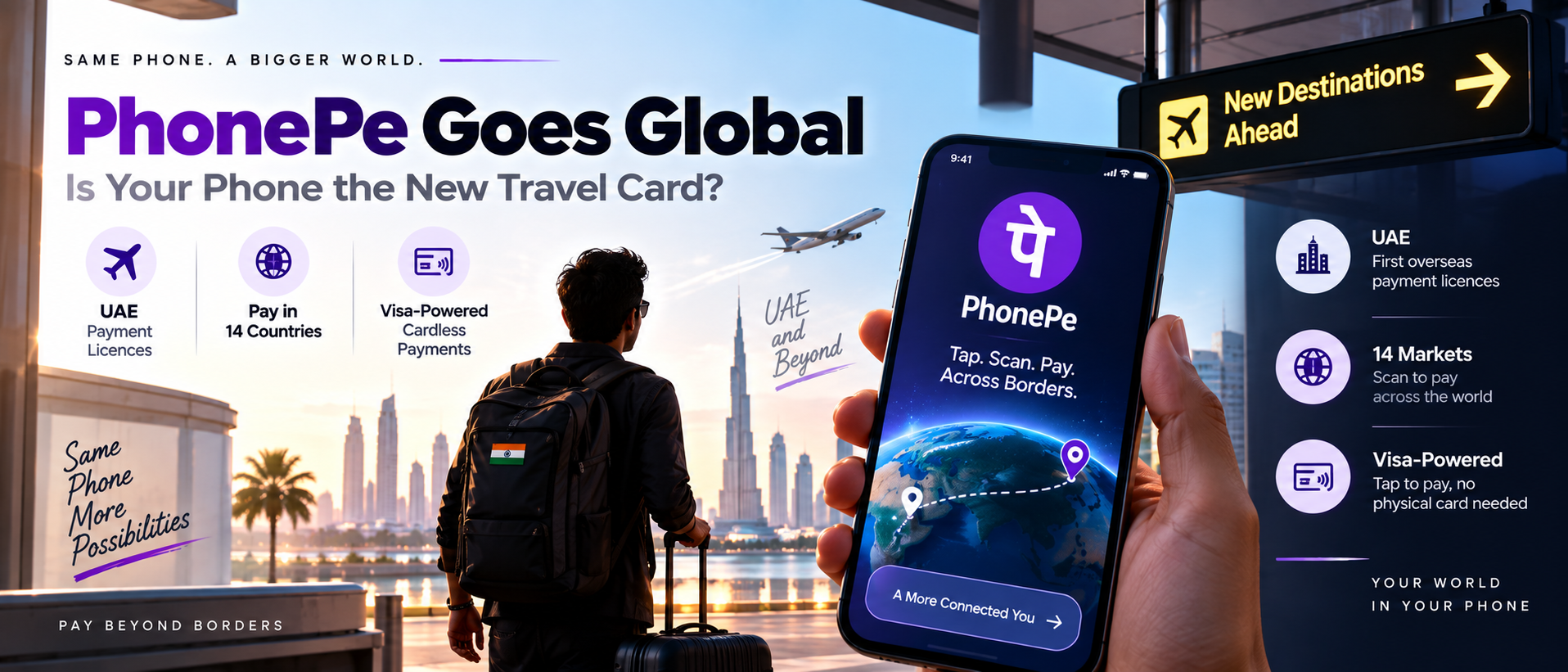
PhonePe has secured UAE payment licences and launched Visa-powered cardless payments across 14 markets. Here's what its global push means.
PhonePe UAE, PhonePe Visa partnership, PhonePe cardless payments, PhonePe international payments, Visa tokenisation India, cross-border QR payments, PhonePe UAE licence
PhonePe Goes Global: Is Your Phone the New Travel Card?
For years, Indian travellers going abroad have relied on physical cards, cash and increasingly mobile payment apps. PhonePe is now pushing that experience further. The company has secured its first overseas payment licences in the UAE while separately expanding Visa-powered cardless payment capabilities across international markets. The bigger story isn't simply paying without a physical card — it's PhonePe trying to turn an India-first payments platform into a global payments business.
Business Standard
Business Standard
PhonePe's First Step Outside India
On September 9, PhonePe announced that the UAE would be its first international market, after receiving licences from the Central Bank of the UAE. PhonePe co-founder and CEO Sameer Nigam said the company would launch local operations there, marking its first foreign-market expansion.
The UAE approval is significant because PhonePe isn't entering the country simply as a travel-payment app. The company said the licences can support activities including consumer payments, wallets, gift cards and merchant acquiring, while future use cases could include remittances between the UAE and India. MoneyControl
That gives PhonePe a potentially broader role in the UAE payments ecosystem. Instead of only helping Indian visitors pay abroad, the company could eventually serve UAE-based users and merchants, creating a local payments business around its technology. The exact rollout and availability of individual services will depend on PhonePe's implementation of the licensed activities.
Visa Is Making the Physical Card Less Necessary
At the same time, PhonePe and Visa announced three new payment capabilities at Global Fintech Fest 2026: Tap to Pay, Cross Border Scan to Pay and Smart Accept. The partnership builds on Visa device tokenisation that PhonePe introduced in February 2025. PhonePe
With Tap to Pay, eligible Android users can tokenise their Visa cards inside PhonePe and use their smartphones at compatible contactless point-of-sale terminals. The important distinction is that the physical card isn't actually disappearing from the underlying payment system — its credentials are being represented by a digital token. ETBFSI
The more interesting travel feature is Cross Border Scan to Pay. PhonePe says users will be able to scan Visa-supported QR codes across 14 international markets, including Singapore, Malaysia, Thailand, Vietnam, Indonesia, Sri Lanka, Japan, China and South Korea. The transaction is funded by the user's tokenised Visa card, rather than UPI. Business Today
That distinction matters because this isn't simply “UPI going global.” PhonePe is using the Visa network underneath the experience while making the interaction look familiar to a mobile-first Indian consumer: open the app, scan a supported QR code and pay without physically producing the card.
The UAE Licence and Visa Partnership Are Different Bets
The two announcements therefore solve different problems. The UAE licences are about local regulatory access and building a payments business in a new country. Visa tokenisation is about extending the usefulness of existing Visa cards through PhonePe's mobile interface. Together, however, they point toward the same strategic direction: PhonePe wants its technology to sit closer to the consumer at more points in the international payments journey. Business Standard
It's also important not to overstate the financial benefit. PhonePe's announcements do not establish that international card fees or foreign-exchange costs have been eliminated. In fact, PhonePe's own UPI International terms state that applicable forex rates, markups and processing fees can apply to UPI international transactions. The confirmed benefit of the new Visa system is primarily payment convenience and reduced dependence on carrying the physical card. PhonePe
Why the UAE Could Be the Bigger Story
PhonePe's UAE strategy could eventually extend beyond Indian tourists. The company has discussed services such as local wallets, gift cards, remittances and merchant acquiring, while also pointing to the possibility of UAE-based users making payments at local point-of-sale terminals and sending money between the UAE and India. MoneyControl
That creates a much bigger test for PhonePe. India gave the company enormous scale in digital payments; the UAE will test whether that technology, brand and operating model can work inside another country's regulated payments infrastructure. Success would require more than an app feature — it would require local users, merchants, payment acceptance and transaction volume.
The Bigger Bet
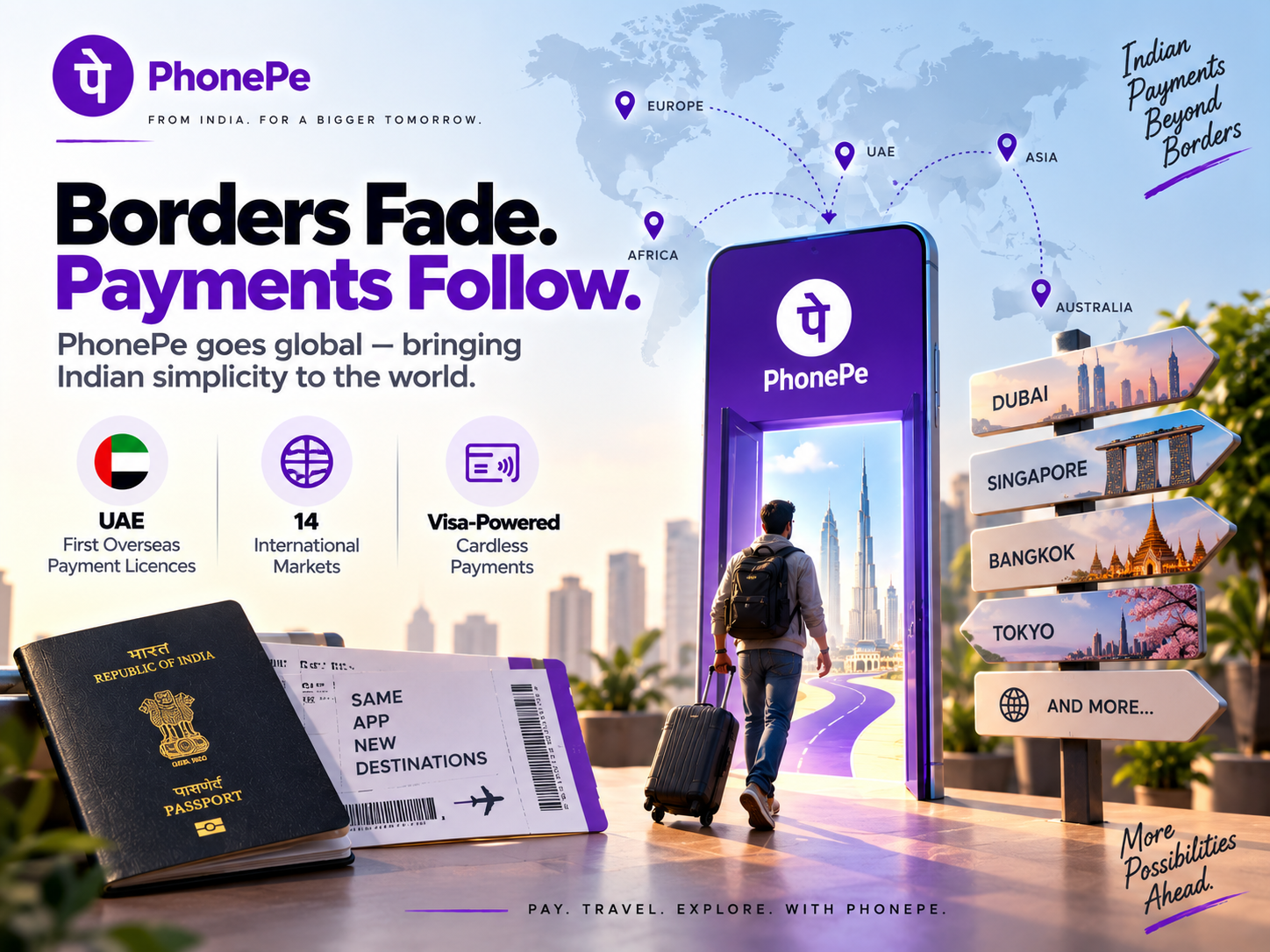
PhonePe's global strategy is therefore moving on two tracks: build local infrastructure where regulators allow it, while using global payment networks where they already exist. Visa supplies international card rails; the UAE licences give PhonePe a route into local financial services. Neither automatically creates a global payments network, but together they give the company two different ways to expand beyond India's domestic market.
The real question now isn't whether you will need to carry a physical card on your next trip. It's whether the card itself becomes invisible — stored securely as a token on your phone while Visa, local payment networks and regulated fintech infrastructure handle everything underneath.
FAQ
Is PhonePe now a global payments company?
Not yet in the full sense. The UAE is PhonePe's first international market, while its Visa partnership extends selected card-payment capabilities to supported overseas markets.
Can PhonePe users pay abroad without carrying a physical Visa card?
For supported Visa services, yes. Eligible users can tokenise their Visa cards in PhonePe and use their phones for supported contactless and international QR transactions.
Is Cross Border Scan to Pay a UPI service?
No. The international QR transaction uses the user's tokenised Visa card as the underlying payment instrument; Visa provides the payment network.
How many countries does Cross Border Scan to Pay support?
PhonePe says it will support 14 international markets, including Singapore, Malaysia, Thailand, Vietnam, Indonesia, Sri Lanka, Japan, China and South Korea.
Does PhonePe's UAE licence mean all services are already live?
No. The UAE approvals provide the regulatory basis for PhonePe's local operations, but individual products and services still need to be rolled out.
Does this eliminate foreign-exchange fees?
No blanket elimination has been announced. The new Visa capabilities primarily reduce the need to carry a physical card; applicable exchange rates, markups or other fees can still depend on the payment product and issuer.

Tushar Shrivas
B.Tech CS@ Shri Balaji Institute of Technology & Management
I write at Metaplugs — breaking down the latest in tech, economics, and business into simple, impactful stories for everyday readers. Passionate about software testing and global finance.