Back to News
News AlertWorld Money
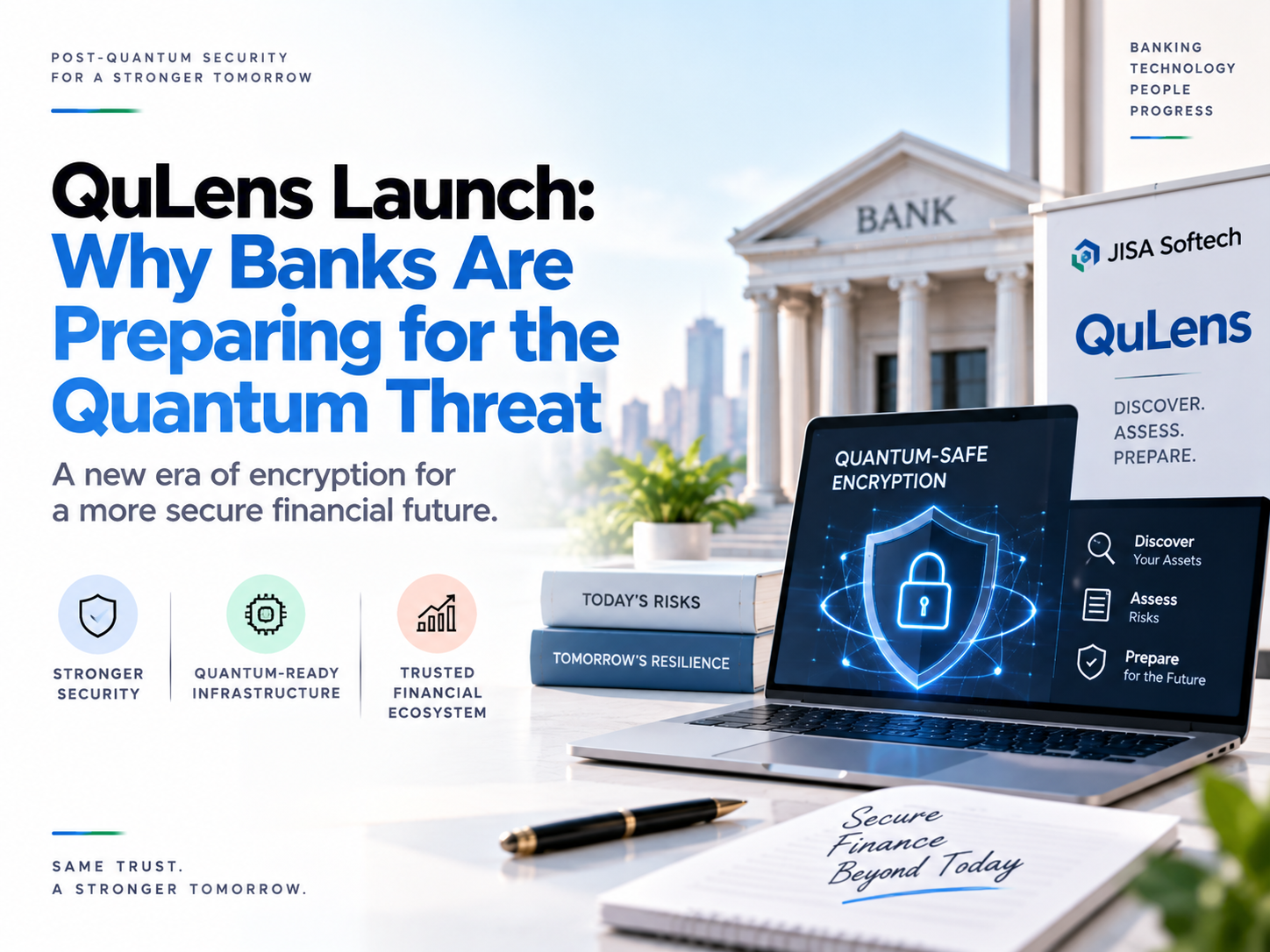
QuLens Launch: Why Banks Are Preparing for the Quantum Threat
T
Author
Tushar Shrivas
Published
September 21, 2026
Reading Time
6 MIN READ
Spread the Word
QuLens launched at Global Fintech Fest 2026 as India prepares for the quantum threat. Here's why banks are moving toward post-quantum cryptography.
A new threat is forcing financial institutions to think beyond today's cyberattacks. At Global Fintech Fest 2026, JISA Softech launched QuLens, a platform designed to help enterprises discover their cryptographic assets, identify weaknesses and prepare systems for post-quantum cryptography. The timing is significant: GFF 2026 made Quantum one of its three defining themes alongside Agentic AI and Tokenisation. The Tribune
QuLens launch 2026, post-quantum cryptography India, quantum-safe banking, cryptographic bill of materials, CBOM, quantum threat to banks, harvest now decrypt later, GFF 2026 quantum
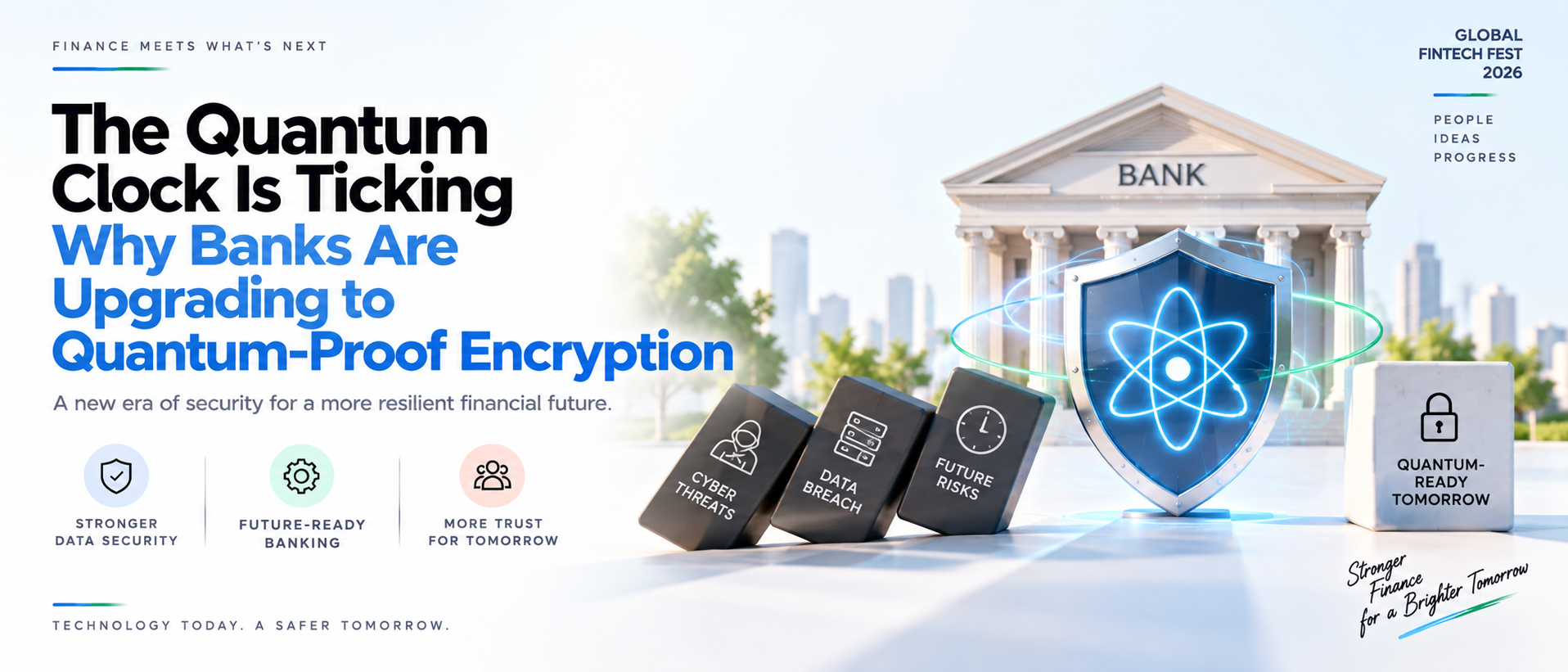
The Quantum Clock Is Ticking: Why Banks Are Upgrading to Quantum-Proof Encryption
A new threat is forcing financial institutions to think beyond today's cyberattacks. At Global Fintech Fest 2026, JISA Softech launched QuLens, a platform designed to help enterprises discover their cryptographic assets, identify weaknesses and prepare systems for post-quantum cryptography. The timing is significant: GFF 2026 made Quantum one of its three defining themes alongside Agentic AI and Tokenisation. The Tribune
The problem QuLens is targeting is not that quantum computers can already break bank encryption. They cannot. The concern is what happens when sufficiently powerful quantum computers become available. NIST says some widely used cryptographic systems could eventually be broken by quantum computers, which is why organizations are being urged to begin migration before the threat becomes practical. The Print
Why Banks Have a Bigger Problem Than Just Changing an Algorithm
Modern financial infrastructure depends on cryptography everywhere: customer authentication, digital certificates, secure communications, payment systems and the protection of sensitive financial information. Replacing vulnerable cryptography is therefore not a matter of simply installing a new encryption program. The BIS says financial institutions need to deal with inventory, governance, migration planning, interoperability and system integration as they move toward quantum-safe infrastructure. Bank for International Settlements
That is where cryptographic visibility becomes important. QuLens says its platform creates a unified view of an organization's cryptographic footprint through a Cryptographic Bill of Materials (CBOM), alongside QBOM and SBOM information. It is designed to identify weak or deprecated cryptography, assess quantum-related risk and help coordinate migration toward post-quantum cryptography across cloud, on-premise, hybrid and operational-technology environments.
The idea behind a CBOM is simple but important: an organization cannot replace cryptography it does not know it is using. NIST's migration guidance similarly emphasizes building a cryptographic inventory because organizations need to understand where vulnerable algorithms, keys, certificates and protocols are embedded before they can prioritize migration. NIST Pages
The Threat That Starts Before Quantum Computers Arrive
The most important part of the quantum-security story is the “harvest now, decrypt later” problem. An attacker does not necessarily need a quantum computer today. They can capture encrypted information now, store it, and potentially decrypt it years later if quantum technology becomes capable of breaking the underlying cryptography. For banks, that matters because financial records, identity information and transaction-related data can remain sensitive for many years. NIST
This changes the timetable for financial cybersecurity. Waiting until a powerful quantum computer actually exists could leave organizations with too little time to migrate. NIST notes that replacing cryptographic algorithms across products and information systems can take 10 to 20 years, making preparation a long infrastructure project rather than a last-minute security upgrade.
Finance Is Already Testing the Quantum-Safe Future
This isn't only a theoretical exercise. The BIS Innovation Hub's Project Leap Phase 2 tested post-quantum cryptography in an operational payment system, replacing traditional digital signatures with quantum-resistant cryptography while sending liquidity transfers. The experiment found that quantum-safe migration is technically feasible but also highlighted performance, interoperability and deployment challenges. BIS
India's financial ecosystem is also beginning to treat quantum security as a formal issue. The RBI has previously highlighted quantum resistance as something that should be considered in financial infrastructure design, while CERT-In and SISA have published a roadmap specifically addressing quantum cyber readiness and migration toward quantum-resistant algorithms.
That makes QuLens interesting for a reason beyond the product itself. Its proposition is not simply “install post-quantum encryption.” It is about finding where cryptography exists, understanding what is vulnerable and creating the ability to change it systematically. That broader idea — often called crypto-agility — could become increasingly important as standards evolve and organizations discover that their security infrastructure is much more complicated than a single encryption algorithm.
The Bigger Question for World Money
The quantum transition could become one of the largest invisible infrastructure upgrades in financial technology. Customers probably won't notice when their bank migrates a certificate, replaces a public-key algorithm or updates a payment system's cryptographic library. But those changes will determine whether digital banking infrastructure remains trustworthy as computing technology evolves. The World Economic Forum has warned that quantum attacks could threaten the cryptography underlying authentication, data protection and digital trust across financial systems.
QuLens does not mean India's banking system has suddenly become quantum-proof. It means the industry is moving toward a more practical phase of quantum readiness: inventory first, risk assessment next, migration after that. NIST has already finalized three major post-quantum standards, while financial institutions and payment networks are beginning to test how those standards work in real systems.
The real race, then, isn't between today's banks and tomorrow's quantum computers. It is between the speed at which financial institutions can understand and upgrade their cryptographic infrastructure and the speed at which quantum capabilities develop. QuLens is one new attempt to close that gap — and the fact that it appeared at one of India's biggest fintech events shows that quantum security is moving from a research discussion into the financial industry's infrastructure agenda. Global Fintech Fest
FAQ
What is QuLens?
QuLens is a cryptographic governance and post-quantum readiness platform launched by JISA Softech. It is designed to provide visibility into cryptographic assets, identify vulnerabilities and support migration toward post-quantum cryptography.
Can quantum computers break bank encryption today?
No. The threat is future-facing. The concern is that sufficiently powerful quantum computers could eventually break some widely used public-key cryptography, which is why organizations are preparing now.
What does “harvest now, decrypt later” mean?
It refers to collecting encrypted information today and storing it with the expectation that future quantum computing capabilities could eventually make it possible to decrypt that information.
Are banks already using post-quantum cryptography?
Financial institutions and payment organizations are conducting pilots and experiments. BIS Project Leap, for example, tested post-quantum cryptography in an operational payment system. Broad migration across the financial system is still a long-term process.
Why does a CBOM matter?
Why does a CBOM matter?
A Cryptographic Bill of Materials helps organizations build an inventory of the cryptographic components they use. That visibility can help security teams identify dependencies and prioritize migration to quantum-resistant standards.

Tushar Shrivas
B.Tech CS@ Shri Balaji Institute of Technology & Management
I write at Metaplugs — breaking down the latest in tech, economics, and business into simple, impactful stories for everyday readers. Passionate about software testing and global finance.