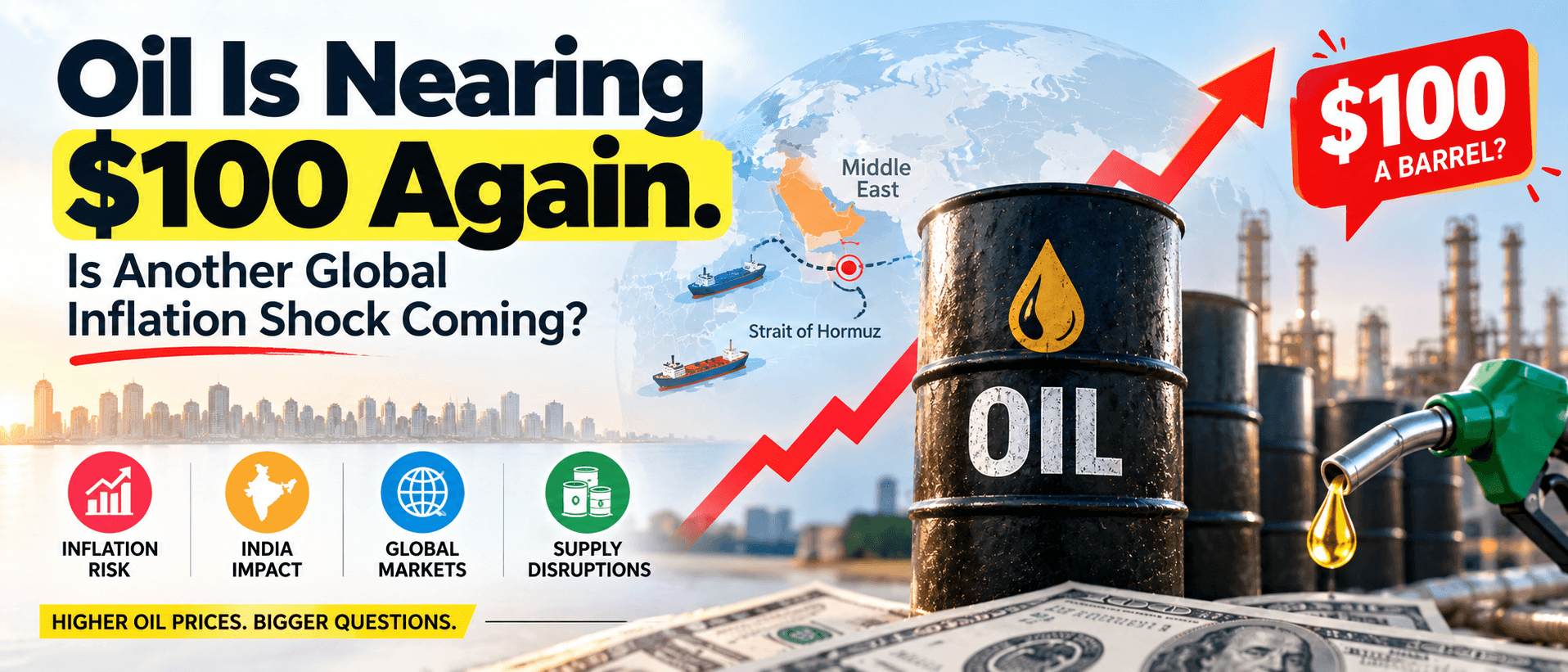
Rupee Under Pressure as Oil Nears $90: What It Means for India’s Economy and Investors
60-Second Brief
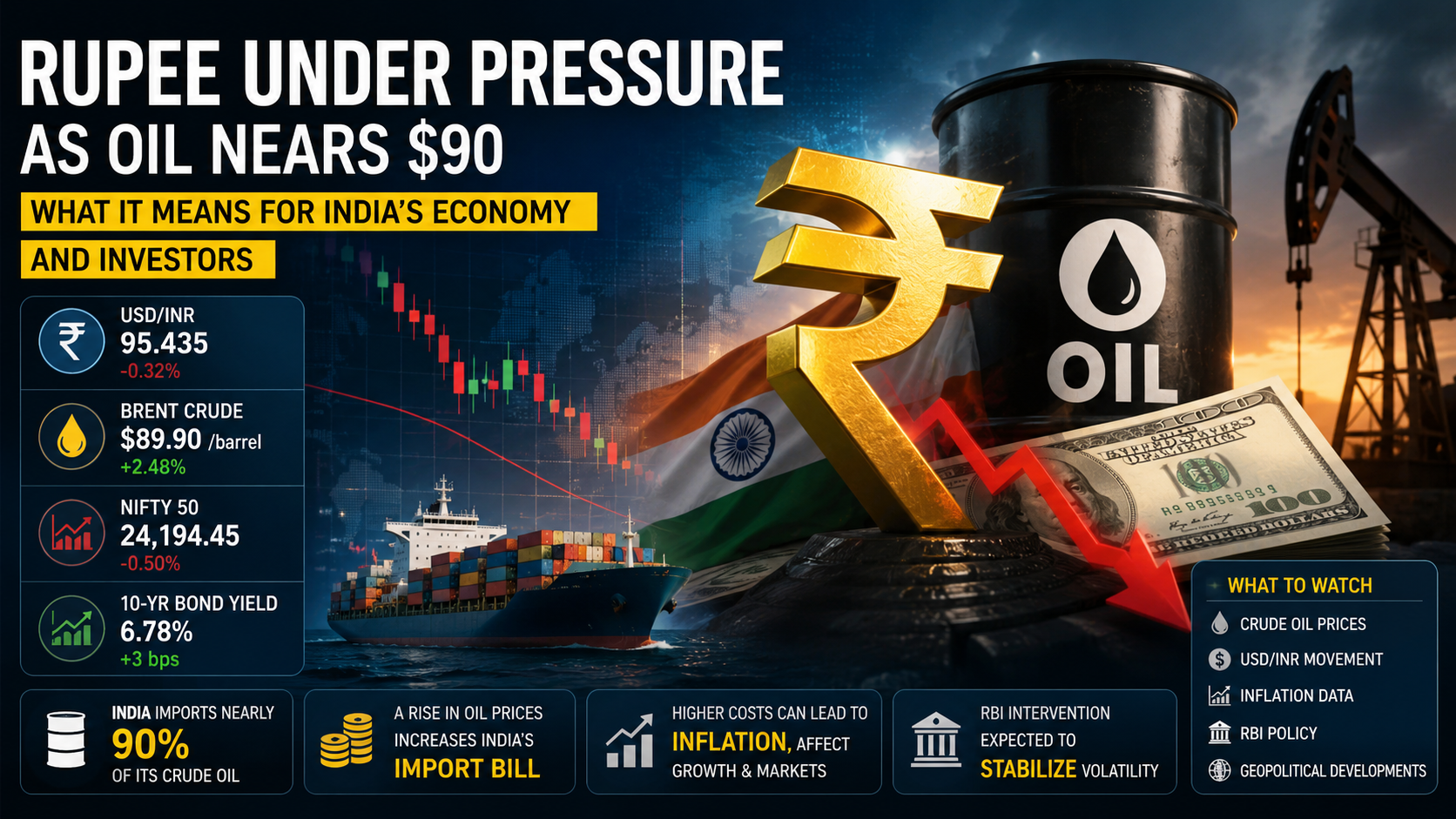
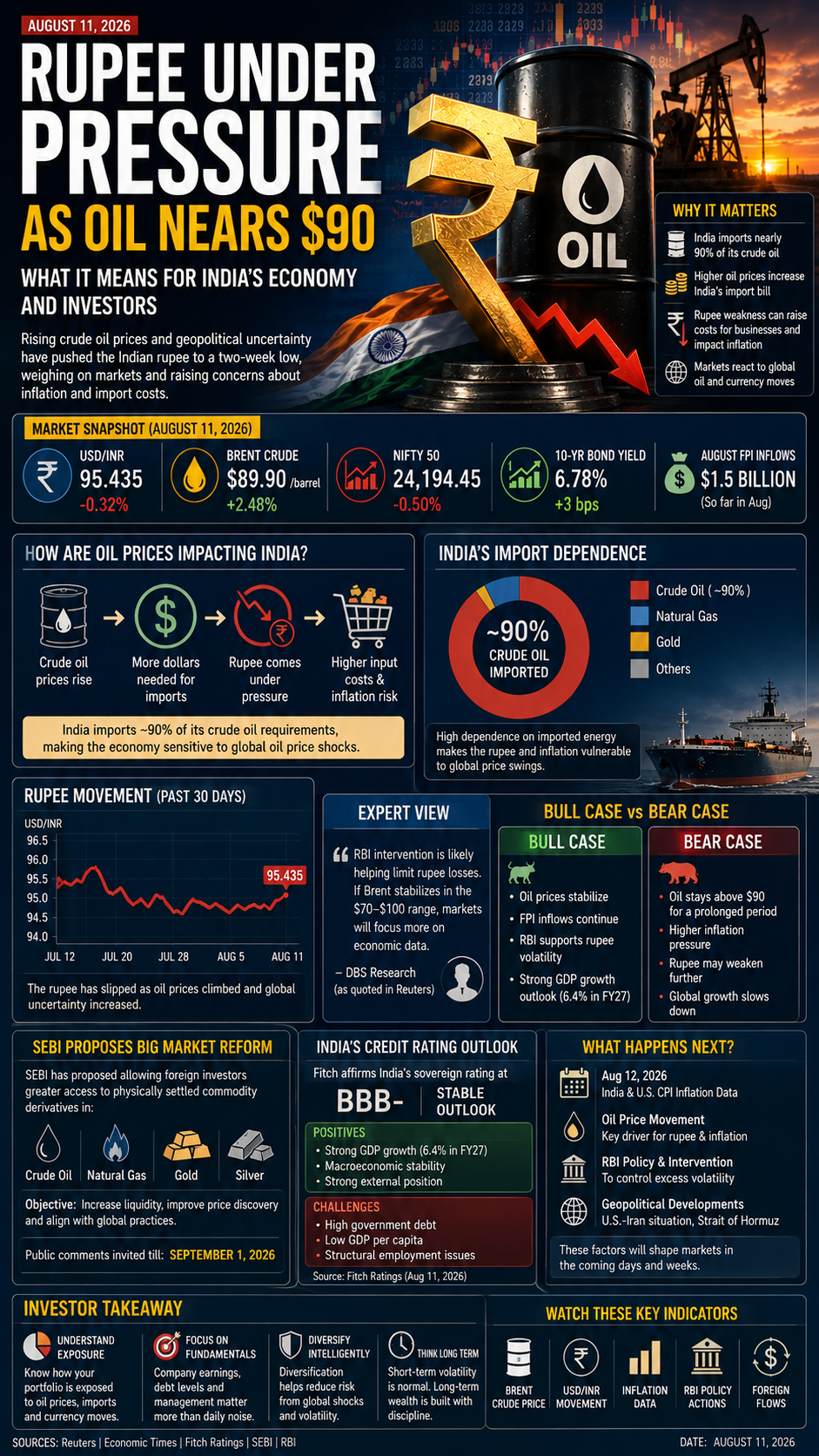
The Indian rupee weakened to ₹95.435 per US dollar on August 11, its weakest closing level in nearly two weeks, as crude oil prices jumped amid renewed uncertainty surrounding the U.S.-Iran situation. Brent crude rose nearly 2.5% to around $89.90 a barrel, while the Nifty 50 fell 0.5%. India is particularly vulnerable to oil-price shocks because it imports nearly 90% of its crude requirements.
The immediate concern is not simply a weaker rupee. Higher oil prices can increase India's import bill, put pressure on inflation and raise costs for businesses that depend on fuel and imported inputs. At the same time, the Reserve Bank of India is expected to remain an important stabilising force in the foreign-exchange market.
What Really Happened?
The rupee's weakness came as global oil prices moved sharply higher. Brent crude approached $90 a barrel after expectations of a near-term U.S.-Iran agreement weakened. The possibility of continued disruption around the strategically important Strait of Hormuz has added to concerns about global oil supplies.
For India, this matters immediately because the country purchases most of its crude from overseas. When oil becomes more expensive, Indian importers require more US dollars to pay for energy. Higher demand for dollars can put additional pressure on the rupee.
The impact does not stop with the currency market. Expensive oil can affect transportation, manufacturing, logistics and other businesses, potentially feeding into consumer prices if the increase persists.
Why This Matters
For the Indian Economy
A prolonged oil-price increase could increase India's import bill and put pressure on the country's external balance. Higher energy costs can also make it harder to keep inflation comfortably under control.
However, a temporary oil spike is very different from a prolonged oil shock. If crude prices stabilise, the economic impact can be absorbed more easily. If prices remain elevated for months, the pressure becomes considerably more significant.
For Companies
Bull Case
If geopolitical tensions ease and crude prices stabilise, pressure on India's currency and inflation could moderate. The rupee could then become more sensitive to domestic economic data, capital flows and monetary policy rather than oil fears.
India also continues to attract foreign capital. Reuters reported approximately $1.5 billion of net foreign inflows in August, following about $2.1 billion in July.
Bear Case
If crude moves significantly higher and remains there, India's import bill could rise further. Persistent energy inflation could pressure businesses and consumers while making the currency more vulnerable.
The risk becomes considerably larger if high oil prices are combined with weaker global growth.
What Investors Should Watch
Brent crude: The most important external variable for India right now.
USD/INR: A sustained move higher would indicate continued pressure on the rupee.
Inflation: Higher energy costs could eventually influence consumer prices.
RBI policy: Watch for signs of intervention and changes in monetary policy expectations.
Foreign flows: Strong foreign investment can provide support to the rupee and Indian equities.
Geopolitical developments: Any improvement or deterioration in the U.S.-Iran situation could quickly change oil-market expectations.
What Does This Mean for a Normal Investor?
Today's market movement does not automatically mean investors should sell everything.
Instead, it is a reminder to understand portfolio exposure.
If a portfolio is heavily concentrated in companies that depend on imported energy or raw materials, higher oil prices can become a risk. Export-oriented businesses can behave differently because a weaker rupee can increase the rupee value of foreign earnings.
For long-term investors, diversification and company fundamentals remain more important than trying to predict the next day's exchange rate.
The Bottom Line
India is facing a familiar economic vulnerability: high dependence on imported energy.
The current rupee weakness is manageable if oil prices stabilise and geopolitical tensions ease. But a prolonged oil shock could create a more difficult environment for inflation, corporate margins and the currency.
At the same time, India's strong growth outlook, foreign capital inflows and RBI intervention provide important buffers. Fitch's decision to maintain India's BBB- stable rating also shows that the current market pressure has not fundamentally changed the country's broader credit story.
Trusted Sources
Reuters — Rupee, crude oil, Indian markets, SEBI proposal and Fitch rating.
Economic Times — Indian stock-market developments.
Fitch Ratings — India's sovereign credit outlook and growth assessment.