Back to News
News AlertWorld Defence Tech
The $20,000 Question: How a Guided Rocket and a Solid-State Battery Are Reshaping 21st‑Century Warfare
V
Author
Vishal Sable
Published
April 8, 2026
Reading Time
13 MIN READ
Spread the Word
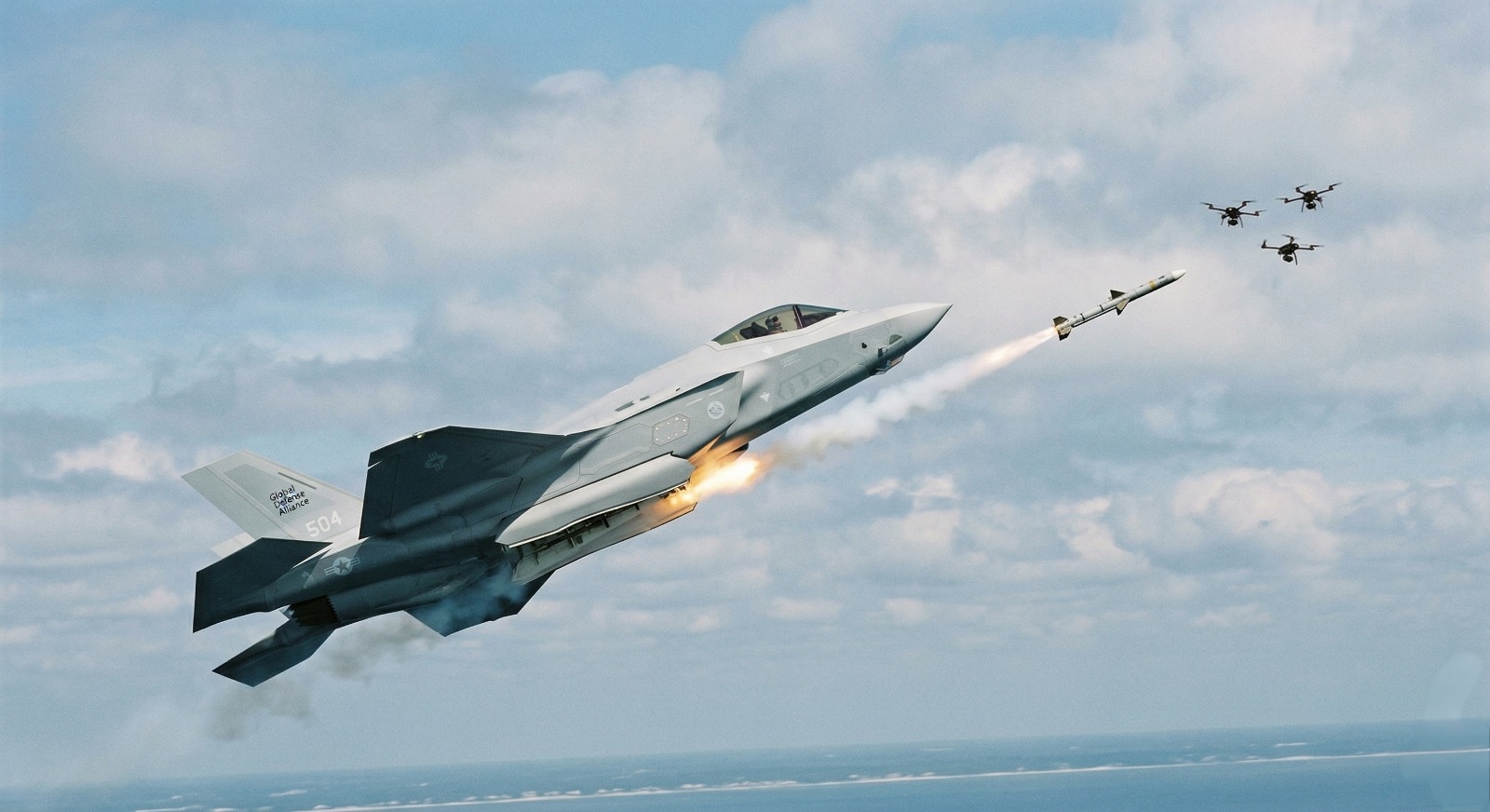
Low-Cost Drone Defense & Solid-State Military Batteries | April 2026 . BAE Systems tests APKWS on Typhoon for $20K drone intercepts. QuantumScape brings ex‑USAF Chief Scientist on board for defense-grade solid-state batteries.
April 8, 2026 — The Day the Pentagon Got a Lesson in Economics
Two announcements landed today — one from a British fighter jet test range, the other from a Silicon Valley battery lab — that together rewrite the financial logic of modern warfare.
In the skies above Lancashire, a Eurofighter Typhoon test-fired a $20,000 laser‑guided rocket designed to swat down $50,000 enemy drones, proving that you don't need a million‑dollar missile to win a swarm war.
Meanwhile, QuantumScape brought Dr. Mark Maybury, former Chief Scientist of the U.S. Air Force and current Lockheed Martin VP, onto its strategic advisory board — a clear signal that solid‑state batteries are leaving the electric‑vehicle lab and heading for the battlefield.
The message is simple: defence technology is getting smarter, cheaper and safer — all at once.
BAE Systems + APKWS – Giving the Typhoon a Scalpel for the Drone Swarm
The Test That Changes the Math
On March 25, 2026, a Royal Air Force Eurofighter Typhoon took off from BAE Systems’ flight test development centre in Warton, Lancashire. The target was a ground‑based drone. The weapon was a 70 mm AGR‑20A Advanced Precision Kill Weapon System (APKWS) – a laser‑guidance kit that converts a dumb rocket into a precision tool.
The rocket struck. The drone was destroyed. And the world’s fourth‑generation fighter jets just got a low‑cost, high‑volume counter‑drone option.
BAE announced the successful test today (8 April 2026), calling it “part of a range of capability enhancements planned for Typhoon to increase the aircraft’s potency in current and future combat air operations”.
Why $20,000 Matters
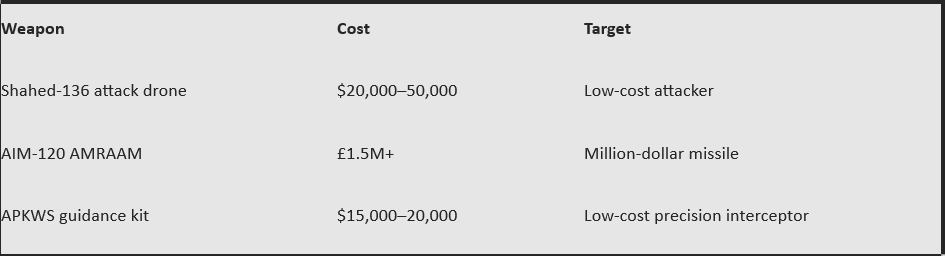
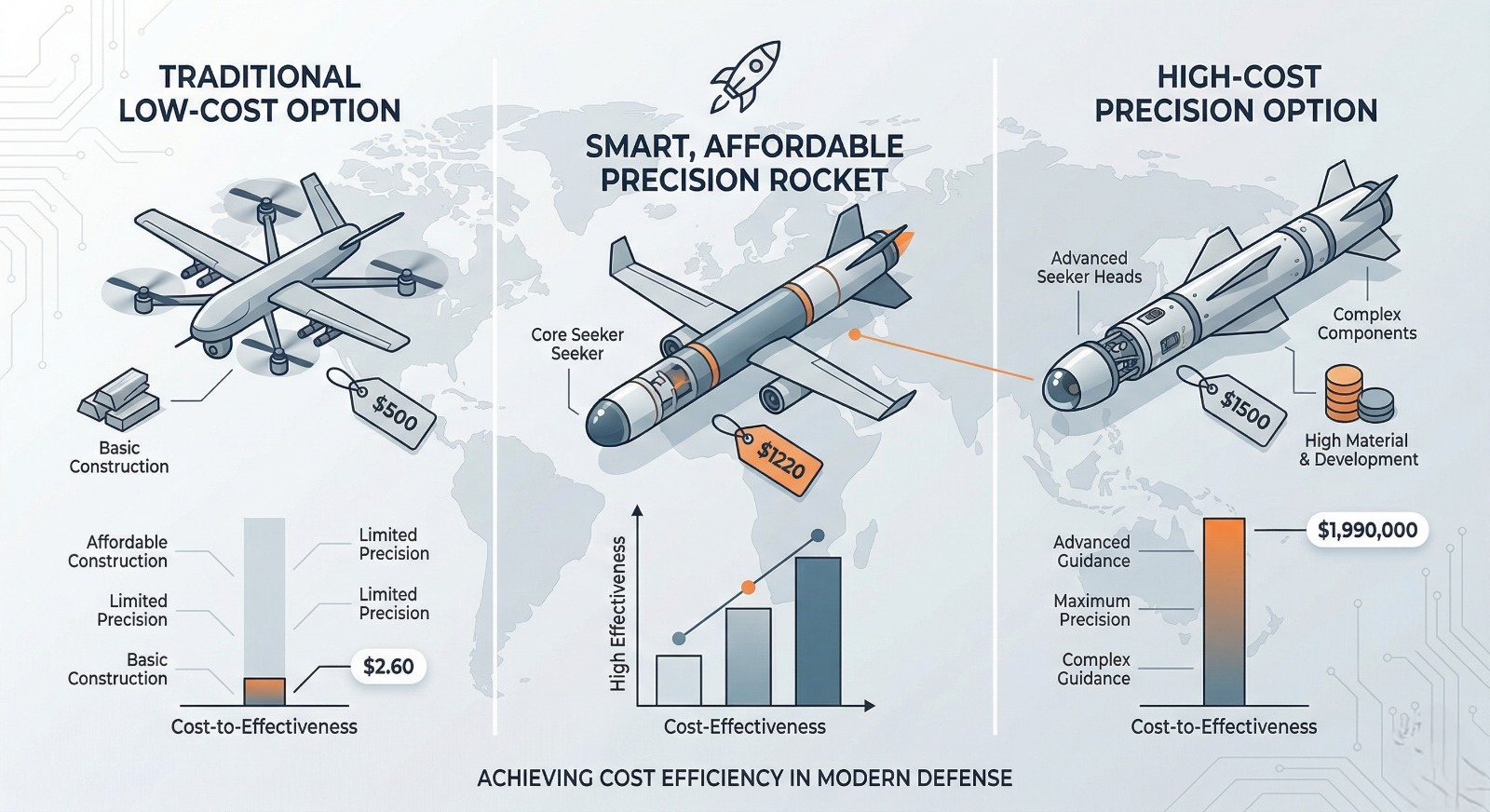
The economics of drone warfare have been brutally one‑sided. Iran’s Shahed‑136 attack drones cost between $20,000 and $50,000. To shoot one down, an RAF Typhoon previously had to fire a £1.5 million+ AMRAAM or Meteor missile.
The APKWS laser‑guidance kit costs roughly $15,000–20,000. A Typhoon can carry multiple pods, each containing up to seven rockets. That’s a cost ratio improvement of 50–100x.
“The trial with the APKWS laser‑guidance kit on Typhoon demonstrates a game‑changing capability and a cost‑effective solution that would enhance Typhoon’s already impressive range.”
— BAE Systems statement
The test was internally funded by BAE — a sign that the company sees a clear market demand from the four Eurofighter partner nations (UK, Germany, Italy, Spain) for an affordable, scalable counter‑UAS option.
What Comes Next
The ground‑target test was Phase 1. BAE confirmed that air‑to‑air testing will follow — the true operational test for intercepting moving drone swarms in flight. And the integration timeline has been remarkably short: BAE first disclosed the APKWS assessment at DSEI London in September 2025; seven months later, it had already conducted live‑fire trials.
QuantumScape – Bringing the Air Force’s Brainpower to the Battery Lab
A Board Appointment with Strategic Weight
Across the Atlantic, QuantumScape (NASDAQ: QS) — the San Jose‑based leader in solid‑state lithium‑metal batteries — made a move that few in the defence sector missed.
Dr. Mark Maybury has joined its Strategic Advisory Board.
Maybury is not a typical board member. He is:
Vice President of Commercialization, Engineering and Technology at Lockheed Martin — responsible for turning cutting‑edge research into deployable defence products.
Former Chief Scientist of the U.S. Air Force (2010–2013) — advising the Chief of Staff and Secretary of the Air Force on science and technology priorities.
A Cambridge‑educated Ph.D. in AI who has led MITRE’s National Cybersecurity FFRDC and served as CTO at Stanley Black & Decker.
“Mark brings a combination of deep technical expertise and proven commercialization leadership. His ability to translate advanced research into market‑ready solutions, coupled with his extensive experience across defence, AI, cybersecurity and strategic innovation, will be invaluable.”
— Siva Sivaram, QuantumScape CEO
Why Solid‑State Batteries Matter on the Battlefield
Today’s lithium‑ion batteries — used in drones, night‑vision goggles, radios and electric combat vehicles — have three fundamental weaknesses for military operations:
Safety risk – They are flammable. A single bullet or thermal runaway can ignite the battery, turning a combat vehicle into a fireball.
Slow charging – In a forward operating base, waiting hours for a battery to charge is a tactical liability.
Low energy density – To get the required range or endurance, you have to carry heavy, bulky battery packs.
Solid‑state batteries replace the flammable liquid electrolyte with a solid separator. The result:
Non‑flammable – Much safer in high‑heat, high‑impact battlefield environments.
Faster charging – Potentially 80% charge in 15 minutes.
Higher energy density – More power in a smaller, lighter package.
Maybury himself put it plainly:
“QuantumScape’s battery technology offers compelling advantages for both industrial and defence applications – from superior energy density and faster charging to enhanced safety in demanding operational environments.”
— Dr. Mark Maybury
Beyond the Car — Defence and AI Data Centres
QuantumScape has historically been viewed as an electric‑vehicle battery company. The appointment of Maybury signals a deliberate strategic pivot.
The company’s announcement explicitly states that Maybury’s role is to “further strengthen QS’s push into additional markets” — specifically transportation, defence and AI applications.
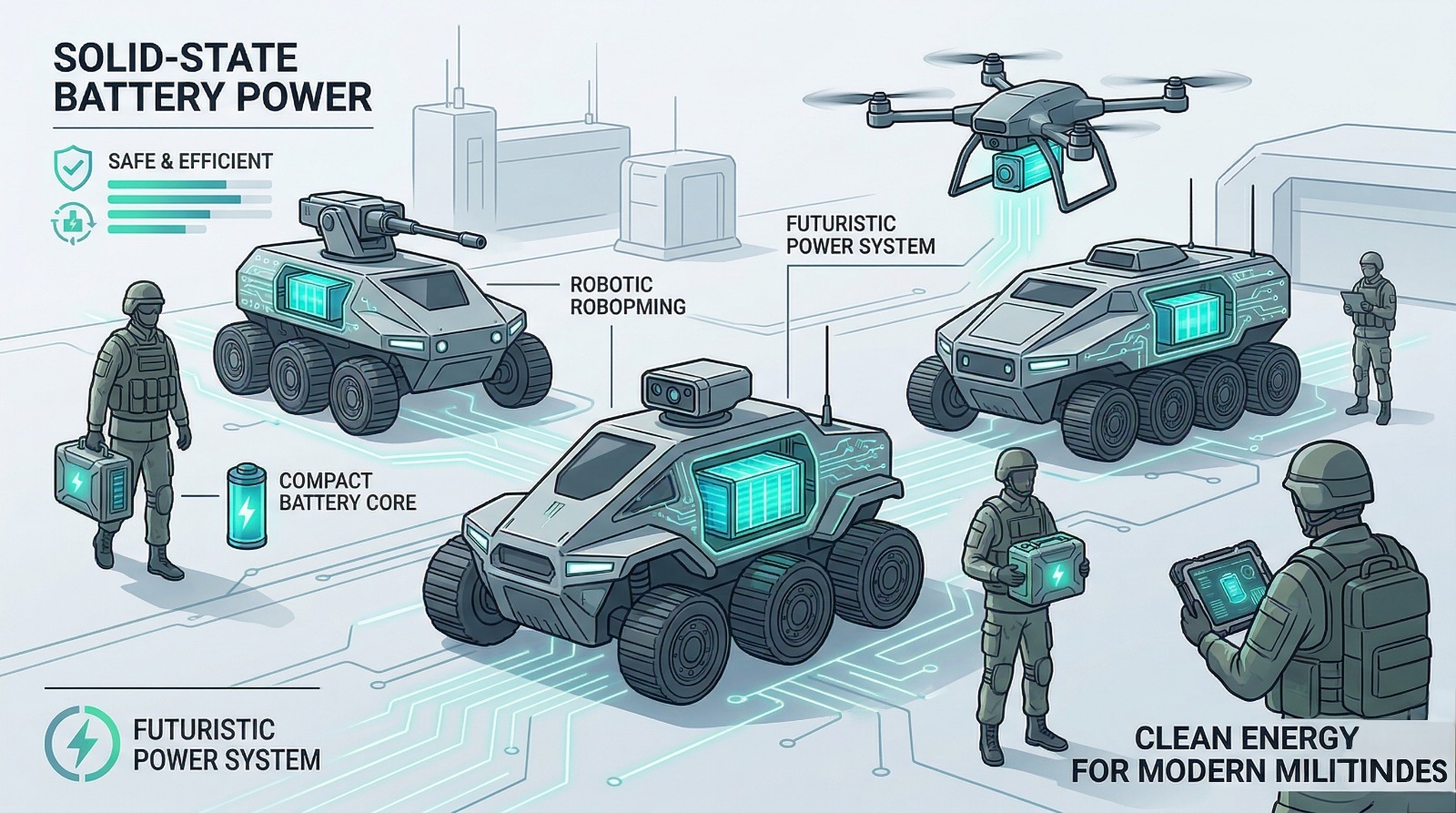
The defence angle is obvious: drones, ground robots, portable soldier power, and electric light tactical vehicles all need batteries that won’t catch fire when shot at. The AI angle is equally strategic: training large language models and running autonomous systems requires massive, reliable, uninterruptible power — and QuantumScape sees solid‑state batteries as a data‑centre backup solution as well.
The Convergence – Low‑Cost Interception + High‑Performance Power
These two announcements — from opposite ends of the defence supply chain — share a single thesis: the economics of warfare are changing faster than the procurement cycle.
BAE’s APKWS test shows that air forces no longer need to fire a million‑dollar missile at a $50,000 drone. A $20,000 rocket does the job just fine.
QuantumScape’s Maybury appointment shows that the next generation of military hardware — from drones to data centres — will be powered by batteries that are safer, denser and faster‑charging than anything fielded today.
For the UK Ministry of Defence, which supported the APKWS test, and for the U.S. Department of Defence, which will be watching QuantumScape’s progress, the message is the same: the future of warfare is being written in code, in chemistry and in cost‑effectiveness.
Conclusion: The New Defence Trilemma – Cost, Safety, Capability
April 8, 2026, will be remembered as the day two separate streams of defence innovation converged.
On one side, BAE Systems demonstrated that a fourth‑generation fighter jet can be retrofitted with a low‑cost, precision‑guided rocket — turning a $100 million asset into an affordable drone‑killer.
On the other, QuantumScape signalled its intent to bring solid‑state batteries out of the EV lab and into the hands of soldiers, pilots and AI‑powered systems — where safety and performance are literally matters of life and death.
The winners in 2026 will not be those with the biggest budget. They will be those who solve the trilemma: low‑cost interception, safe high‑density power, and AI‑enabled autonomy.
Today, two very different companies showed that they understand the assignment.

Vishal Sable
B.Tech AD @ shri balaji institute of technology and management
Engineering and tech journalist. I love exploring the impact of emerging technologies on global defense, sovereignty, and everyday life. Always looking for the real story behind the headlines.