The 32-Gigawatt Deficit: Why Elon Musk is Launching AI Data Centers Into Orbit
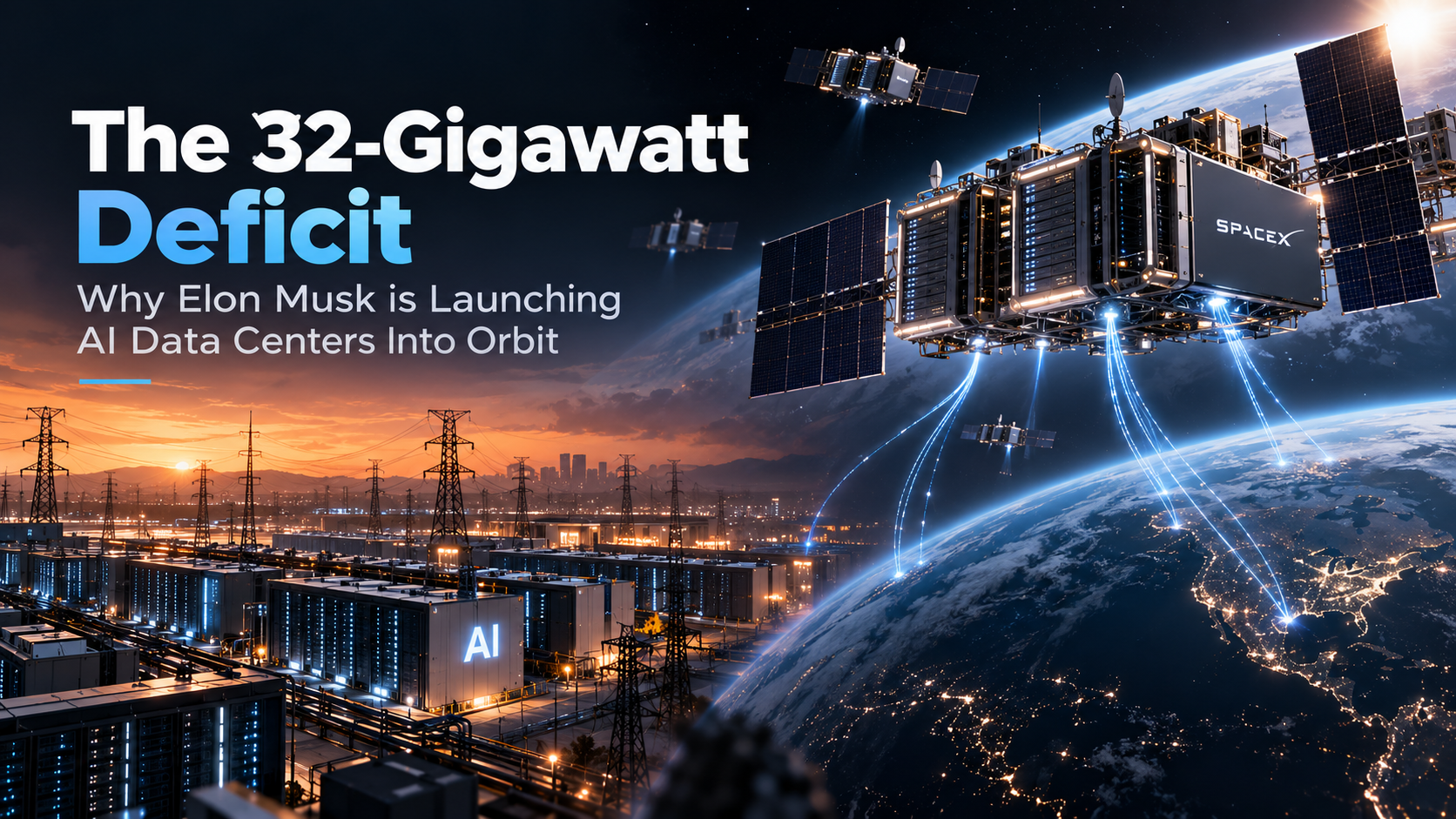
As a 32-gigawatt power shortage paralyzes US data centers, Elon Musk is filing plans to move AI computing into orbit to bypass the energy crisis entirely.
For years, the artificial intelligence industry worried about running out of advanced silicon chips, but Wall Street has suddenly realized a far more terrifying bottleneck: we are completely running out of electricity. As Morgan Stanley drops a bombshell report revealing a massive 32-gigawatt power shortage facing U.S. data centers, tech giants are frantically scrambling for energy. However, Elon Musk is taking a radically different approach to the crisis—by filing official plans to move AI computing completely off the planet and into the vacuum of space.
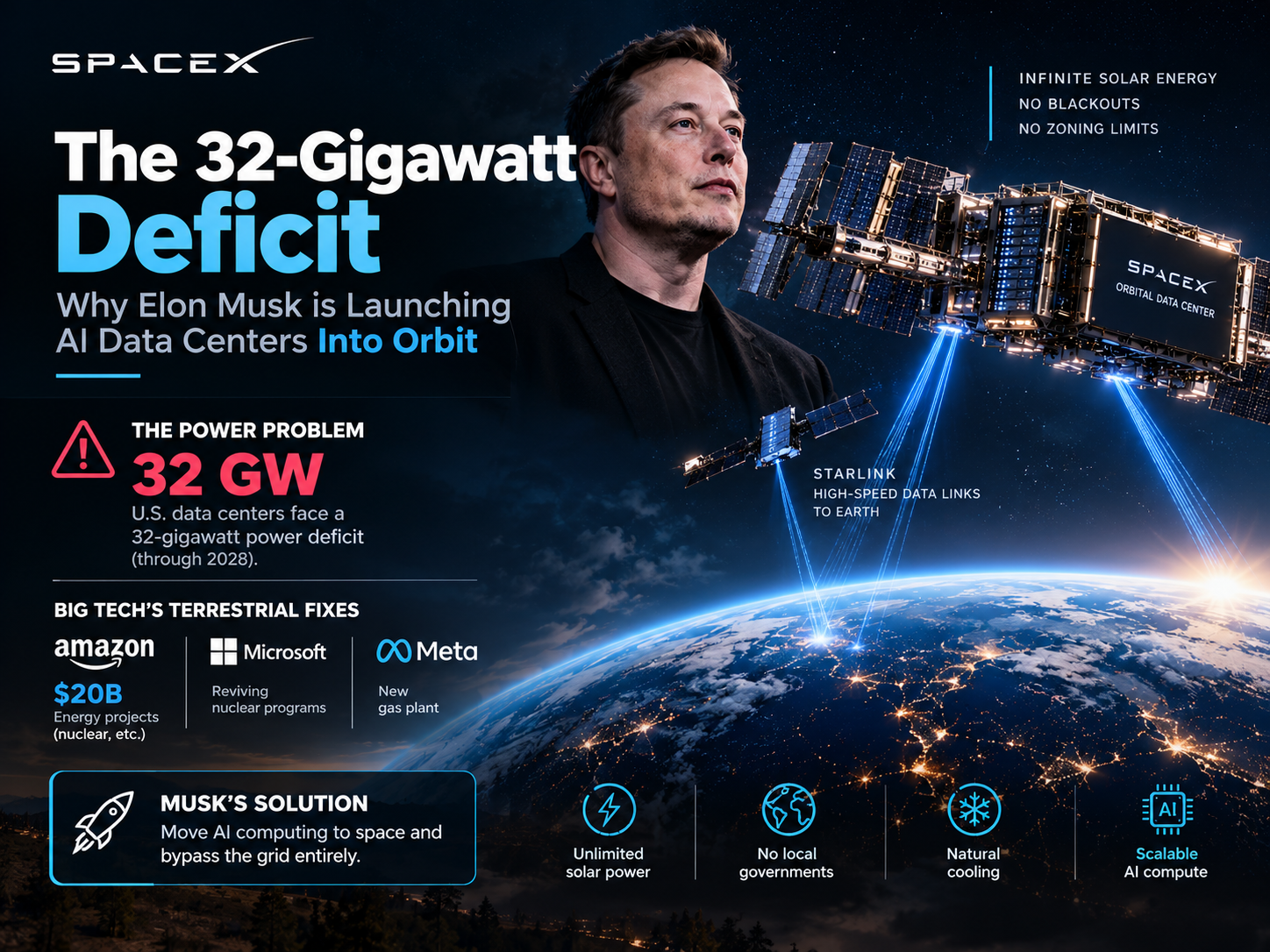
On October 17, 2026, technology investor James Altucher highlighted a critical infrastructure failure that is currently paralyzing the global AI boom. According to Morgan Stanley analysts, developers building U.S. data centers are facing an insurmountable 32-gigawatt electricity deficit that will stretch entirely through 2028. The simple reality of the technology sector is that without uninterrupted power, a data center cannot operate; and when data center projects stall, hardware orders are subsequently pushed out or canceled entirely.
While major players like Nvidia and Broadcom can temporarily divert their highly sought-after chip shipments to the few infrastructure projects that actually have secured power, the broader supply chain underneath them is facing severe delays. Tech giants are desperately throwing billions at terrestrial power solutions just to keep the lights on. Amazon has invested $20 billion into energy projects including nuclear, Microsoft is attempting to revive decommissioned nuclear programs, and Meta is constructing a massive new gas plant.
For years, the public obsessed over which company had the smartest language model or the fastest processor, completely ignoring the colossal physical infrastructure required to keep it running. Training and operating frontier AI models demands uninterrupted around-the-clock power, massive cooling systems, physical buildings, heavy transmission lines, and high-speed networking links. Traditional power grids simply cannot generate enough energy to support the full, unbridled potential of artificial intelligence.
Instead of fighting local zoning boards and competing for the exact same overwhelmed terrestrial power grids, Elon Musk has officially filed plans with the FCC via SpaceX to deploy AI infrastructure in orbit. In space, there are no blackouts, no local governments to block construction, and an infinite supply of solar energy to do the heavy lifting. By shifting the computational "brain" into orbit, the only terrestrial requirement is a robust "nervous system"—a high-speed satellite network capable of moving massive amounts of data back down to Earth. This has sparked a massive rush to identify the niche aerospace suppliers providing the communication chips necessary for these orbital networks.
Why It Matters For the global enterprise and technology sectors, this 32-gigawatt deficit is a blaring alarm. The entire foundation of the coming "agentic AI" era relies on models being constantly active in the background, which requires an exponential, rather than linear, increase in power consumption. If companies cannot secure the electricity required to run their autonomous digital workers, the highly anticipated productivity gains of AI will hit a hard physical ceiling.
For massive IT integration hubs and software developers, the pivot toward orbital computing represents a profound shift in the hardware supply chain. If Musk's off-planet data centers become the new standard, the most critical tech companies will no longer just be the ones designing the AI models. The market power will shift to the niche hardware suppliers and aerospace partners building the satellite links required to beam that intelligence back to Earth. The true bottleneck of the 21st-century digital economy has officially shifted from software engineering to physical energy logistics.
The Horizon We are witnessing the physical limits of our planet actively dictating the future of digital intelligence. While competitors like Amazon and Meta engage in a desperate ground war over terrestrial power plants and old nuclear reactors, Musk is leveraging his aerospace dominance to bypass the grid entirely. But as SpaceX prepares to launch the first generation of orbital data centers, a massive question remains: Will moving AI to space permanently solve the global energy crisis, or will it simply create an entirely new set of vulnerabilities for the world's most critical digital infrastructure?

Saumya Dawande
B.Tech AIML @ oriental institute of science technology bhopal
Engineering and tech journalist. I love exploring the impact of emerging technologies on global defense, sovereignty, and everyday life. Always looking for the real story behind the headlines.