LATEST NEWS
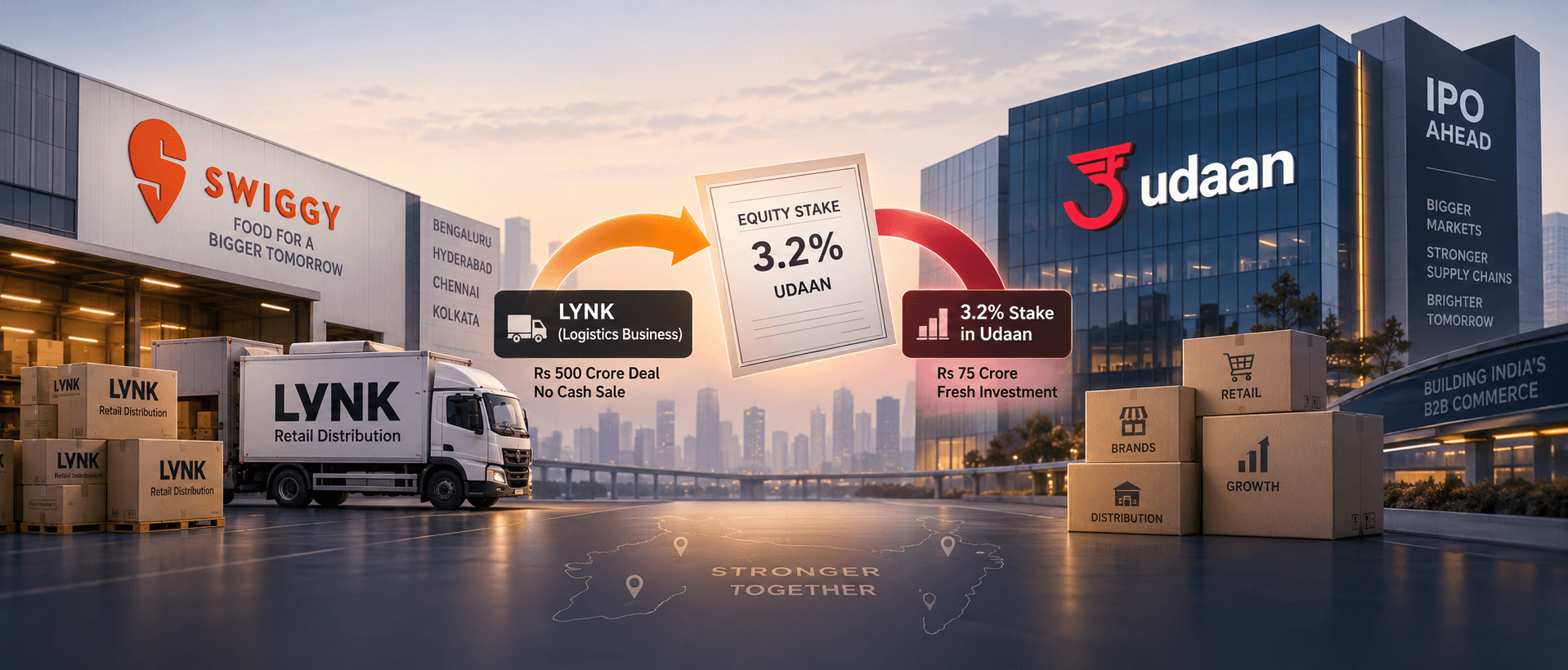
Swiggy Didn't Sell Its B2B Arm for Cash — It Bought Into the Company Buying It
September 9, 2026 5M
Back to News
News AlertWorld of Startup’s
The "Founder Factory" Effect & The Rise of Serial AI Entrepreneurs
V
Author
Vishal Sable
Published
August 14, 2026
Reading Time
4 MIN READ
Spread the Word
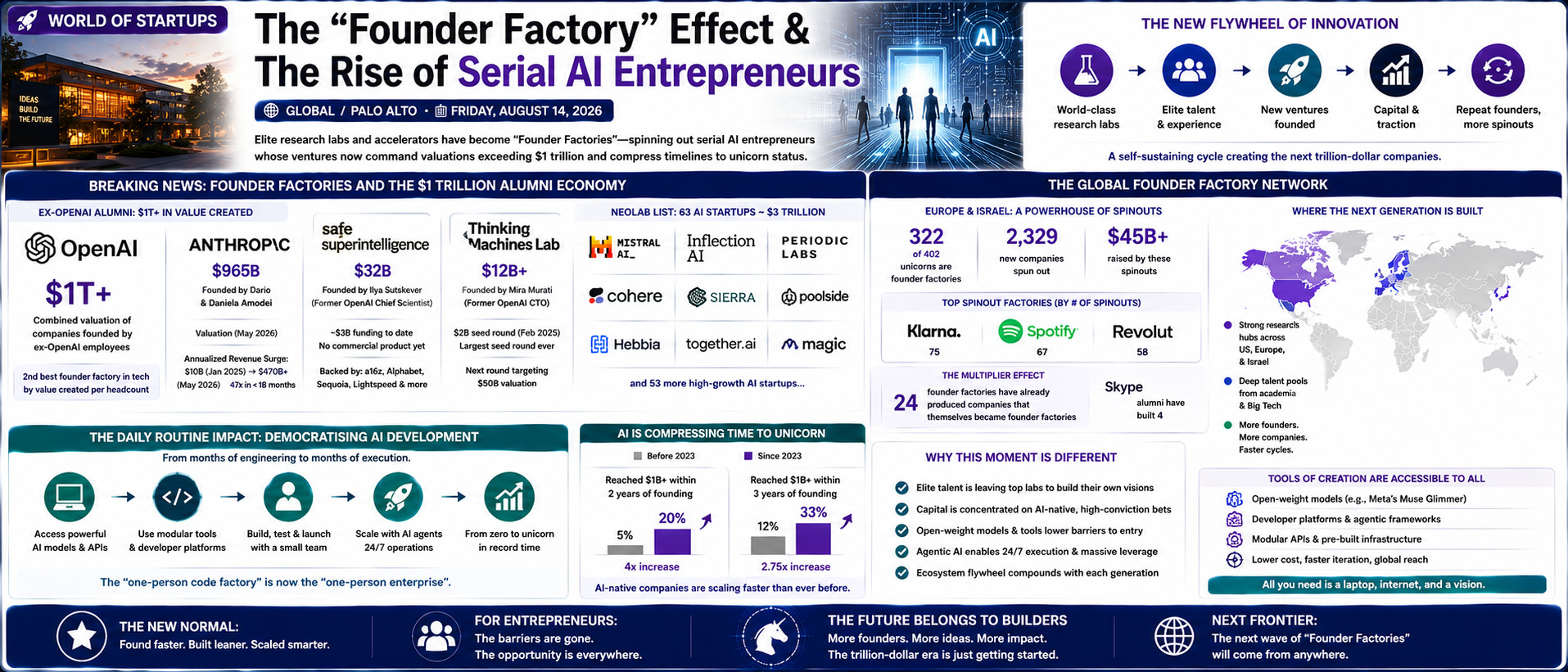
A structural transformation is reshaping how the world's most valuable technology companies are built, as fresh ecosystem analysis confirms that a handful of elite research institutions and accelerators have become "Founder Factories"—producing alumni whose collective ventures now command valuations exceeding $1 trillion. The phenomenon, most vividly illustrated by the exodus of talent from OpenAI and Google DeepMind, has created a self-sustaining flywheel where serial AI entrepreneurs spin out new ventures at unprecedented velocity, compressing the timeline from founding to unicorn status from years to months.
THE BREAKING NEWS: Founder Factories and the $1 Trillion Alumni Economy
SignalFire, a venture capital firm that traced more than 2,000 founders behind roughly 800 US unicorns back to their previous employers, has documented that ex-OpenAI employees have founded companies worth over $1 trillion combined. Yet remarkably, OpenAI ranks only as the second-best founder factory in tech when normalised by headcount—Google DeepMind takes the top spot, having produced alumni who built Mistral, Inflection AI, and Periodic Labs. The concentration of value is staggering: Anthropic ($965B), Safe Superintelligence ($32B), and Thinking Machines Lab ($12B) represent just the most prominent OpenAI spinouts. The "Neolab" list, maintained by Menlo Ventures partner Deedy Das, has expanded to 63 AI startups valued at approximately $3 trillion, founded predominantly by top researchers from OpenAI, DeepMind, and Meta AI.
The numbers defy historical precedent. Anthropic, founded by former OpenAI executives Dario and Daniela Amodei, reached a $965 billion valuation in May 2026 after a private funding round, with investors now projecting a potential $2 trillion IPO valuation in October. The company's annualized revenue has reportedly surged from $10 billion in January 2025 to over $470 billion by May 2026—a 47-fold increase in less than 18 months. Safe Superintelligence, founded by former OpenAI Chief Scientist Ilya Sutskever, has accumulated approximately $3 billion in funding at a $32 billion post-money valuation despite having no commercial product, backed by Andreessen Horowitz, Alphabet, Sequoia Capital, and Lightspeed Venture Partners. Thinking Machines Lab, launched in February 2025 by former OpenAI CTO Mira Murati with a $2 billion seed round—the largest seed round for a startup ever—is now reportedly targeting a $50 billion valuation in its next funding round.
The "Founder Factory" effect extends well beyond OpenAI. Across Europe and Israel, 322 of the region's 402 unicorns have become founder factories, spinning out 2,329 new companies that have raised over $45 billion. Klarna leads with 75 spinouts, followed by Spotify (67) and Revolut (58). Twenty-four of these founder factories have already produced companies that themselves became founder factories—Skype alumni alone have built four.
THE DAILY ROUTINE IMPACT: The Democratisation of AI Development
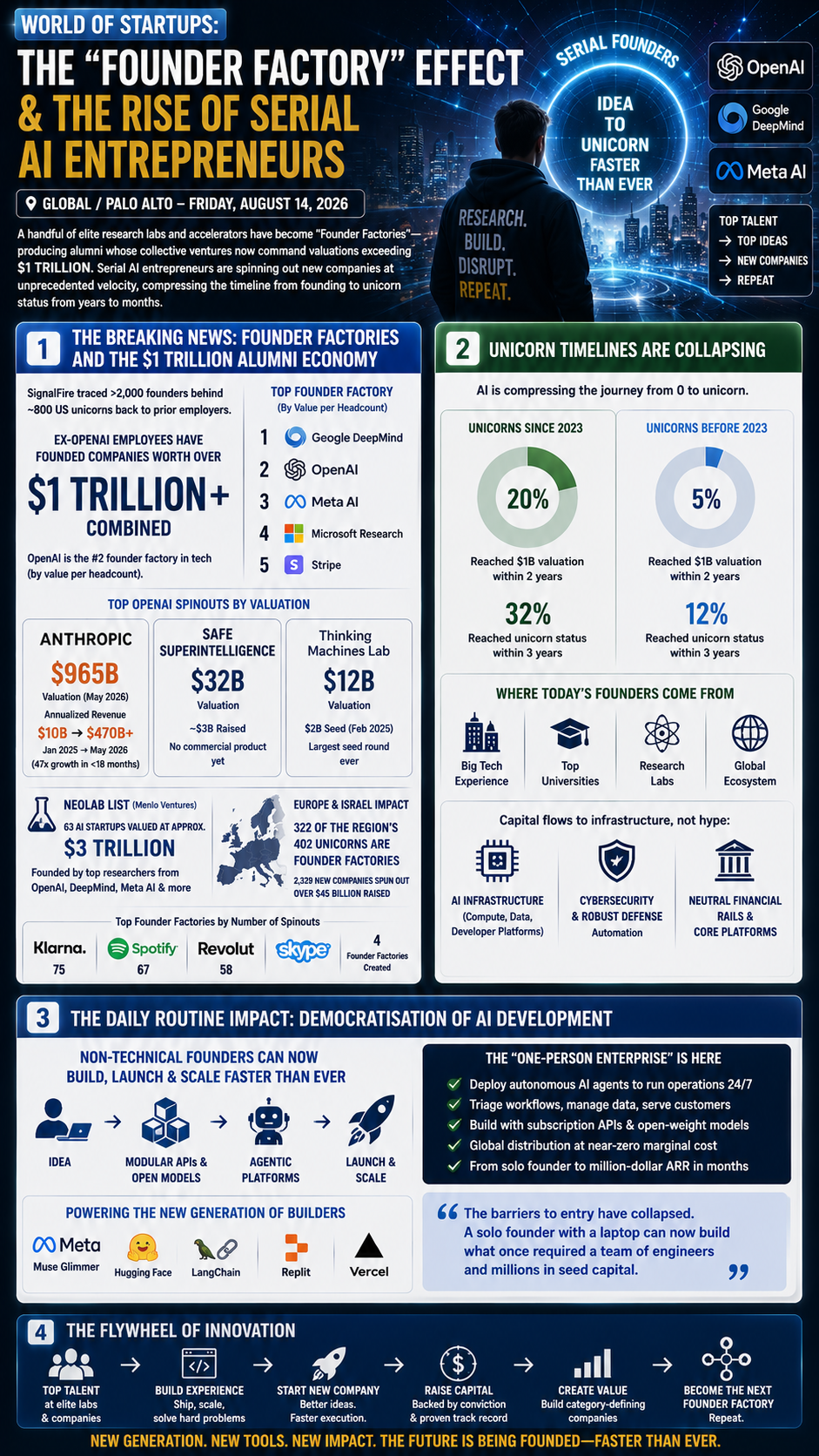
While elite alumni build trillion-dollar empires, the broader startup ecosystem is experiencing a parallel democratisation. Non-technical entrepreneurs and small teams are leveraging pre-built AI developer platforms and modular APIs to launch functional software products within months rather than years. The corporate focus has officially shifted toward "agentic" execution, where startups can deploy autonomous AI agents to run operations, triage workflows, and manage data 24/7—the "one-person code factory" is rapidly evolving into the "one-person enterprise".
The acceleration is quantifiable. One in five unicorns minted since 2023 reached a $1 billion valuation within two years of founding, compared with just 5% before 2023. Nearly a third reached unicorn status within three years, up from 12% previously. AI is compressing the timeline, creating a new generation of companies that scale from zero to unicorn in record time. The latest wave of founders is more likely to have gained experience at Big Tech companies, academic institutions, and research environments than previous generations, with world-class universities and major technology companies building strong research presences across Europe, Israel, and the United States.
For entrepreneurs, the message is unambiguous: the barriers to entry have collapsed. Modular APIs, open-weight models like Meta's Muse Glimmer, and agentic development platforms have reduced the cost and complexity of building AI-native products to a fraction of what they were just two years ago. A solo founder with a laptop and a subscription to a developer platform can now prototype, launch, and scale a functional software product that would have required a team of engineers and millions in seed capital in the pre-AI era. The "Founder Factory" effect is no longer confined to the alumni of elite institutions—it is becoming a property of the entire ecosystem, where talent, experience, and capital compound with each generation of founders, and where the tools of creation are increasingly accessible to anyone with the vision to use them.

Vishal Sable
B.Tech AD @ shri balaji institute of technology and management
Engineering and tech journalist. I love exploring the impact of emerging technologies on global defense, sovereignty, and everyday life. Always looking for the real story behind the headlines.