LATEST NEWS
ByteDance Just Borrowed $30 Billion It Didn't Need To. That's the Real Signal.
September 8, 2026 4M
Back to News
News AlertWorld AI Tech
The Hardware Sovereigns: How OpenAI, Qualcomm, and the Token Economy Are Redefining AI's Mid-2026 Reality
V
Author
Vishal Sable
Published
June 29, 2026
Reading Time
13 MIN READ
Spread the Word

OpenAI's
Jalapeño chip ends Nvidia dependency. Qualcomm's Halo detects deepfakes
on-device. The vibe coding cost crisis hits. Inside mid-2026's AI reality.
The Great Unbundling: Why Mid-2026 Is the Moment AI Stopped Being Software
Three narratives have come to define the artificial intelligence industry in the second quarter of 2026—each revealing a deeper truth about where the AI revolution is heading. The first is the story of hardware sovereignty: OpenAI, long dependent on Nvidia's GPUs, has unveiled its own custom inference chip, Jalapeño, developed with Broadcom in just nine months. The second is the story of real-time defense: Scam.ai, at Computex 2026, launched Halo, an on-device deepfake detection model running on Qualcomm chips, capable of catching synthetic video manipulation during live calls. The third is the story of economic reckoning: the "vibe coding" phenomenon—where developers generate vast codebases using AI agents without checking token usage—has triggered a cost crisis so severe that Microsoft began revoking internal Claude Code licenses in May, and Uber burned through its entire 2026 AI programming budget in the first four months. Together, these three threads tell a single story. The era of unrestricted AI exploration is over. The era of AI governance, sovereignty, and cost discipline has arrived.
OpenAI's Jalapeño: The End of Nvidia's Monopoly Begins
On June 24, 2026, OpenAI and Broadcom unveiled Jalapeño, OpenAI's first custom Intelligence Processor. The chip is purpose-built for LLM inference—the compute-intensive process of running AI models in response to user commands—and represents the culmination of a strategic pivot that began with the Broadcom partnership announcement in October 2025. The numbers are striking. Developed from design to production in nine months—a timeline accelerated by OpenAI's own AI models assisting in the design process—Jalapeño is already running engineering samples in the lab at production target frequency and power, including workloads from GPT-5.3-Codex-Spark. Early testing indicates that the first-generation accelerator will deliver "performance per watt substantially better than current state-of-the-art" alternatives. The architecture reduces data movement and balances compute, memory, and networking resources to achieve "realized utilization much closer to theoretical peak performance". But Jalapeño is not merely a technical achievement. It is a sovereignty play. OpenAI President Greg Brockman told CNBC that the company "cannot get compute fast enough". Broadcom CEO Hock Tan backed that assessment, describing compute demand from the company's six customers as "simply insatiable" and extending through 2028. By designing its own silicon, OpenAI is reducing its heavy reliance on Nvidia's expensive GPUs, moving toward what Brockman called "building the full stack behind its models and products". The scale is breathtaking. Jalapeño will be deployed at "gigawatt scale with data center partners" starting in late 2026, with a contractual commitment to deploy 1.3 gigawatts of compute in 2027 as part of a broader 10-gigawatt agreement through 2029. Broadcom expects the collaboration to extend over multiple generations and help power large AI clusters for OpenAI, Microsoft, and other partners. As Brockman framed it: "The world is moving to a compute-powered economy. Jalapeño is part of our long-term full-stack infrastructure strategy to make compute more abundant".

The Vibe Coding Reckoning: When AI Costs Exceed Human Salaries
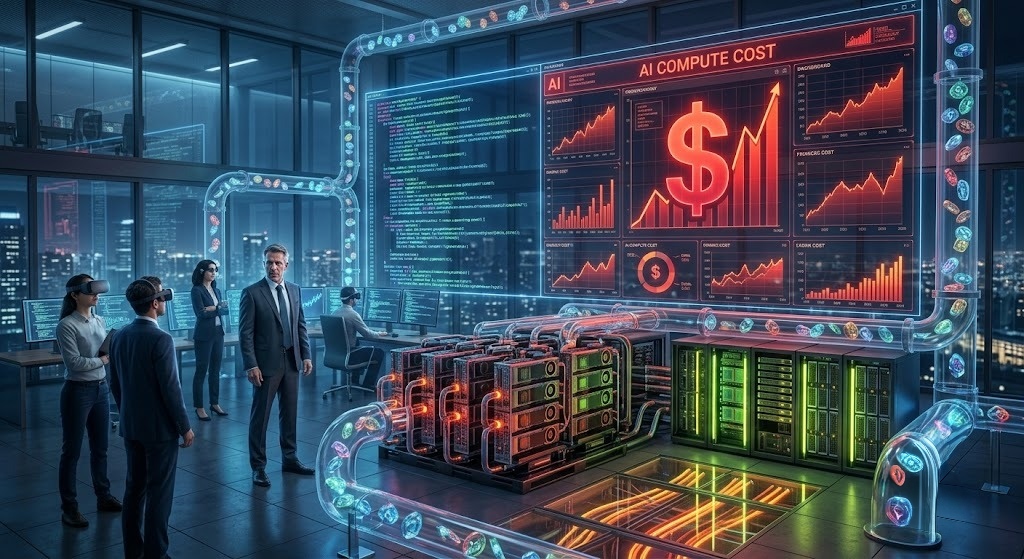
The third narrative of mid-2026 is perhaps the most sobering. "Vibe coding"—the practice of describing intent in natural language and letting AI agents generate code, popularized by Andrej Karpathy in early 2025—has become mainstream. But mainstream adoption has brought mainstream costs. The evidence is mounting. On May 14, 2026, Microsoft began revoking most employees' internal Claude Code licenses, with a deadline of June 30—the last day of the company's fiscal year. The decision was starkly revealing. Just six months earlier, in December 2025, Microsoft had opened Claude Code to thousands of employees, including engineers, product managers, and designers, encouraging everyone to reshape workflows through vibe coding. Employees loved the tool—perhaps too much. The Verge reported that employees generally believed Claude Code was more user-friendly than Microsoft's own Copilot CLI, and its popularity even made the internal tool feel "neglected". Microsoft is not alone. Uber's CTO Praveen Neppalli Naga revealed to The Information that the company's full-year 2026 AI programming tool budget was already burned through in the first four months. Uber had previously run an internal leaderboard, using a competition to motivate employees to use more AI—resulting in a budget collapse. Uber President and COO Andrew Macdonald later admitted that the company cannot clearly connect usage metrics for tools like Claude Code with the delivery of "useful" features to customers. Even Nvidia's VP of Applied Deep Learning, Bryan Catanzaro, told Axios: "For my team, the cost of computing power far exceeds the cost of employees"—a remarkable admission from a company whose core product is selling that computing power. Fortune connected the dots with a blunt headline: "Microsoft's Report Exposes the True Cost Problem of AI—Using This Thing Is More Expensive Than Paying Employees". The result is a structural shift. Companies are moving from open exploration to strict token budget governance. The "vibe coding" experiment has exposed a fundamental tension: AI adoption measured by usage rather than business outcomes leads to spiraling costs. As one analysis put it, the "copilot mode" has hit a wall. The era of unrestricted token consumption is over.
The Convergence: What Mid-2026 Teaches Us About AI's Next Phase
Taken together, these three narratives reveal a single, coherent picture of AI's trajectory in mid-2026. First, infrastructure is becoming sovereign. OpenAI's Jalapeño chip is not just about cost reduction—it is about control. By designing its own silicon, OpenAI is ensuring that its future is not hostage to Nvidia's supply chain, pricing, or roadmap. The move mirrors what Google did with TPUs and Amazon with Trainium: vertical integration as a competitive moat. Second, trust is moving to the edge. Scam.ai's Halo represents a fundamental shift in how we think about AI security. Instead of sending video to the cloud for analysis—with all the privacy, latency, and reliability problems that entails—Halo runs locally on Qualcomm chips. The deepfake threat is too immediate and too personal to be handled any other way. Third, economics are disciplining exuberance. The vibe coding cost crisis is a classic bubble moment: a technology so compelling that organizations adopt it without asking what it costs. The correction is painful but necessary. Microsoft's revocation of Claude Code, Uber's budget blowout, and the broader shift toward token governance are signs of a market maturing, not collapsing. The through-line is clear. In 2024, AI was about discovery. In 2025, it was about deployment. In 2026, it is about discipline. The companies that survive and thrive will be those that build their own infrastructure, secure their own trust layers, and govern their own costs. The era of free experimentation is over. The era of intentional, sovereign, economically rational AI has begun.

Vishal Sable
B.Tech AD @ shri balaji institute of technology and management
Engineering and tech journalist. I love exploring the impact of emerging technologies on global defense, sovereignty, and everyday life. Always looking for the real story behind the headlines.