LATEST NEWS
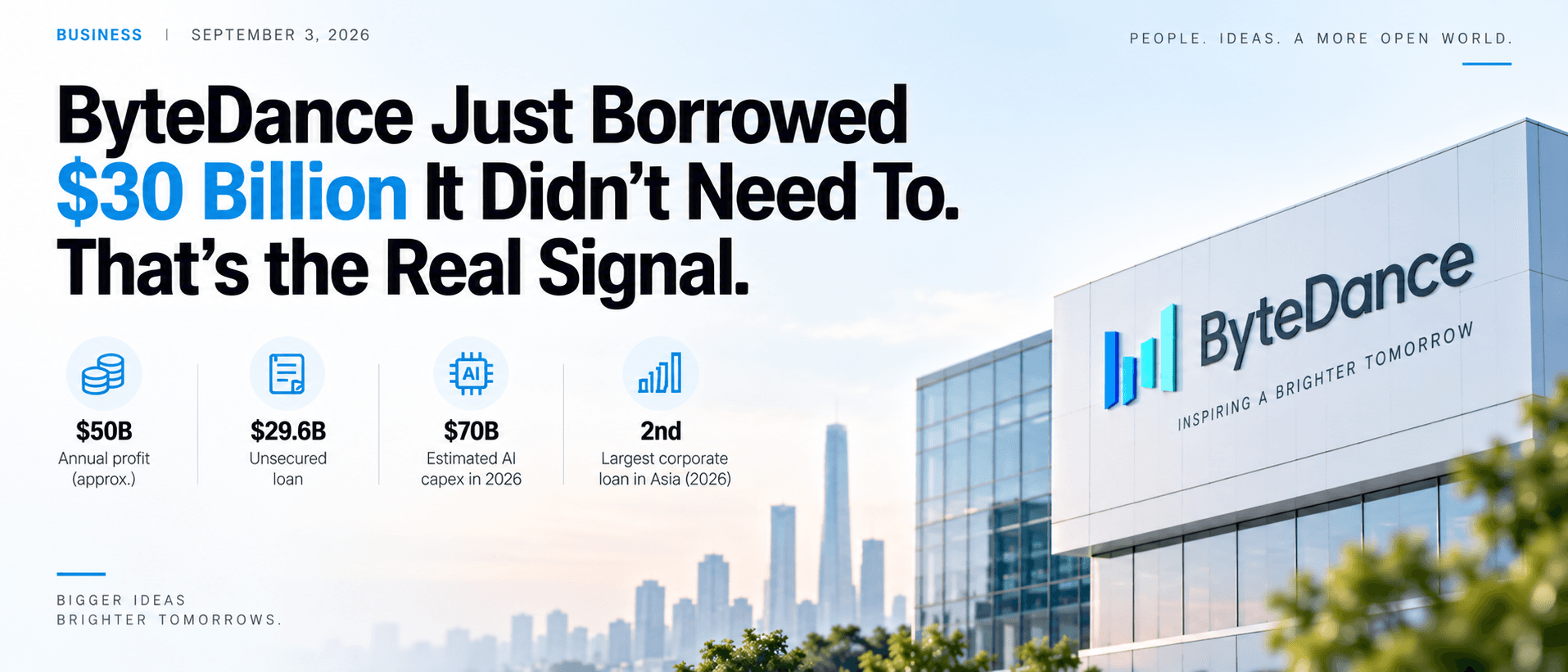
ByteDance Just Borrowed $30 Billion It Didn't Need To. That's the Real Signal.
September 8, 2026 4M
Back to News
News AlertWorld AI Tech
OpenAI Rolls Out GPT-5.6 Ecosystem and the "ChatGPT Work" Super App
V
Author
Vishal Sable
Published
July 10, 2026
Reading Time
3 MIN READ
Spread the Word
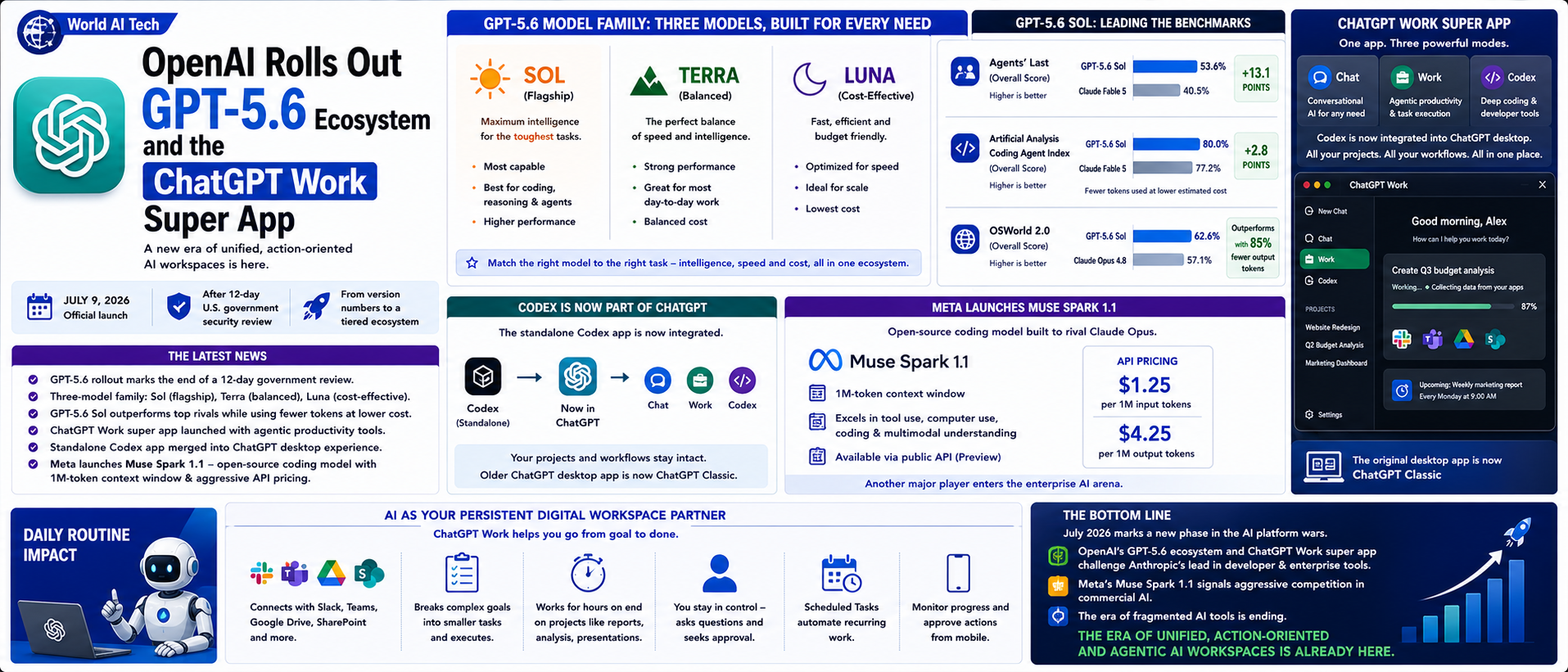
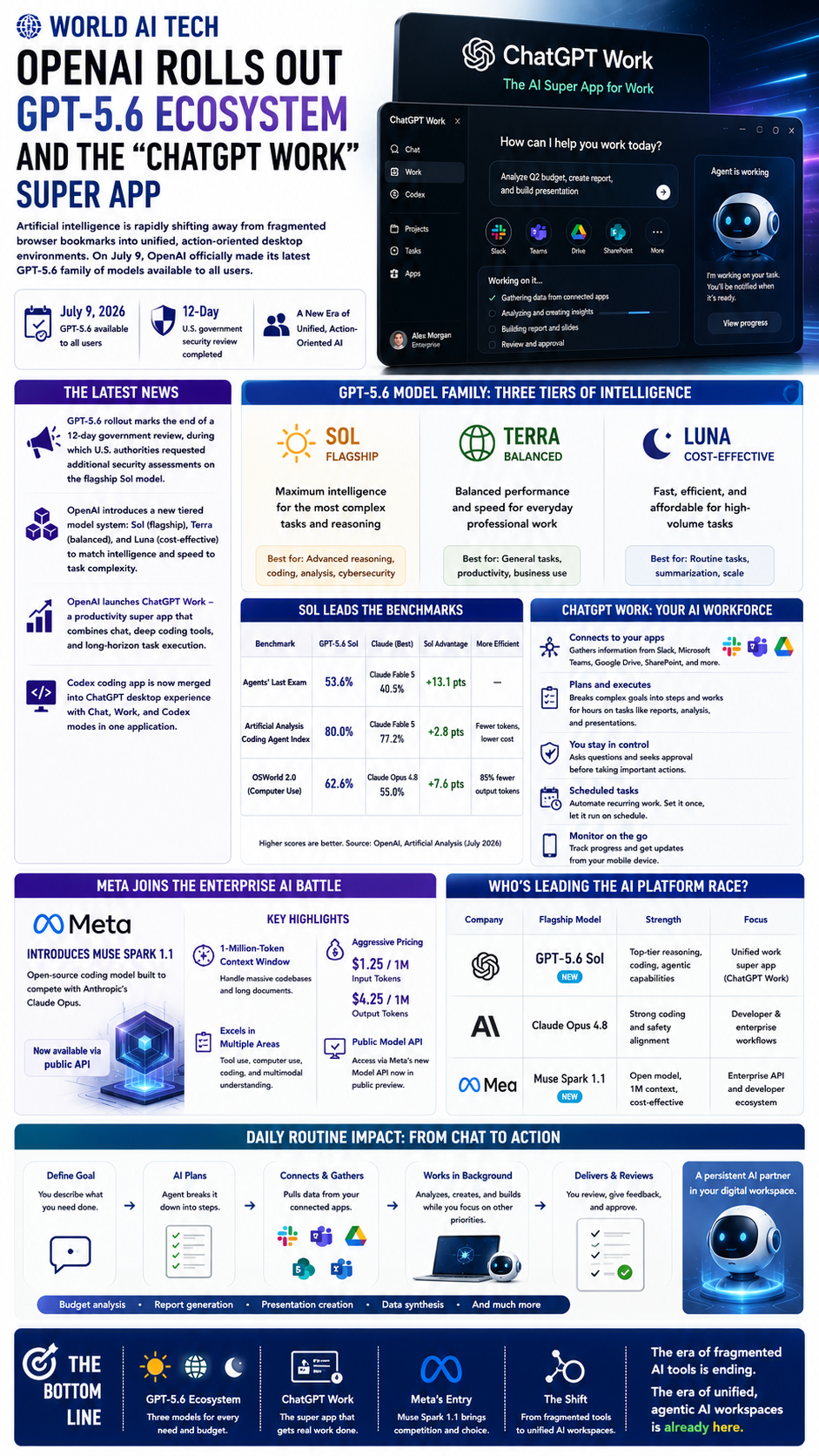
Artificial intelligence is rapidly shifting away from fragmented browser bookmarks into unified, action-oriented desktop environments. On July 9, OpenAI officially made its latest GPT-5.6 family of models available to all users, unveiling a trio of models—Sol, Terra, and Luna—alongside a major product overhaul: the ChatGPT Work super app .
The Latest News
The GPT-5.6 rollout marks the end of a 12-day government review, during which U.S. authorities requested additional security assessments on the flagship Sol model due to its advanced cybersecurity capabilities . The naming scheme shifts from simple version numbers to a tiered system: Sol (flagship), Terra (balanced), and Luna (cost-effective), allowing users to match intelligence and speed to task complexity .
The flagship model, GPT-5.6 Sol, demonstrates performance improvements that put it in direct competition with Anthropic's Claude line. OpenAI reports Sol scored 53.6% on Agents' Last Exam, beating Claude Fable 5 by 13.1 points, and achieved an 80% score on the Artificial Analysis Coding Agent Index, surpassing Fable 5 by 2.8 points while using fewer tokens at lower estimated cost . On OSWorld 2.0, it reached 62.6%, outperforming Opus 4.8 while consuming 85% fewer output tokens .
Alongside the intelligence upgrade, OpenAI launched ChatGPT Work, a new productivity agent that combines the company's chat interface with deep-tier coding tools and long-horizon task execution . The company also merged its standalone Codex coding app into the unified ChatGPT desktop experience, offering Chat, Work, and Codex modes in a single application . Existing Codex users retain their projects and workflows, while the older ChatGPT desktop app has been renamed ChatGPT Classic .
Simultaneously, Meta dropped Muse Spark 1.1, its newest open-source coding model built to go toe-to-toe with Anthropic's Claude Opus . For the first time, Meta is offering the model through a public API with aggressive pricing—$1.25 per million input tokens and $4.25 per million output tokens—as it enters the competitive enterprise AI market . Muse Spark 1.1 supports a 1-million-token context window and excels in tool use, computer use, coding, and multimodal understanding . Developers can access it through Meta's new Model API, now in public preview .
Daily Routine Impact
AI is officially a persistent digital workspace partner. Instead of simply writing text, tools like ChatGPT Work are utilized to securely manage enterprise-grade background administrative routines. ChatGPT Work can gather information from connected apps like Slack, Microsoft Teams, Google Drive, and SharePoint, break complex goals into smaller tasks, and continue working for hours on projects such as budget analysis, report generation, and presentation creation . Users remain in control, with the agent asking questions and seeking approval before taking important actions . The system also supports Scheduled Tasks for automating recurring work and can be monitored from mobile devices .
The Bottom Line
July 2026 marks a new phase in the AI platform wars. OpenAI's GPT-5.6 ecosystem—with three tiers of capability and the ChatGPT Work super app—directly challenges Anthropic's developer and enterprise dominance. Meta's Muse Spark 1.1, meanwhile, signals that the social media giant is serious about competing in the commercial AI space. The era of fragmented AI tools is ending. The era of unified, action-oriented, and agentic AI workspaces is already here.

Vishal Sable
B.Tech AD @ shri balaji institute of technology and management
Engineering and tech journalist. I love exploring the impact of emerging technologies on global defense, sovereignty, and everyday life. Always looking for the real story behind the headlines.