Back to News
News AlertWorld Money
US Inflation Hits 3.7%: Dollar Rally Meets G20 Summit
T
Author
Tushar Shrivas
Published
October 15, 2026
Reading Time
6 MIN READ
Spread the Word
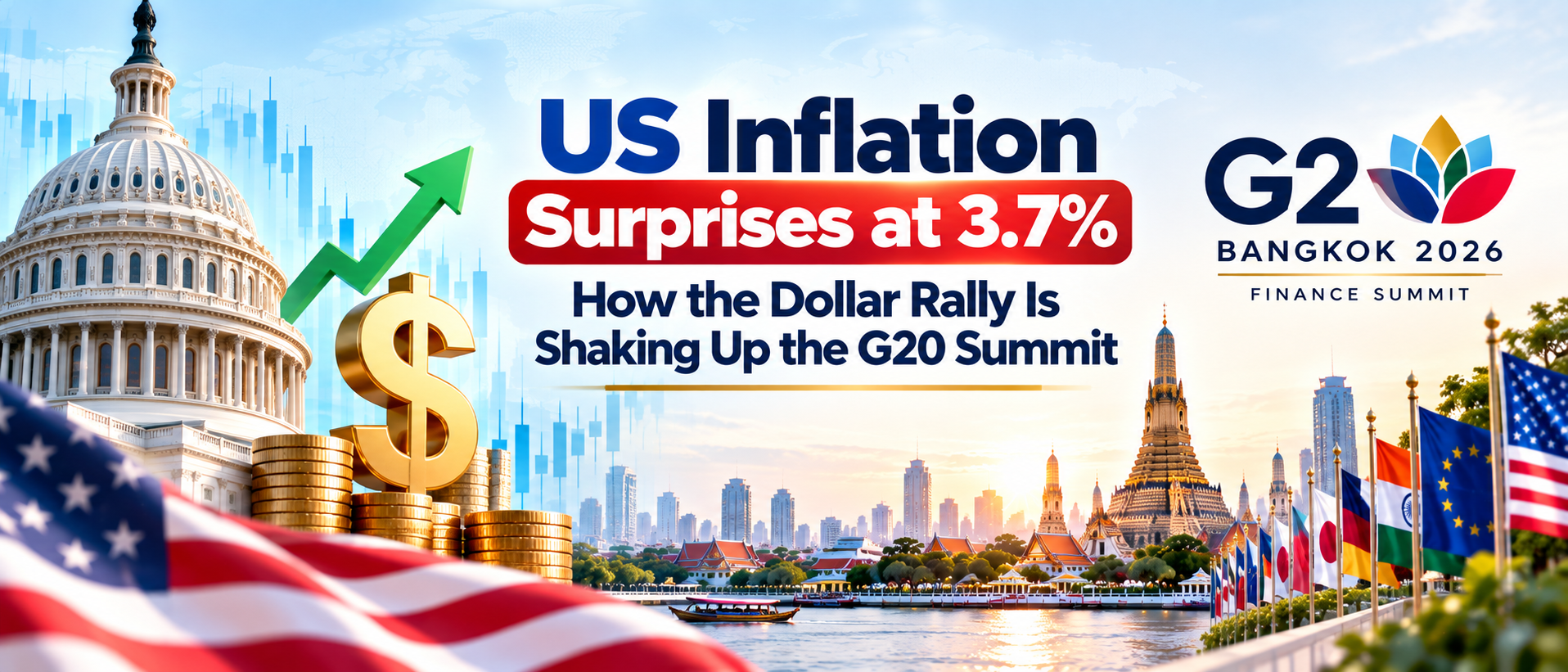
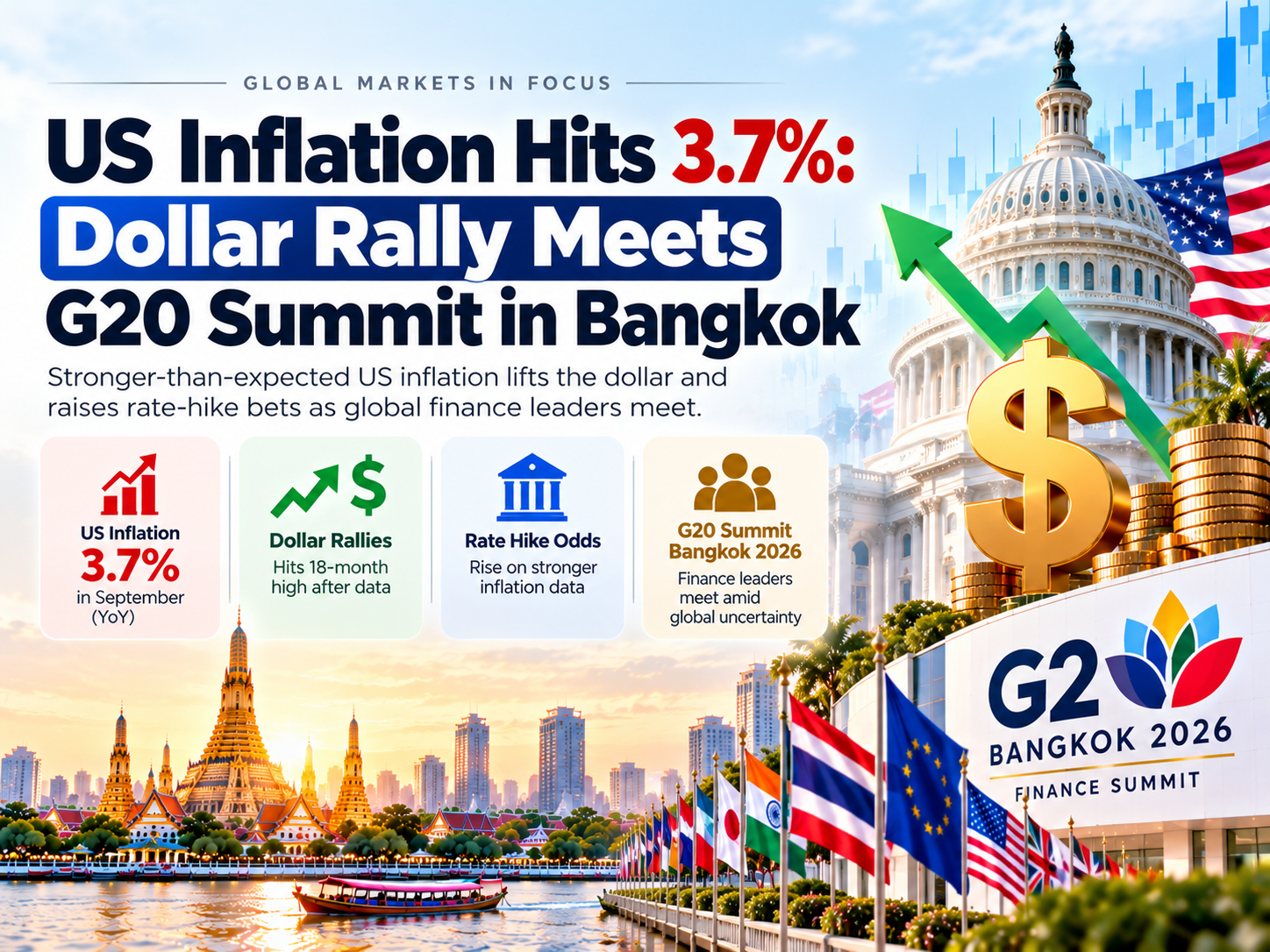
US inflation rose to 3.7% in September, lifting the dollar and rate-hike expectations as G20 finance leaders meet in Bangkok amid global uncertainty.
US CPI September 2026, US dollar rally, G20 finance summit Bangkok, Federal Reserve interest rates, currency market volatility, global financial markets
US CPI September 2026, US dollar rally, G20 finance summit Bangkok, Federal Reserve interest rates, currency market volatility, global financial markets
US Inflation Surprise Puts Global Markets on Alert
A fresh inflation surprise in the United States has added uncertainty to global financial markets just as G20 finance ministers and central bank governors gather in Bangkok, Thailand. US consumer prices rose 3.7% year over year in September, up from 2.9% in August and above economist's expectations of 3.6%. Rising gasoline prices played a major role, while core inflation also came in stronger than expected.
The timing matters because policymakers are meeting amid geopolitical tensions, elevated energy costs and concerns about global economic resilience. The inflation report has renewed debate over whether the Federal Reserve may need to keep interest rates higher for longer.
US Bureau of Labor Statistics
Why the Dollar Strengthened After the CPI Report
The US dollar initially climbed after the inflation figures were released on October 14. Investors interpreted the stronger-than-expected data as a sign that inflationary pressures could persist, potentially making further monetary tightening more likely. The dollar index reached an 18-month high during the trading session, while US Treasury yields rose and US stocks weakened.
However, the rally did not continue uninterrupted. By October 15, the dollar had retreated from its peak as cautious Federal Reserve commentary and falling Treasury yields reduced expectations of an immediate rate hike. This reversal shows how quickly currency markets can change when traders reassess economic data and central-bank signals. Reuters
What the Inflation Data Means for the Federal Reserve
The Federal Reserve faces a difficult balancing act. Higher interest rates can help restrain demand and inflation, but they can also increase borrowing costs for households and businesses. September's headline CPI increased 3.7% annually, while core CPI, which excludes food and energy, rose 2.6%.
The core figure matters because it helps policymakers assess whether price pressures are spreading beyond volatile energy and food categories. Markets adjusted their expectations for a possible rate increase following the report, but a single inflation reading does not determine the Fed's decision. Officials will continue to assess incoming data, employment conditions and the broader economic outlook.
Federal Reserve
Why the G20 Finance Summit Matters
G20 finance ministers and central bank governors are meeting in Bangkok on October 15 as part of the IMF and World Bank Annual Meetings, scheduled for October 12–18. The gathering comes amid concerns about global growth, public debt, geopolitical tensions and the impact of energy-price shocks.
For participating economies, the challenge is managing inflation and financial stability without undermining growth. Higher US yields can increase borrowing costs internationally, particularly for emerging markets that depend on foreign capital. A stronger dollar can also put pressure on currencies that weaken against the greenback, making dollar-denominated imports and debt more expensive.
The Impact on Forex, Remittances and Fintech
Currency volatility can affect more than professional traders. Businesses paying overseas suppliers may face changing costs, while families sending international remittances can receive different amounts depending on exchange rates and transfer fees. Financial technology companies and payment providers may also need to manage currency exposure and changing liquidity conditions.
Automated trading systems can react rapidly to economic releases, but volatility can also increase execution costs and the risk of sudden price movements. Wider bid-ask spreads may occur in less liquid currency pairs, although the effect varies by provider and market conditions. These are potential consequences of market volatility, not evidence that every trading algorithm or remittance platform has changed its pricing.
Reuters
What This Could Mean for India
India can be affected by changes in the US dollar because several important imports, particularly crude oil, are priced internationally in dollars. If the dollar strengthens against the rupee while oil prices remain elevated, import costs may rise, potentially adding pressure to inflation and the country's import bill.
Currency movements can also influence foreign investment flows and the cost of servicing dollar-denominated debt. However, the actual impact depends on the rupee's movement, global commodity prices, domestic demand and policy responses. A stronger dollar does not automatically mean every Indian asset will fall or every import will become more expensive. Reserve Bank of India
The Bottom Line
The Bottom Line
The US inflation surprise has put monetary policy and currency movements back at the center of global market attention. The dollar's initial rally, followed by a partial retreat, illustrates how investors are balancing inflation risks against signals that the Federal Reserve may remain cautious.
As G20 finance leaders meet in Bangkok, the key issue is whether energy-driven inflation will become more persistent and how policymakers can protect economic stability without weakening growth. Investors and businesses should watch upcoming inflation data, Treasury yields and central-bank communications rather than assuming the dollar will continue moving in one direction.
Frequently Asked Questions
Why did US inflation reach 3.7%?
September's annual inflation rate rose to 3.7%, with higher gasoline prices contributing significantly to the increase.
Why did the US dollar rise?
The hotter-than-expected inflation report increased expectations that the Federal Reserve might raise interest rates, supporting the dollar initially.
Is the dollar still rallying on October 15?
The dollar has eased from its 18-month high as traders reassessed rate-hike expectations and Treasury yields pulled back.
Why is the G20 summit important?
Finance ministers and central bank governors are discussing global economic challenges at a time of energy-price uncertainty, inflation pressure and financial-market volatility.
How can dollar strength affect India?
A stronger dollar can make dollar-priced imports, including crude oil, more expensive in rupee terms and can affect overseas borrowing costs. The actual impact depends on exchange rates, commodity prices and domestic conditions.

Tushar Shrivas
B.Tech CS@ Shri Balaji Institute of Technology & Management
I write at Metaplugs — breaking down the latest in tech, economics, and business into simple, impactful stories for everyday readers. Passionate about software testing and global finance.