Back to News
News AlertWorld Money
US PPI Jumps 6.3%, Yet Treasury Yields Fall
T
Author
Tushar Shrivas
Published
October 16, 2026
Reading Time
7 MIN READ
Spread the Word
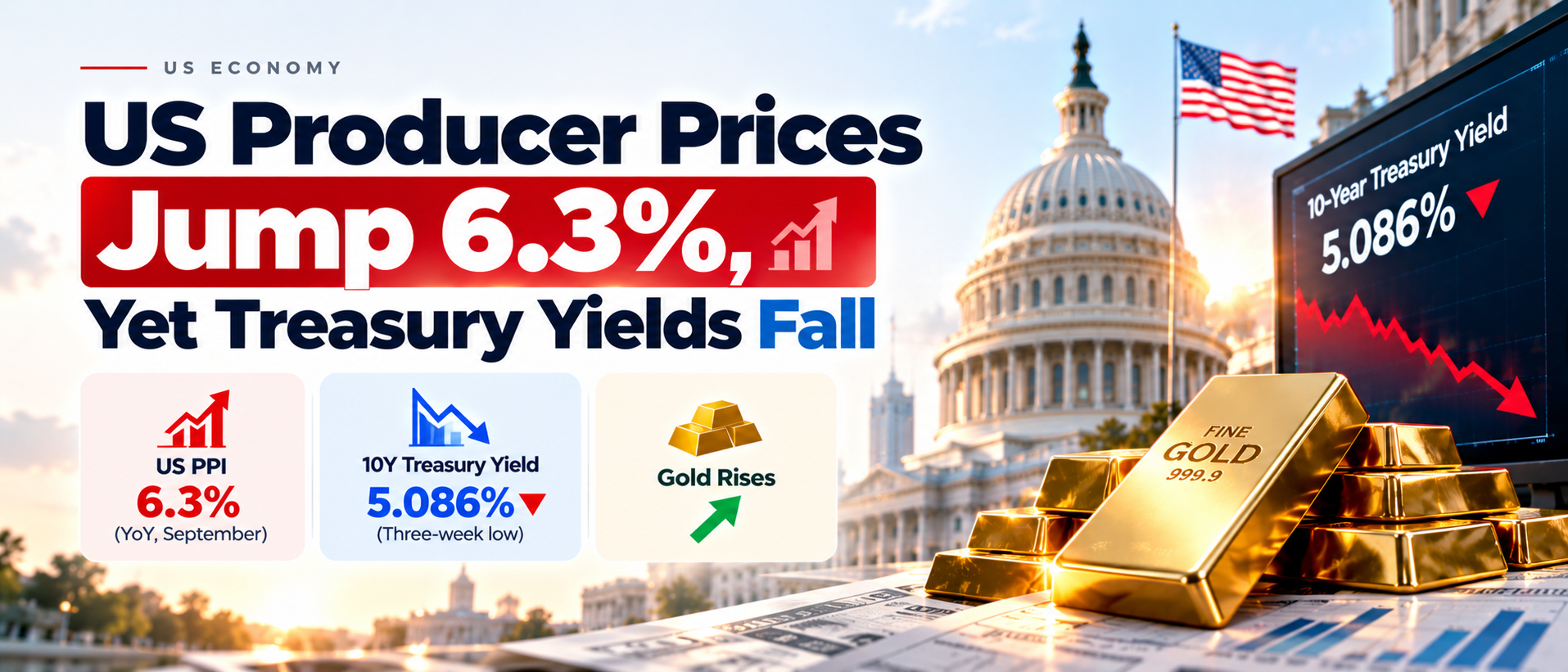
US producer prices rose 6.3% year over year in September, while Treasury yields fell as investors sought safety amid an AI-stock selloff.
producer price index September 2026, 10-year Treasury yield, gold price October 2026, AI stock selloff, Fed October hike odds, core PPI
US Producer Prices Rise at Their Fastest Monthly Pace Since 2022
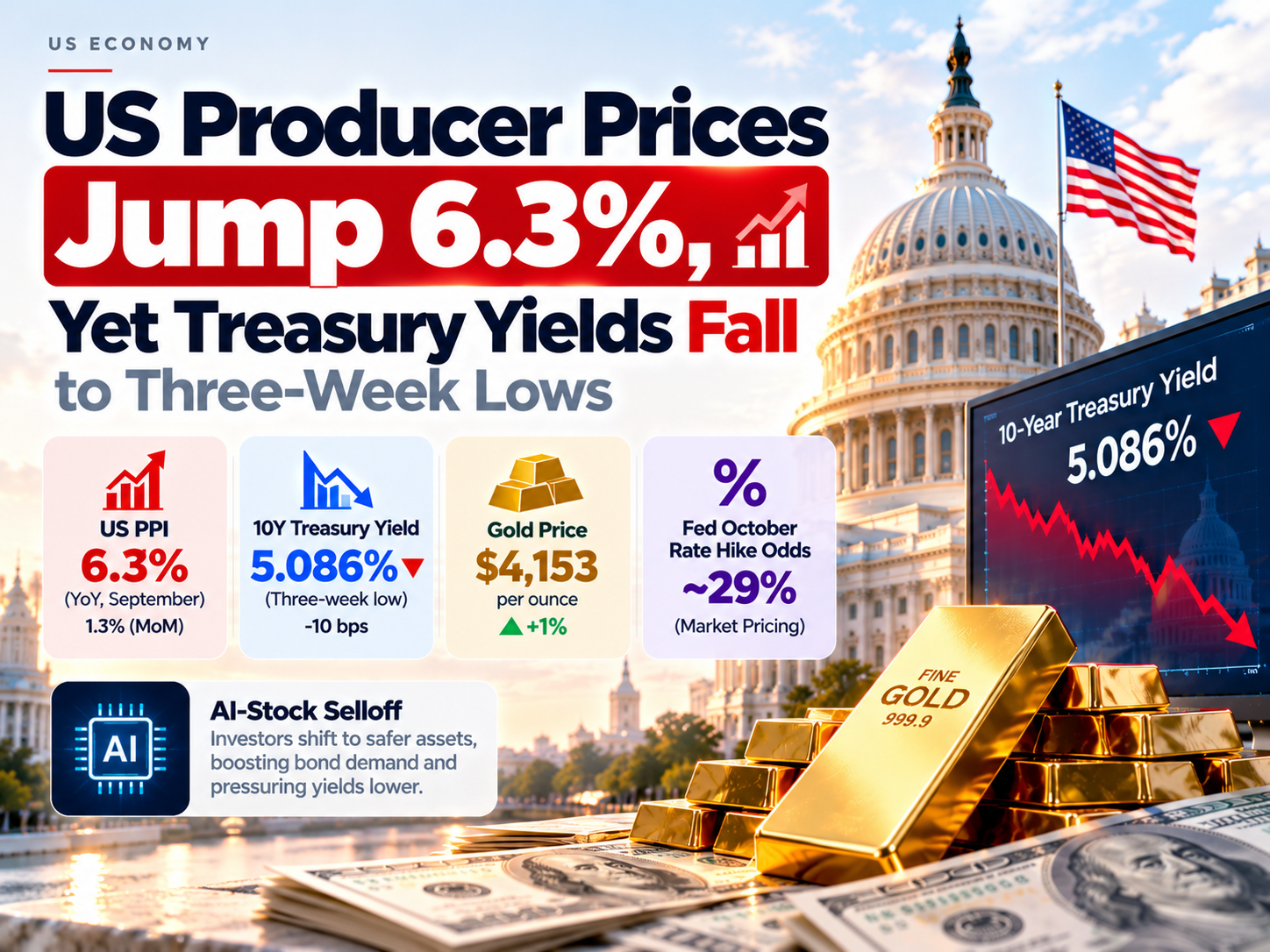
US producer prices rose sharply in September 2026, with the Producer Price Index (PPI) for final demand increasing 1.3% month over month and 6.3% year over year. The annual increase was the largest since December 2022, while the monthly rise was the biggest since March 2022. The figures came in above market expectations and added to concerns about persistent inflation.
Energy costs played a major role. Prices for final-demand goods rose 2.6% during the month, and the final-demand energy index jumped 10.8%. Crude petroleum prices also surged in the intermediate-demand category, reflecting significant pressure across energy markets.
U.S. Bureau of Labor Statistics
Underlying Producer-Price Pressures Remain Important
Energy volatility can push headline inflation higher, but policymakers also monitor measures that help separate temporary price shocks from broader pressures. In September, prices for final demand excluding foods, energy and trade services rose 0.5% month over month and 5.0% year over year.
This measure is not identical to the commonly cited core PPI measure that excludes food and energy alone. Its continued increase nevertheless indicates that price pressures extend beyond the most volatile categories. If higher producer costs persist, businesses may face difficult decisions about absorbing those expenses or passing some of them on to customers.
Treasury Yields Fall Despite Hot Inflation Data
Ordinarily, unexpectedly high inflation can push Treasury yields upward because investors anticipate higher interest rates or demand greater compensation for inflation risk. On October 15, however, the US bond market moved in the opposite direction.
The benchmark 10-year Treasury yield fell by approximately 10 basis points to 5.086%, its lowest level in about three weeks. The move reversed part of the previous session's rise, rather than representing a market collapse. Investors were increasingly concerned about the impact of high borrowing costs on technology companies and AI-related investment, encouraging demand for government bonds.
The session demonstrates that bond yields respond to more than inflation figures alone. Expectations for economic growth, investor positioning and demand for safer assets can also influence prices.
Why the AI-Stock Selloff Mattered
Technology and semiconductor shares faced pressure amid concerns about the scale of spending required to build AI infrastructure and the financing needed to support it. When investors become more cautious about riskier assets, they may shift some capital toward government bonds, increasing bond prices and lowering yields.
Positioning can intensify these moves. Investors who previously bet against Treasury bonds may buy them back to close those positions, adding to demand. However, the market's movement should not be attributed to one factor alone: inflation expectations, growth concerns, trading positions and broader risk sentiment can all interact.
For investors, the key lesson is that even a hot inflation report does not guarantee higher Treasury yields on the day it is released. The Wall Street Journal
Gold Rebounds as the Dollar and Yields Retreat
Gold rose more than 1% on October 15, supported by a weaker US dollar and lower Treasury yields. Reuters reported spot gold at approximately $4,153 per ounce, while US gold futures for December delivery settled around $4,170.
Lower yields can make gold more attractive because the metal does not pay interest. A weaker dollar can also make dollar-priced gold less expensive for buyers using other currencies. These factors helped bullion recover despite the latest inflation data raising concerns about future monetary policy.
The rally does not necessarily mean investors have settled on a lasting inflation strategy. Gold can respond to changes in interest-rate expectations, geopolitical risk and currency movements, sometimes in different directions over short periods. Reuters
Fed Rate-Hike Expectations Remain Uncertain
The hotter producer-price report renewed questions about whether the Federal Reserve could raise interest rates at its October 27–28 meeting. However, markets did not move decisively toward expecting an immediate increase.
According to market pricing reported by MarketWatch, traders assigned approximately a 29% probability to an October rate hike following the PPI and retail-sales data on October 15. This is a time-sensitive market estimate, not a forecast or an official Fed position. Expectations can change rapidly as new economic data and comments from policymakers emerge.
The Fed must weigh persistent inflation against the risks of tightening financial conditions too aggressively. The next policy decision will depend on the full range of available economic evidence rather than one producer-price report. MarketWatch
Was the annual PPI increase the largest since 2022?
What Investors Should Watch Next
The combination of rising producer prices and falling Treasury yields highlights the complexity of current market conditions. Investors will be watching upcoming inflation releases, consumer demand, corporate earnings and further developments in AI investment to determine whether the bond rally reflects temporary risk aversion or a broader reassessment of growth.
For algorithmic trading and portfolio-risk systems, the session offers a practical lesson: models that automatically translate higher inflation into higher bond yields may fail when investor demand for safer assets dominates the market. A more complete approach considers inflation, growth expectations, market positioning and liquidity together.
The Bottom Line
US producer prices rose 6.3% over the year through September, with the monthly increase marking the strongest advance since March 2022. Yet Treasury yields fell as investors reassessed risk and sought safer assets amid concerns about AI-related investment and high borrowing costs.
Gold also rebounded as the dollar and yields declined, while market expectations for an October Fed hike remained limited. The broader message is that financial markets are balancing inflation risks against growth concerns, and no single data release determines the direction of every asset.
Frequently Asked Questions
How much did US producer prices rise in September 2026?
The PPI for final demand rose 1.3% month over month and 6.3% over the 12 months through September.
Was the annual PPI increase the largest since 2022?
Yes. The BLS reported that the 6.3% annual increase was the largest since December 2022. The 1.3% monthly rise was the largest since March 2022.
Did Treasury yields crash?
No. The 10-year Treasury yield fell sharply, by approximately 10 basis points to 5.086% on October 15. This was a meaningful daily move, not a collapse.
Why did yields fall after a hot inflation report?
Investors were concerned about risks to AI-related investment and the broader technology sector. Demand for safer government bonds, alongside trading-position adjustments, helped push yields lower.
What was gold's price on October 15?
Reuters reported spot gold at approximately $4,153 per ounce and December US gold futures at about $4,170 at settlement.
What were the odds of a Fed rate hike in October?
Market pricing reported on October 15 put the probability at approximately 29%. This estimate changes with incoming data and should not be treated as a guaranteed outcome.

Tushar Shrivas
B.Tech CS@ Shri Balaji Institute of Technology & Management
I write at Metaplugs — breaking down the latest in tech, economics, and business into simple, impactful stories for everyday readers. Passionate about software testing and global finance.