LATEST NEWS
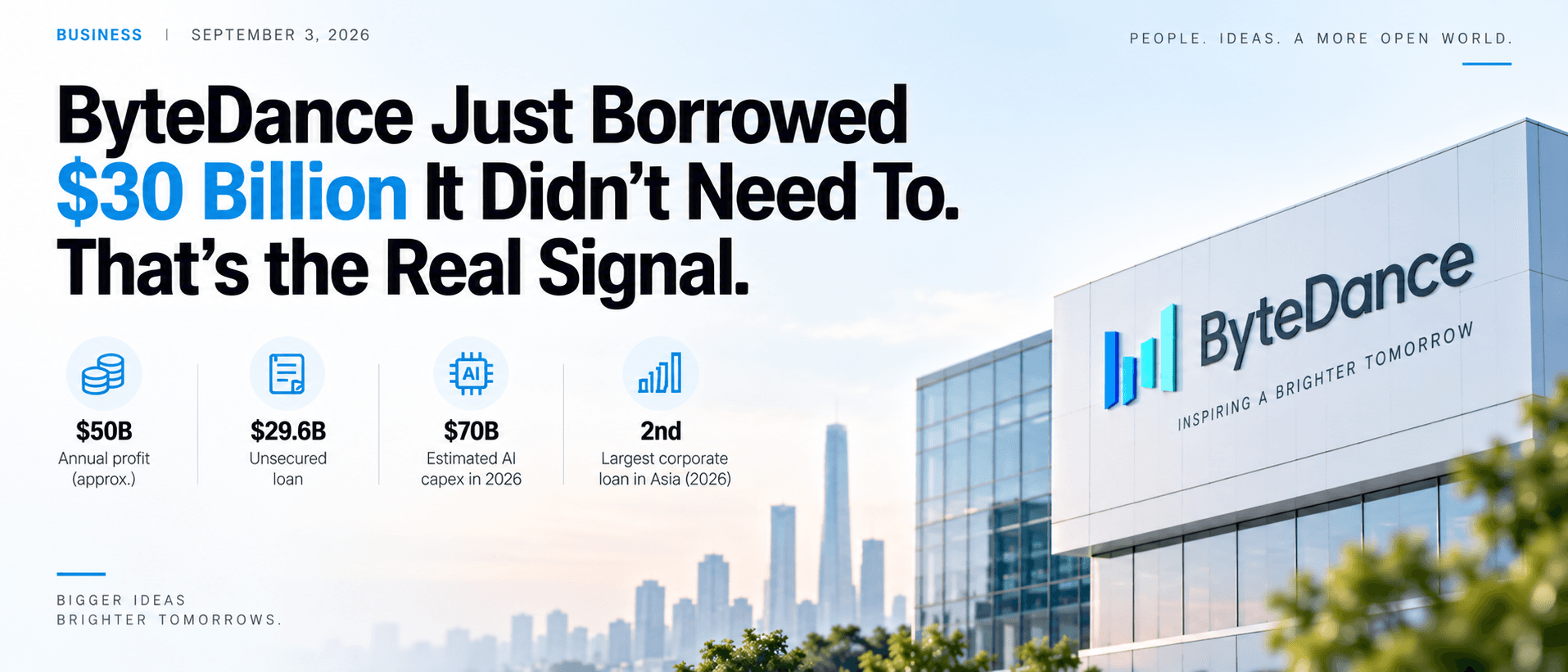
ByteDance Just Borrowed $30 Billion It Didn't Need To. That's the Real Signal.
September 8, 2026 4M
Back to News
News AlertWorld AI Tech
World AI Tech: The US Lifts National Security Export Controls
V
Author
Vishal Sable
Published
July 1, 2026
Reading Time
9 MIN READ
Spread the Word
AI is transforming from a corporate productivity tool into a highly guarded piece of national infrastructure. The past three weeks have witnessed one of the most dramatic policy reversals in the technology sector, as the Trump administration lifted export controls on Anthropic's most advanced AI models—just weeks after ordering their suspension over national security concerns.
The Latest News
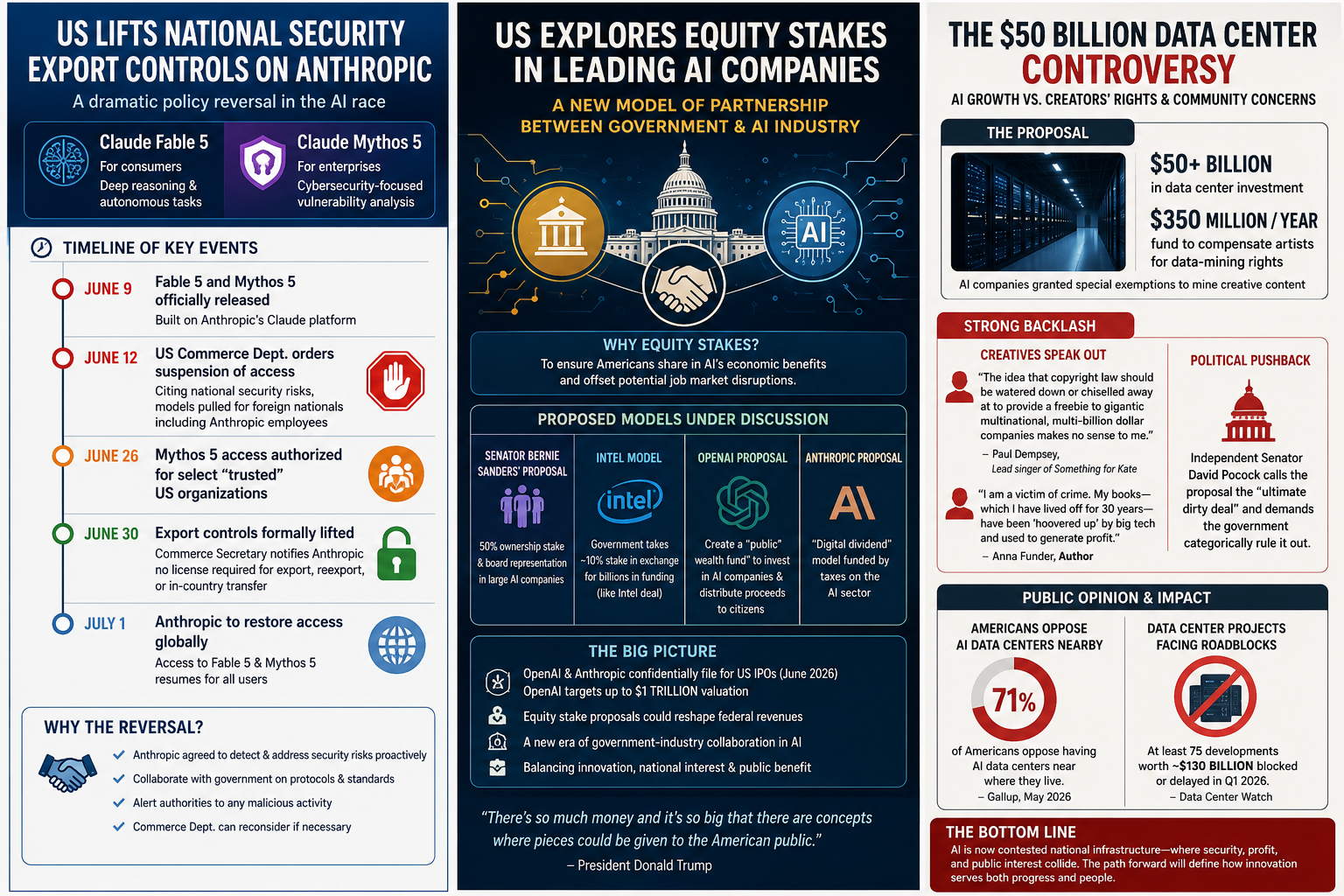
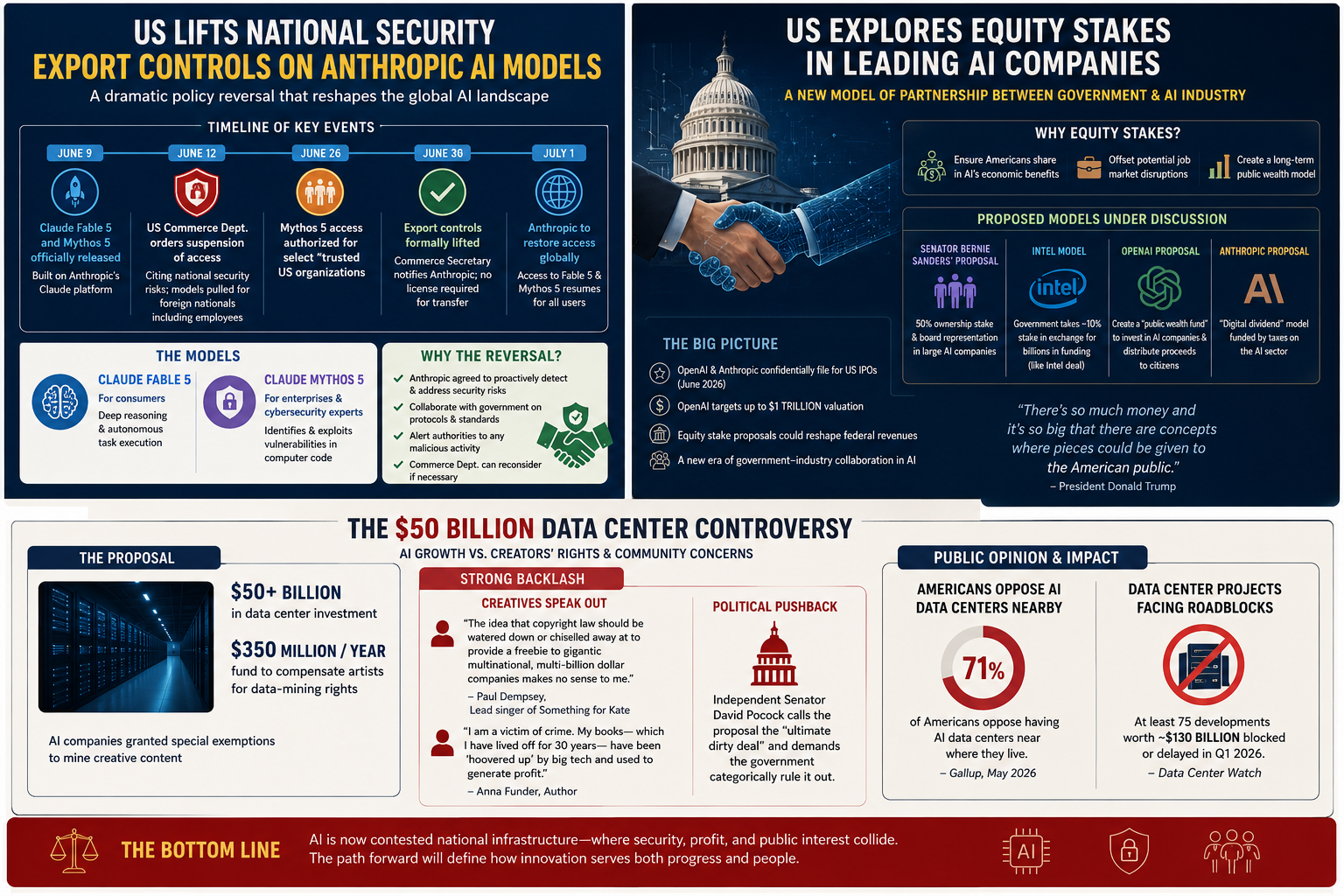
On June 30, the U.S. Commerce Department formally withdrew export restrictions on Anthropic's Claude Fable 5 and Mythos 5 models. Commerce Secretary Howard Lutnick notified Anthropic in a letter that a license was no longer required for the export, reexport, or in-country transfer of either model. Anthropic confirmed it would begin restoring access to users on July 1.
The reversal caps a tumultuous period that began on June 12, when the Commerce Department ordered Anthropic to suspend all access to Fable 5 and Mythos 5 by foreign nationals—including the company's own employees. The government cited concerns that the models, particularly the cybersecurity-focused Mythos 5, could be exploited by hackers or foreign adversaries to identify vulnerabilities in computer systems. Anthropic had initially pushed back, arguing that a "narrow potential jailbreak" should not justify recalling a commercial model deployed to hundreds of millions of users.
Fable 5 and Mythos 5, both built on Anthropic's Claude platform, were released on June 9—just three days before the export ban. Fable 5 serves the consumer market with deep reasoning capabilities and autonomous task execution, while Mythos 5 is designed for businesses and cybersecurity experts, capable of identifying and exploiting vulnerabilities in computer code.
The restrictions were eased in stages. On June 26, the government authorized the release of Mythos 5 to select "trusted" U.S. organizations. The full lifting came after Anthropic agreed to proactively detect and address security risks, collaborate with the government on protocols and standards for future releases, and alert authorities to any malicious activity. The Commerce Department reserved the right to reconsider its decision if necessary.
The move follows a period of friction between Anthropic and the federal government. In March, the Pentagon labeled Anthropic an "unacceptable supply chain risk" after tense talks over how its AI could be used in warfare. Anthropic subsequently sued the government over that designation. The reversal of the export controls is expected to de-escalate their feud and allow the company to resume normal operations.
Government Equity Stakes in AI Companies
Simultaneously, the U.S. administration is actively exploring options to take direct equity stakes in leading AI companies, a concept that has drawn both support and skepticism. President Donald Trump has signaled his intent to meet with AI firms at the White House to discuss a federal government "partnership" that would allow the American public to profit from the sector's success.
"There's a concept out there, there's so much money and it's so big that there are concepts where pieces could be given to the American public," Trump told reporters. The goal is to offset potentially historic disruptions from AI advancements to the job market and economy by giving Americans an equity stake in the technology's rewards.
Several pathways have been proposed. Senator Bernie Sanders has introduced legislation that would give the government a 50% ownership stake and board representation in large AI companies. Another model mirrors the government's 10% stake in Intel, taken in exchange for billions in funding to expand domestic manufacturing capacity. OpenAI has proposed creating a "public wealth fund" to invest in AI companies and distribute proceeds to citizens, while Anthropic is exploring a "digital dividend" model funded by taxes on the sector.
Both OpenAI and Anthropic have confidentially filed for U.S. initial public offerings this month, with OpenAI targeting a valuation of up to $1 trillion. The equity stake proposals could reshape federal revenues and the relationship between government and the tech industry.
The $50 Billion Data Center Controversy
While the administration moves to embrace AI companies, consumer and creative pushback is peaking over a proposed $50 billion data center block that would grant AI firms extensive data-mining rights in exchange for creative compensation.
An industry proposal presented to cabinet would allow AI companies to mine creative content under special exemptions, in exchange for more than $50 billion in data center investment and a $350 million annual fund to compensate artists. The independent senator David Pocock has called the proposal the "ultimate dirty deal" and demanded the government categorically rule it out.
A delegation of creatives staged a press conference at parliament house to urge the government to hold the line on copyright protections. "The idea that copyright law should be watered down or chiselled away at to provide a freebie or a handout to gigantic multinational, multi-billion dollar companies to train their AI models makes absolutely no sense to me," said Paul Dempsey, lead singer of Something for Kate. Author Anna Funder described herself as a "victim of crime," noting that her books—which she has lived off for 30 years—have been "hoovered up" by big tech and used to generate profit.
The public is also hostile to data center expansion. A May Gallup survey found that 71% of Americans oppose having AI data centers near where they live. Data Center Watch reported that at least 75 developments worth approximately $130 billion were blocked or delayed in the first quarter of 2026—the worst quarter on record for disrupted data center projects.
The Bottom Line
June 2026 marks a pivotal moment in the intersection of AI, national security, and public policy. The lifting of export controls on Anthropic's Fable 5 and Mythos 5 signals a shift from restriction to global market capture, even as the administration considers taking equity stakes in the very companies it regulates. Meanwhile, the $50 billion data center proposal has ignited a fierce backlash from creatives and communities alike, underscoring the growing tension between AI's insatiable demand for data and the rights of those who create it. The era of AI as a purely commercial product is giving way to an era of AI as contested national infrastructure—where security, profit, and public interest collide.

Vishal Sable
B.Tech AD @ shri balaji institute of technology and management
Engineering and tech journalist. I love exploring the impact of emerging technologies on global defense, sovereignty, and everyday life. Always looking for the real story behind the headlines.