Back to News
News AlertWorld Defence Tech
World Defence Tech: The Great Unbundling of Modern Warfare
V
Author
Vishal Sable
Published
June 29, 2026
Reading Time
14 MIN READ
Spread the Word
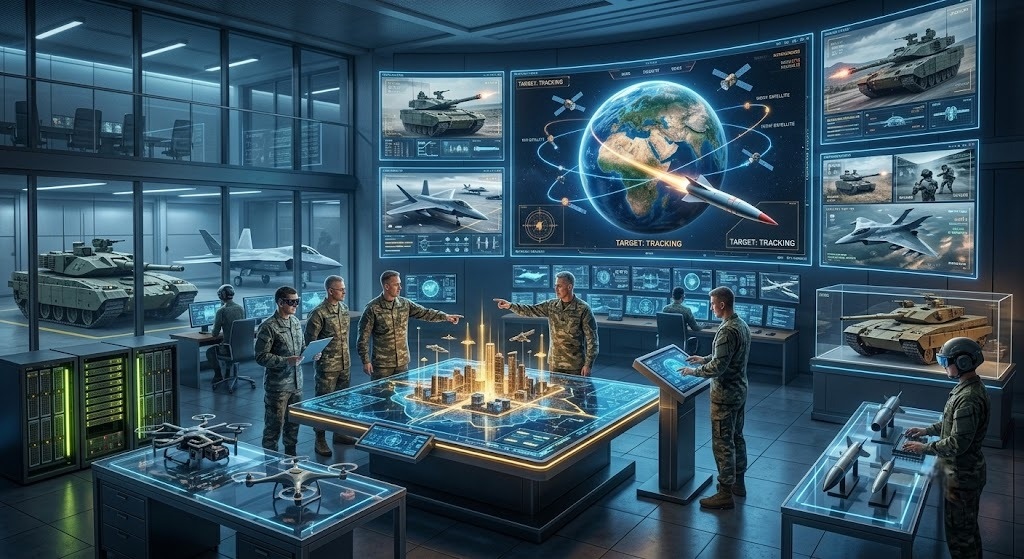
Defence technology in mid-2026 is undergoing a transformation as profound as any since the advent of precision-guided munitions. Two narratives have come to define this moment. The first is the story of internal modernization: India's Ministry of Defence has just unleashed a sweeping bureaucratic reform designed to cut through decades of procedural inertia and accelerate the induction of indigenous defence systems. The second is the story of external expansion: capital is flooding into specialised space-based security infrastructure, minting deep-tech unicorns like True Anomaly and Varda Space Industries at valuations that would have been unthinkable just three years ago. Together, these threads reveal a single truth: modern warfare is no longer about platforms alone; it is about the speed of decision-making, the autonomy of orbital systems, and the ruthless efficiency of getting capabilities from laboratory to battlefield in months, not decades.
India's DFP-2026: Cutting Red Tape to Win the Race of Readiness
On June 29, 2026, Defence Minister Rajnath Singh released the Delegation of Financial Powers to DRDO (DFP-2026), a major structural reform that radically cuts red tape and grants higher functional and financial autonomy to expedite trial campaigns, prototyping, and the rapid induction of new defence systems into the Armed Forces. The revised framework, unveiled in New Delhi in the presence of Chief of Defence Staff General NS Raja Subramani and Defence Secretary Rajesh Kumar Singh, addresses several critical requirements that have historically plagued India's defence R&D ecosystem. The DFP-2026 significantly expands functional and financial empowerment at various levels within the Department of Defence R&D. It introduces dedicated financial provisions for trial campaigns, tests and evaluation activities; authorisation for sanctioning pre-project R&D initiatives; and clear segregation of financial powers for grants-in-aid pertaining to Extra-Mural Research Projects, Defence Innovation Accelerator-Centres of Excellence, and Technology Development Fund projects. Singh stated that the new framework will facilitate faster production and induction of systems, platforms, and technologies emerging from the R&D ecosystem into the Defence Forces, while fostering stronger collaboration with industry and academia—reinforcing the vision of Aatmanirbhar Bharat. The significance of this reform cannot be overstated. For decades, India's Defence Research and Development Organisation has been burdened by a legacy of bureaucratic bottlenecks, where financial clearances could take years and prototyping cycles extended well beyond the operational relevance of the systems being developed. The DFP-2026 is an explicit recognition that in an era of rapidly evolving threats—from hypersonic missiles to autonomous drone swarms—the window of technological advantage is measured in months, not decades. By devolving financial authority downward and streamlining project implementation, the reform aims to accelerate the delivery of critical defence technologies and strengthen the nation's defence preparedness. The Aerospace & Security Convergence: Capital Finds the High Ground
While India modernises its internal processes, global capital is making an equally decisive bet on the future of defence—and that future is in orbit. The sector has rapidly minted deep-tech defence infrastructure entities at valuations that signal a fundamental reorientation of where investors see the next frontier of conflict and commerce.
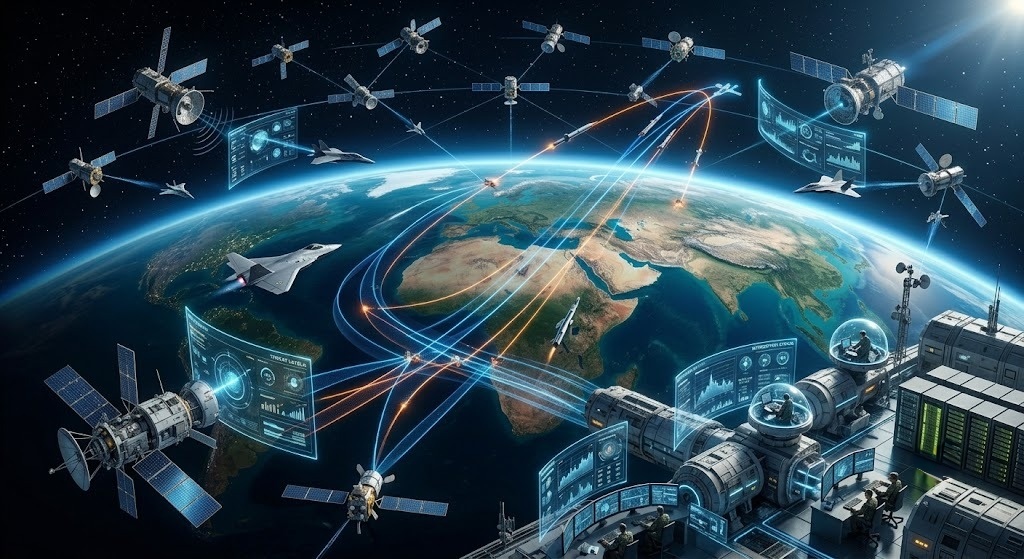
True Anomaly, a Colorado-based aerospace startup founded in early 2022, announced on April 28, 2026, that it had raised $650 million in a Series D funding round co-led by Eclipse and Riot Ventures, valuing the company at $2.2 billion. The financing coincided with the company's entry into the Pentagon's Golden Dome program, an ambitious effort to develop space-based interceptors designed to counter missile threats. True Anomaly was named among 12 contractors selected by the U.S. Space Force's Space Systems Command to develop prototypes for the program, under Other Transaction Authority agreements collectively worth up to $3.2 billion. The company builds spacecraft and software for U.S. national security missions, including its Jackal satellite, designed to maneuver in orbit, and Mosaic, a mission software platform for geospatial imagery analysis and autonomous space operations. True Anomaly has raised approximately $1 billion since its founding and plans to expand manufacturing to produce up to 50 Jackal spacecraft annually at its facility near Denver. The company has grown from about 150 employees last year to roughly 300, with plans to reach 500 by year-end. It has also been selected among 14 companies by the Space Force to compete for contracts to develop satellites that monitor activity in geostationary orbit, a region about 22,000 miles above Earth where high-value military satellites operate.
True Anomaly CEO Even Rogers framed the company's mission in stark terms
"Space is a war-fighting domain, and our adversaries are building space war-fighting capabilities at a scale that we've never seen". The company is now planning missions in geostationary orbit and cislunar space, including a tactically responsive Space Force mission known as Victus Haze. Varda Space Industries, another deep-tech defence and space infrastructure player, has similarly attracted significant capital. The company, which provides a full-stack service for in-space pharmaceutical manufacturing through its Winnebago Series capsules, has raised $578 million to date, with its Series D round in February 2026 valued at approximately $1.58 billion. Varda's autonomous capsules combine manufacturing and re-entry capabilities, eliminating dependency on the International Space Station while facilitating the development and return of space-processed pharmaceuticals. The company's emergence as a valuation leader underscores a broader trend: the lines between commercial space infrastructure and national security applications are blurring, and investors are betting that the companies building the hardware and software for orbital operations will be the strategic assets of the next decade.
The Golden Dome Effect: Why Space Defence Is No Longer Science Fiction
The surge in valuations for companies like True Anomaly and Varda Space Industries is not happening in a vacuum. It is being driven by a confluence of geopolitical urgency and technological possibility. President Donald Trump is planning a massive $185 billion ballistic interceptor system, dubbed the Golden Dome, and has called to hike the defence budget to $1.5 trillion in 2027. The Golden Dome program represents a fundamental shift in missile defence strategy: unlike traditional systems that operate from the ground or sea, space-based interceptors would be stationed in orbit and positioned to track and potentially disable hostile satellites or incoming missiles during the early phases of flight. The concept remains in development and faces technical and cost challenges, but the strategic logic is compelling. In an era of hypersonic weapons that can manoeuvre unpredictably through the upper atmosphere, ground-based radars have limited line-of-sight and can lose threats as they dip below the horizon. Space-based interceptors offer the possibility of persistent, global coverage—an "always-on watchtower" that can track threats from launch through their entire flight path. The fact that 12 companies, including SpaceX, Anduril, Lockheed Martin, Northrop Grumman, and RTX, were selected for Golden Dome prototype contracts signals that the defence establishment views this not as a distant aspiration but as an immediate priority. The private sector is responding accordingly. True Anomaly's fundraising comes as investors and defence officials increase focus on space as a potential domain of conflict. The company is benefiting from heightened investor interest ahead of SpaceX's long-awaited public market debut, with private space companies like Vast and Sierra Space recently closing funding rounds of $500 million or more.
The Convergence: What Mid-2026 Teaches Us About the Future of Defence
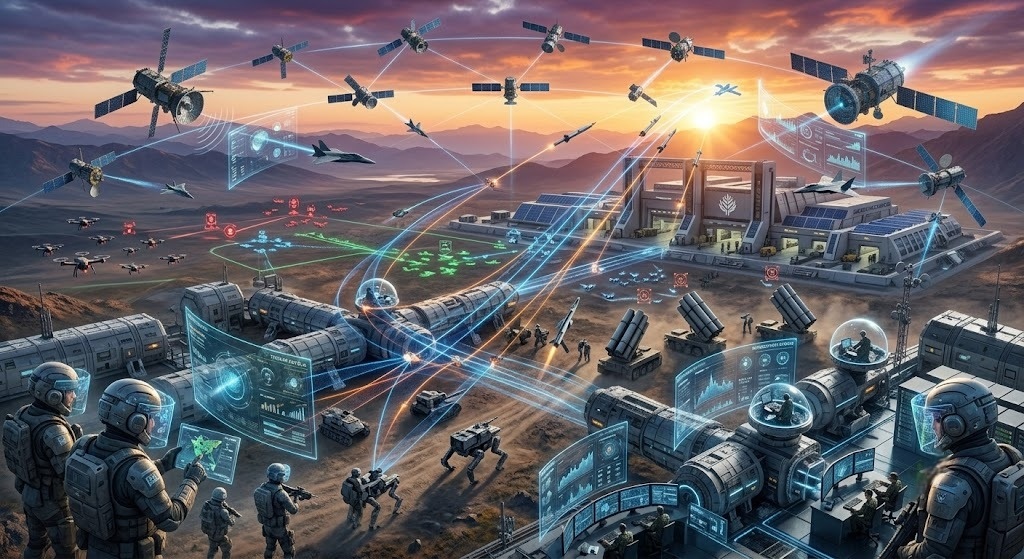
Taken together, these two narratives reveal a coherent picture of defence's trajectory in mid-2026. India's DFP-2026 represents the internal dimension of modernisation: the recognition that bureaucratic agility is as important as technological capability, and that the speed of induction is a strategic asset in its own right. The reforms will facilitate faster production and induction of systems, platforms, and technologies emerging from the R&D ecosystem into the Defence Forces, while fostering stronger collaboration with industry and academia. The rise of True Anomaly and Varda Space Industries represents the external dimension: the realisation that the next frontier of conflict is orbital, and that the companies building the infrastructure for space-based surveillance, interception, and manufacturing will be the strategic assets of the 21st century. The $2.2 billion valuation of True Anomaly and the $1.6 billion valuation of Varda Space Industries are not speculative bets on distant futures; they are recognition that the hardware and software for contested space operations are needed now. The through-line is clear. In 2024, defence was about platforms. In 2025, it was about connectivity. In 2026, it is about autonomy, speed, and orbital persistence. The countries and companies that succeed will be those that can cut through bureaucratic inertia to field capabilities in months, not decades, and those that can build the orbital infrastructure to monitor, track, and—if necessary—intercept threats from the ultimate high ground.

Vishal Sable
B.Tech AD @ shri balaji institute of technology and management
Engineering and tech journalist. I love exploring the impact of emerging technologies on global defense, sovereignty, and everyday life. Always looking for the real story behind the headlines.