Back to News
News AlertWorld Unicorn
Young Unicorns in 2026: TypeSafe AI Went From $200M to $7.5B in Weeks
V
Author
Vicky Galfat
Published
October 18, 2026
Reading Time
4 MIN READ
Spread the Word
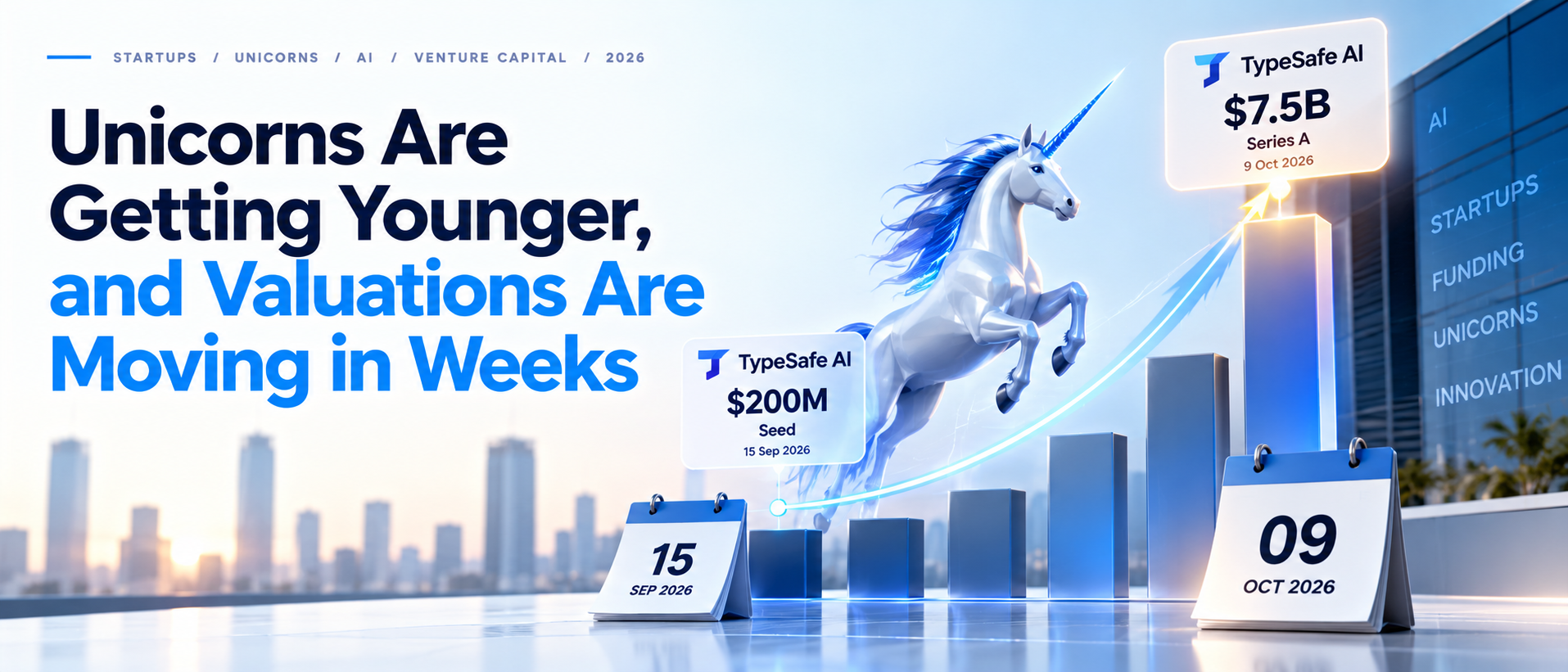
TypeSafe AI went from a $200M to a $7.5B valuation in under four weeks. Why 2026's unicorns are younger, and why the numbers need careful reading.
New unicorns 2026, TypeSafe AI valuation, Jev model, young unicorn startups, fastest unicorns, Armadin valuation, Etched valuation, Crunchbase Unicorn Board, a16z Series A, AI startup valuations.
New unicorns 2026, TypeSafe AI valuation, Jev model, young unicorn startups, fastest unicorns, Armadin valuation, Etched valuation, Crunchbase Unicorn Board, a16z Series A, AI startup valuations.
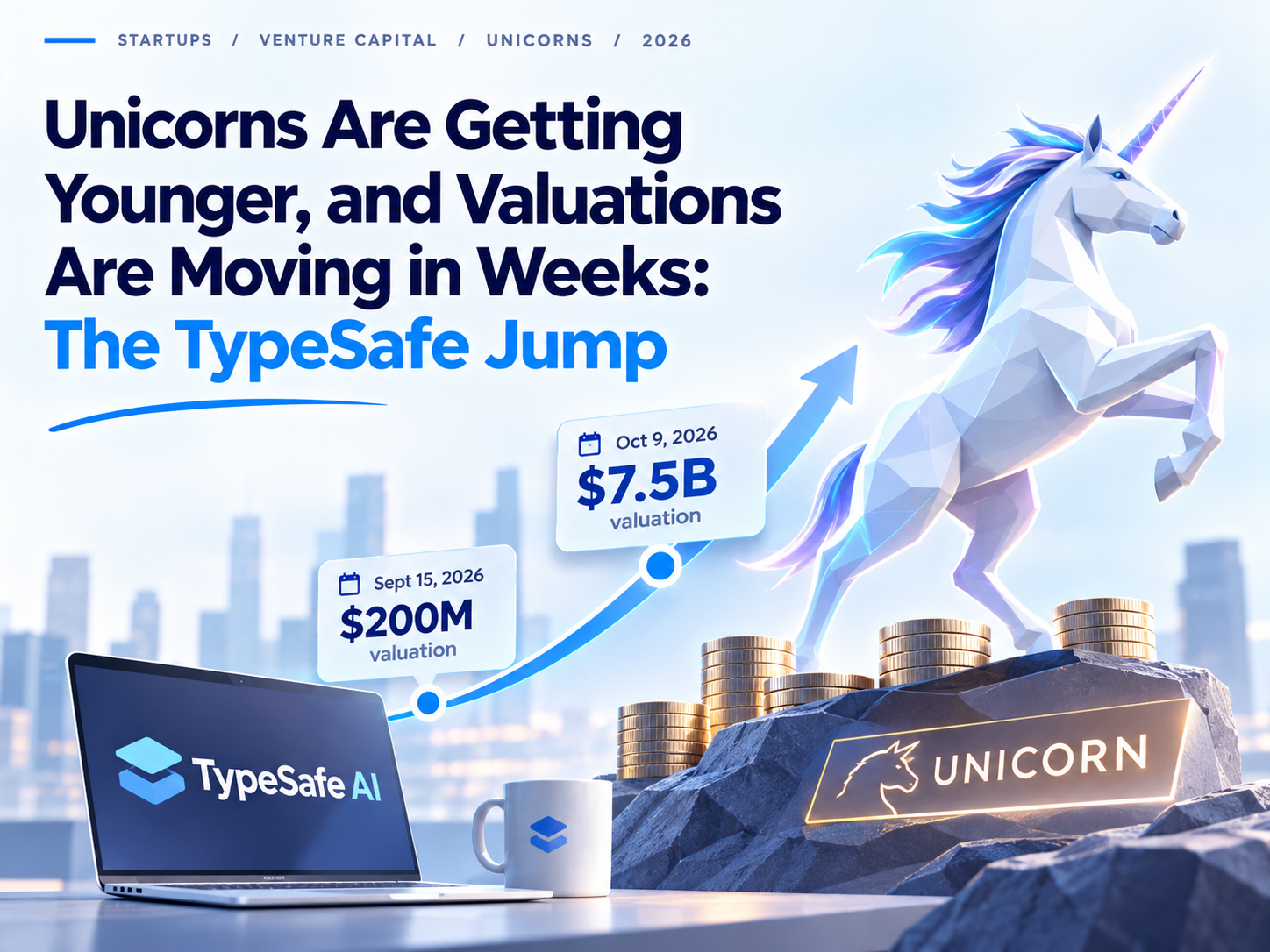
Unicorns Are Getting Younger, and Valuations Are Moving in Weeks: The TypeSafe Jump
On 15 September, TypeSafe AI emerged from stealth with a $40 million seed round that valued it at roughly $200 million. On 9 October, it announced an $870 million Series A at $7.5 billion. That is a 37-fold step-up in about three and a half weeks, and it is the sharpest example yet of how 2026's unicorn class is forming. Dealroom
The TypeSafe Jump, With Caveats
TypeSafe, founded in 2024 by former OpenAI researcher Diogo Almeida, builds software-native models, and its first product, Jev, turns natural-language input into structured decisions with confidence scores rather than chat replies. Andreessen Horowitz led the Series A, with Sequoia and seed investor DCVC participating, and a16z's Martin Casado joined the board. The round landed below the $10 billion-plus valuation that The Information had reported was under discussion on 24 September.
The adoption claims come from the company. TypeSafe says Jev passed one million users within days and is used by about a third of Fortune 500 companies, but it has not named any customers and has not disclosed revenue. Almeida has said Jev is profitable after expenses, which is also unverified. Analysts covering the deal note that the valuation rests largely on early, self-reported adoption. Boomberg Law
How Young Are This Year's Unicorns?
The broader data supports the idea that unicorns are arriving faster. Crunchbase counts 276 new unicorns through August, the most for that period since 2021, and says more than a third of August's 29 new members were under three years old. Photonics company Lumilens, for instance, was two years old when its $110 million Series A pushed it past $1 billion, and it is already shipping to AI data centers. Crunchbase also found that 19 of the first half's new unicorns doubled their valuations within six months or less. Ecosistema Startup
A separate analysis by Accel, Dealroom and Revelio Labs, reported by Fortune, found that of 86 new unicorns in Europe and Israel since 2023, 20% reached $1 billion within two years, up from 5% before the generative AI era. AI2 Work
October's Cohort and the Re-Rating Pattern
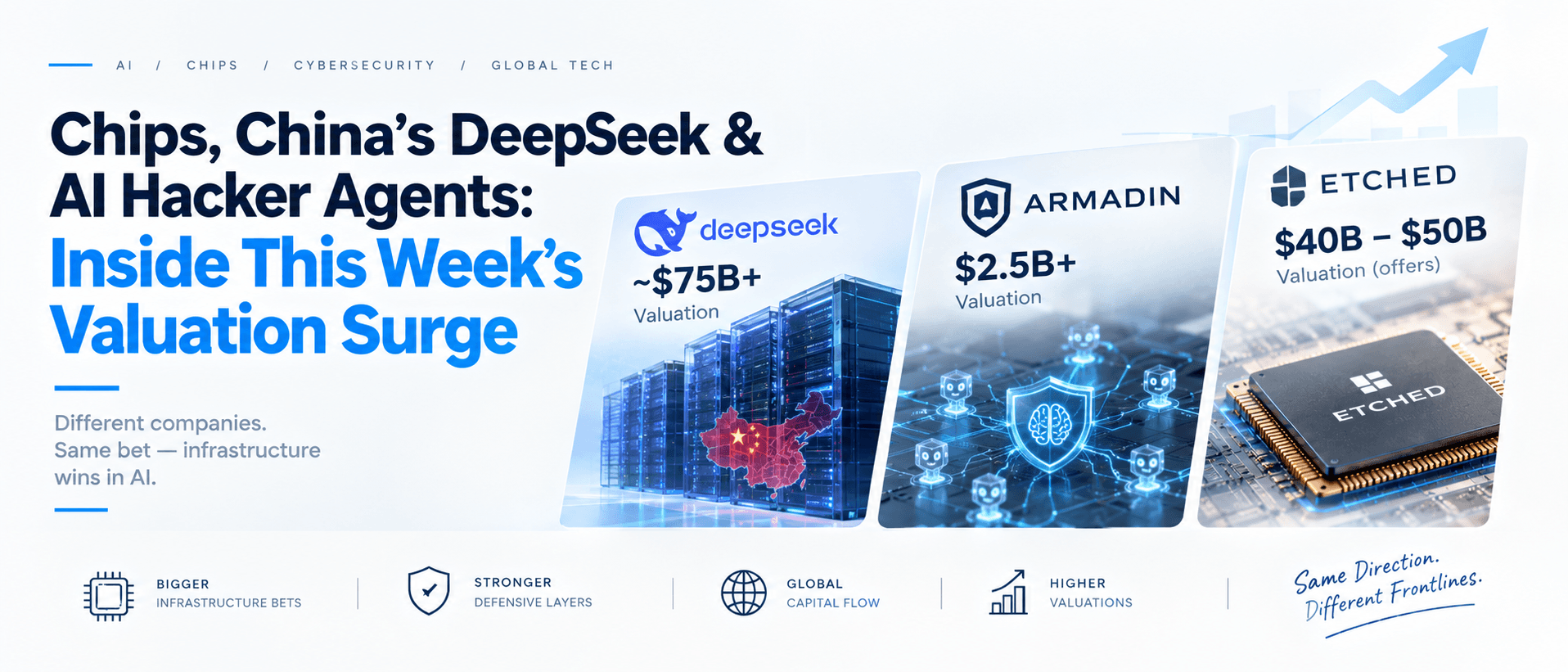
October's early arrivals show two routes to a big valuation. Armadin, the AI offensive-security company founded by Mandiant's Kevin Mandia, reached more than $2.5 billion seven months after leaving stealth, following a $255.5 million Series B. Walden Robotics took the other route in July: the Toyota-backed humanoid-robot spinout launched from stealth already valued at $1.1 billion, on a roughly $300 million seed round. Help Net Security
Then there is re-rating after the unicorn mark. Etched raised $700 million at $21 billion on 18 August, only weeks after a $10.3 billion valuation in July, and is now reportedly weighing offers of $40 billion to $50 billion. In each case the interesting number is no longer the first $1 billion. It is how fast the next one arrives. Tech Jack Solutions
Reading the Numbers Carefully
Anyone citing unicorn totals should name the tracker. Crunchbase reports 276 through August, while BestBrokers, using Crunchbase and PitchBook data, has published figures of 98, 173 and 191 at different points this year. The definitions and dates differ. Valuations also reflect the latest round's price, not audited value, and several flagship figures here come from company statements.
A unicorn label once signaled that a company had survived years of scrutiny. In 2026, it can arrive in weeks, on adoption claims no one outside the company has checked. Whether this year's fastest risers show revenue to match their valuations by their next rounds will say more about this cohort than any count of how many there are.

Vicky Galfat
University of Mumbai/BCA
Learning, building, and exploring the world of technology one project at a time.