Back to News
News AlertWorld Defence Tech
The "Military Tech Trickles Down" Myth Is Dead — Defense and Consumer Tech Are Now Being Built on the Same Day
S
Author
Saumya Dawande
Published
September 27, 2026
Reading Time
4 MIN READ
Spread the Word
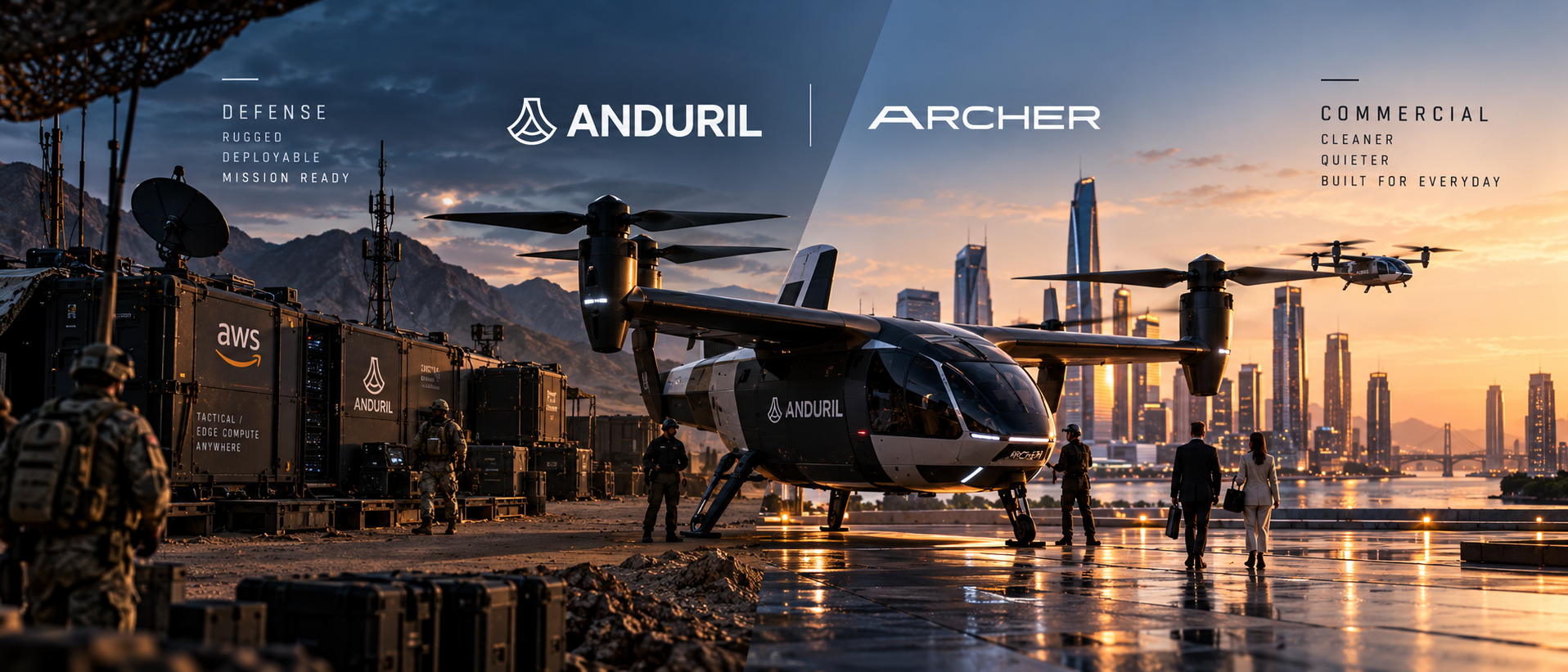
The old defense-tech myth is that military innovation trickles down to consumers years later. Anduril's latest deals show it's now built for both on day one.
The standard pitch for why defense tech matters to everyone else goes like this: the military spends decades and billions solving a hard engineering problem under extreme conditions, and years later, a version of that breakthrough shows up in your phone or your car. GPS, the internet, and modern chip fabrication all followed roughly that path. This summer, two announcements from Anduril Industries show that pattern has effectively collapsed — dual-use hardware is now being designed for defense and commercial markets simultaneously, not sequentially. DefenseScoop, Fox Business
The clearer example is the least dramatic-sounding one. On June 30, AWS and Anduril demonstrated a new tactical data center offering: AWS Outposts — the same hardware AWS sells to run cloud-style compute inside a company's own data center — paired with Anduril's Menace-I, a ruggedized mobile data center built to survive deployment in extreme field conditions. The combined system is now listed on the Pentagon's own cloud marketplace, the Joint Warfighting Cloud Capability. Anduril's engineering SVP Tom Keane put the logic plainly to reporters at the launch: commercial infrastructure can be attacked, made unavailable, or denied entirely, so the military needs the benefits of commercial cloud tools without depending on a live commercial connection to get them. DefenseScoop
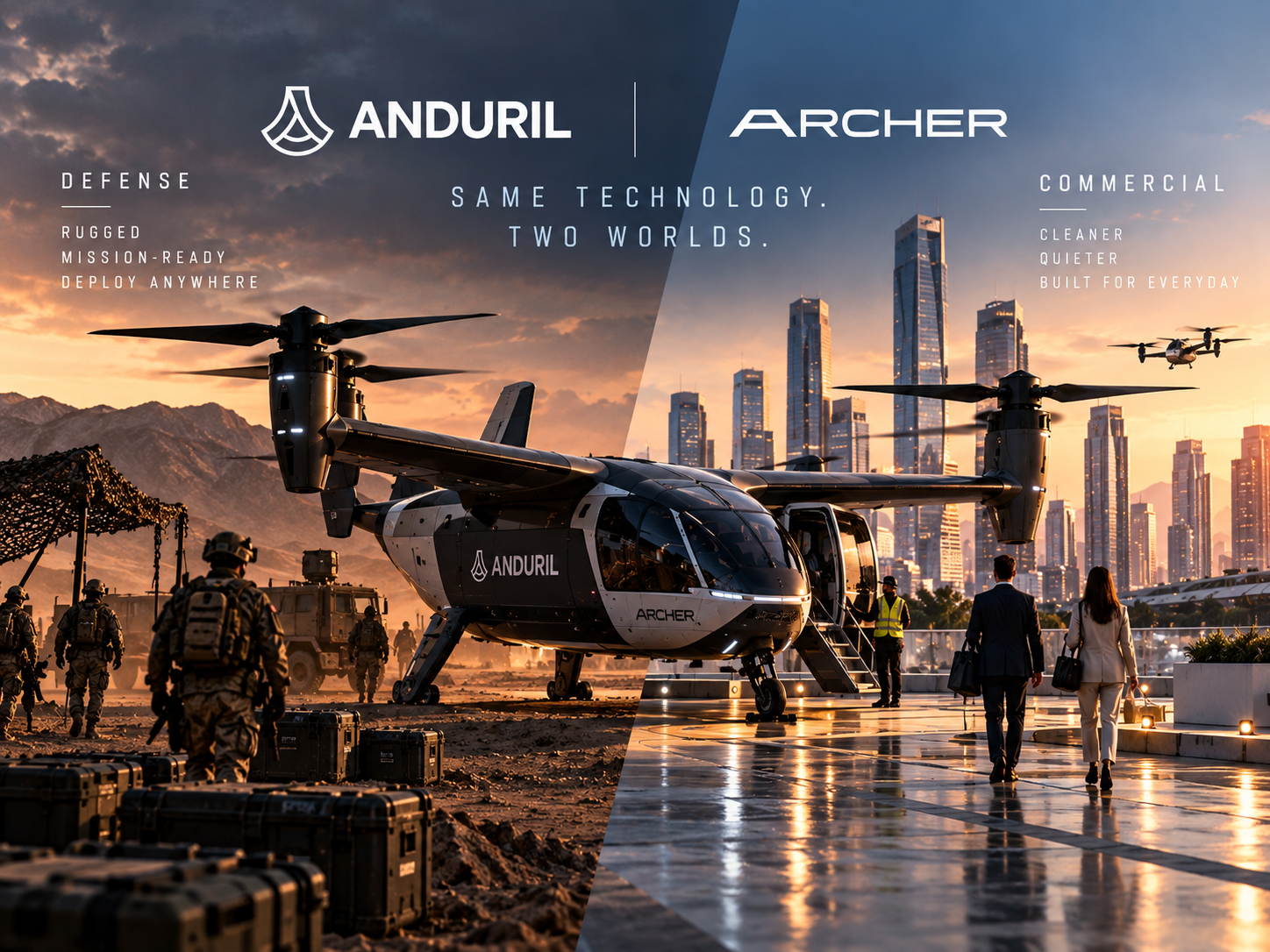
Notice the direction of that flow: it isn't defense innovation trickling down to consumers, it's a commercial cloud giant's existing product being hardened for the battlefield, sold through the Pentagon's own marketplace within months. The traditional trickle-down story assumes military R&D happens first and civilian versions follow years later. Here, AWS's Outposts already existed as an enterprise product — Anduril's contribution was packaging and ruggedizing it fast enough to be combat-relevant now, not eventually. DefenseScoop
Three weeks later, at the Farnborough Airshow, Anduril and Archer Aviation unveiled the more literal version of "built for both markets at once": a hybrid-electric VTOL aircraft platform, developed jointly from a clean-sheet design, with a defense variant called Thunder and a civilian variant Archer will bring to commercial partners. Archer's CEO Adam Goldstein was explicit that the aircraft needed a from-scratch design specifically to serve both defense and commercial missions from day one, rather than adapting an existing airframe for one market after it had already been optimized for the other. Archer Aviation ,Fox Business
Both moves track with where Anduril itself has been heading structurally. The company was valued at roughly $61 billion as of May, has grown to around 7,000 employees, and in March signed a 10-year, up-to-$20-billion enterprise contract with the U.S. Army that consolidated what had previously been more than 120 separate individual procurement deals into one relationship — the kind of single-vendor scale that makes designing hardware for two markets simultaneously financially sensible in a way it wasn't for a smaller defense contractor a decade ago. TechCrunch, Wikipedia — Anduril Industries
It's worth being clear-eyed about what "dual-use" means in practice, too — it isn't a purely feel-good story about shared innovation. Privacy researchers have documented that Anduril's Lattice software, marketed for "public safety, security and defense," has found its most significant civilian deployment in border-control systems in the US and UK, extending surveillance infrastructure built for military contexts into policing and immigration enforcement. Dual-use cuts both ways: the same simultaneous design process that makes a VTOL aircraft or a tactical data center useful for both a soldier and a civilian customer also means civilian and military applications of surveillance tech are converging faster than the public conversation about where that line should sit. Privacy International
The open question isn't whether defense tech still shapes civilian tools — it clearly does. It's whether "designed for both markets on day one" is actually a healthier model than the old trickle-down one, or whether collapsing that gap just means civilian infrastructure inherits military-grade surveillance capability at the same speed it inherits military-grade resilience — without much of a public conversation happening in between.

Saumya Dawande
B.Tech AIML @ oriental institute of science technology bhopal
Engineering and tech journalist. I love exploring the impact of emerging technologies on global defense, sovereignty, and everyday life. Always looking for the real story behind the headlines.