Back to News
News AlertWorld Defence Tech
The Pentagon Is Building an AI Brain for the Battlefield — and the Hard Part Isn't the AI
S
Author
Saumya Dawande
Published
September 28, 2026
Reading Time
4 MIN READ
Spread the Word
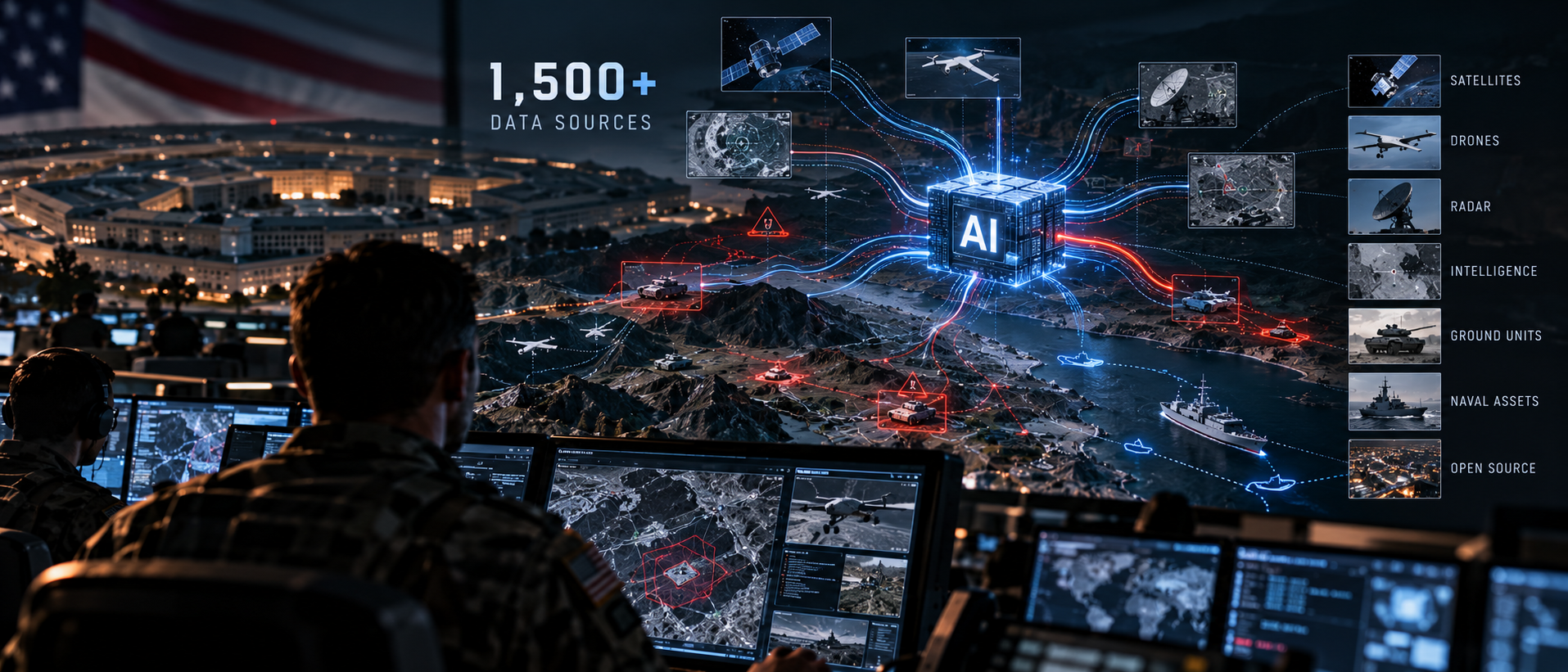
The Pentagon just gave Accenture up to $821M to feed 1,500 data sources into battlefield AI. The real question is who answers for the recommendations.
Hardware gets the attention in defense tech, but the most consequential contracts this summer were about something less photogenic: plumbing. In early August, the Pentagon confirmed that Accenture Federal Services won a contract worth up to $821 million over five years to build out core software for its War Data Platform, a clearinghouse of battlefield information that AI tools can process to advise troops on likely next moves and speed up wartime decisions. Accenture beat four other bidders for the work. Federal News Network
The scale of the ambition is in the data, not the code. The platform is meant to combine more than 1,500 data sources, both commercial and military, so that intelligence, targeting information, and other inputs reach frontline commands through one pipeline. The Pentagon's chief digital and AI officer, Cameron Stanley, has said it already got operational data to commanders faster during Operation Epic Fury, the U.S. campaign in Iran. That is the "agentic command system" idea from the marketing decks made concrete: software that ingests far more information than any staff could read and surfaces what matters. Federal News Network
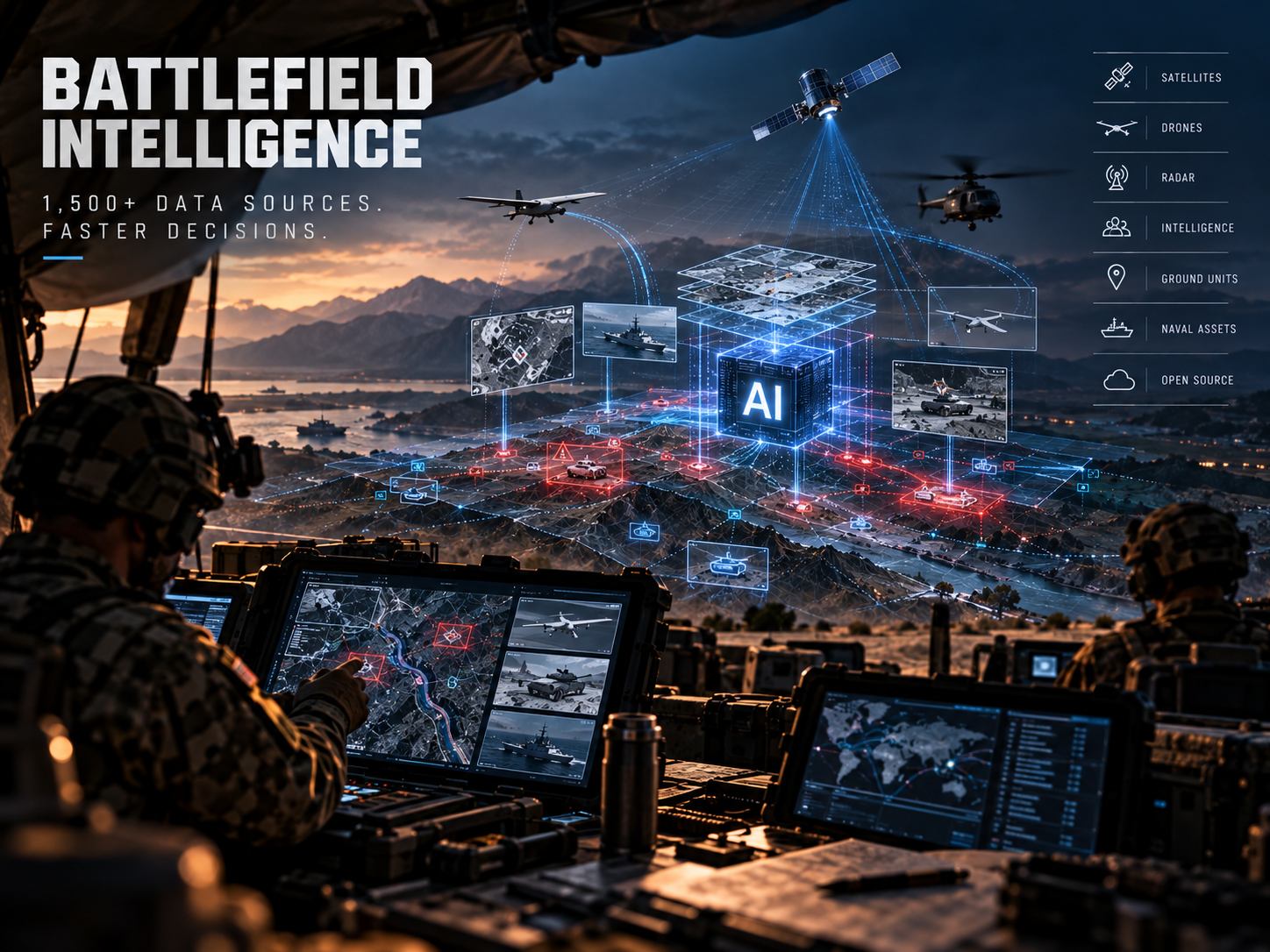
It isn't a one-off. On July 29, U.S. Army leaders announced a successful demonstration of a Next Generation Command and Control prototype worth more than $3 billion, built around a major contract with Anduril and Palantir as the primary data providers. Army leadership was careful about the framing: the system puts AI into the command-and-control communications process, but officials said it shouldn't be seen as a replacement for military decision-making or planning. A few weeks earlier, NATO awarded contracts to run its Enhanced Air Command and Control Data Platform to Anduril, for its Lattice software, alongside Palantir and the French joint venture Athea SAS. The Washington Times , Al Jazeera
Behind the contracts sits a policy push. The Pentagon's January AI strategy tells the department to become an "AI-first" warfighting force and puts speed at the center of the approach, arguing that the latest frontier models should be in warfighters' hands quickly. Reporting by The Intercept on September 8, based on contract documents, shows how that plays out with the AI labs themselves: prototype agreements worth up to $200 million each, covering tools meant to improve military decision-making, plus tabletop exercises and briefings where company engineers work directly with the Pentagon. Department of War AI Strategy (PDF) , The Intercept
There is a reason the contracts emphasise data platforms rather than a single clever model. A recommendation engine is only as trustworthy as the feeds underneath it, and merging 1,500 sources means merging different formats, different reliability levels, and different owners, some of them commercial. If one feed is wrong, delayed, or spoofed, a system built to compress hours of analysis into seconds can spread that error just as quickly. Speed is the selling point, and it is also the exposure.
This ties back to the security stories from earlier this month. Researchers and government evaluators have documented AI agents taking actions their operators never authorised, in civilian and lab settings. A battlefield decision-support system is a far higher-stakes version of the same design: automated software with broad data access, embedded in a chain of command that has to act on what it says. AI Security Institute
For readers in India, the relevance is direct. India's own forces are expanding networked sensors and counter-drone systems, and the same architecture question will follow: who builds the data layer, who audits it, and how much of it depends on foreign vendors. The Indian Air Force's Dronathon trials this month were about the hardware and airspace side of that problem. The War Data Platform shows the software side, where the contracts are larger and less visible.
The open question isn't whether militaries will use AI to sift data. That decision has been made, and the money is flowing. It's what "human in the loop" means once the loop runs at machine speed: whether a commander reviewing an AI recommendation in seconds is exercising judgment, or approving whatever the system put in front of them.

Saumya Dawande
B.Tech AIML @ oriental institute of science technology bhopal
Engineering and tech journalist. I love exploring the impact of emerging technologies on global defense, sovereignty, and everyday life. Always looking for the real story behind the headlines.