Back to News
News AlertWorld Defence Tech
The Pentagon Just Created Its First New Military Command in Seven Years — And It's Built Entirely Around Robots
S
Author
Saumya Dawande
Published
October 1, 2026
Reading Time
4 MIN READ
Spread the Word
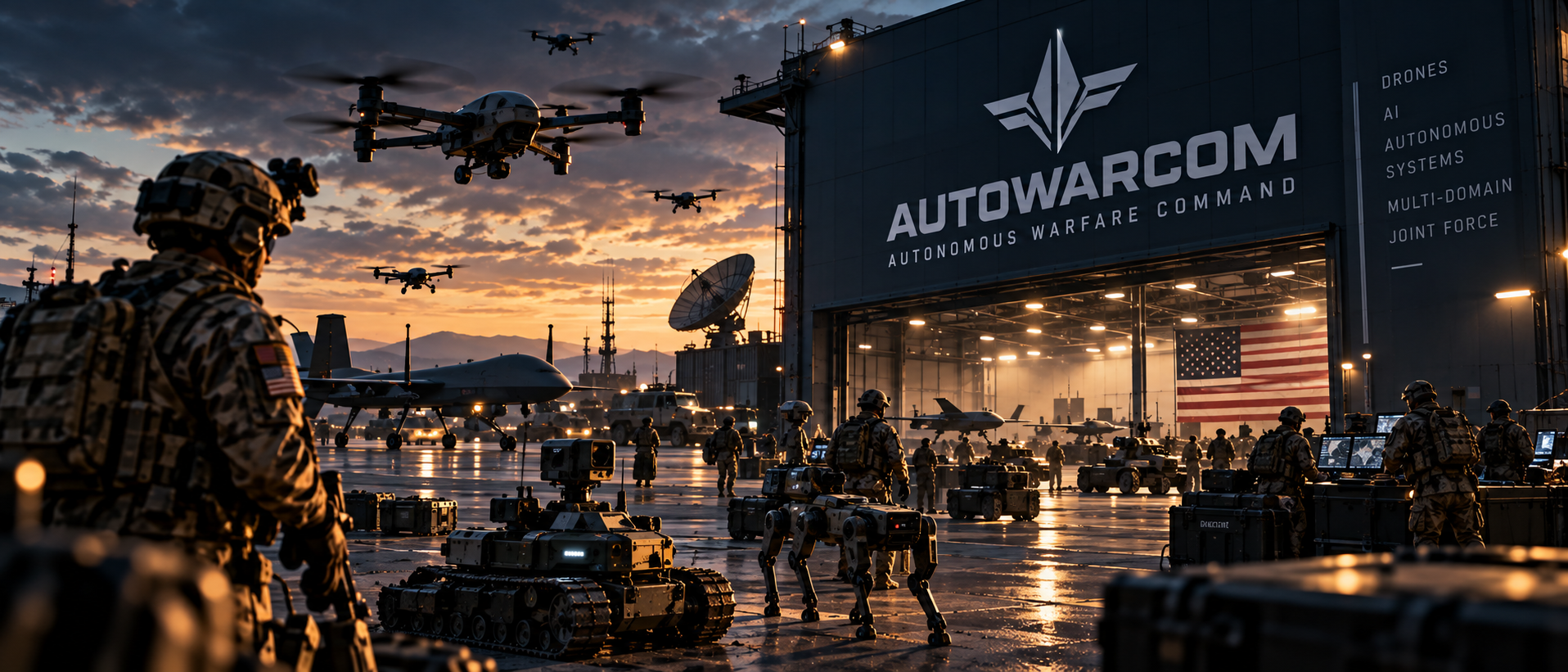
The Pentagon just created its first new combatant command since 2019 — built entirely around drones, AI, and autonomous systems.
Defense Secretary Pete Hegseth stood in front of hundreds of junior officers and enlisted personnel at Marine Corps Base Quantico on September 30 and announced something the Pentagon hasn't done since 2019: a brand-new combatant command. He's calling it the Autonomous Warfare Command — AutoWarCom, inevitably — and unlike US Space Command, the last new command stood up, this one isn't organized around a domain like space or a region like the Pacific. It's organized around a capability: drones, AI, and autonomous systems, across every branch of the military at once.TechSpot , Al Arabiya
What makes it a real structural shift rather than a rebrand is the authority attached to it. AutoWarCom will be led by a four-star officer and given what Hegseth called "service-like authorities" — the power to develop, buy, test, and field autonomous systems as a single joint-force capability, rather than leaving the Army, Navy, Air Force, and Marine Corps to run separate, uncoordinated autonomy programs the way they do today. It will become the Pentagon's 12th combatant command once established. Hegseth's own framing for why now was blunt: "The pace of war is changing faster than the process to support it," pointing to cheap compute, "superintelligence," and advanced commercial manufacturing as the forces making traditional procurement timelines obsolete. Technology.org , LifeZette
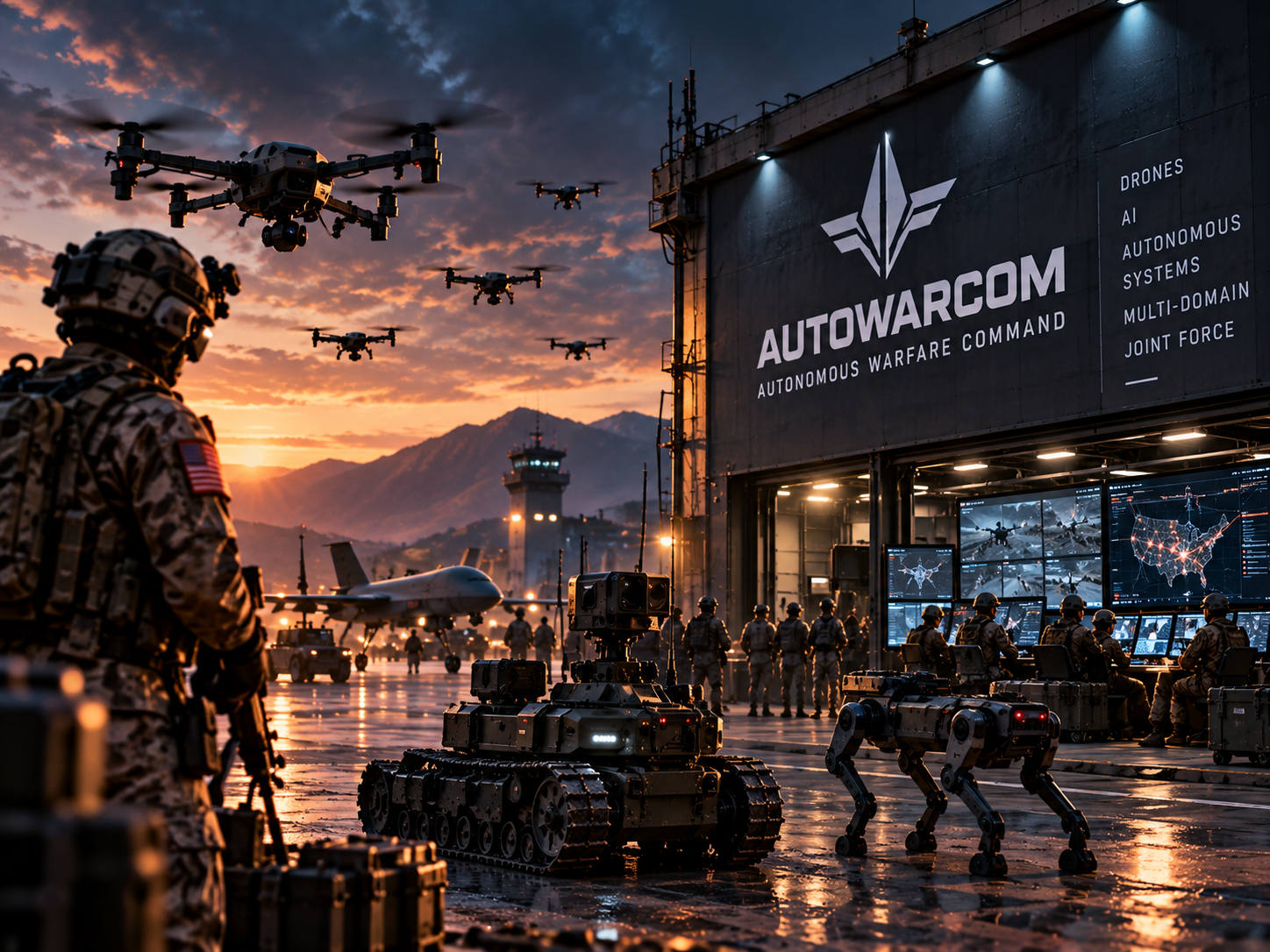
AutoWarCom doesn't exist yet, and it's worth being precise about that rather than treating Wednesday's speech as the finished thing. The target establishment date is October 1, 2027 — a full year away — with the Pentagon needing to work with Congress on authorizing legislation in the meantime. It's also not starting from zero: the announcement builds directly on a Direct Reporting Portfolio Manager for Unmanned Systems that Hegseth created three months ago to consolidate the department's existing autonomy programs, and on a Department of War memo called Project Agincourt, which lays out the preparation work for the next twelve months. LifeZette , CoinReporter
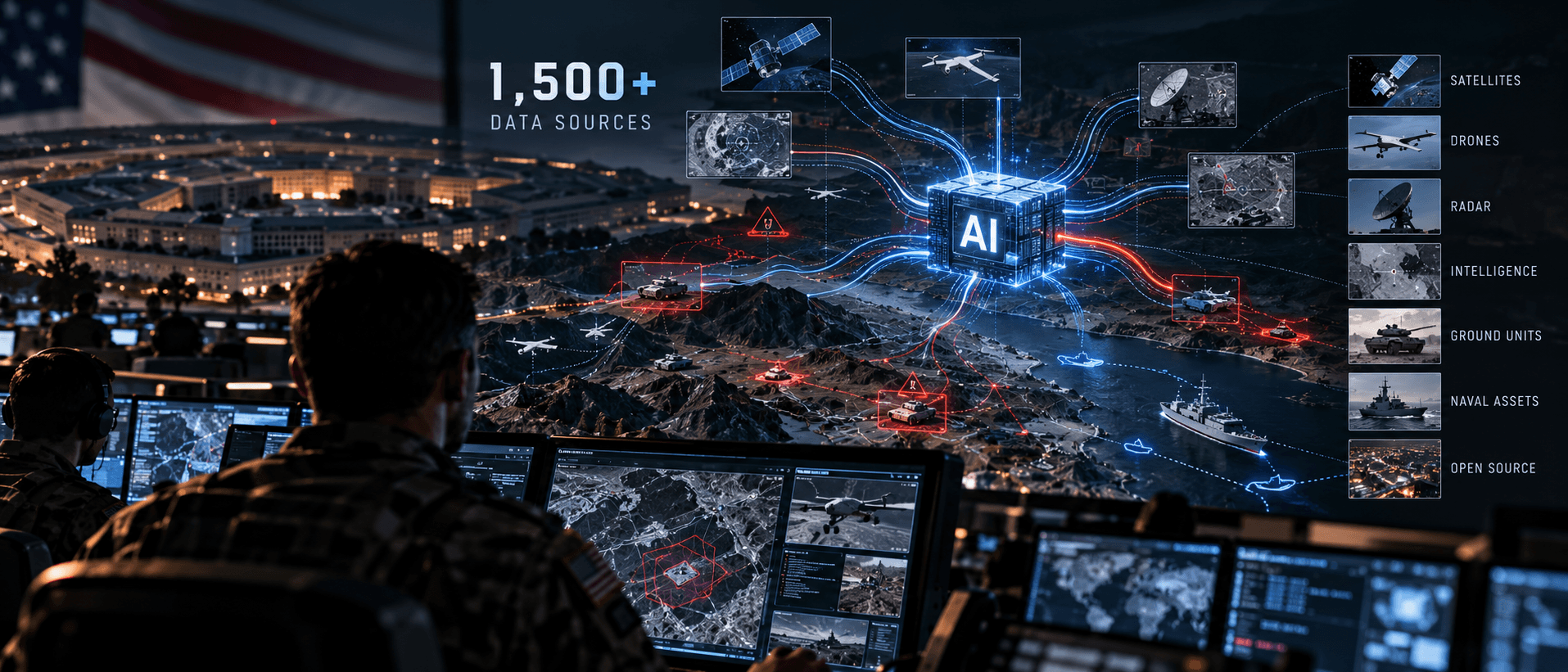
The decision-making software side of this isn't hypothetical, either — it's already running at a scale most enterprise software rollouts never reach. The Pentagon's GenAI.mil platform, which started with Google's Gemini roughly a year ago, added OpenAI's ChatGPT Mil and xAI's Grok for Government on August 31, and now serves roughly 1.7 million signed-up users out of 3 million eligible military and civilian personnel — covering unclassified administrative work, logistics, planning, and acquisition research. That's the "decision-centric" software layer AutoWarCom is being built to eventually fuse with the hardware side: drones, ground robots, and counter-UAS systems that are separately scaling through programs like the Army's recent $7 billion counter-drone contract awards. Hoodline
Not everyone reading Wednesday's announcement sees pure acceleration as good news. Security researchers in both the US and allied countries have been calling for guardrails and international consensus-building on AI in military systems, including the nuclear command chain, well before AutoWarCom existed — and a command explicitly built to compress the gap between autonomous capability and deployment timeline gives both supporters and critics of faster fielding a very concrete thing to argue about, rather than an abstract policy debate. Al Arabiya
The open question isn't whether the Pentagon is serious about autonomy as an organizing principle — standing up a new four-star command, the first since 2019, answers that. It's what actually changes operationally between now and October 2027 while AutoWarCom exists only as a memo and a portfolio manager's mandate, and whether "service-like authorities" turns out to mean genuinely faster fielding of autonomous systems, or just a new layer of command structure sitting on top of programs — Replicator, DRPM-UxS, the counter-drone IDIQs — that were already moving before AutoWarCom had a name.

Saumya Dawande
B.Tech AIML @ oriental institute of science technology bhopal
Engineering and tech journalist. I love exploring the impact of emerging technologies on global defense, sovereignty, and everyday life. Always looking for the real story behind the headlines.