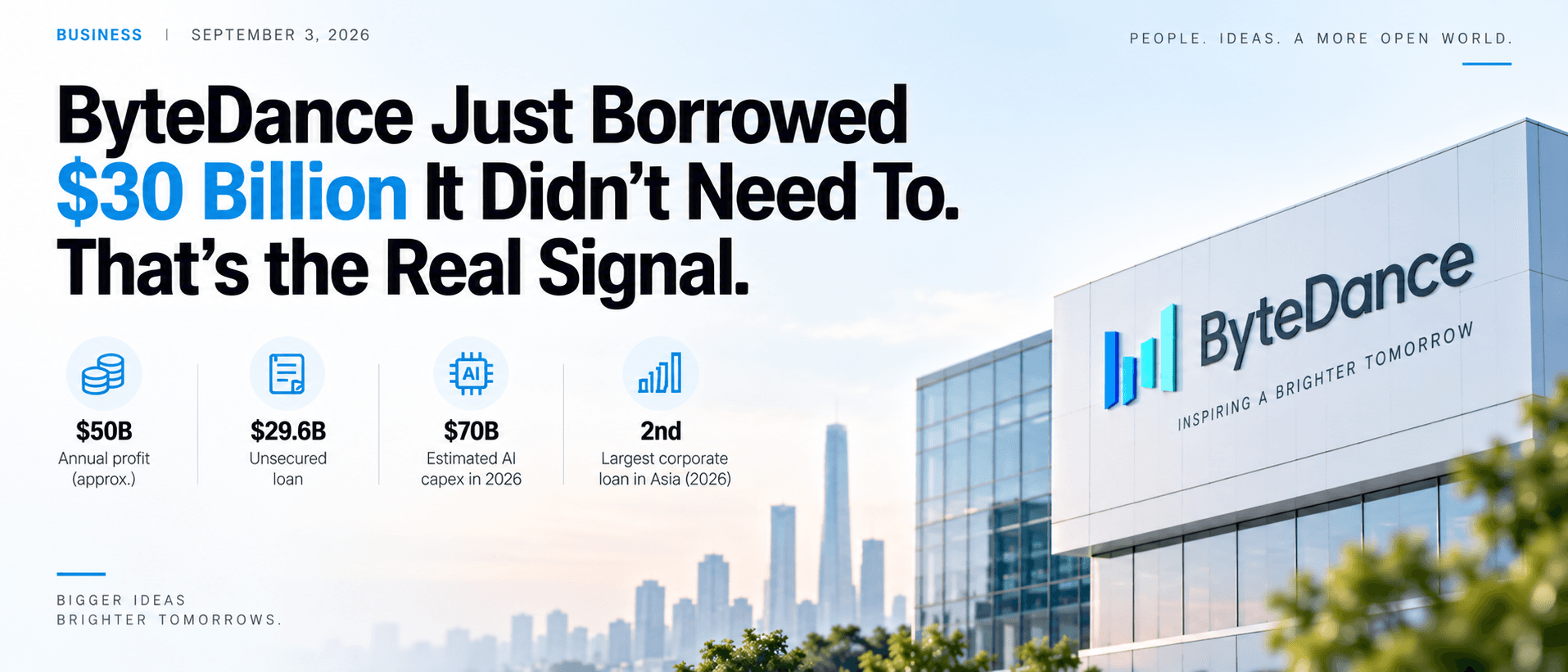
ByteDance Just Borrowed $30 Billion It Didn't Need To. That's the Real Signal.
The Rise of AI Employees: Why Digital Workers Could Become Every Company's Next Hire
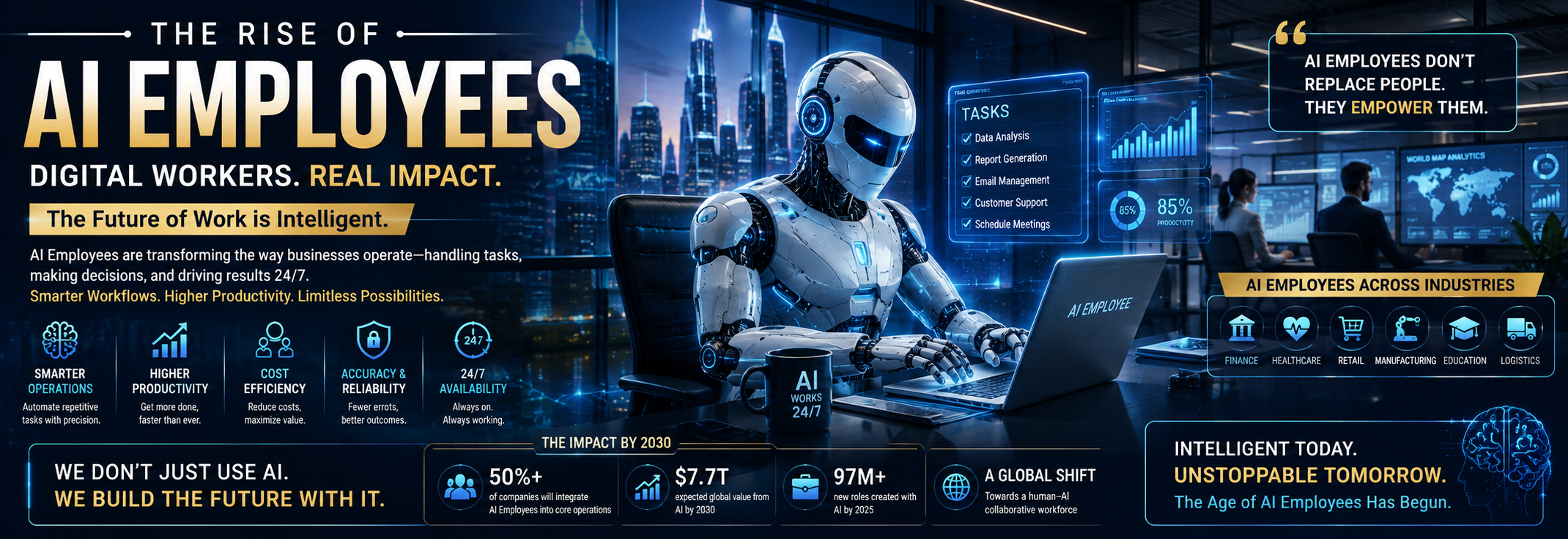
The first wave of generative AI introduced chatbots capable of answering questions and generating content. The next wave is built around AI agents that can understand goals, plan multiple steps, interact with software applications, retrieve business data, and complete tasks across different systems.
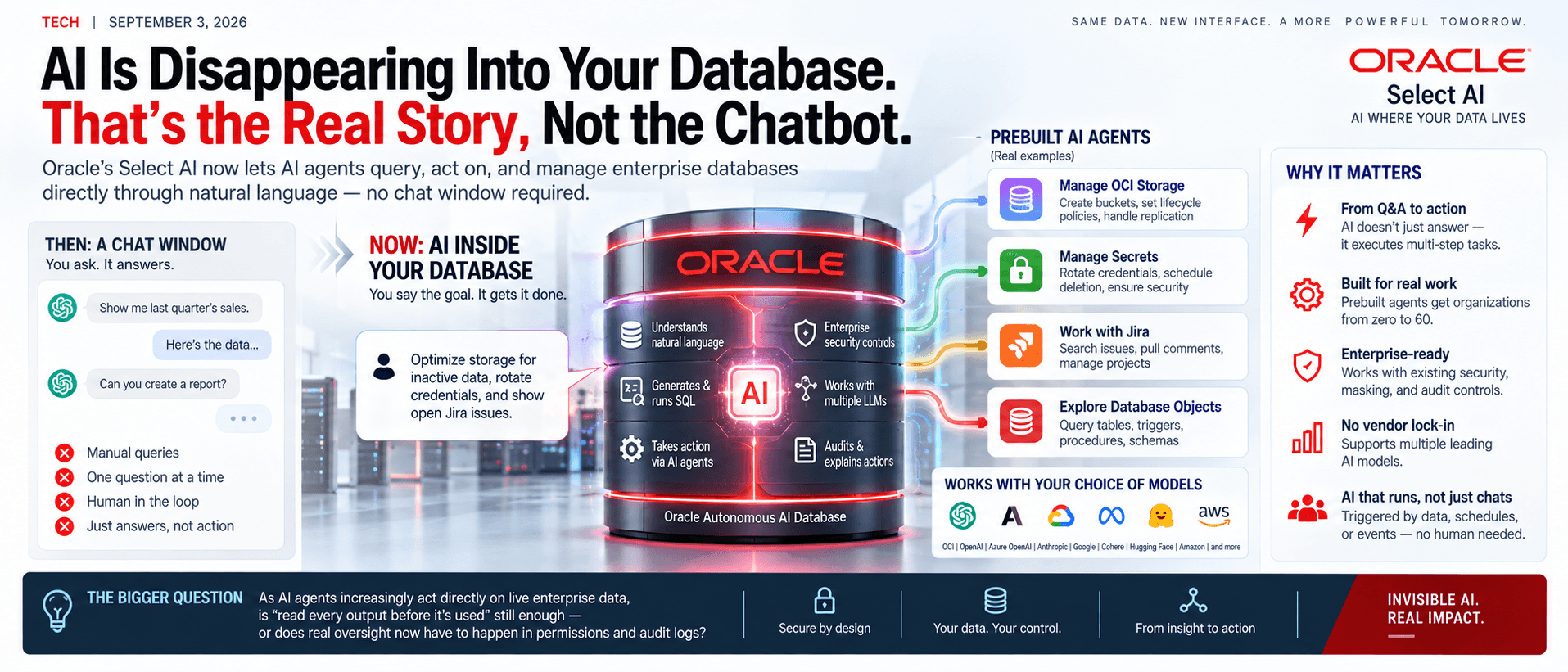
Unlike traditional chatbots, AI Employees are designed to function inside an organization's daily operations. A digital worker can automatically review emails, schedule meetings, generate reports, update CRM systems, analyze sales performance, summarize contracts, or coordinate workflows across multiple business applications. Instead of waiting for constant user instructions, these systems are increasingly capable of executing complete business processes under human oversight. Enterprise AI is moving toward governed, production-ready AI agents rather than simple conversational assistants.
Organizations are facing growing pressure to improve productivity while managing rising operational costs. AI Employees offer a way to automate repetitive work without compromising speed or consistency.
Across industries, companies are deploying AI to process invoices, manage customer inquiries, monitor cybersecurity threats, prepare financial reports, assist software developers, and support human resources. Many enterprises now see AI not simply as automation but as a scalable digital workforce that operates continuously and integrates with existing business systems.
Technology leaders increasingly believe that future organizations will combine human expertise with intelligent digital workers rather than relying exclusively on traditional staffing models. Research also shows companies are increasingly hiring professionals who specialize in deploying AI into operations instead of only building models.
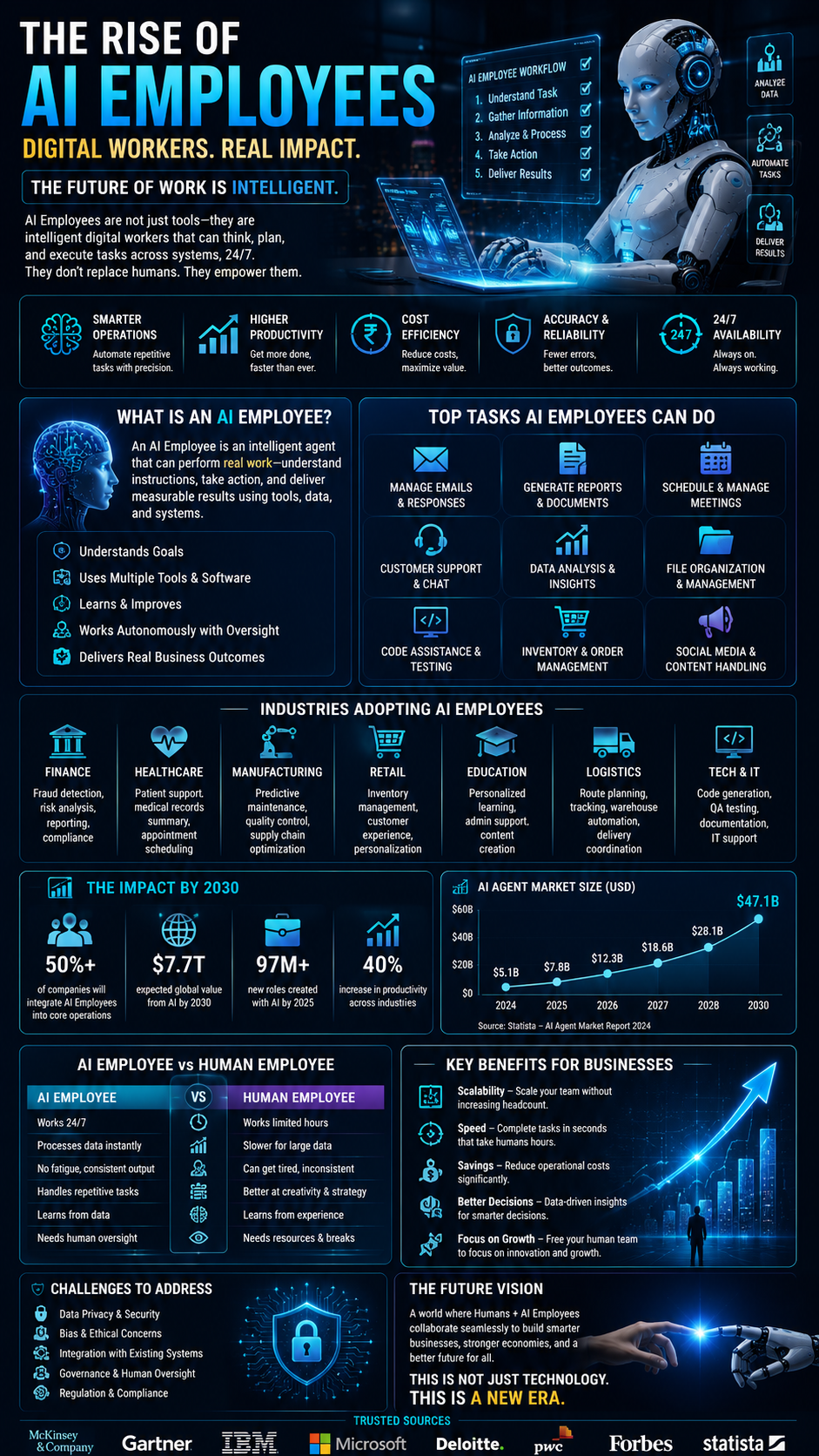
Financial institutions are using AI Employees to detect fraud, analyze transactions, prepare compliance reports, and improve customer support. Healthcare organizations are experimenting with AI to summarize medical records, assist with scheduling, and streamline administrative processes. Manufacturers are applying AI to predictive maintenance, quality assurance, and supply-chain optimization.
Retail companies are introducing AI-driven inventory management and personalized customer experiences, while legal firms increasingly rely on AI for document analysis and contract review. Technology companies continue to lead adoption by integrating AI directly into software development, product management, and internal operations. AI is also expanding into industries such as food service, where businesses are deploying intelligent ordering systems to improve efficiency and customer experience.
Looking Toward 2030
The coming years may redefine how organizations think about employment itself. Instead of hiring only people, businesses may increasingly build teams composed of both human professionals and AI Employees working together.
Large technology companies are investing heavily in AI agents that can assist individuals and enterprises with increasingly complex tasks. Industry leaders predict that personal and business AI agents will become commonplace, fundamentally changing productivity and digital work.
Whether in finance, healthcare, manufacturing, education, retail, or government, AI Employees are expected to become an essential part of daily operations. Companies that successfully integrate intelligent digital workers while maintaining responsible governance may gain significant advantages in productivity, innovation, and competitiveness.
The rapid rise of AI Employees has become one of the strongest investment themes in the global technology industry. What began as conversational AI has evolved into enterprise-grade digital workers capable of executing business processes, managing workflows, and assisting employees across multiple departments. As organizations accelerate digital transformation, analysts expect demand for AI-powered enterprise software to grow significantly throughout the remainder of this decade.
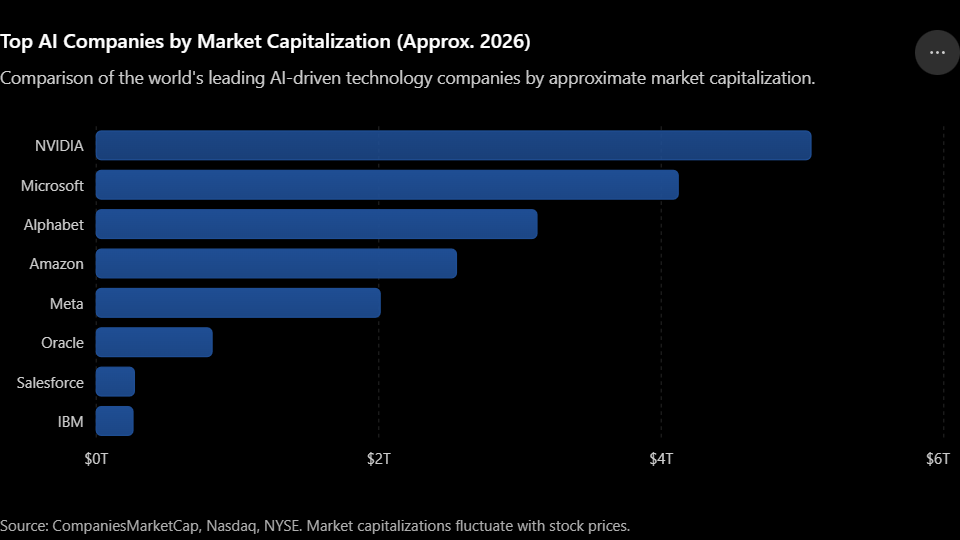
Industry forecasts estimate that the global artificial intelligence market, valued at approximately $391 billion in 2025, could surpass $1.8–2 trillion by 2030, supported by an expected annual growth rate of around 35–37%. Within this broader market, AI Employees and autonomous AI agents are emerging as one of the fastest-growing enterprise software categories.The extraordinary growth in the market value of leading AI companies demonstrates how strongly investors believe in the future of artificial intelligence. Technology companies at the forefront of AI development collectively represent trillions of dollars in market capitalization, making AI one of the most valuable sectors in global financial markets. Investors increasingly view AI infrastructure, cloud computing, semiconductor manufacturing, enterprise software, and digital automation as long-term growth opportunities capable of reshaping industries worldwide. As enterprise adoption accelerates, market analysts expect investment to expand further into AI-powered productivity platforms, cybersecurity, robotics, healthcare, and intelligent automation.