The US Is Sending a Third Aircraft Carrier Toward Iran. This War Has Been Going On for Eight Months.
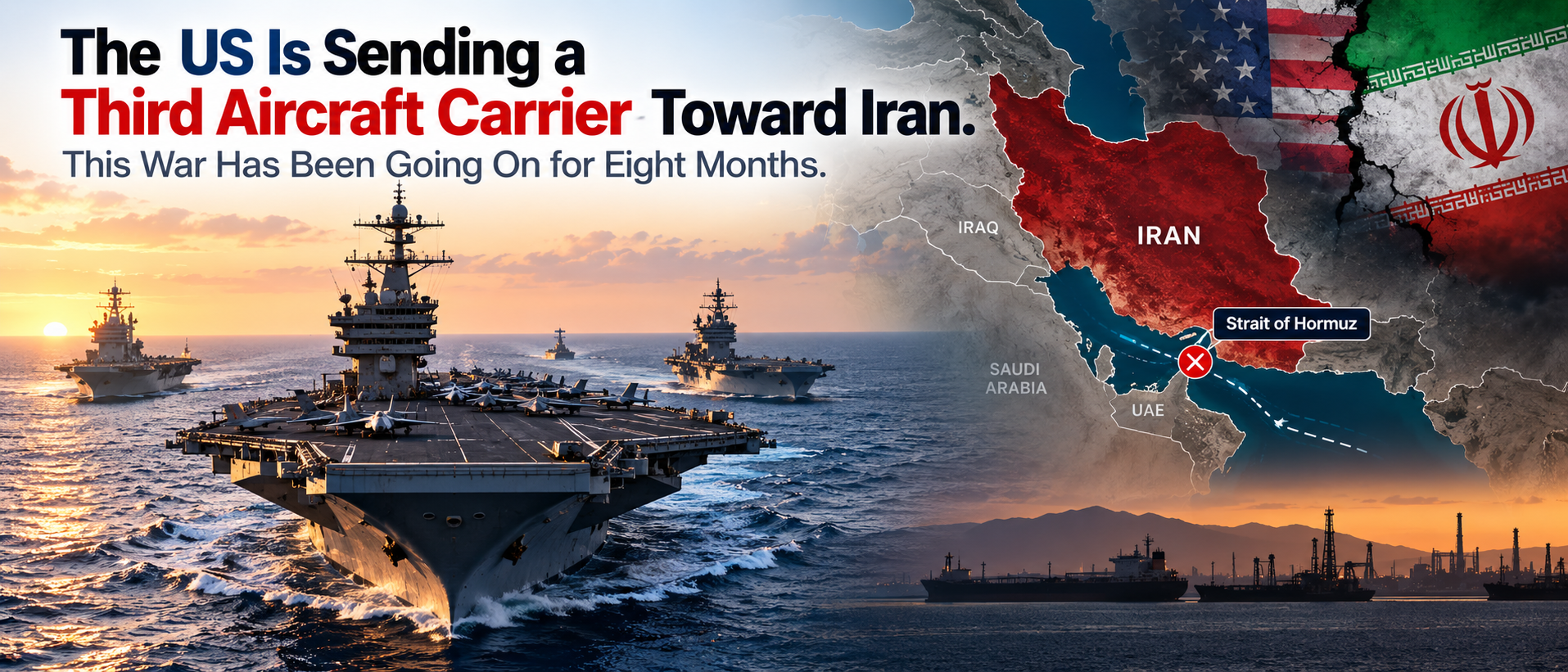
The US is deploying its third carrier strike group near Iran as an active war enters its eighth month. Iran's parliament speaker says Hormuz stays closed until seven specific conditions are met.
US third aircraft carrier Iran, Iran war eighth month, Strait of Hormuz closed Ghalibaf, USS Theodore Roosevelt deployment, Iran Islamabad memorandum seven conditions
A war that's been running since February, escalating again
The United States and Iran have been in an active, declared war since February 28, 2026, when the US and Israel struck Iranian nuclear and military infrastructure, killing Supreme Leader Ali Khamenei. Eight months later, that war is still unresolved — and this week, the US moved to significantly increase its military footprint in the region rather than draw it down. CFR Global Conflict Tracker
What's actually being deployed
The USS Theodore Roosevelt carrier strike group left San Diego on a Sunday, followed a day later by the Makin Island Amphibious Ready Group, carrying more than 2,000 Marines. A US official told Al Jazeera the combined deployment could bring an additional 9,000 to 10,000 US troops into the region, including sailors, Marines, and crew assigned across the ships involved. By the end of November, the US could have three aircraft carriers and two amphibious landing groups positioned around Iran simultaneously — a force posture the US Navy last held in April, at an earlier peak of this same conflict. Al Jazeera
This isn't simply reinforcement — it's a rotation under strain. The USS Abraham Lincoln spent more than 250 days at sea supporting the conflict, long enough that reports of low morale and supply shortages among its roughly 5,000-person crew reportedly factored into the decision to begin relieving it. The Roosevelt's own crew was reportedly told to maximize food, retail, and hygiene supplies before departure — preparation explicitly aimed at avoiding the Lincoln's strain repeating itself. Washington Times
Why now: a stalled ceasefire, not a new trigger
The timing lines up with reporting that President Trump has signaled he may resume strikes on Iran after the November US midterm elections, with CNBC reporting Trump has told aides he expects to resume bombing that same month. The broader picture: indirect talks between Washington and Tehran have stalled, with the US rejecting an Iranian proposal to reopen the Strait of Hormuz in exchange for lifting sanctions — leaving the conflict in what multiple outlets describe as an active stalemate rather than a ceasefire holding. CNBC
What Iran actually said about Hormuz
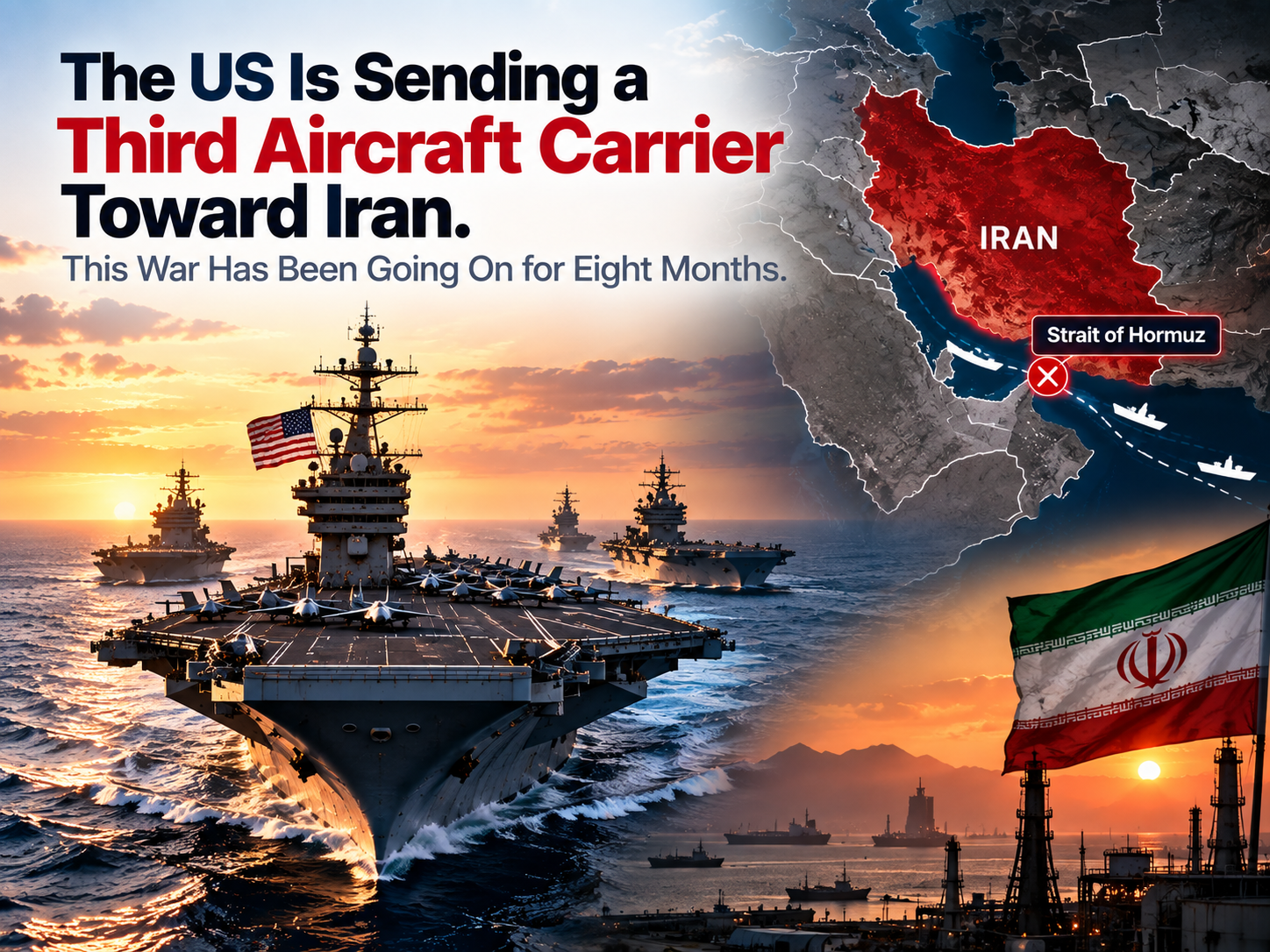
Iranian Parliament Speaker Mohammad Bagher Ghalibaf stated this week that the Strait of Hormuz will remain closed until seven specific Iranian conditions, set out under a June interim agreement known as the Islamabad Memorandum of Understanding, are met — including lifting the naval blockade, unfreezing Iranian assets, and halting military pressure. Worth being precise here: this is Ghalibaf restating Iran's existing, standing negotiating position rather than a new declaration made specifically in response to this week's carrier deployment. "The era of dragging out the process and dictating one-sided demands is over," Ghalibaf said, adding that Iran intends to "both fight and negotiate" simultaneously rather than choosing one path exclusively. Oman Observer
Iran's Foreign Minister Abbas Araghchi offered a narrower, more conditional path separately the same day: a Tehran-proposed plan that could lead to Hormuz reopening within seven days, specifically if the US accepts it — alongside a warning that Iran remains prepared to respond militarily if Washington chooses force again rather than diplomacy.
On the ground in the Gulf, Iran's Revolutionary Guard Corps has reportedly implemented what's being described as a "controlled maritime zone" — requiring commercial vessels to obtain prior clearance from Iran, follow approved routes, and pay transit fees, a practical enforcement layer sitting beneath the broader diplomatic standoff over the Strait's legal status under international law. Sunday Guardian
Why it matters
The Strait of Hormuz carries roughly a fifth of the world's oil supply, so a prolonged standoff over its status is a global economic concern, not just a regional military one — a reality reflected in persistent pressure from other countries, including China, for it to reopen. For the US and Iran specifically, this week's developments show both sides doubling down rather than de-escalating: Washington building toward its largest regional force posture of the entire war, and Tehran restating firm conditions rather than softening its position, even as both sides keep a diplomatic channel technically open. Eight months in, neither side has signaled it's ready to be the one that blinks first.
With three US carrier strike groups set to surround Iran by the end of November, and Tehran holding firm on seven specific conditions it's not budging from, is this buildup more likely to force Iran back to the negotiating table — or does concentrating that much force in one place make the next military escalation more likely, not less?

Vishal Sable
B.Tech AD @ shri balaji institute of technology and management
Engineering and tech journalist. I love exploring the impact of emerging technologies on global defense, sovereignty, and everyday life. Always looking for the real story behind the headlines.